AI + Intelligent Manufacturing Drive: In-depth Analysis of Metal Stamping Precision Forming Technology in 2026
Introduction: The Deep Leap from Traditional Forming to Data Intelligence
As the basic process of modern manufacturing, metal stamping is experiencing a profound paradigm shift in its technological evolution. From the early single-process manual stamping, to modern high-speed automated production lines, to the current intelligent stamping system based on artificial intelligence, this field is redefining the technical boundaries of sheet metal forming under the cross-drive of materials science, mechanical engineering, control theory and information technology.
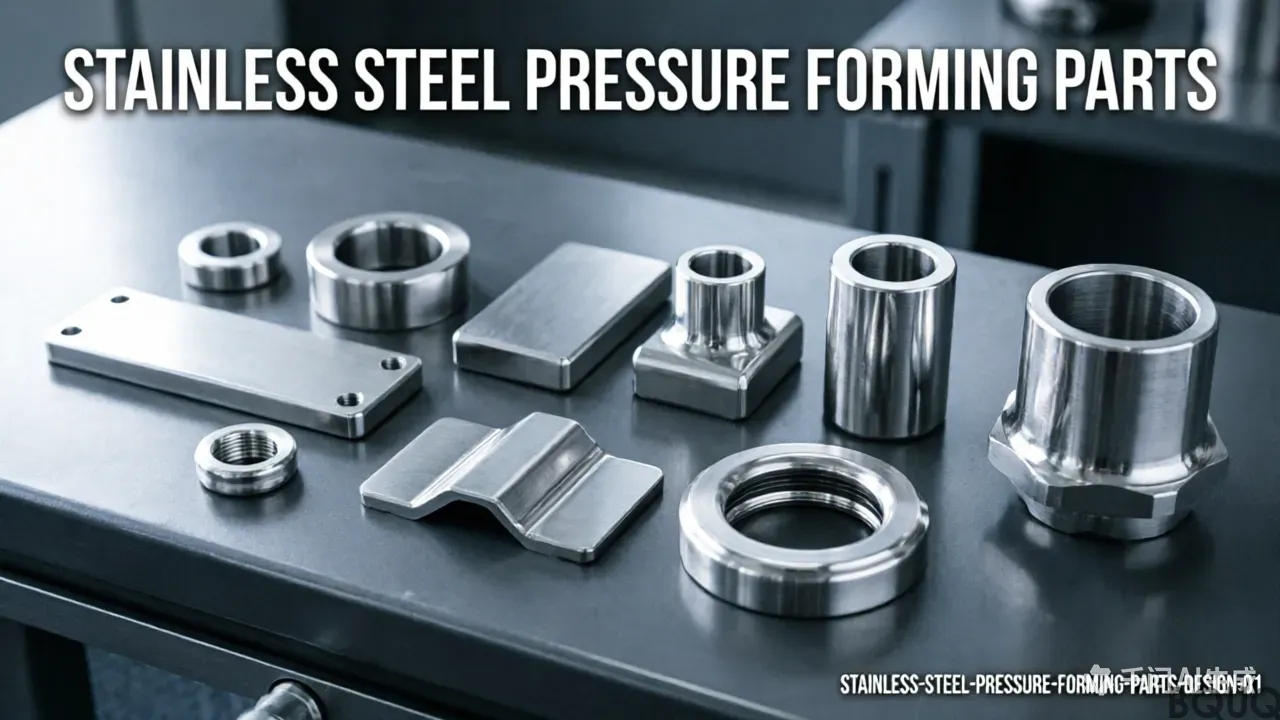
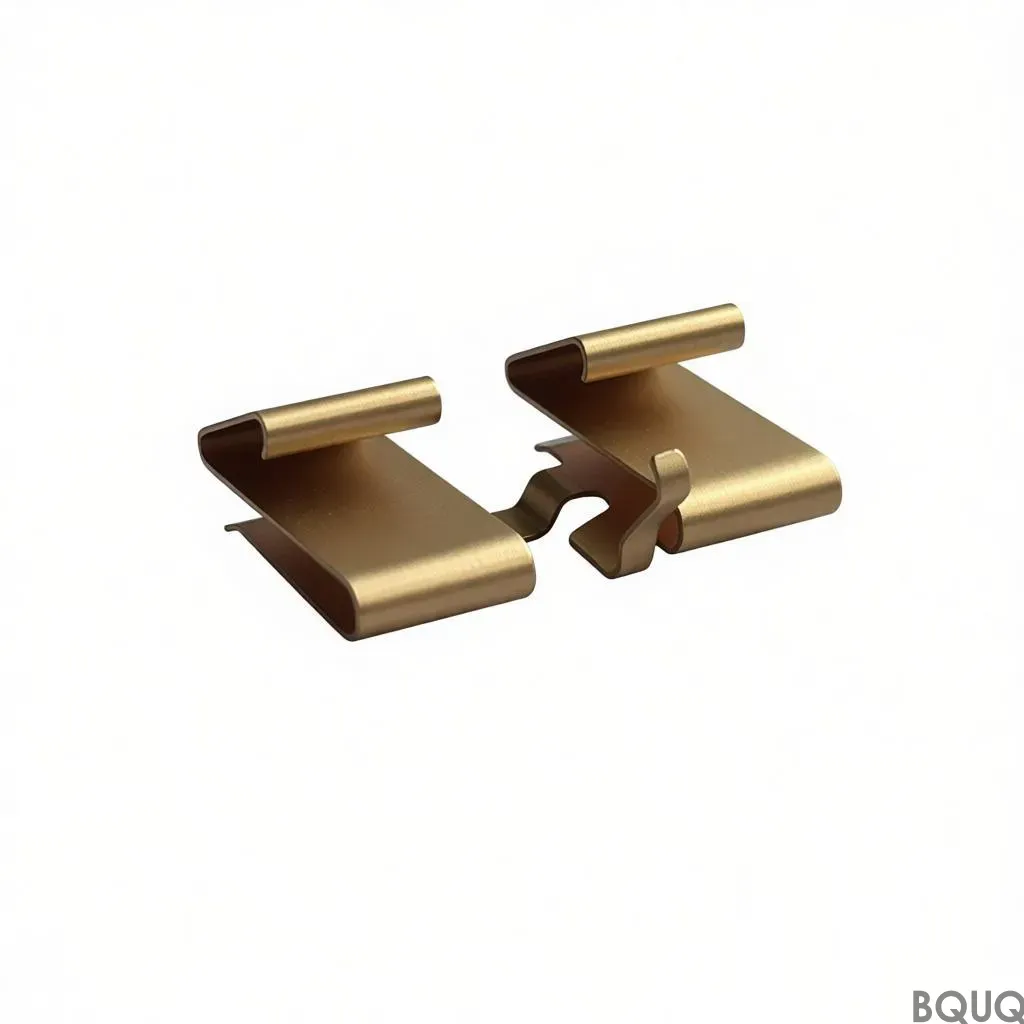
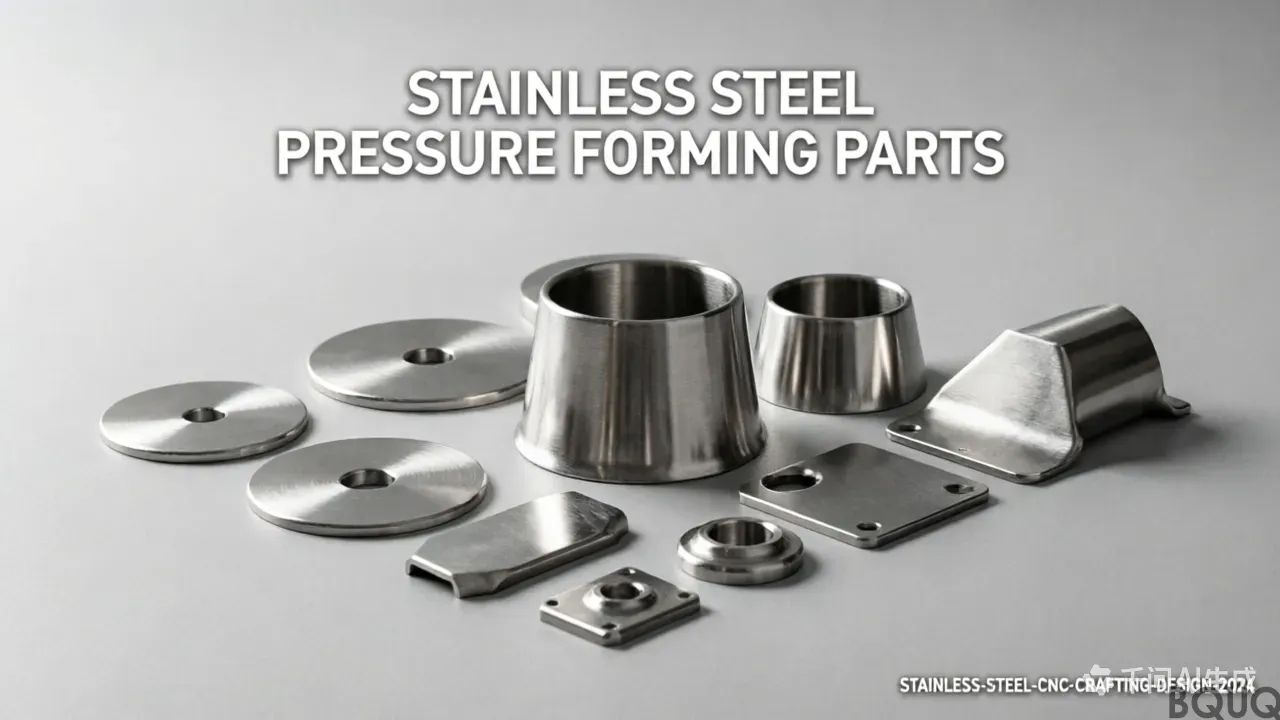
The core mechanism of precision metal stamping parts processing is to use stamping equipment and precision molds to apply controlled pressure to the metal sheet to cause plastic deformation or separation, so as to obtain parts with specific geometric shapes, dimensional accuracy and mechanical properties. This process covers punching, bending, stretching, flanging, bulging, fine blanking and other multi-forming methods. However, the requirements of modern manufacturing for stamping parts are far beyond the scope of the word "forming" - it faces extremely complex technical trade-offs and engineering challenges between micron-level dimensional accuracy, millisecond-level beat control, million-second die life and the quality goal of zero defects in the whole process.
This paper will analyze the hardware stamping precision forming technology from five dimensions: core technology system, cutting-edge material science, AI-driven intelligent manufacturing revolution, quality detection technology innovation, industrial status quo and market prospect.
First, the core technology system and multi-dimensional process control of precision stamping
1.1 Material selection and engineering constraints of materials science
The starting point of precision stamping process lies in the material. The stamping material system has expanded from traditional low carbon steel, stainless steel, copper alloy, and aluminum alloy to high strength steel (HSS), advanced high strength steel (AHSS), ultra-high strength steel (boron steel, etc.), magnesium alloy, and even carbon fiber composites and metal matrix composites. Each material has significant differences in key indicators such as yield strength, elongation, work hardening index (n value), plastic strain ratio (r value), and springback characteristics, which directly determines the geometric compensation strategy of die design and the parameter window of stamping process.
Taking the automotive sector as an example, the application ratio of high-strength steel (HSS) and advanced high-strength steel (AHSS) has continued to increase to 65%, the application ratio of aluminum alloy in cover parts has reached 30%, and magnesium alloy and carbon fiber reinforced composites have begun to be applied on a large scale in local structural parts, which can reduce weight by more than 40%. However, ultra-high-strength steel generally has problems such as narrow forming window, fast die wear, and difficult springback prediction; aluminum alloy faces high cost, poor weldability, and surface quality control challenges. From the perspective of materials science, microstructure regulation is the fundamental path to solve these problems - by optimizing grain orientation (such as anisotropy control), surface lubrication coating design, and precise matching of yield ratios, deep drawing, flanging, and springback stability can be significantly improved.
1.2 Die: "Process Core" for precision stamping
Die is the link that bears the highest technical density in metal stamping. A set of high-precision continuous die or multi-station transfer die, its tolerance control often needs to reach the micron level. The die structure covers punching die, bending die, drawing die, flanging die, fine stamping die and other types, while precision metal stamping parts are usually processed by fine stamping or high-speed stamping process. The fine stamping technology can make the punching surface finish below Ra 0.2 μm and the verticality is better than 0.01mm through the cooperation of ring gear blank holder, reverse top force and very small gap, which can meet the requirements of automotive safety parts, electronic connectors and other products with demanding shear surface requirements.
The modern mold material system has jumped from traditional tool steel and high-speed steel to powder high-speed steel and cemented carbide inserts, with PVD physical vapor deposition coatings (such as TiAlN, CrN, etc.) to greatly improve wear resistance. In the forming of ultra-high-strength steel, the application of nano-composite coating technology (such as AlCrN/TiSiN) has significantly reduced the die wear rate. In addition, the stress analysis of the die frame must take into account the thermodynamic coupling effect during the continuous stamping process - the current industry bottleneck is that the existing CAE simulation models often ignore the thermal accumulation and stress relaxation of the die frame under high-speed continuous stamping, resulting in the actual life of the stress concentration area being only 60% of the design value.
1.3 Fine optimization and closed-loop control of process parameters
Minor fluctuations in process parameters such as punch force, stroke speed curve, die clearance, blank holder force, lubrication method and fuel injection can cause dimensional deviations, excessive burrs or surface defects. In the case of the drawing process, too much blank holder force causes the material to crack, and too little causes wrinkling; deviations in punching clearance directly change the burr height and section characteristics.
Rebound control is one of the most difficult issues in precision stamping. For complex bent parts, the prediction and compensation of the rebound angle must be carried out by CAE analysis with the help of finite element simulation software, and the material flow trend, stress concentration area and potential defects must be anticipated in the virtual environment, so as to optimize the mold parameters in the design stage. However, the prediction error of the springback of the existing CAE software for high-strength steel plates (980MPa level) is still ±0.15mm. This results in the mold profile often needs to be revised repeatedly. The average number of mold trials exceeds 5 times, and the new product development cost increases by about 35%.
II. Deep integration of materials science and process innovation
2.1 Multi-scale design of advanced high-strength steel
The application of high-strength steel and advanced high-strength steel (AHSS) in stamping is developing from single-phase steel (such as DP duplex steel, CP multiphase steel) to multi-phase microstructure regulation. The application of DP steel, TRIP phase transformation-induced plastic steel and aluminum-silicon coated hot-forming steel has significantly improved body collision safety and reduced fuel consumption. Taking the ultra-high-strength steel DP1180 as an example, its lack of ductility has been a major bottleneck restricting precision forming. The industry has developed a controlled local heat treatment process to precisely soften the material in the key deformation zone and significantly improve the plasticity. At the same time, it cooperates with a servo press to achieve millisecond-level dynamic regulation of pressure and speed, so that the material flow is more uniform.
2.2 Aluminum alloy and lightweight forming technology
6000 series aluminum alloys have reached 30% of the large-scale application in body panels, and their characteristics of both lightweight and collision safety have made them the mainstream choice. However, the difficulty of stamping aluminum alloys lies in: its low elongation and surface scratch sensitivity require a very high surface finish on the die surface (usually mirror polishing), and the lubrication system must be specially designed. The penetration rate of hydraulic forming technology (THF) has exceeded 40%, and 30% weight reduction of hollow structures in chassis parts has been achieved.
2.3 Hot stamping: breaking the forming limit of ultra-high strength materials
For boron steel with a tensile strength of more than 1500 MPa (such as 22MnB5), cold stamping has been difficult to meet the forming requirements. The core of hot stamping forming technology is to heat boron steel to an austenitizing temperature (usually about 930 ° C), press it at a high temperature, and then quench it in a mold to make the material complete martensite transformation, and obtain a formed part with a tensile strength of more than 1500 MPa. The current hot stamping technology is developing from a single station to a multi-station high-speed development. The quenching efficiency of 22MnB5 steel is increased by 50%, and the integrated forming of complex structural parts is realized.
2.4 layer performance materials and multi-material hybrid design
The frontier of future stamping materials is layered performance materials - "hardening on demand" is possible through local softening or local hardening in different areas of the sheet. The development of heat-treatable aluminum and magnesium alloy composites is pushing the boundaries of lightweight design. On the process side, digital twin-driven virtual stamping prototypes will significantly reduce physical trials and errors, and self-lubricating or degradable coatings will further reduce environmental loads.
III. AI and Intelligent Manufacturing: Driving the Technological Revolution in the Stamping Industry
3.1 Springback compensation and intelligent mold design based on big data
One of the most groundbreaking applications of artificial intelligence in the stamping field is reflected in the field of intelligent die design. In traditional die design, engineers rely on experience to model geometrically, and it takes 3 to 4 weeks to design molds for complex automotive structural parts. Today, springback compensation algorithms based on deep learning are changing this situation. By training a large number of material-process-springback correlation data, deep neural networks can learn high-dimensional nonlinear mapping relationships, compressing the springback prediction error from ±0.15mm to within ±0.05mm. The number of mold trials is reduced from an average of more than 5 times to 2 times.
3.2 "AI + Mold Operation and Maintenance": Full Chain Smart Solution
Stamping is the first process of automobile production, and the precision and stability of the mold directly determine the quality and production efficiency of the whole vehicle. The intelligent quality inspection system independently developed by BMW Brilliance based on AI visual recognition and digital twin technology realizes the automatic closed-loop determination of surface defects and dimensional deviations of stamped parts, and builds a quality defense line of "no intervention, real-time early warning, and precise interception". The inspection data is synchronized to the digital twin platform in real time, which not only makes the quality status of stamped parts clear at a glance, but also realizes the accurate traceability of defects.
In terms of mold life prediction, the industry's forward thermo-mechanical coupling life prediction model has evolved. By building a material-process-life correlation database, the mold life prediction error is ≤±10%, and the online wear monitoring system can give real-time alarms to the wear of 5 μm level, and the product defective rate is controlled below 0.1%.
3.3 Real-time optimization of process parameters driven by digital twin
One of the biggest shortcomings in the current industry is how to achieve online automatic detection and adaptive control. The emergence of digital twin technology provides a solution to this problem - by building a digital model in the virtual space that exactly corresponds to the actual stamping production line, combined with real-time sensor data, the whole process can be realized from material selection to process design virtual verification. According to industry predictions, digital twin technology will cover 80% of stamping production lines in 2026, and AI-driven process parameter optimization system coverage is expected to exceed 60%. Research using the "data + big model" concept is becoming the mainstream paradigm in the industry - based on actual production data and physical experimental data, process parameters, product quality, and equipment working status can be predicted or detected to achieve fault warning and prevention.
IV. Online intelligent quality inspection: a paradigm shift from empirical judgment to real-time full inspection
4.1 Technological breakthroughs and applications of AI visual inspection
Traditional stamping parts quality inspection relies heavily on manual visual or hand-touch methods to perceive the surface condition of parts. These methods have fundamental defects such as unclear quantification of judgment standards, high missed inspection rate, and strong subjectivity. Breakthroughs in industrial AI vision technology are revolutionizing this situation.
Taking Changhong Technology as an example, its robot vision inspection system not only detects product appearance defects, but also detects whether the mold status is abnormal online. Once the system detects an abnormality, it immediately alarms and stops, automatically displays the specific alarm content and abnormal points, and realizes non-stop real-time detection. The detection efficiency and accuracy rate are nearly 100%, and the production efficiency is increased by 20%.
In the field of online detection of surface defects of sheet metal parts in automotive stamping high-tempo production lines, combined with traditional image processing (image normalization, feature matching and blob analysis), the detection rate of punching detection can be as high as 99.9%. The technical solution constructs three quality inspection AI model algorithms of several holes, cracking/obvious necking and bumps and bumps. Through the end-to-end intelligent detection architecture, the real-time localization and classification of micro-scale defects is realized.
4.2 Improvement of defect type identification and detection capabilities
Common defects in stamping include cracking/necking, few holes, bumps, pressure scratches, wrinkling and burrs, etc. The image features of different defects are significantly different: there are obvious grey release changes in the cracked area (irregular long strips of inner black and outer white); the bumps show a circular point-like feature; the wrinkling shows an uneven sense of light and dark in the area. Convolutional neural networks (CNN) in deep learning realize the intelligent identification and classification of these complex surface defects through feature learning of a large number of labeled defect samples.
4.3 Online non-contact precision measurement
In addition to surface defect detection, online detection of stamping part displacement and geometric parameters is the core link of quality control. A variety of non-contact measurement technologies on the market are being integrated into the stamping production line: laser contour scanning, structured light 3D measurement, binocular stereo vision, etc. The core purpose of online detection of stamping part displacement is to monitor key parameters in real time during the production process to ensure that each "building block" meets the standards, thus ensuring the overall quality and performance of the final product. The current advanced solutions have achieved 0.05mm accuracy and high-speed real-time feedback of 1kHz, achieving millimeter-second dynamic calibration capability.
V. Industry status, market prospects and technology trends
5.1 Market size and growth drivers
From the industry data point of view, the overall market size of domestic stamping parts in 2025 has exceeded 350 billion yuan, and the average annual compound growth rate of the industry has remained at about 8% in the past five years. The size of the automotive cold stamping parts market is expected to reach 30,326 million US dollars by 2032, with a compound annual growth rate of 3.7% during the period. Automotive stamping parts as the core downstream demand - the global scale has reached 210 billion US dollars in 2025, China accounts for 32% of the share, and the Yangtze River Delta region contributes 45% of the domestic automotive stamping parts production.
The explosion of new energy vehicles is the industry's strongest growth engine: in 2025, the demand for new energy automotive stamping parts will increase by 28% year-on-year, and the application proportion of lightweight materials has increased to 42%. In the electric drive system of new energy vehicles, the stamping accuracy of the silicon steel sheet of the motor stator and rotor core directly affects the lamination coefficient and magnetic circuit performance. The burr height is required to be less than 0.03mm. The coaxiality control of the stacked core needs to be realized through special pneumatic tooling and online inspection.
5.2 Industry challenges and technical shortcomings
Despite the strong growth of the industry, the challenges facing the industry are also unavoidable: fluctuations in raw material prices, stricter environmental protection policies, and rising labor costs put continuous pressure on business operations. The more fundamental technical shortcomings are concentrated in five dimensions: the localization and performance stability of stamping materials, the autonomy and control of industrial software (especially high-end CAE simulation software), the technical barriers of stamping equipment (especially servo drive core components), the design and manufacturing capabilities of high-quality molds, and the digital management level of the whole process driven by data.
5.3 Outlook on technology trends from 2026 to 2030
In the next five to ten years, the metal stamping industry will present the following technological trends:
First, the acceleration of the penetration rate of intelligent manufacturing. The penetration rate of intelligent production lines has reached 67% (up 39 percentage points from 2020), and the digital control of the whole process will become the industry standard. Stamping factories are gradually realizing the interconnection of all links from raw material cutting, distribution, stamping to post-processing, and opening up information "islands".
Second, multi-process composite and flexible production. The "stamping-spinning-laser welding" composite process chain completes multi-process forming in a single clamping, which can effectively avoid accumulated errors and stabilize the tolerance within ±0.05mm. The flexible stamping production line realizes seamless switching between different products through a quick die change system and an adaptive process library.
Third, the large-scale application of servo stamping technology. China's servo press market has grown from 4.80 billion yuan in 2023 to 6.50 billion yuan in 2025, with an average annual compound growth rate of 16.3%, and is expected to exceed 7.50 billion yuan in 2026. Servo multi-station presses, as an alternative to multi-machine joint production lines for small and medium-sized enterprises, are gradually maturing.
Fourth, closed-loop recycling and green manufacturing. The establishment of a closed-loop recycling system will promote the high-value recycling of stamping waste, and the development and application of low-carbon and high-performance aluminum alloys are accelerating. 85% of the leading manufacturers have completed the transformation of green factories, and the energy consumption per unit output value has decreased by 18% compared with 2020.
VI. Conclusion: From process to system, from experience to intelligence
Metal stamping is transforming from an "experience-driven" traditional process to a "data intelligence" -centric systems engineering. It is no longer just the forming process of sheet metal, but covers the interdisciplinary fields from materials science, precision machinery, control engineering to artificial intelligence, industrial Internet of Things, digital twin.
The processing of precision metal stamping parts is no longer an isolated manufacturing process, but an industrial system closely related to downstream design, assembly and recycling. In the future, with the continuous deepening of the industrial Internet of Things and intelligent manufacturing system, this traditional process will release new technological potential. But for stamping enterprises, the key to technological breakthroughs is not local leadership, but to build a complete closed loop of digital capabilities - from intelligent mold design, AI optimization of process parameters, to online intelligent quality inspection and digital twin control. Only by opening up the data flow of each link can we achieve a fundamental transition from "manufacturing" to "intelligent manufacturing".
In the context of the continuous expansion of downstream industries such as new energy vehicles, 3C electronics and household appliances, the hardware stamping industry is in a double opportunity period of technological change and market growth. Those companies that can take the lead in completing digital transformation, master AI-driven core capabilities, and establish a material-process-life full chain data platform will truly become the leading force in the evolution of stamping technology in this era.
BQUQ is a professional metal stamping manufacturer, please send us drawings, and our company will quote you within 12 hours.
Frequently Asked Questions
What materials can your precision metal stamping process handle?
Our stamping process covers a wide material range, from traditional low carbon steel, stainless steel, copper alloy, and aluminum alloy to advanced high strength steel (AHSS), ultra-high strength steel like boron steel, magnesium alloy, and even carbon fiber composites. Each material's yield strength, elongation, and springback characteristics are factored into die design and process parameters.
What dimensional accuracy can you achieve in precision stamping?
We target micron-level dimensional accuracy in our precision stamping parts. The article emphasizes engineering trade-offs between micron-level dimensional accuracy, millisecond-level beat control, and million-shot die life, all aimed at achieving a zero-defect quality goal throughout the entire process.
What forming methods does your precision stamping process include?
Our precision metal stamping process covers multiple forming methods, including punching, bending, stretching, flanging, bulging, and fine blanking. This allows us to produce parts with specific geometric shapes, dimensional accuracy, and mechanical properties by applying controlled pressure to metal sheets.
How does your process handle high-strength materials like AHSS?
We account for the unique properties of high-strength and advanced high-strength steels, such as their yield strength, work hardening index (n value), and plastic strain ratio (r value). These factors directly determine the geometric compensation strategy in die design and the stamping process parameter window to manage springback and achieve precision.