BQUQ is a professional metal stamping manufacturer, please send us drawings, and our company will quote you within 12 hours.
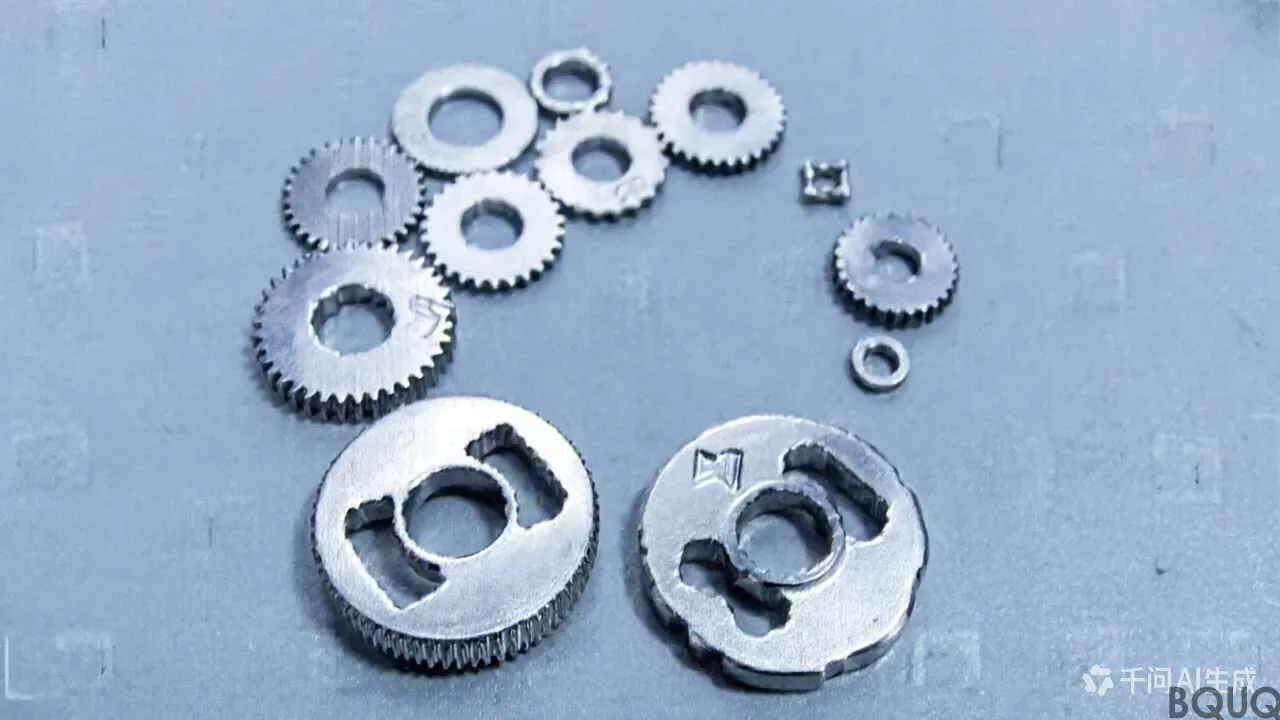
High-speed precision stamping and in-die microforming technology: from electronic connections to micromotor cores
Introduction: The Extreme Challenge of Stamping in the Micro Era
The multi-row precision connectors inside the smartphone, the ultra-thin silicon steel core of the new energy vehicle drive motor, and the radio frequency shielding cover of the 5G base station - all of these products rely on high-speed precision stamping technology. The stamping speed of modern high-speed punching machines can reach more than 1200 strokes per minute, while the dimensional accuracy requirements of the workpiece are often within ±0.01mm or even ±5μm. This means that in a stamping cycle every 0.05 seconds, the material must complete multiple processes such as feeding, alignment, punching, bending, stretching, tapping, and even riveting, and the accumulated error of each process must be controlled within a very narrow tolerance band.
This paper focuses on the dynamics of high-speed precision stamping equipment-die-material-process system, as well as integrated technologies such as in-die micro-forming (in-die tapping, in-die riveting, iron core stacking riveting), providing technical guidance for the processing of high value-added stamped parts.
First, the system dynamics of high-speed stamping
1.1 Key technical indicators of high-speed punches
Ordinary punches can reach 600 strokes per minute, but real high-speed precision punches are usually higher than 800 strokes per minute and can reach up to 2500 strokes per minute. Core indicators include: slider motion curve (sinusoidal vs. improved trapezoidal curve), dynamic repeatability of lower dead point (within ±0 mm), frame rigidity and vibration reduction design. Servo direct drive technology gradually replaces the traditional flywheel clutch structure in the high-speed field, which can realize programmable control of speed and stroke, which is extremely beneficial for complex microforming.
1.2 Feeding and guidance system
When stamping at high speed, the feeding accuracy directly determines the punching positioning. The roller feeder with pneumatic clamping has been gradually replaced by the servo motor-driven cam feeding, and the feeding error can be controlled within ±0.02mm. A more advanced configuration is the optical alignment system: a high-resolution CCD is installed at the mold inlet, the edge of the belt material or the prefabricated guide hole is detected in real time, and the feeding servo motor is adjusted through a closed loop.
1.3 Die dynamics and vibration control
At ultra-high speed, the punch and concave dies of the die will produce small elastic deformation and vibration. The structure of the mold base and the fastening method must be optimized through modal analysis to avoid resonance. The punch fixing plate should be made of high-rigidity alloy steel and lightweight design. In addition, nitrogen gas spring is used instead of metal spring as the unloading force source, because its dynamic force is more stable.
Second, the design philosophy of cemented carbide progressive dies
2.1 Mold structure and step arrangement
The number of steps of a precision progressive die is often 20 to 40, and the order of arrangement follows: punching the positive hole, rough punching the inner hole, fine punching the shape, bending and forming separation. For small parts, complete separation is required in the last step to avoid a single small part getting stuck in the mold. The setting of empty steps (empty stations) is crucial in high-speed molds, leaving room for future mold changes or additional sensors.
2.2 Punching clearance and burr control
The punching gap (the unilateral gap between the punch and the die) affects the burr height and section quality. For thin materials with a thickness of 0.1 to 0.5mm, the gap of precision punching is usually 3% to 6% of the material thickness. However, when the material thickness is less than 0.2mm, the relative gap fluctuation caused by the eccentricity of the die edge machining and assembly will increase significantly, and micro-wire EDM must be used to form the die insert in one shot.
Industry standard for burr height: Connectors require less than 10% of the material thickness and no more than 0.02mm. Coping strategy: Fine Blanking structure - pressure plate with V-ring gear, but limited by die size and cost, only applied locally at key stations.
2.3 Punch cooling and anti-sticking
High-speed continuous stamping will generate friction heat, causing the punch temperature to rise and the material to adhere easily. Solution: Integrate a fine cooling runner inside the mold, or use a combination of cemented carbide + coating, and increase the amount of fuel injection to force cooling.
Third, the collection of in-mold microforming technology
3.1 In-mold tapping and in-mold riveting
The traditional tapping machine is required to process threads one by one after stamping, which has low efficiency and increases turnover. In-mold tapping is driven by the movement of the punch slider to rotate the tap through the tapping head installed on the lower mold of the mold, and the tapping is completed on the strip. The accuracy can reach 6H, and the speed is synchronized with the stamping beat.
In-mold riveting refers to the assembly of stamped parts and nuts, studs or other stamped parts in the same mold. The riveting parts are sent into the mold through the feeding mechanism, and the riveting or flanging riveting is completed when the slider goes down.
3.2 Motor core automatic stacking and riveting technology
The stator and rotor core of a motor is made of hundreds of silicon steel sheets of the same shape stacked on top of each other. The traditional process is to glue or weld separately after stamping. Automatic stacking and riveting technology uses a special punch of progressive dies to punch out annular pits (riveting points) on each piece. When the next piece is stacked, the bumps squeeze into the pits of the previous layer to form an interference connection. Controlling each piece to rotate at a certain angle eliminates thickness direction errors and improves magnetic properties at the same time.
This technology requires extremely high-precision stack thickness control (thickness tolerance of ±0.002mm per sheet), and automatically detects the number of laminations during the stamping process, and automatically discharges the core after reaching a predetermined number of sheets.
3.3 Etching + stamping mixing process of lead frame
High-density lead frames (pin spacing below 0.3mm) are traditionally chemically etched, but the production cycle is long and it is not conducive to environmental protection. The hybrid process of precision stamping + partial etching is being applied: first, the shape and the rough outline of the pin are stamped with a progressive die, and then the fine gaps between the pins are refined by laser or chemical etching to ensure that the edge of the pin is smooth and free of burrs.
IV. Common defects and diagnoses of high-speed stamping
Defect Type Typical Cause Diagnosis Method
Burr abnormality increases punch wear, gap increases, feeding asynchronous stroboscopic observation of the inside of the mold, microscopic measurement of burr
Small hole blockage, waste floating, die wear, oil viscous pressure sensor monitoring, waste blowing pressure inspection
Iron core stacking height fluctuation silicon steel sheet thickness error accumulation, unstable riveting force online laser thickness measurement, sensor monitoring riveting point depth
In-mold tapping and rotten taps, synchronous timing offset, vibration monitoring of high material hardness, annealing or replacement of taps
Online monitoring and adaptive control
High-speed stamping must achieve quality monitoring without downtime. Mainstream solutions include: tonnage monitoring system (each station's stamping pressure waveform is compared with the standard waveform, and the deviation exceeds the threshold alarm), photoelectric detection of die blanking (counting of occluded beams of light when small parts fall), and stroboscopic lighting + high-resolution camera (taking still images at high speed to detect burrs or missing materials).
The state-of-the-art stamping workshop has achieved full closed-loop control: the system automatically adjusts the stamping speed or lubrication amount according to the burr height trend, or prompts the grinding of the punch.
Future trends: micro-stamping and additive manufacturing molds
With the growing demand for wearable devices and miniature medical apparatus, metal foil stamping with a thickness of less than 0.05mm has become a frontier. This requires micro-stamping dies (punch diameter up to 0.1mm), manufactured by micro-EDM or UV-LIGA process. At the same time, additive manufacturing (3D printing) is used to make carbide mold inserts with conformal cooling channels, effectively solving the heat dissipation problem of micro-molds.
conclusion
High-speed precision stamping is the technology pyramid tip in the field of hardware stamping, which integrates multi-disciplinary knowledge such as mechanical dynamics, material tribology, precision measurement and control. Driven by the dual demand of new energy vehicles and 3C electronics, companies that can achieve thousands of strokes per minute and maintain micron-level accuracy will surely occupy a high value-added core position in the global industrial chain.
BQUQ is a professional metal stamping manufacturer, please send us drawings, and our company will quote you within 12 hours.
Frequently Asked Questions
What is the maximum stamping speed your high-speed precision presses can achieve?
Our high-speed precision presses can reach up to 2500 strokes per minute, with real high-speed precision punching typically above 800 strokes per minute. This is supported by servo direct drive technology that enables programmable speed and stroke control for complex microforming operations.
What dimensional accuracy can you hold for stamped parts?
We maintain dimensional accuracy within ±0.01mm, and for critical features, we can achieve tolerances as tight as ±5μm. This precision is ensured through closed-loop optical alignment systems and servo-driven cam feeding with feeding errors controlled within ±0.02mm.
Can you perform in-die micro-forming operations like tapping or riveting?
Yes, we integrate in-die micro-forming technologies including in-die tapping, in-die riveting, and iron core stacking riveting. These operations are performed within the stamping cycle, which can be as short as 0.05 seconds, while controlling accumulated errors across all processes within a narrow tolerance band.
How do you control vibration and die dynamics at ultra-high speeds?
We optimize die base structure and fastening methods through modal analysis to avoid resonance. Punch fixing plates use high-rigidity alloy steel with lightweight design, and we employ nitrogen gas springs instead of metal springs for unloading force. This ensures stable operation even at speeds above 1200 strokes per minute.