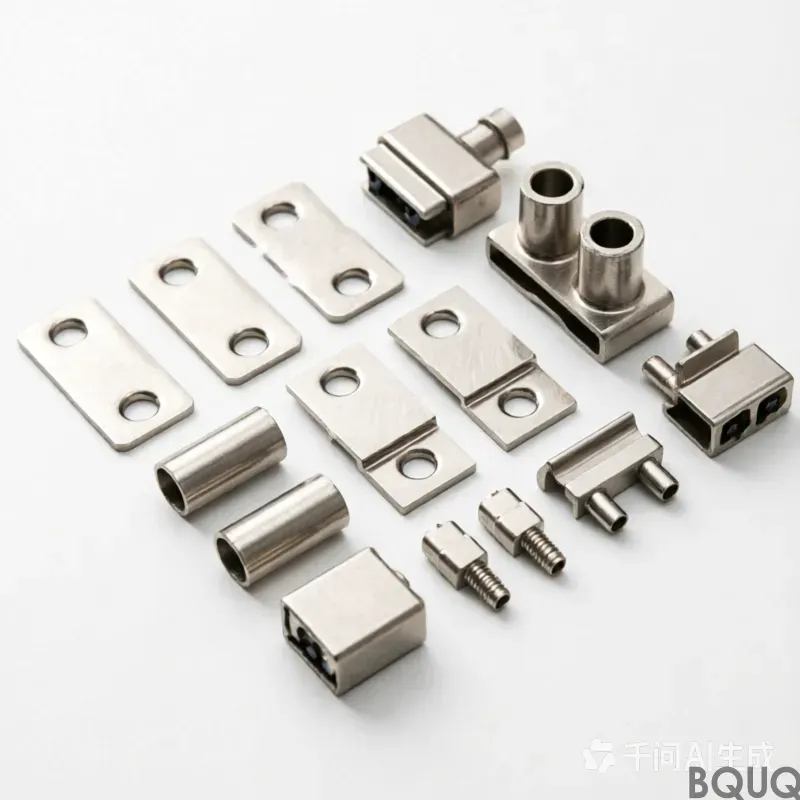
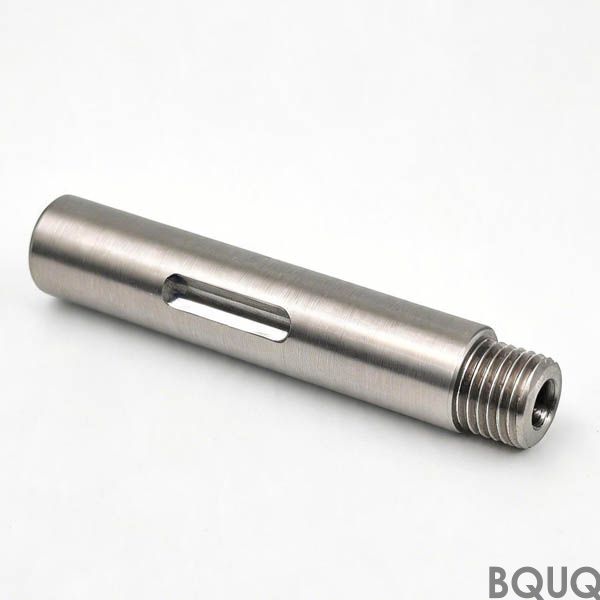
I. Cutting/shearing process (separation)The goal is to separate one part of the sheet metal from another along a specific contour.cuttingCut a complete workpiece from a sheet metal strip. Stamped p
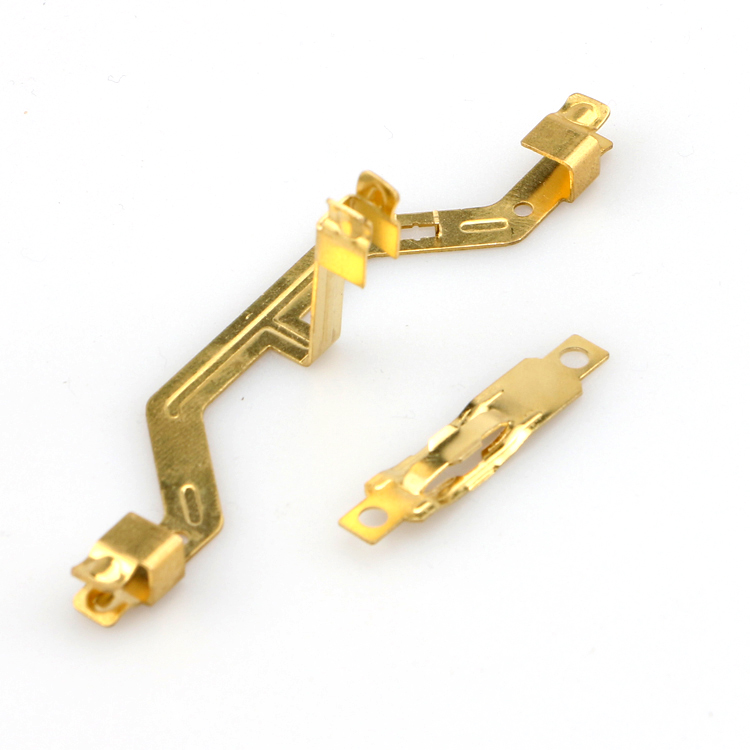
The core process of metal stamping
I. Cutting/shearing process (separation)
The goal is to separate one part of the sheet metal from another along a specific contour.
Blanking
Cutting a complete workpiece from the sheet metal strip. The punched-out piece is the useful part.
Punching/Perforating
Creating holes in the workpiece. The punched-out material is scrap (called the "slug").
Trimming
Cutting away excess or irregular flash from a formed part (e.g., the edges of a drawn cup).
Notching
Removing small sections from the edge of a blank or strip.
Nibbling
Cutting a contour using a series of rapid, overlapping punches, often for prototyping or complex shapes.
Fine Blanking
A specialized precision process using a triple-action press and a V-ring indenter to produce a clean, fully sheared edge in a single stroke.
II. Forming Processes (Deformation)
The goal is to plastically deform the material into a desired shape without failure.
Bending
Deforming the metal along a straight axis to create V-shapes, U-channels, or other angles.
Deep Drawing
Transforming a flat blank into a hollow, cup-shaped part (like a kitchen sink or metal housing) using a punch and die.
Flanging
Bending the edge of a part, typically around a hole or on the periphery, to create a raised rim. Includes hole flanging and edge flanging.
Stretching/Stretch Forming
The sheet metal is clamped at its edges and stretched over a form, causing thinning and elongation.
Hemming
Folding the edge of a part over onto itself (often in two stages: a sharp bend followed by a flattening). Used for edge reinforcement and safety.
Curling
Forming a rolled, circular edge at the open end of a part (e.g., a door hinge or a drum).
Embossing
Creating raised or recessed designs, letters, or ribs on the surface by stretching the material into a shaped die.
Coining
A high-pressure, closed-die process that compresses the metal to replicate fine features from the die onto the part, achieving precise dimensions and surface detail.
Ironing
Thinning the wall of a drawn part (like a beverage can) by pushing it through a die with a smaller clearance than the original wall thickness.
Bulging
Expanding the walls of a hollow part, often using fluid pressure or a rubber punch.
III. Combination & Advanced Processes
Progressive Die Stamping
The most common high-volume method. A coil of metal is fed through a series of stations in a single die, each performing a different cutting or forming operation, producing a complete part with each press stroke.
Compound Die Stamping
Multiple operations (e.g., blanking and punching) are performed in a single station during one press stroke, resulting in high accuracy.
Transfer Die Stamping
A pre-cut blank is mechanically transferred between multiple standalone dies to create a complex part. Ideal for larger components.
Four-Slide Stamping
Uses four horizontally moving slides and multiple tool sets to perform complex bending and forming on wire or strip metal in a highly automated sequence.
Key Process Elements & Control
Successful stamping relies on precise control of:
Tool & Die: The heart of the process. Design, accuracy, and material are critical.
Press: Tonnage, speed, accuracy, and type (mechanical, hydraulic, servo).
Material: Metal properties (yield strength, elongation, n-value, r-value), gauge, and surface finish.
Lubrication: Reduces friction, lowers force, prevents galling, and improves tool life.
Process Parameters: Clearance, press speed, blank holder force, draw bead settings.
Frequently Asked Questions
What is the difference between blanking and punching in sheet metal stamping?
Blanking cuts a complete workpiece from the strip, and the punched-out piece is the useful part. Punching creates holes in the workpiece, where the punched-out material is scrap, called the slug. Both are cutting/shearing processes that separate metal along a contour.
What is fine blanking and how does it achieve precision?
Fine blanking is a specialized precision process that uses a triple-action press and a V-ring indenter to produce a clean, fully sheared edge in a single stroke. It is used when high dimensional accuracy and edge quality are required, unlike standard blanking.
What is the most common high-volume method for producing stamped parts?
Progressive die stamping is the most common high-volume method. A coil of metal is fed through a series of stations in a single die, each performing a different cutting or forming operation, producing a complete part with each press stroke. This method is efficient for mass production.
What is the difference between deep drawing and stretching in metal forming?
Deep drawing transforms a flat blank into a hollow, cup-shaped part using a punch and die, like a kitchen sink. Stretching clamps the sheet at its edges and stretches it over a form, causing thinning and elongation. Deep drawing forms depth, while stretching shapes by tension over a form.