Product details
. The pain points of stamping parts, we will fill them in for you
Do you make hardware products, have you experienced these: the proofing quality is perfect, but the mass production is full of burrs; the last batch of assembly is smooth, but this batch is frequently stuck; the mold is repaired three days and two days, and the delivery is delayed again and again. At Armored Cattle, we have turned these industry common problems into insurmountable red lines.
Why choose metal stamping parts for armored cattle?
Advantage 1: Consistent 10,000 times, dare to promise zero difference between batches
Our approach: The mold steel is imported SKD11/DC53, and the heat treatment is followed by multiple cryogenic treatments to eliminate internal stress. SPC statistical control is used throughout the mass production process, and the key dimensions are sampled every 500 strokes, and the data is entered into the system in real time.
Value to customers: Your automatic assembly line no longer stops due to part differences. Batch switching does not require re-adjustment, and the first pass yield is stable at a high level.
Advantage 2: The burr is controlled to microns, eliminating the cost of subsequent deburring
Our approach: the die clearance is controlled at 3% -5% of the material thickness, and the edge is maintained at the mirror level. Under special requirements, the stamping is equipped with a leveling and vibration grinding process simultaneously, and the burr can be controlled within 0.03mm.
Value to customers: Stamped parts can directly enter your assembly line or electroplating process when they are offline. Save personnel, time and scrap costs for secondary processing.
Advantage 3: Mold life = your long-term cost, we will calculate the long-term account for you
Our approach: The life of the mold is estimated at the design stage, and the replaceable insert structure is adopted. The "Mold Life Estimation and Maintenance Manual" is attached when the mold is delivered, and the wearing parts replacement node is actively reminded. A single set of molds promises a guaranteed life, and the mold is repaired once free after the life is exceeded.
Value to customers: The cost of a single piece of stamping is still controllable after three years. There is no risk of production interruption due to sudden scrapping of the mold, and your BOM cost calculation is more accurate.
Advantage 4: Issue a DFM report on the same day, allowing design flaws to stop at the drawings
Our approach: within 4 hours after receiving the drawings, the engineering team issues a manufacturability analysis report. Optimization suggestions are put forward for stamping fillet, hole spacing, bending rebound, etc., and CAE simulation analysis diagrams are attached.
Value to customers: Before opening the mold, you can see the stress distribution of the part after forming. Avoid the risk of cracking and wrinkling in advance, and shorten your cycle from design to mass production.
Advantage 5: Materials, molds, stamping, surface treatment, one-stop delivery
Our approach: integrate stamping, CNC, spring and heat sink four production lines. After stamping, tapping, riveting, and partial CNC finishing can be completed in the factory. At the same time, a stable electroplating, anode, and spraying supply chain is connected.
Value to customers: You don't need to connect three suppliers for one part. From stamping rough to surface treatment finished product, one order, one delivery, one test report.
The types of products we specialize in
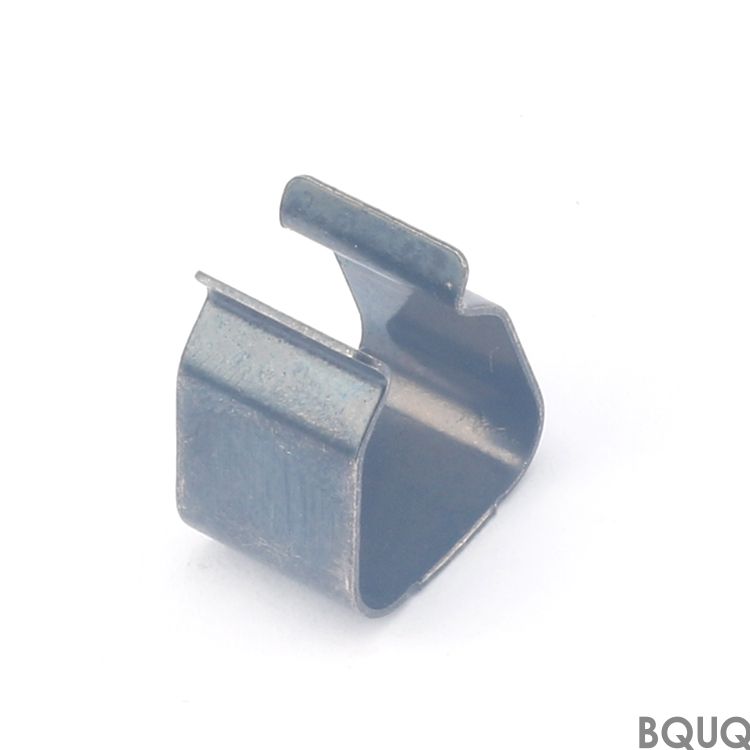
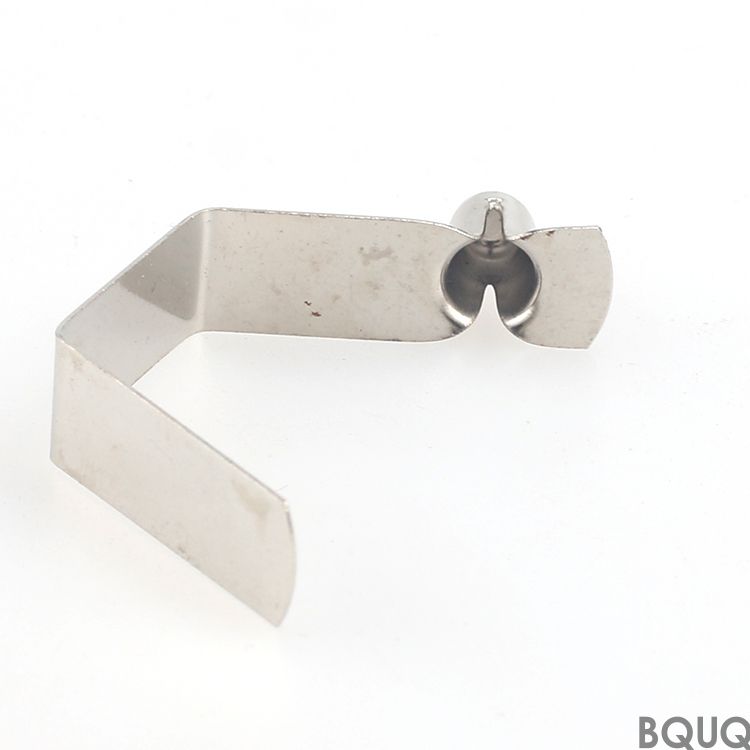
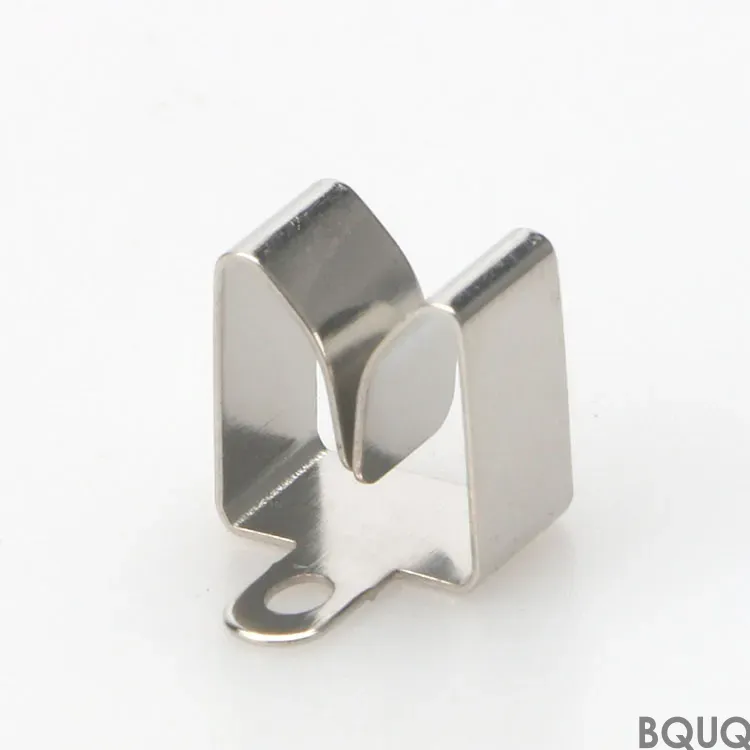
Electronic shielding cover/shrapnel: elastic and stable, consistent insertion and unplugging force, no oxidation and no brittleness
Connector terminal: high-precision bending, dimensional tolerance ±0.02mm, burr controllable
Radiator buckle/Fin piece: material does not tear, rebound consistent, smooth assembly
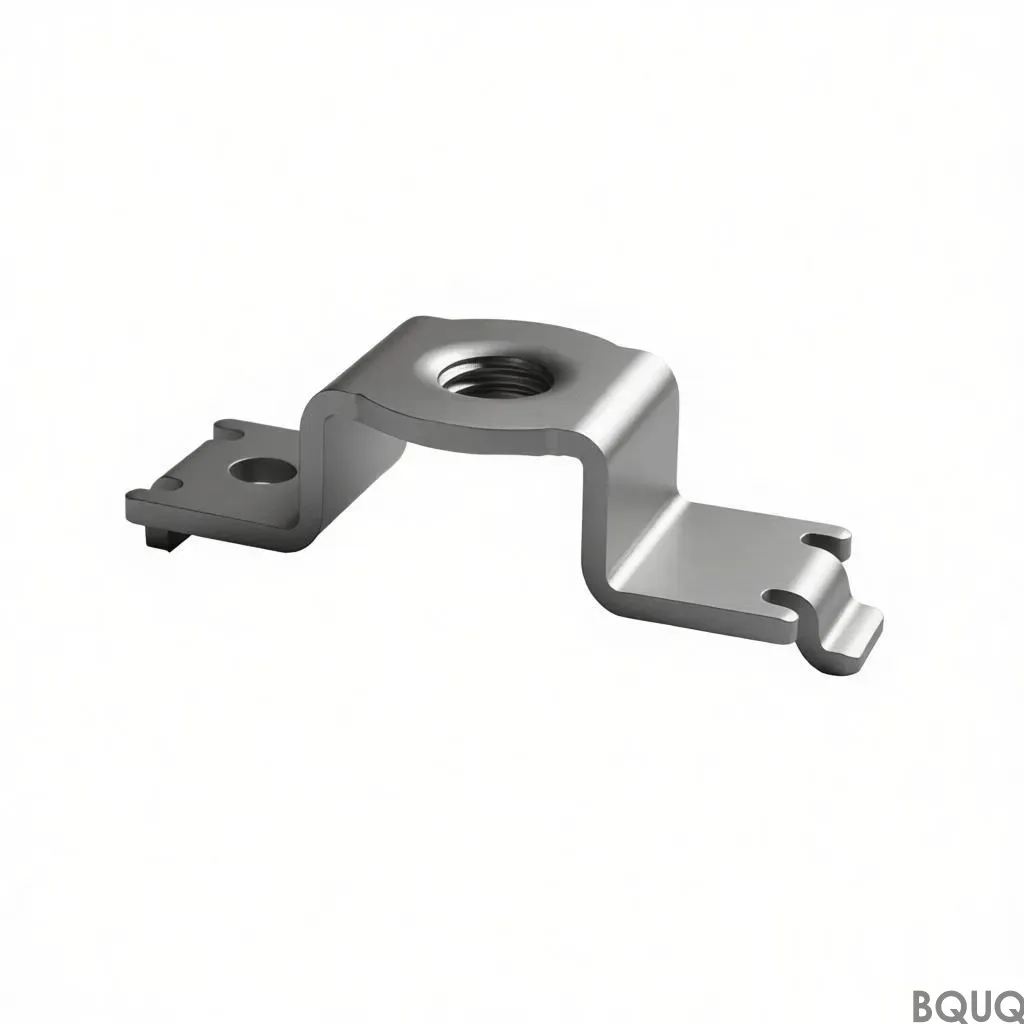
Robot structural bracket/support: high-strength steel stamping, flatness controllable, welding surface flat
Battery pole piece/bus: red copper/aluminum stamping, no burr, smooth conductive surface
. Visible quality bottom line
Mold steel: adhere to the specified grade, storage spectrum sampling, to prevent shoddy.
Stamping oil: special volatile stamping oil, the surface of the parts is clean and free of residue.
First piece confirmation: The first piece of each batch must be measured by three-coordinate full size, and the signature must be retained.
End piece comparison: At the end of the batch, the end piece is compared with the first piece to verify that the mold state is not attenuated.
Packaging standards: precision custom blister tray, anti-collision, anti-deformation, anti-mixing.
Cooperation process: four steps to make stamping parts no longer your anxiety
The first step is to send drawings: submit 3D/2D drawings and requirements, and the engineer will respond immediately.
The second step is to receive DFM: receive manufacturability analysis, mold plan and quotation within 4 hours.
The third step is to confirm the proofing: the mold opening period is [X] days, and the first sample is accompanied by a full-size report for your actual measurement.
The fourth step is mass production delivery: after the order is confirmed, the production is scheduled, delivered by node, and the report is accompanied.
. Frequently Asked Questions
Q: What is the minimum thickness of material you can punch? What is the maximum tonnage?
Answer: Our stamping equipment tonnage covers [25] tons to [180] tons, and the material thickness is from 0.1mm to 6.0mm. Please send drawings for evaluation, and we will give the most matching machine and mold plan.
Q: Who does the mold belong to? Will there be an extra charge?
Answer: The cost of the mold is clearly allocated or bought out according to the contract. If you buy out the mold, the ownership belongs to you, and the mold will be kept and maintained by us for free for life. If it is allocated according to the agreement, the mold fee will be exempted after the agreed stroke is reached.
Q: What should I do if there is a quality fluctuation after mass production?
Answer: The first and last data of each batch are archived, and the SPC process monitoring warns of abnormal fluctuations. If there is a quality problem caused by our manufacturing reasons, unconditional rework or compensation.
Q: Can multi-variety small batches be made?
Answer: Yes. We have a quick mold change system and a flexible scheduling mechanism, and the minimum order quantity is flexible. Welcome to send pictures for confirmation.
Let your stamped parts say goodbye to the "open blind box" between batches.
Send drawings now, get free DFM analysis, and experience the same stable quality of ten thousand times stamping.
parameter
List of commonly used materials for metal stamping parts
1. Cold-rolled steel sheet (SPCC/SPCD/SPCE)
SPCC: the most common cold-rolled steel, stamping forming good, inexpensive. Uses: electronic equipment chassis, brackets, shielding shell.
SPCD/SPCE: Deep drawing grade, suitable for stretch molding without cracking. Uses: motor end cover, deep cavity shell, complex drawing parts.
2. Stainless steel (SUS304/SUS301/SUS316)
SUS304: Most commonly used, corrosion-resistant and heat-resistant, non-magnetic after stamping. Uses: electronic shrapnel, spring clip, medical equipment bracket.
SUS301: can be strengthened by heat treatment, good elasticity, adjustable hardness. Uses: high elasticity contact piece, switch shrapnel, connector terminal.
SUS316: stronger acid and alkali resistance. Uses: semiconductor equipment parts, chemical environment structural parts.
3. Copper and copper alloys (electrically and thermally conductive)
Copper T2: high conductivity, good ductility. Uses: battery bus, conductive connector, heat dissipation substrate.
Brass H62/H65: easy stamping, wear resistance, electroplating. Uses: electronic connectors, terminals, heat sink fasteners.
Phosphor copper C5191: excellent elasticity, long fatigue life. Uses: precision spring, switch touchpoint, elastic connector.
Beryllium Copper C17200: Ultra-high elasticity and conductivity, heat treatable. Application: High-end contact shrapnel, sensor elastomer.
4. Aluminum alloy (lightweight heat dissipation)
AL5052: excellent stamping molding, corrosion resistance. Uses: electronic panel, chassis shell, shielding box.
AL6061: high strength, heat treatment, anodizing. Application: robot structure bracket, heat sink substrate, force frame.
AL1050/1060: pure aluminum, good electrical and thermal conductivity, very soft and easy to shape. Uses: heat dissipation fins, conductive busbar, battery pole pieces.
5. High-strength steel/alloy steel (resistance and wear resistance)
65Mn: high carbon spring steel, excellent elasticity after heat treatment. Uses: spring, elastic washer, high stress elastic.
SK5/SK7: carbon tool steel, high hardness and wear resistance. Uses: blade stamping parts, wear-resistant gaskets, tooling inserts.
42CrMo: high strength alloy steel, heat treatable. Uses: heavy-duty mechanical structural parts, high strength fastening brackets.
6. Special and rare metals (customized requirements)
Titanium alloy TC4: Ultra light, super strong, biocompatible. Uses: high-end medical apparatus, aerospace precision bracket.
Nickel alloy (INCONEL series): resistant to ultra-high temperature and extreme corrosion. Uses: aero-engine seals, deep-sea equipment parts.
Molybdenum/tungsten alloy: high temperature resistance, high density. Application: semiconductor packaging fixture, X-ray target parts.
Material selection guide
Need to conduct electricity? Red copper T2, brass H62 are preferred, and phosphor copper or beryllium copper are required for elasticity.
Need lightweight and corrosion resistance? Preferred aluminum alloy 5052 or 6061.
Need elastic and non-magnetic? Preferred stainless steel SUS301 or SUS304.
Need low-cost general-purpose parts? Cold-rolled sheet SPCC is preferred, and the surface can be galvanized/nickel-plated for corrosion protection.
Not sure what material is best for your product? Send us the drawings, and the engineer will recommend the material and reason within 4 hours based on the stamping process, cost and performance.