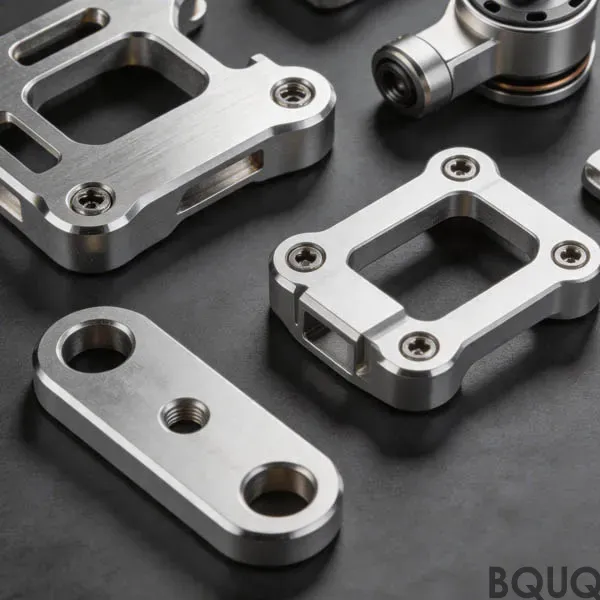
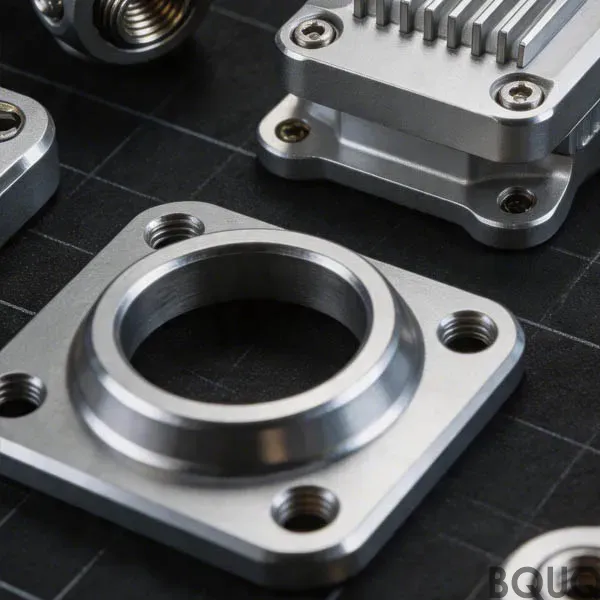
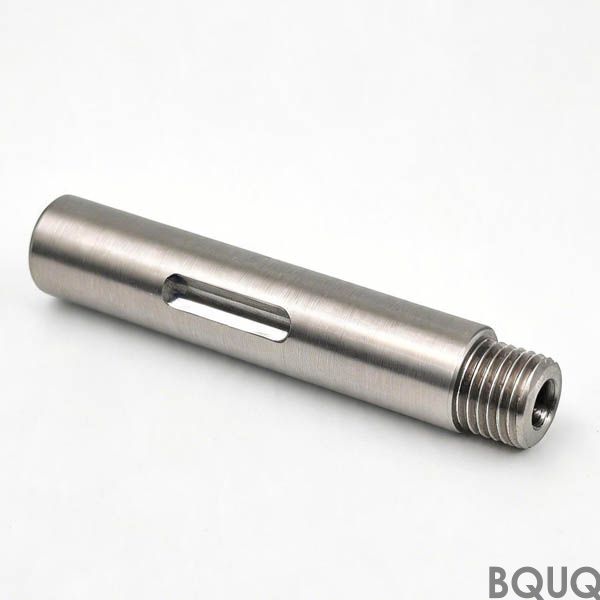
Complete guide to custom CNC machining: 3/4/5-axis differences, what to send for quoting, tolerance limits, material selection, supplier evaluation checklist, and China sourcing tips.
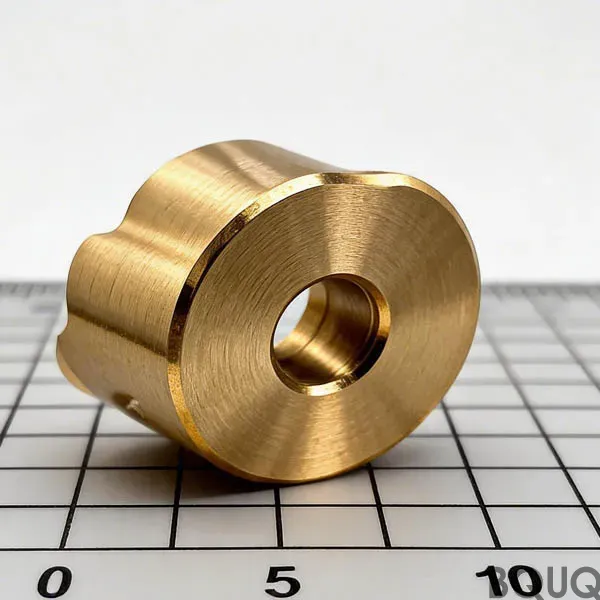
Custom CNC Machining Services: A Complete Guide for Engineers
# Custom CNC Machining Services: A Complete Guide for Engineers
*Last updated: August 2026 . Reading time: 10 minutes*
You have a part on your screen in SolidWorks or Fusion 360. Now you need someone to actually make it. The difference between a smooth sourcing experience and a three-month disaster is usually decided before you send the first email - by knowing what to ask for and who you are asking.
This guide is written from the supplier side. We have run a CNC shop in Dongguan, China for 20 years, and we have seen every mistake buyers make. Here is what you need to know.
---
## What "custom CNC machining" actually covers
CNC machining is a subtractive process: a computer-controlled spindle removes material from a solid block until only your part remains. The three main configurations:
| Machine type | Axes | Best for | Typical tolerance |
|--------------|------|----------|-------------------|
| 3-axis mill | X, Y, Z | Prismatic parts, brackets, housings | +/-0.02mm |
| 4-axis mill | + rotary axis | Parts needing indexed rotation, curved features | +/-0.02mm |
| 5-axis mill | + 2 rotary axes | Complex sculpted surfaces, impellers, molds | +/-0.01mm |
| CNC lathe | X, Z | Round parts: shafts, bushings, fittings | +/-0.01mm |
| Swiss lathe | Multiple | Tiny precision parts under dia. 20mm | +/-0.005mm |
**The single most important question to ask a supplier: "What machines do you actually run in-house?"** If a shop subcontracts everything, you lose control over quality and lead time.
---
## What to send when requesting a quote
We quote hundreds of parts every month. The RFQs that get answered fastest and most accurately contain:
1. **STEP or IGES file** (3D) - mandatory. PDF drawings alone force guesswork.
2. **2D drawing with GD&T** - critical tolerances, datums, surface finish symbols.
3. **Material specification** - full grade, e.g., "6061-T6" not "aluminum".
4. **Quantity** - actual or range. "250-300 pcs" is better than "some".
5. **Surface treatment** - anodize color, passivation, powder coat, nickel plate.
6. **Deadline** - realistic target date, not "ASAP".
7. **Quality requirements** - do you need a full inspection report? PPAP? Material certs?
**What slows everything down:** missing material, missing tolerance callouts, and STEP files exported at wrong units (mm vs inches). Check your export units before sending.
---
## Tolerances: what is normal, what is expensive
Most general machining is +/-0.1mm. Standard precision is +/-0.02mm. High precision is +/-0.005mm. Beyond that - +/-0.002mm or less - you are in grinding territory, not milling, and the cost jumps accordingly.
| Feature | Achievable in CNC milling | Notes |
|---------|--------------------------|-------|
| Linear dimension | +/-0.005-0.01mm | With temperature-controlled shop |
| Hole position | +/-0.01mm | Depends on machine rigidity |
| Hole diameter (reamed) | +/-0.005mm | Reaming or boring required |
| Flatness (100mm face) | 0.01-0.02mm | Stress-relieved material helps |
| Surface finish | Ra 0.4um (machined) | Below that = polishing/lapping |
A trustworthy supplier will tell you what they can hold *reliably*, not what they can hold *once*. Ask: "What tolerance can you guarantee on every part in the batch?" - and ask to see their inspection report format.
---
## Material selection for CNC parts
| Material | Machinability | Strength | Corrosion | Typical applications |
|----------|---------------|----------|-----------|---------------------|
| Aluminum 6061-T6 | Excellent | Good | Good | Enclosures, brackets, general parts |
| Aluminum 7075-T6 | Good | High | Good | Aerospace, high-stress parts |
| Stainless 303 | Good | Medium | Excellent | Fittings, fasteners |
| Stainless 304 | Fair | Medium | Excellent | Food, medical, general |
| Stainless 316 | Fair | Higher | Best | Marine, chemical, pharma |
| Brass C360 | Excellent | Medium | Good | Electrical, valves, decorative |
| Steel 1018 | Excellent | Medium | Poor (coat) | Shafts, low-cost structural |
| Steel 4140 (HT) | Good | High | Poor (coat) | Gears, shafts, tooling |
| POM / Delrin | Excellent | Low | N/A | Plastic gears, bushings |
| PEEK | Fair | High | N/A | High-temp, medical, aerospace |
**Machinability matters more than raw material price.** Brass and 6061 machine fast; titanium and hardened steel machine slow. A part that is 3x more expensive in material can be 5x more expensive in machining time.
---
## How to evaluate a CNC supplier (checklist)
1. **Ask for machine list** - real brands (Hass, Fanuc, Mazak, or equivalent), counts, axis types.
2. **Ask for inspection equipment** - CMM, height gauges, optical comparators. No inspection equipment = no control.
3. **Ask for sample inspection reports** - a real supplier has them ready to show.
4. **Ask for batch traceability** - how do they track material lot, operator, machine, date?
5. **Ask about communication** - who answers your emails? An engineer, or a sales person who forwards everything?
6. **Order a test part first** - always. Small order, evaluate quality, then scale up.
7. **Check the factory address** - do a Google Maps street view check. The number of "factories" that are actually trading offices is higher than you think.
---
## The China advantage (and how to use it)
China's CNC ecosystem is unmatched for cost-to-quality at scale. The same part that costs $40 in the US typically quotes at $15-20 from a good Dongguan shop, including the same machines and inspection standards.
What makes it work:
- **Complete supply chain in one city** - Dongguan has anodizing, plating, heat treatment, and stamping shops within 30 km. No shipping parts to a second vendor across the country.
- **Fast prototype turnaround** - 3-5 days for simple parts is normal.
- **Production flexibility** - shops are comfortable with 10-piece prototypes and 10,000-piece production runs.
The risk is not quality - it is communication and process control. That is why we built our quote process around a simple promise: **send the STEP file, get a formal quote in 12 hours, and get the part with a full inspection report.**
---
## Typical lead times
| Order type | Lead time (Dongguan) |
|------------|---------------------|
| Prototype (1-20 pcs) | 3-7 days |
| Small batch (20-200 pcs) | 7-14 days |
| Production (200-2,000 pcs) | 14-25 days |
| Large production (2,000+) | 25-45 days |
| Rush prototype (48h) | +50-100% surcharge |
Air freight from Shenzhen to the US West Coast: 3-5 days. Sea freight: 18-25 days.
---
## Final advice
The best way to evaluate us - or any supplier - is to send one real part. Not a hypothetical, not a "what if". One actual part with your drawing, your tolerance, your material. The quote and the sample will tell you everything.
**Send your STEP file to sc@bquq.com and get a formal quote within 12 hours.** We run 3/4/5-axis CNC with +/-0.005mm process control, in-house inspection, and 20 years of serving US and European customers.
Email: sc@bquq.com . WhatsApp/WeChat: +86 13713157787 . www.bquq.com
*Keywords: custom CNC machining, CNC machining services, CNC machine shop China, precision CNC parts, 5-axis CNC, CNC machining supplier*
Frequently Asked Questions
What is the typical tolerance for custom CNC machining services?
Tolerances vary by machine type. 3-axis and 4-axis mills typically achieve +/-0.02mm, 5-axis mills and CNC lathes reach +/-0.01mm, and Swiss lathes can hold +/-0.005mm for tiny parts under 20mm diameter. Always confirm the specific tolerance for your part's critical dimensions.
What files should I send to get an accurate quote for CNC machining?
Send a STEP or IGES 3D file, which is mandatory, along with a 2D drawing with GD&T showing critical tolerances, datums, and surface finish symbols. Also specify the material. PDF drawings alone force guesswork and slow down the quoting process.
Why is it important to ask what machines a CNC supplier runs in-house?
If a shop subcontracts all its work, you lose control over quality and lead time. Asking 'What machines do you actually run in-house?' ensures the supplier has direct control over production, which is critical for maintaining consistent quality and meeting delivery schedules.
What types of parts are best suited for a 5-axis CNC mill versus a Swiss lathe?
5-axis mills are best for complex sculpted surfaces, impellers, and molds, achieving +/-0.01mm tolerance. Swiss lathes are ideal for tiny precision parts under 20mm diameter, holding +/-0.005mm. Choose based on your part's geometry and size requirements.