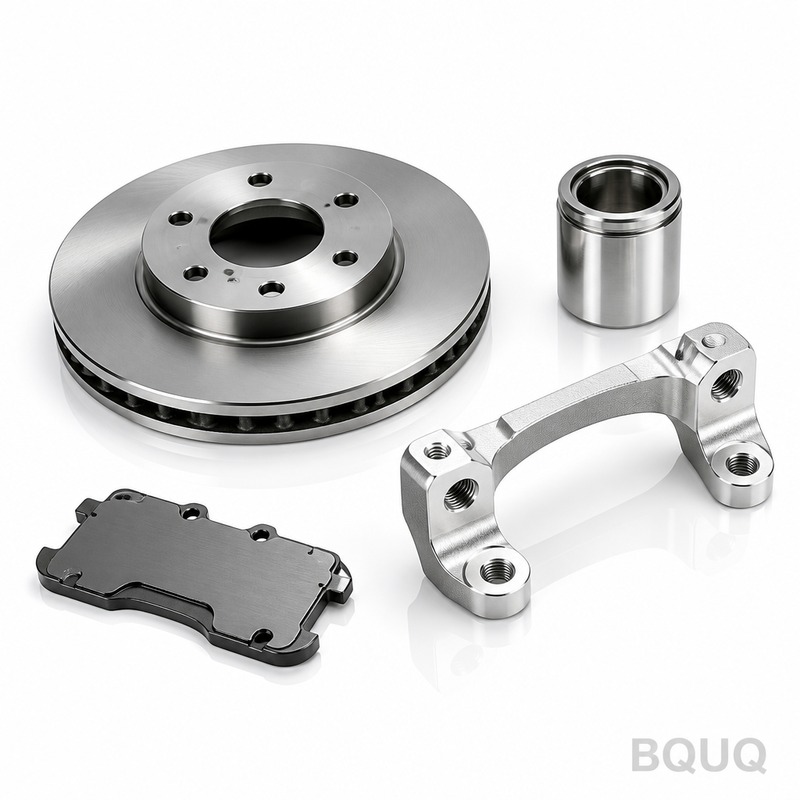
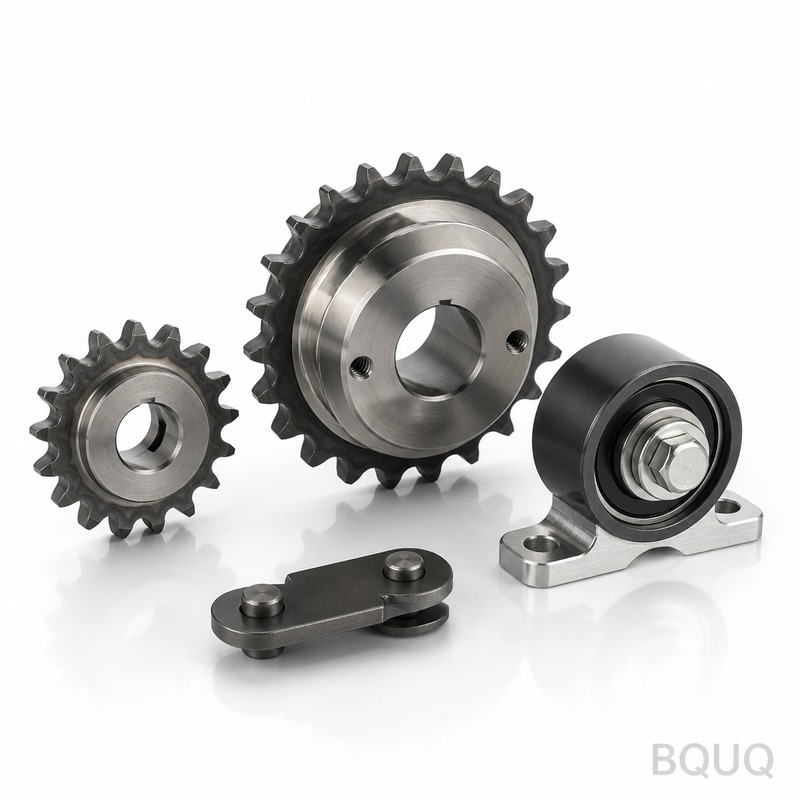
BQUQ FAQ page answers common questions about CNC machining, CNC turning/milling, precision components, hardware stamping parts, compression/torsion/extension springs, ER collet chucks, auto lathe collets, and aluminum/copper heat sinks. Learn how Dongguan ZuanXin Plastic Hardware supports custom parts from drawings or samples, tight tolerances, surface treatment, inspection, low-volume prototyping, mass production, and global shipment for electronics, automotive, industrial, and thermal management applications.
General & Quotation
Are you a factory or a trading company?+
Dongguan Zhixin Hardware (BQUQ) is the source factory, located in Dongguan. Four production lines are in one plant: CNC machining, metal stamping, springs, and heat sinks. Stamping presses and CNC workshops are our own. Only surface treatment (anodizing, plating, etc.) is outsourced to local certified partners, with our QC overseeing. Factory tours are welcome. Video tours are also available.
What do you need from me for a quote? How soon can I get it?+
Send drawings for the fastest response: STEP/STP/IGS/DXF/DWG all work. A 3D model plus a 2D drawing with dimensions and tolerances is ideal. No formal drawing? Send a physical sample or clear photos with dimensions. For quoting, include: material, quantity, tolerance requirements, and surface finish. You get a quote within 12 hours of receiving drawings. Complex parts take 24-48 hours max. Email sc@bquq.com, WhatsApp +86 13713157787.
What is the minimum order quantity (MOQ)? Do you support prototyping and small batches?+
It depends on the process. CNC has no hard MOQ. One piece is fine. Small-batch prototyping of 1-50 pieces is our daily work. For stamping with existing tooling, 50-200 pieces is doable. New tooling requires a trial run quantity based on tool condition. Mass production generally starts at 2000 pieces. Smaller quantities mean higher unit price because tooling amortization costs don't drop. Sample fees and production fees are listed separately in quotes. No ambiguity.
What are the lead times for samples and mass production?+
CNC prototyping: 3-7 working days standard. Stamping samples with existing tooling: 4-8 days. New tooling: 12-20 working days for the tool itself, depending on complexity. After sample approval, mass production takes 14-25 working days. This depends on order volume, material stock, and surface treatment scheduling. International shipping time is not included. Rush orders are possible, but scheduling depends on shop capacity. If a deadline is not achievable, I will tell you directly. No false promises.
What drawing formats do you accept? Can you work from a physical sample only?+
STEP, IGS, STP, DXF, and DWG are preferred. A 3D model plus a 2D drawing with dimensions and tolerances gives the fastest, most accurate quote. A physical sample alone is acceptable. Send it over, and we will do reverse engineering. But for mass production, CAD data is strongly recommended. Without a 2D dimensioned drawing, we cannot guarantee dimensional consistency for batch parts. A PDF drawing alone is not enough for quoting. Dimension information is incomplete.
What are your payment terms?+
For new customers, standard terms are 30% deposit to start production or tooling, and 70% before shipment. Mainly T/T wire transfer. Long-term stable customers can discuss credit terms separately. For rush or export orders, letters of credit are possible. Details depend on the project.
Can you sign an NDA? Will my drawings be leaked?+
Yes, we accept customer NDAs. Drawings, samples, and project information are not shared with third parties. They are stored internally. No public case display without your written consent. Send your drawings with confidence. Confidentiality is the bottom line in this industry. One leak and no one would do business with us again.
How do you ensure quality? Do you have ISO certification? Can you provide inspection reports and material certificates?+
We follow ISO 9001 system procedures: 100% first-article inspection after setup, in-process sampling during batch production, and final inspection before shipment. Measuring tools include calipers, micrometers, and height gauges. CMM is available for precision parts. FAI (First Article Inspection) reports are issued on request. Material certificates (MTC) are passed along from material suppliers. RoHS-compliant materials are available. REACH can be arranged if specified at the RFQ stage. Third-party full inspection reports are possible at an additional cost.
CNC Machining
What tolerance can CNC machining hold?+
Stable mass production tolerance is ±0.005mm. We control the full process for small to medium parts and include inspection reports with every batch. Not every feature can hit the limit—ultra-tight tolerances depend on part geometry; some structures deform during clamping, so forcing tight tolerances wastes money. Mark critical dimensions on your drawing, and we'll suggest tolerances based on functional needs. You won't pay for precision you don't use.
What materials can CNC machine?+
We regularly machine stainless steel 304/316, cold-rolled steel, spring steel, aluminum 6061/6063/7075, brass, and copper. Special alloys depend on material lead time; we don't handle high-temperature alloys unless you supply the material. Copper is soft and needs special clamping to prevent deformation—we have proven processes for it.
How do I choose between CNC machining, stamping, and 3D printing?+
In short: it depends on volume and shape. Stamping suits thin sheet parts with high volume (thousands or tens of thousands), but requires tooling. CNC suits complex 3D structures, prototypes, and low volume—no tooling needed, even one piece works. 3D printing suits very complex internal cavities in plastic or prototypes; metal printing is costly and accuracy falls short of machining. Some parts work with either process—send your drawing, and we'll recommend the most cost-effective route based on volume and structure.
What's the minimum wall thickness for CNC thin-wall parts?+
For most metals, the CNC wall thickness limit is 0.8-1.0mm. Below that, vibration increases and deformation risk rises, hurting yield. Aluminum is more forgiving; stainless steel thin walls are tough. If your drawing specifies thinner walls, our DFM feedback at the quoting stage will flag the risk and offer alternatives—we won't take on jobs we can't deliver.
Which design features drive up CNC costs?+
Four main culprits: internal sharp corners (need small tools and slow feeds to clean out), deep narrow slots (chip evacuation is hard and tools break), ultra-thin walls (vibration causes high scrap rates), and tight tolerances across the whole drawing (doubles machining and inspection time). Fixes: add R corners, keep slot depth-to-width ratio within 3:1, and apply tight tolerances only to functional critical dimensions. Send your drawing for free DFM—we'll flag which features are burning money.
Is DFM design review free? Can you optimize my drawing?+
Yes, it's free. After we receive your CAD drawing, our engineering team performs a manufacturability review, flagging machining risks, cost-driving features, and tolerance suggestions—before tooling or production starts. We give process-level advice, but we don't make design decisions for you—function is yours to define; cost savings are ours to deliver.
What surface finishes are available for CNC parts?+
We offer anodizing (natural, black, or colored), electroplating, zinc plating, passivation, powder coating, polishing, brushing, deburring, and laser marking (logo, serial number, or part number). Surface finishing is done by local partner shops, with our QC overseeing the full process. Add 3-7 days to lead time. Note: anodizing and electroplating add film thickness, so reserve coating allowance on critical dimensions—our engineers will remind you at quoting.
Can you handle urgent CNC orders?+
Yes, depending on shop floor scheduling. Mark your deadline clearly when sending the drawing. If we can do it, we will; if not, we'll tell you straight—we don't promise deadlines we can't meet. Rush orders typically jump the queue, so unit price is higher—you pay for speed, and it's clearly priced.
Metal Stamping
What tolerance can you hold for stamped parts?+
Standard stamping tolerance is ±0.03-0.08mm, depending on material thickness and die design. Thin materials and simple geometries are more stable. For precision stamping within ±0.02mm, we need to evaluate die grade and material—not all parts can achieve this. Mark your critical dimensions on the drawing, and we'll quote based on actual capability. We flag any limitations upfront.
How much do dies cost? Who owns them?+
Die cost depends on cavity count, part complexity, and material. Simple single-operation dies start at a few thousand RMB; progressive dies range from tens of thousands to hundreds of thousands. We need drawings for an accurate quote. Standard practice: customer pays for the die, owns it after full payment, and we store it free for 2-3 years for production. Exceptions are documented separately. Die ownership must be clearly stated at the quoting stage to avoid disputes later.
What is the die lifespan?+
It depends on material and maintenance. For regular cold-rolled steel, progressive dies commonly achieve 500K-1M strokes. Stainless steel and hard materials wear faster, reducing lifespan. Dies need regular sharpening and maintenance—typically every 50K-100K strokes. Maintenance costs are usually 5-10% of die cost. We provide expected lifespan and maintenance schedules before you order. Treating dies as disposable consumables ends up costing more.
Stamping vs CNC—which is cheaper? At what volume should I invest in tooling?+
Look at total cost: amortize die cost per part. Below a few thousand parts per year, stamping may not be cost-effective—laser cutting plus CNC bending could be cheaper. Above 10K-20K parts per year, stamping unit cost drops sharply, and the die pays back within months. Industry breakeven is typically 3K-7K parts per year, depending on the part. Share your annual volume, and we'll quote both processes for comparison. We don't push tooling unless it makes sense.
Can you do progressive dies? Fine blanking?+
Progressive dies are our core capability—multi-station, single-pass forming for high-volume complex parts with high efficiency and stability. For fine blanking, our capacity is limited; it requires dedicated fine blanking presses and dies. We have partner resources but will disclose this upfront. We take on what we can deliver; we don't overpromise.
Can you completely remove burrs?+
Burrs come from die clearance, wear, and material properties. We perform deburring, but 100% burr-free on every edge is not realistic—no one in precision parts can guarantee that. Specify allowable burr direction and size on the drawing, and we'll control it consistently to standard. Review samples before mass production; lock the burr standard at the sample stage.
Does surface treatment affect stamped part dimensions?+
Yes. Anodizing and plating add a material layer—film thickness ranges from a few microns to tens of microns—which affects critical fit dimensions. Either reserve plating allowance in design or control post-treatment dimensions. Our engineers flag which dimensions are affected by coating during the quoting stage. We address this issue before it becomes a problem.
Can the drawing be changed after tooling is made?+
Minor changes are possible with die modification—extra cost and time. Major structural changes typically require new tooling. We lock critical dimensions with you before tooling. Modification costs start at 30% of die cost, and lead time is measured in weeks. We strongly recommend finalizing production drawings before tooling—every dollar saved on die changes is profit.
Custom Springs
What parameters are needed to order custom springs?+
Eight parameters are usually enough: wire diameter, outer diameter (or inner diameter), free length, total coils/active coils, end type (closed and ground/closed not ground/open), material, working load or stiffness (N/mm), and operating environment. Missing parameters? No problem. Send a sample or photo and we will reverse-engineer it. Many customers bring a broken spring and we replicate it exactly.
What types of springs can you make?+
Compression springs, extension springs, torsion springs, tactile springs, battery springs, and shaped wire forms. Small tactile springs and battery contact springs for consumer electronics are our common work—high volume and consistent. We also make precision springs for automation equipment. Wire diameter range 0.1–10 mm is standard; larger sizes depend on equipment.
How do I choose the right spring material?+
It depends on the application. For normal environments, carbon spring steel (65Mn type) is economical. For humidity or mild corrosion, use 304 stainless steel. For seawater, chemical, or medical use, choose 316. For high temperature or heavy loads, use alloy steel (50CrVA, 60Si2Mn). RoHS materials are available. Wrong material means early failure; over-specifying wastes money. Tell us the environment (temperature/humidity/contact media/life requirement) and we will help you select.
How is spring life tested? How is fatigue testing done?+
Spring design uses fatigue life curves. For critical applications, we run cycle tests on a fatigue testing machine simulating actual load frequency and stroke, and provide a life report. Standard springs are controlled by design stress margins and accepted per industry standards (DIN/ISO/JIS or your specified standard). If fatigue life is required, state it during inquiry. We design and select material for your cycle requirement—no gambling on life.
What is the difference between ground and unground spring ends?+
Closed and ground ends are flat, giving stable vertical positioning and uniform perpendicular force—essential for precision assembly. Unground ends cost less and suit applications with low flatness requirements. The price difference is small, but the functional difference is significant. Specify ends by drawing or sample—don't leave it to default.
What tolerances can you hold on springs?+
Springs are elastic parts. Dimensional tolerances follow DIN 2095/2096 or your specified standard, with grades. Stiffness tolerance is typically ±5–10%. Dimensional tolerances depend on wire diameter and spring index. Don't apply rigid-part thinking to elastic parts—free length, stiffness, and outer diameter each have their own standards. Send us your assembly requirements and we will set tolerance grades by function, not blindly tighten.
Can you make small springs like tactile springs and battery springs?+
Yes. These are our common products, used in remote controls, TWS earbuds, smart locks, and small appliances. Small wire springs demand high coiling equipment precision and consistency. We produce these in volume with inspection on every batch. Specify contact position and plating (gold/nickel) on the drawing. Validate feel and force with samples before mass production.
What are the lead times for spring samples and mass production?+
Standard non-standard spring samples take 3–7 working days. Special materials or complex shapes take 7–15 days. After approval, mass production takes 7–15 working days, depending on quantity. Low-volume trial runs of 100–500 pieces are flexible. Lower minimum order quantities mean higher unit prices. For R&D stages, we support small-batch validation.
ER Collets & Machine Tool Collets
What is the runout accuracy of ER collets?+
Standard ER collets hold runout within 0.01-0.015mm. Precision grade achieves 0.005mm. Runout depends on the collet, lock nut, and holder taper bore working together. For high-precision applications like finish milling or drill reaming, use precision collets and verify actual clamping runout. We test every collet for runout before shipment and provide a report.
How do I confirm ER collet compatibility with my holder and spindle?+
Match three numbers: ER size (ER8/ER11/ER16/ER20/ER25/ER32/ER40), clamping diameter range, and taper angle (8° for ER series). Send us your holder model or spindle interface (BT/HSK/SK etc.) and the tool shank diameter. We will match it for you. Wrong specs are the most common low-level mistake in this industry.
What ER collet sizes can you make?+
We make the full ER8 to ER40 range, covering clamping diameters from 1-26mm (ER40 max 26mm). Standard sizes are in stock. Non-standard bore diameters can be customized. Fast-moving stock: ER11, ER16, ER20, ER25, ER32.
What material are the collets made of?+
Collet bodies use 65Mn spring steel or alloy steel, ground after heat treatment to ensure clamping elasticity and precision retention. For corrosion resistance or premium use, we use stainless steel. Nuts are hardened alloy steel. Material and heat treatment directly determine how long runout stays stable. We do not cut corners here.
What if my collet rusts or wears out?+
Light rust can be removed by derusting and polishing. But if slots are worn or clamping precision drops, replace it. Collets are consumables. Precision parts are not worth using when compromised. A scrapped tool costs more than a new collet. Clean and rust-proof regularly with dedicated collet oil. Do not soak in cutting fluid. For high-volume users, we recommend 2-3 spare sets per holder for rotation.
Can you make power chucks? What is the accuracy?+
Yes, we make power chucks and matching jaws. Chuck accuracy follows manufacturer standards. Standard chucks hold 0.02-0.05mm clamping accuracy. High-precision applications with soft jaws and self-boring can achieve better. Power chucks involve safety. We manufacture to standard, run clamping force tests, and ship with reports. No shortcuts here.
Can collets be customized for non-standard specs?+
Yes. Non-standard bore diameters, special collet lengths, and special thread nuts can all be customized. Non-standard parts usually require dedicated tooling, so MOQ and lead time are longer than standard. We clarify this at the quotation stage. Use standard sizes whenever possible. They are cheaper and faster.
What is the lead time for collets?+
Standard sizes ship in 1-3 days from stock. Regular custom sizes take 7-15 days. Non-standard custom parts depend on tooling lead time. Collets are consumables. We recommend stocking inventory. We set up safety stock plans for long-term customers. A line stoppage costs far more than holding spare stock.
Heat Sinks
What materials are used for heat sinks?+
Aluminum is the main choice. 6063 extruded aluminum is most common—good thermal conductivity and can form complex cross-sections. 6061 is used for CNC-machined heat sinks where higher strength is needed. Pure aluminum or 6063 stamped fins suit light-load applications. Copper offers the best thermal performance but is costly and heavy, typically reserved for high-end or space-limited designs. We handle many heat sinks for consumer electronics, power supplies, and LEDs. Share your power dissipation and space, and I'll recommend the material.
How do I choose between extruded, CNC, and stamped heat sinks?+
It depends on shape and volume. Aluminum extrusion suits long profiles with consistent cross-sections—lower tooling cost and cheap at scale. CNC machining fits irregular shapes, mounting features, and small batches without tooling. Stamped fins work for thin, dense fin patterns in light-load, high-volume cases. LED heat sinks often combine extrusion with CNC post-machining. Send your drawing, and we'll propose a solution based on structure and quantity.
Can heat sinks be anodized? What colors are available?+
Yes. Anodizing improves appearance, increases surface emissivity (black finish aids radiative cooling), and boosts corrosion resistance. Natural, black, silver, gold, and other colors are possible, with typical coating thickness of 8–25 microns. Note: anodizing is insulating. If electrical grounding is needed, mask areas or leave conductive spots—mark them on the drawing.
How is cooling performance evaluated? What is the thermal resistance?+
Cooling performance is measured by thermal resistance (°C/W)—lower is better. Evaluation requires power dissipation, allowable temperature rise, airflow or natural convection conditions, and ambient temperature. We can provide thermal design advice based on your operating conditions: fin height, fin spacing, and base thickness. Natural convection needs wider fin spacing; forced air allows denser fins. A thermal simulation model is ideal, but if you don't have one, we'll use empirical formulas for design suggestions and verify with sample testing.
What machining tolerances do heat sinks have?+
Heat sinks are functional parts, not precision fits. Key tolerances are on mounting surfaces: base flatness where it contacts the heat source is typically 0.05–0.1 mm (for surfaces with thermal paste), and mounting hole positions are ±0.1 mm standard. Fin dimensions don't need tight control—standard tolerances suffice. Invest precision in contact surfaces and holes, not fins; tight specs on fins just add cost.
Can you make custom-shaped heat sinks? What's the tooling lead time?+
Yes. For custom shapes, we often combine extrusion with CNC post-machining—the die only creates the base profile, and CNC handles complex features, saving tooling costs. Pure extrusion dies take 2–4 weeks; adding CNC post-machining for samples takes 1–2 weeks more. For low-volume custom parts, we machine them entirely from solid aluminum without tooling—even dozens of pieces are feasible.
How do you estimate weight and cost for heat sinks?+
Weight equals aluminum density (2.7 g/cm³) times volume; quoting is based on actual material usage from the drawing. Main cost drivers: material (extrusion priced by weight per meter), tooling (if new), post-machining labor, and surface treatment. Taller fins mean more material; base thickness affects both thermal resistance and cost—using only the thickness you need saves money. Send your drawing, and I'll break down costs by your volume—you'll see exactly where the expense is.
What are the lead times for heat sink samples and production?+
CNC-machined samples without tooling take 3–7 days. Extrusion with new tooling takes 3–5 weeks for samples (2–4 weeks for die plus sampling). Stamped fins with existing dies take 4–8 days; new dies take 12–20 days. After sample approval, production runs 14–25 days, depending on volume and surface treatment scheduling. For LED or power supply clients with tight project deadlines, expedited orders are negotiable.
Quality & Compliance
Are you ISO 9001 certified? Can you share your certificate?+
Yes, we are ISO 9001 certified, and the certificate is published on our website. Quality runs on ISO 9001 procedures: first-article inspection after setup, in-process sampling during the run, final inspection before shipment. We can share the certificate copy and our inspection reports before you place an order.
Do you have IATF 16949 or automotive-grade qualification?+
We are ISO 9001 certified and regularly produce stamping terminals and precision parts that go into automotive electronics supply chains. We do not hold IATF 16949, and we will not pretend we do. If your program strictly requires an IATF-certified supplier, tell us up front and we will advise honestly whether we fit or recommend an alternative.
What compliance documents can you provide for EU and US imports (RoHS, REACH, CE)?+
For metal parts we can provide RoHS and REACH declarations, material certificates (MTC) from the mill, and finish-related documentation such as plating thickness or anodizing specs. CE applies to finished products, not to contract-manufactured components, so it depends on what you assemble; tell us your target market and we list exactly which documents we can issue.
Can you arrange third-party inspection, like SGS or TUV?+
Yes. Third-party inspection before shipment is welcome, arranged by you or by us at your cost. We host inspectors at our plant in Qiaotou, Dongguan, and our in-house equipment includes a CMM, two 2D optical projectors, and a salt spray tester for the pre-inspection stage. You also get our FAI report with the first batch.
Can you provide material certificates and batch traceability?+
Yes. Every batch carries the material certificate from our mill supplier, and we keep batch records that link the material lot number to the production order and the inspection result. If a part ever fails in the field, we can trace it back to the batch and the raw material within the same working day.
What inspection equipment do you have in-house?+
CMM (coordinate measuring machine), two 2D optical projectors, a salt spray tester, plus the usual micrometers, calipers and height gauges. For springs we can run load and fatigue checks against your specification before shipping. Dimensional reports are standard with every batch.
What happens if parts arrive and do not meet the drawing?+
First we check the evidence: your drawing, our FAI report and photos. If it is our manufacturing fault, we rework or remake at our cost and ship the replacements, including freight. We keep the failed batch for failure analysis so the same issue does not repeat. Quality terms are written into the PI so there is no ambiguity.
Do you provide FAI (First Article Inspection) reports?+
Yes, FAI reports are provided on request, usually with the first batch or before mass production starts. We can follow your company's FAI template or PPAP-level formats if your customer requires them. Standard reports include critical dimensions, material confirmation and surface finish measurements.
Industries & Applications
Which industries do you serve?+
We serve mostly OEMs and distributors in consumer electronics, automotive electronics, communications equipment, home appliances and industrial automation. Typical parts: stamped terminals and contacts, springs for small devices, CNC-machined housings, shafts and brackets, and metal heat sinks. Most of our export business goes to North America and Europe.
Have you exported to the US and Europe? What do you ship there?+
Yes, North America and Europe are our main export markets. We ship stamped terminals and contacts, custom springs, CNC-machined parts and heat sinks to customers there on a regular basis, under EXW, FOB or CIF terms. We are used to US and EU drawing standards and their packaging and documentation requirements.
Do you make stamped terminals and contacts? What types?+
Yes, stamped terminals and contacts are one of our core products. We make connector terminals, socket contacts, spring contacts, shrapnel contacts and busbar-style parts from brass, copper, phosphor bronze and steel strip, mostly with progressive dies on our stamping line. Send the drawing or a sample; we will quote within 12 hours.
Can you make tiny springs for TWS earbuds, smart locks and small devices?+
Yes, small springs are our specialty. We make touch springs, battery springs and coil springs with wire diameters from 0.1 mm up, used in TWS earbuds, smart locks, remote controls and home appliances, on 20 CNC spring machines. For plated contacts (gold or nickel), specify it on the drawing and we validate the force and feel on samples before mass production.
Do you machine precision parts for automation and robotics?+
Yes. Our CNC line runs on DMG MORI and Mazak machines, 20 units combined, with four- and five-axis capability. We machine robot joints, shafts, housings and structural parts in aluminum 6061/7075 and stainless 304/316 at stable tolerances down to ±0.005 mm. Robotics and automation projects are regular work for us.
Can one factory handle my multi-process part (stamping + spring + CNC + heat sink)?+
Yes, that is exactly how our factory is built: stamping, springs, CNC and heat sinks are four lines under one roof. A part that needs a stamped shell, a spring contact and a machined bracket can be quoted, produced and inspected in one place. One PI, one quality system, one person responsible for your project.
Do you work with brands, distributors or trading companies?+
All three. We supply OEM brands directly, and we also work with distributors and trading companies in Europe and North America. We protect your market and your customers: we do not sell competing products under our own brand, and your drawings stay confidential under NDA.
We are a startup and our design changes often. Can you handle that?+
Yes, and this is where a source factory helps. CNC prototypes start at 1 piece with 3-7 working day lead time, and we give free DFM feedback on every revision so you fix cost drivers before they hit production. We keep the process and program files updated across revisions, so later batches match the final approved drawing.
Cost & Pricing
Why do quotes from different suppliers vary so much for the same part?+
Usually because the quotes are not actually for the same thing: different tolerances assumed, different surface treatment included or not, different material grade, mold cost included or amortized differently, and different inspection scope. Compare the full specification, not the price line. Ask each supplier what tolerances and documents are included, then the gap shrinks fast.
How is the tooling cost reflected in my unit price?+
Two standard ways. Option A: you pay the tooling separately, the tool is yours, and unit price stays low. Option B: we amortize the tooling into the unit price over an agreed order quantity, and you own the tool after the tooling cost is fully paid through orders. We put the chosen model in writing in the quotation so there is no surprise later.
How can I lower my unit price?+
Four levers that actually work: larger annual quantity (the mold amortization drops fastest), standard material grades instead of special ones, tolerances only on functional dimensions, and combining several parts into one order to share setup and logistics. Repeat orders also get faster because the tool and programs already exist. Tell us your real annual volume and we show you the price curve.
Do you charge for samples?+
For CNC parts, 1-50 piece prototype runs are our daily work and are charged at a small fee that is credited back once you place the production order. For stamping, if the part needs a new die, the sample cost depends on whether we build a simple trial die or use the production die. We always list sample and production costs separately in the quotation.
How long is your quotation valid?+
Standard quotations are valid for 30 days. If the material is a special alloy or the price of copper, brass or stainless steel moves sharply, we may note a shorter validity or a material adjustment clause. The currency is fixed at the exchange rate used on the quotation date.
What shipping terms do you support?+
EXW, FOB and CIF are our standard terms; DDP is possible for small parcels depending on the destination country. We work with your forwarder or arrange shipment ourselves. Sea freight lead times are not included in our production lead times, so plan the two separately.
How do I get your best price?+
Send a complete drawing with material, quantity, tolerances and finish specified, and give us the real annual volume. The more complete the spec, the less contingency we need to build into the price. And beware of quotes far below the market: in this industry a price too good to be true usually comes back as extra charges or quality problems later.
Are your prices negotiable?+
Within reason, yes, and we would rather negotiate openly than silently cut quality. The room depends on quantity, payment terms and whether we can standardize the process. We will tell you honestly what we can adjust and what is fixed, because a price that leaves no margin ends in quality problems for both of us.
Sourcing from China & Trust
How can I verify you are a real factory, not a trading company?+
Three ways, all free. Ask for our business license and ISO 9001 certificate; we send them with the quotation. Book a video walk-through of the workshop, which we do regularly. Or visit us in person: Building 1, No. 311 Swan Road, Qiaotou Town, Dongguan. We have been manufacturing here since 2005, and the equipment list on our website matches what you will see on camera.
What is the process from first contact to delivery?+
Six steps: 1) you send the drawing and spec; 2) we reply with free DFM feedback and a quotation within 12 hours; 3) you confirm and we make samples in 3-7 working days (CNC) or 4-8 days (stamping with existing dies); 4) you approve samples; 5) mass production runs 14-25 working days; 6) we ship with inspection reports. Everything is documented at each step, so you always know where your order stands.
Can I audit your factory remotely or in person?+
Yes, both. Remote: we do live video audits where you walk through stamping, spring, CNC and inspection areas and see the equipment list in real time. In person: we host buyer audits at our plant in Qiaotou, Dongguan, and can help arrange pickup from Shenzhen or Guangzhou airports. Third-party auditors are welcome as well.
What is the difference between buying from you directly and finding a factory on Alibaba?+
On Alibaba you compare many suppliers with platform protection, but you pay through the platform and many listings are trading companies reselling factory capacity. Buying direct from a source factory means the quote is the real production cost, communication goes straight to the engineers, and you can verify the plant yourself. Both channels work; we simply believe a factory that lets you walk the floor is easier to trust.
What if I receive parts that do not match the specification?+
Keep the parts and send us photos plus the drawing. If the fault is ours, we rework or remake free of charge and cover the freight for replacements. We log the case, analyze the root cause and give you a corrective action report. This is written into our PI terms, so you have the same protection as buying through a platform.
Do you support long-term contracts and scheduled deliveries?+
Yes. We work on annual framework agreements with scheduled monthly releases, which lets us reserve material and production slots and gives you stable pricing. Many of our European and US customers run this way. You can adjust quantities within the agreed band each month without renegotiating the contract.
How do you communicate with customers in the US and Europe?+
By email and WhatsApp, in English, and we reply within one working day. We are used to working with US and EU time zones: drawings and questions arriving in your morning are answered by our team before your day ends. For urgent production issues we arrange calls at hours that suit you.
Can you handle repeat orders efficiently?+
Yes. The tooling and CNC programs are stored and maintained after the first order, so repeat orders skip the tooling lead time: sample approval on file, production usually starts within days of your PO. We also keep your inspection records, so each repeat batch is measured against the same approved baseline.