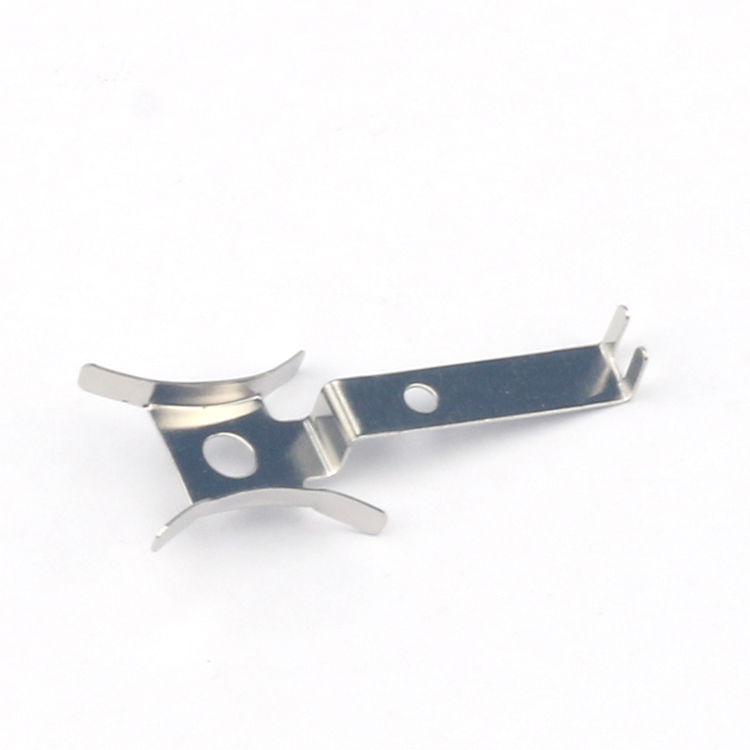
How Metal Stamping Improves Heat Sink Efficiency
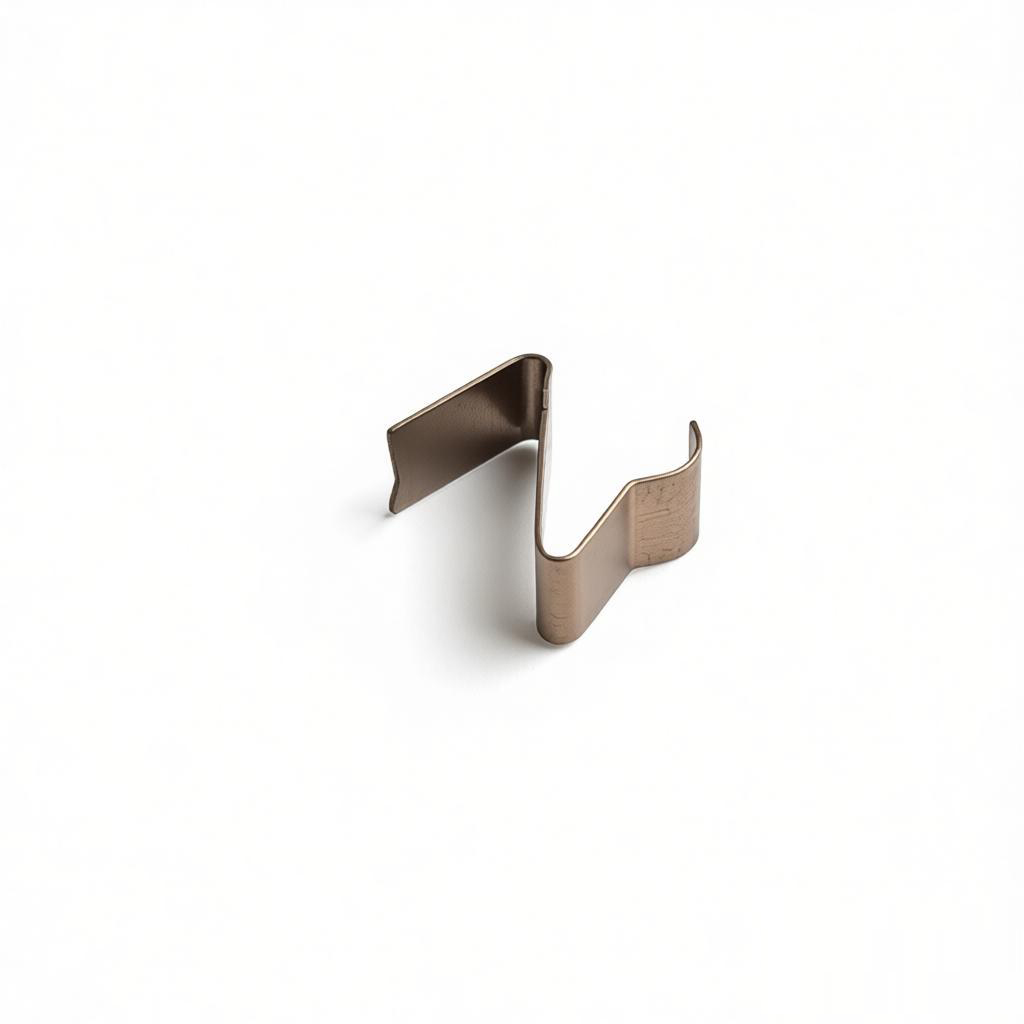
Jun 21,2026

How Metal Stamping Improves Heat Sink Efficiency

Introduction to Metal Stamping in Heat Sink Manufacturing

Introduction to Metal Stamping in Heat Sink Manufacturing

Heat sinks are critical components in electronics, dissipating heat from devices like CPUs, LEDs, and power modules. Manufacturing them efficiently is key to meeting demand. Metal stamping, a high-speed forming process, has revolutionized heat sink production by delivering precision, scalability, and cost-effectiveness. This guide explores how metal stamping improves efficiency at every stage, from design to delivery.

Advantages of Metal Stamping for Heat Sinks

Speed and Volume

Metal stamping uses progressive dies to produce hundreds of parts per minute. For heat sinks, this means faster cycle times compared to machining or extrusion. A single press can output thousands of aluminum or copper heat sinks daily, reducing lead times.

Precision and Consistency

Stamping achieves tight tolerances (e.g., ±0.1 mm) with repeatable accuracy. For finned heat sinks, consistent gap sizes ensure uniform airflow and thermal performance. The process eliminates human error and variations.

Material Utilization

Stamping often nests parts closely on a strip, minimizing scrap. Advanced die design can achieve over 80% material utilization, lowering raw material costs—especially important with expensive metals like copper.

Cost Efficiency

High-volume stamping amortizes die cost over millions of parts. Per-part cost is significantly lower than CNC machining, making it ideal for mass production. Setup times are minimal after initial tooling.

The Stamping Process for Heat Sink Production

Step 1: Material Selection and Coil Preparation

Aluminum (e.g., 6061, 5052) or copper coils are chosen for thermal conductivity and formability. Coils are fed into the press with a straightener and feeder.

Step 2: Progressive Die Stamping

A multi-station die performs blanking, bending, coining, and cutoff. For heat sinks, features like fins, base plates, and mounting holes are created in sequence. Each stroke produces a finished part.

Step 3: Fin Formation

Fins are often bent upward from the base in a louver or zigzag pattern. Stamping allows variable fin density and height without secondary operations.

Step 4: Surface Finishing

After stamping, parts may be deburred, cleaned, or anodized for corrosion resistance and emissivity.

Design Considerations for Stamped Heat Sinks

  • Fin Height and Thickness: Taller fins increase surface area but require thicker material and deeper draws. Limit aspect ratio to avoid tearing.

  • Draft Angles: Slight tapers (1–3°) ease ejection from the die.

  • Minimal Features: Simplify geometry to reduce die cost. Integrate mounting tabs as part of the stamping.

  • Material Gauge: Thicker material (0.5–2.0 mm) improves rigidity but increases stamping force.

Comparison with Other Manufacturing Methods

MethodSpeedPrecisionCost per Part (high volume)Material Waste
Metal StampingHigh (100–400 ppm)High (±0.1 mm)LowLow
CNC MachiningLow (1–10 ppm)Very high (±0.01 mm)HighHigh
ExtrusionMedium (10–20 ppm)Medium (±0.5 mm)MediumMedium
Die CastingMedium (10–30 ppm)Medium (±0.3 mm)MediumMedium

Tips for Optimizing Heat Sink Stamping Efficiency

  • Use High-Speed Presses: Servo-driven presses improve velocity control and reduce cycle time.

  • Lubrication: Apply micro-lubrication to reduce friction and extend die life.

  • Die Maintenance: Regular inspection and polishing of cutting edges prevents burrs.

  • Simulation Software: Use FEA to predict material flow and minimize trial runs.

  • Automated Part Handling: Integrate conveyors or robots to reduce manual labor.

Quality Control and Testing

Stamped heat sinks undergo dimensional checks using CMM, optical comparators, and leak tests (for sealed types). Thermal resistance is measured per ASTM D5470. In-process monitoring with sensors detects splits or misalignments, enabling real-time adjustments.

Future Trends in Stamped Heat Sinks

Advancements include multi- slide stamping for complex 3D shapes, micro-stamping for miniature electronics, and hybrid processes combining stamping with cold forging for enhanced density. Sustainability drives use of recycled metals and energy-efficient presses.

Conclusion

Metal stamping is a game-changer for heat sink manufacturing, offering unmatched efficiency in speed, cost, and consistency. By optimizing design and process parameters, manufacturers can meet the growing demand for thermal management solutions in electronics. Partner with an experienced stamper to unlock the full potential of this technology.

Frequently Asked Questions

What tolerances can metal stamping achieve for heat sinks?

Metal stamping achieves tight tolerances such as ±0.1 mm with repeatable accuracy. For finned heat sinks, consistent gap sizes ensure uniform airflow and thermal performance, eliminating human error and variations.

What materials are commonly used for stamped heat sinks?

Aluminum (e.g., 6061, 5052) or copper coils are chosen for thermal conductivity and formability. These materials are fed into the press with a straightener and feeder, and copper is noted as expensive, making material utilization important.

How does metal stamping compare to CNC machining in cost?

High-volume stamping amortizes die cost over millions of parts, making per-part cost significantly lower than CNC machining. Setup times are minimal after initial tooling, making it ideal for mass production.

What design factors should be considered for stamped heat sinks?

Key factors include fin height and thickness—taller fins increase surface area but require thicker material and deeper draws, with aspect ratio limits to avoid tearing. Draft angles of 1���3° ease ejection from the die, and simplifying geometry reduces die cost.
Contact Us Quote
Get A Quote
We use cookie to improve your online experience. By continuing to browse this website, you agree to our use of cookie.

Cookies

Please read our Terms and Conditions and this Policy before accessing or using our Services. If you cannot agree with this Policy or the Terms and Conditions, please do not access or use our Services. If you are located in a jurisdiction outside the European Economic Area, by using our Services, you accept the Terms and Conditions and accept our privacy practices described in this Policy.
We may modify this Policy at any time, without prior notice, and changes may apply to any Personal Information we already hold about you, as well as any new Personal Information collected after the Policy is modified. If we make changes, we will notify you by revising the date at the top of this Policy. We will provide you with advanced notice if we make any material changes to how we collect, use or disclose your Personal Information that impact your rights under this Policy. If you are located in a jurisdiction other than the European Economic Area, the United Kingdom or Switzerland (collectively “European Countries”), your continued access or use of our Services after receiving the notice of changes, constitutes your acknowledgement that you accept the updated Policy. In addition, we may provide you with real time disclosures or additional information about the Personal Information handling practices of specific parts of our Services. Such notices may supplement this Policy or provide you with additional choices about how we process your Personal Information.


Cookies

Cookies are small text files stored on your device when you access most Websites on the internet or open certain emails. Among other things, Cookies allow a Website to recognize your device and remember if you've been to the Website before. Examples of information collected by Cookies include your browser type and the address of the Website from which you arrived at our Website as well as IP address and clickstream behavior (that is the pages you view and the links you click).We use the term cookie to refer to Cookies and technologies that perform a similar function to Cookies (e.g., tags, pixels, web beacons, etc.). Cookies can be read by the originating Website on each subsequent visit and by any other Website that recognizes the cookie. The Website uses Cookies in order to make the Website easier to use, to support a better user experience, including the provision of information and functionality to you, as well as to provide us with information about how the Website is used so that we can make sure it is as up to date, relevant, and error free as we can. Cookies on the Website We use Cookies to personalize your experience when you visit the Site, uniquely identify your computer for security purposes, and enable us and our third-party service providers to serve ads on our behalf across the internet.

We classify Cookies in the following categories:
 ●  Strictly Necessary Cookies
 ●  Performance Cookies
 ●  Functional Cookies
 ●  Targeting Cookies


Cookie List
A cookie is a small piece of data (text file) that a website – when visited by a user – asks your browser to store on your device in order to remember information about you, such as your language preference or login information. Those cookies are set by us and called first-party cookies. We also use third-party cookies – which are cookies from a domain different than the domain of the website you are visiting – for our advertising and marketing efforts. More specifically, we use cookies and other tracking technologies for the following purposes:

Strictly Necessary Cookies
These cookies are necessary for the website to function and cannot be switched off in our systems. They are usually only set in response to actions made by you which amount to a request for services, such as setting your privacy preferences, logging in or filling in forms. You can set your browser to block or alert you about these cookies, but some parts of the site will not then work. These cookies do not store any personally identifiable information.

Functional Cookies
These cookies enable the website to provide enhanced functionality and personalisation. They may be set by us or by third party providers whose services we have added to our pages. If you do not allow these cookies then some or all of these services may not function properly.

Performance Cookies
These cookies allow us to count visits and traffic sources so we can measure and improve the performance of our site. They help us to know which pages are the most and least popular and see how visitors move around the site. All information these cookies collect is aggregated and therefore anonymous. If you do not allow these cookies we will not know when you have visited our site, and will not be able to monitor its performance.

Targeting Cookies
These cookies may be set through our site by our advertising partners. They may be used by those companies to build a profile of your interests and show you relevant adverts on other sites. They do not store directly personal information, but are based on uniquely identifying your browser and internet device. If you do not allow these cookies, you will experience less targeted advertising.

How To Turn Off Cookies
You can choose to restrict or block Cookies through your browser settings at any time. Please note that certain Cookies may be set as soon as you visit the Website, but you can remove them using your browser settings. However, please be aware that restricting or blocking Cookies set on the Website may impact the functionality or performance of the Website or prevent you from using certain services provided through the Website. It will also affect our ability to update the Website to cater for user preferences and improve performance. Cookies within Mobile Applications

We only use Strictly Necessary Cookies on our mobile applications. These Cookies are critical to the functionality of our applications, so if you block or delete these Cookies you may not be able to use the application. These Cookies are not shared with any other application on your mobile device. We never use the Cookies from the mobile application to store personal information about you.

If you have questions or concerns regarding any information in this Privacy Policy, please contact us by email at . You can also contact us via our customer service at our Site.