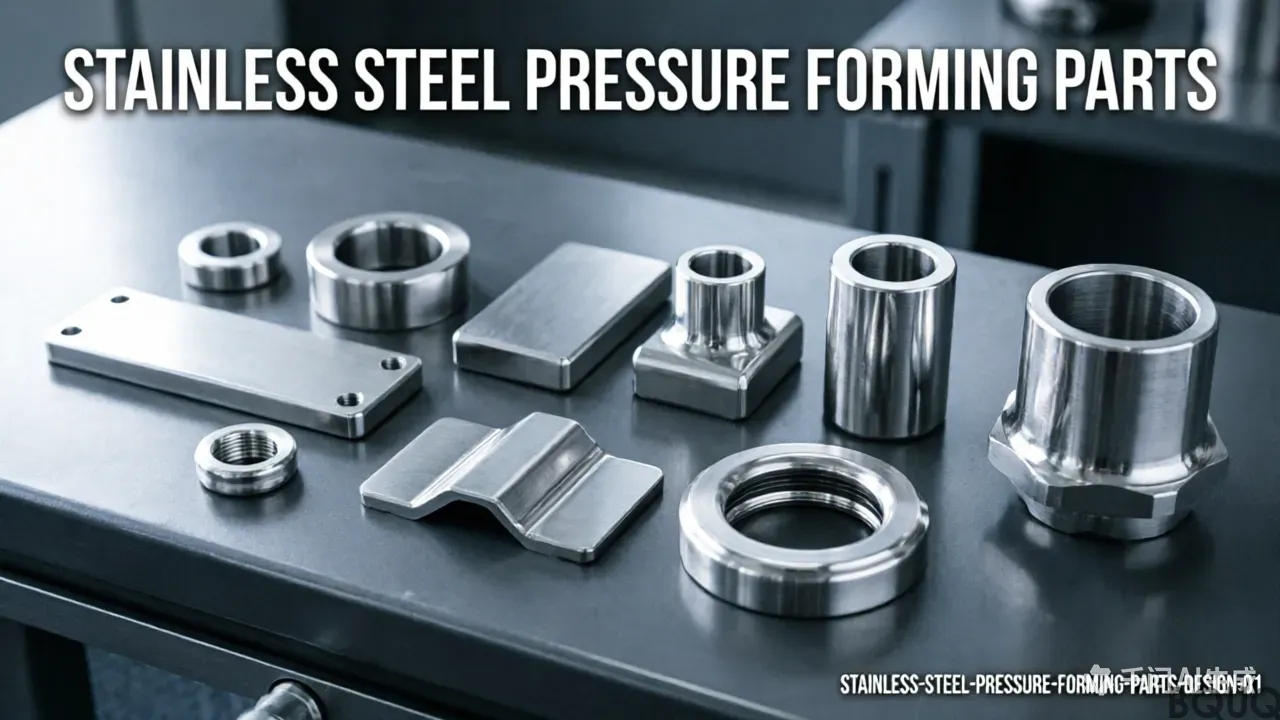
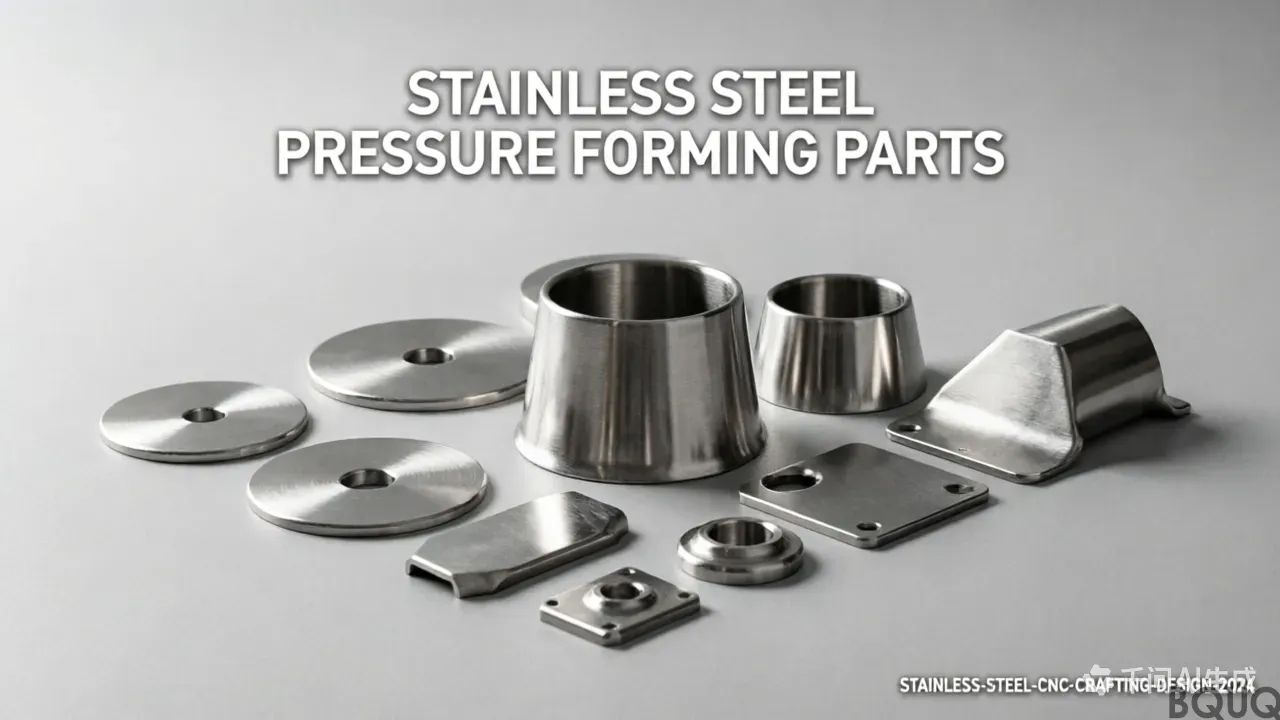
Metal stamping guide for engineers: progressive vs transfer dies, material selection, achievable tolerances, 7 design rules to cut stamped part costs, and a real terminal stamping case study.
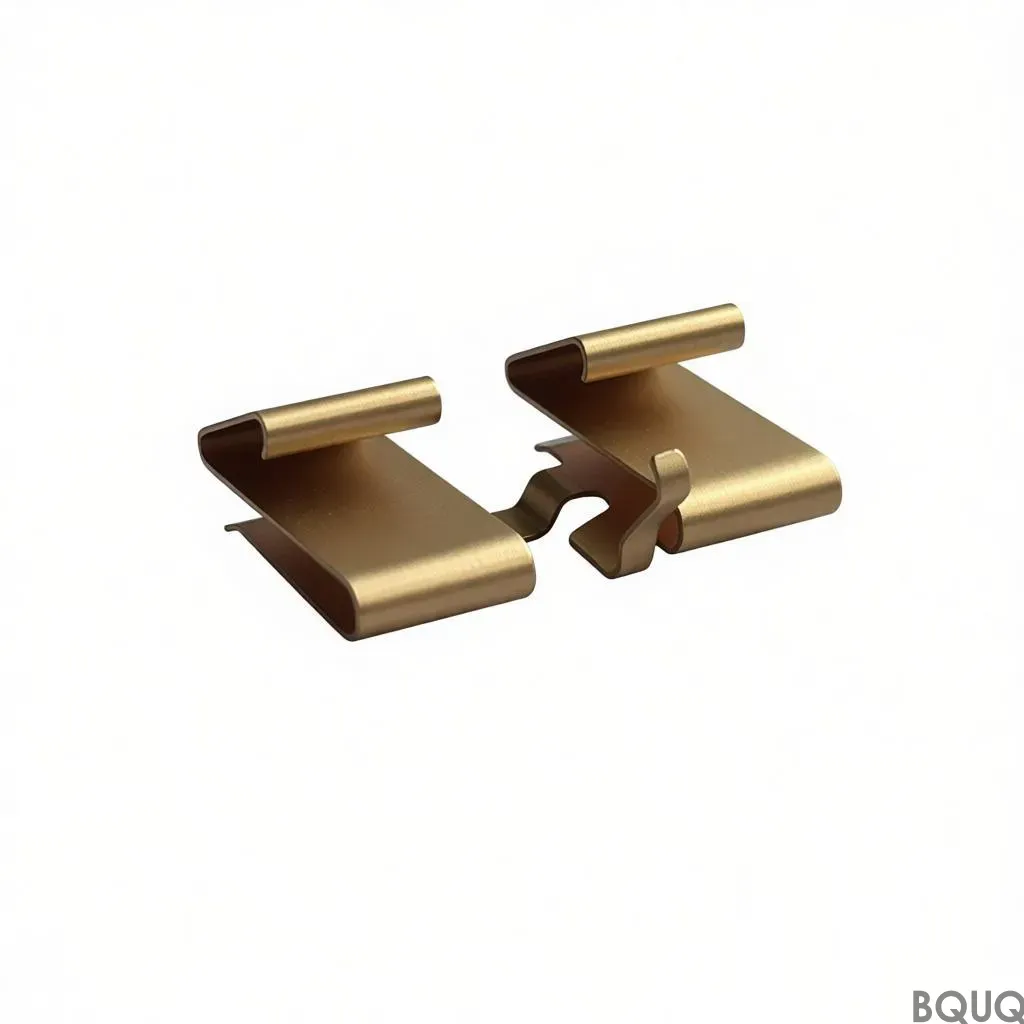
Precision Metal Stamping: Tolerances, Materials, and Design Rules
# Precision Metal Stamping: Tolerances, Materials, and Design Rules
*Last updated: August 2026 . Reading time: 9 minutes*
Metal stamping is how the world makes millions of identical metal parts at pennies each - battery contacts, terminal pins, springs, brackets, and connectors that CNC machining could never produce economically. If your part has a consistent 2D profile and needs to be made in volume, stamping is almost certainly the right process.
This guide covers what you need to know to design, quote, and source stamped parts - from a factory that has run stamping presses for 20 years.
---
## Stamping vs CNC machining: which process for your part?
| Factor | Metal stamping | CNC machining |
|--------|---------------|---------------|
| Best quantity | 5,000+ pcs | 1-500 pcs |
| Unit cost at volume | Pennies to cents | Dollars |
| Tooling cost (mold) | $800-$50,000 | None (setup only) |
| Lead time (tooling) | 15-40 days | 0 (immediate) |
| Tolerance | +/-0.02-0.05mm (typical) | +/-0.005mm |
| Complexity | 2D profile + forming | Full 3D |
| Material thickness | 0.05-6mm | Any |
**The decision rule:** if you need fewer than 500 parts, machine them. If you need more than 5,000 and the design is stamping-compatible, stamp them. Between 500 and 5,000 it depends on tooling cost vs. unit savings.
---
## The 3 types of stamping you will be quoted
### 1. Progressive die stamping (continuous strip)
The strip of metal feeds through a single die with multiple stations. Each stroke of the press performs one operation: pierce, blank, form, tap, cut-off. The part comes out finished at the end.
- **Best for:** high volume (50,000+), complex parts with many features
- **Tooling cost:** $3,000-$50,000
- **Speed:** up to 600 strokes/minute for simple parts
### 2. Transfer die stamping
The part is moved between separate dies by mechanical fingers. Allows deeper draws and more complex forming than progressive dies.
- **Best for:** deeper drawn parts, larger parts
- **Tooling cost:** $5,000-$60,000
### 3. Compound / single-station stamping
One operation per press stroke, often used for simple blanking or piercing. Lowest tooling cost, slowest throughput.
- **Best for:** simple parts, lower volumes, prototyping
- **Tooling cost:** $800-$5,000
---
## Materials used in stamping
| Material | Thickness range | Typical use |
|----------|----------------|-------------|
| Brass strip (H62, H65) | 0.05-2.0mm | Contacts, terminals, springs |
| Phosphor bronze (C5210, C5191) | 0.05-1.5mm | Relay springs, connector pins |
| Beryllium copper (C17200) | 0.05-1.0mm | High-performance contacts |
| Stainless steel strip (301, 304) | 0.05-3.0mm | Springs, clips, medical parts |
| Cold-rolled steel (SPCC, SPCE) | 0.2-6.0mm | Brackets, housings, structural |
| Spring steel (65Mn, SK5) | 0.05-2.5mm | Springs, shims, washers |
| Aluminum strip (5052, 6061) | 0.1-4.0mm | Heatsink fins, enclosures |
| Copper strip (T2, C1100) | 0.05-2.0mm | Busbars, thermal parts, contacts |
**Key material property for stamped springs:** grain direction. Spring steel strip is rolled in one direction, and bending *across* the grain vs *along* the grain gives different fatigue life. A good supplier will ask how the bend orientation affects your spring function - or design the die accordingly.
---
## Stamping tolerances (what is actually achievable)
| Feature | Progressive die (precision) | Compound die |
|---------|---------------------------|--------------|
| Blank/profile | +/-0.03mm | +/-0.05mm |
| Hole position | +/-0.05mm | +/-0.08mm |
| Hole diameter | +/-0.02mm | +/-0.03mm |
| Forming/bend position | +/-0.05-0.1mm | +/-0.1mm |
| Bend angle | +/-0.5 deg | +/-1 deg |
**Important:** stamping tolerance is die-dependent, not operator-dependent. Once the die is made, every part is the same - which is the beauty of the process. But it also means **die quality IS part quality**. The cheapest die will not hold +/-0.03mm.
---
## 7 design rules that reduce your stamped part cost
1. **Keep the profile simple.** Sharp corners require special die features. Use radii of at least 0.5x material thickness.
2. **Standard material thicknesses only.** 0.3, 0.4, 0.5, 0.6, 0.8, 1.0, 1.2, 1.5, 2.0mm - anything odd means special strip purchase and longer lead time.
3. **Holes >= material thickness in diameter.** A hole smaller than the material thickness is hard to pierce reliably.
4. **Slot width >= 1.5x material thickness.** Narrow slots weaken the die punch.
5. **Minimum spacing between features >= 2x material thickness.** Prevents tearing between adjacent holes.
6. **Don't tolerance everything.** Stamping dies are expensive; only tighten the critical dimensions that affect function.
7. **Design for the strip.** Parts that nest efficiently in the strip use less material. Ask your supplier for a nesting suggestion before finalizing the design.
---
## Surface finishes for stamped parts
| Finish | Purpose | Typical cost add |
|--------|---------|-----------------|
| None (raw) | Internal parts, no exposure | - |
| Nickel plating | Corrosion, solderability | +5-10% |
| Tin plating | Solderability (contacts) | +5-10% |
| Gold plating (selective) | High-reliability contacts | +15-30% |
| Zinc plating | Steel parts, corrosion | +5% |
| Passivation | Stainless steel | +2-5% |
| Powder coating | Aesthetics, thick protection | +8-15% |
**Watch out:** selective plating (only the contact area) is much cheaper than full plating and is standard practice for connectors and relay parts.
---
## Real example: terminal pin stamped for a US customer
**Part:** battery contact terminal, phosphor bronze C5210, 0.3mm thick, 12mm x 8mm, one 90 deg bend, gold selective plating on contact surface.
- Tooling cost: $4,200 (progressive die, 8 stations)
- Tooling lead time: 25 days
- Unit price: $0.018/pc at 500,000 pcs/year
- Tolerance: profile +/-0.03mm, hole position +/-0.05mm
- Result: passed 500,000-cycle fatigue test with zero failures
The same part CNC machined would cost roughly $0.80-1.20 each - **45x more expensive**. That is the stamping advantage.
---
## How to quote your stamped part
Send us:
1. **2D drawing** (PDF or DWG) with critical tolerances marked
2. **3D file** (STEP) for the formed geometry
3. **Material + thickness** - e.g., "C5210-H, 0.3mm"
4. **Annual/order quantity** - this drives the die design decision
5. **Plating/finish requirements**
6. **Any functional tests required** (contact resistance, fatigue cycles, salt spray)
We will come back with: die cost, unit price at your quantity, tooling lead time, and production lead time. **Quote within 12 hours.**
Email: sc@bquq.com . WhatsApp/WeChat: +86 13713157787 . www.bquq.com
*Keywords: metal stamping, precision stamping China, progressive die stamping, stamped parts manufacturer, metal stamping tolerance, terminal stamping, battery contact stamping*
Frequently Asked Questions
What is the typical tolerance for precision metal stamping?
Typical stamping tolerances are +/-0.02-0.05mm, which is suitable for most high-volume parts. For tighter precision, CNC machining offers +/-0.005mm, but stamping is more economical for quantities above 5,000 pieces.
When should I choose metal stamping over CNC machining?
Choose stamping if you need over 5,000 parts with a consistent 2D profile, as unit costs drop to pennies. CNC machining is better for 1-500 parts or full 3D complexity. Between 500-5,000 parts, compare tooling costs ($800-$50,000) against unit savings.
What material thickness can metal stamping handle?
Metal stamping can process material thicknesses from 0.05mm to 6mm. This range covers thin battery contacts and terminal pins up to thicker brackets and springs, making it versatile for various precision components.
What are the tooling costs and lead times for stamping?
Tooling costs range from $800 to $50,000 depending on die complexity, with lead times of 15-40 days. Progressive dies for high-volume parts cost $3,000-$50,000, while simpler setups are cheaper. This investment is offset by low unit costs at volume.