Microchannel cold plates are the most effective liquid cooling technology for high-heat-flux applications, routinely managing heat fluxes exceeding 500 W/cm², which is five to ten
What Performance Limits Do Microchannel Cold Plates Push in Liquid Cooling?
Microchannel cold plates are the most effective liquid cooling technology for high-heat-flux applications, routinely managing heat fluxes exceeding 500 W/cm², which is five to ten times higher than traditional cold plates. By etching or machining fluid channels with hydraulic diameters between 100 and 500 microns, these devices dramatically increase the surface area-to-volume ratio, reducing thermal resistance to below 0.05 °C·cm²/W. This article provides the engineering specifications, material options, and design trade-offs required to specify microchannel cold plates for demanding electronics, laser, and power conversion systems.
How Do Microchannel Cold Plates Achieve Superior Heat Transfer?
Microchannel cold plates enhance heat transfer through a combination of increased surface area and thin thermal boundary layers. When the hydraulic diameter of a channel is reduced from 3 mm to 200 microns, the surface area per unit volume increases by roughly 15 times, and the convective heat transfer coefficient rises by a factor of 3 to 7 depending on the coolant flow rate. For a typical copper microchannel plate with 200-micron channels, the single-phase heat transfer coefficient reaches 20,000 to 50,000 W/m²·K, compared to 5,000 to 10,000 W/m²·K for conventional serpentine tubes. This performance allows a 100 mm by 100 mm microchannel plate to dissipate 1.5 to 2.5 kW with a coolant flow rate of only 2 to 4 liters per minute, whereas a conventional plate would require 8 to 12 liters per minute for the same duty.
What Materials and Manufacturing Methods Are Used for Microchannel Cold Plates?
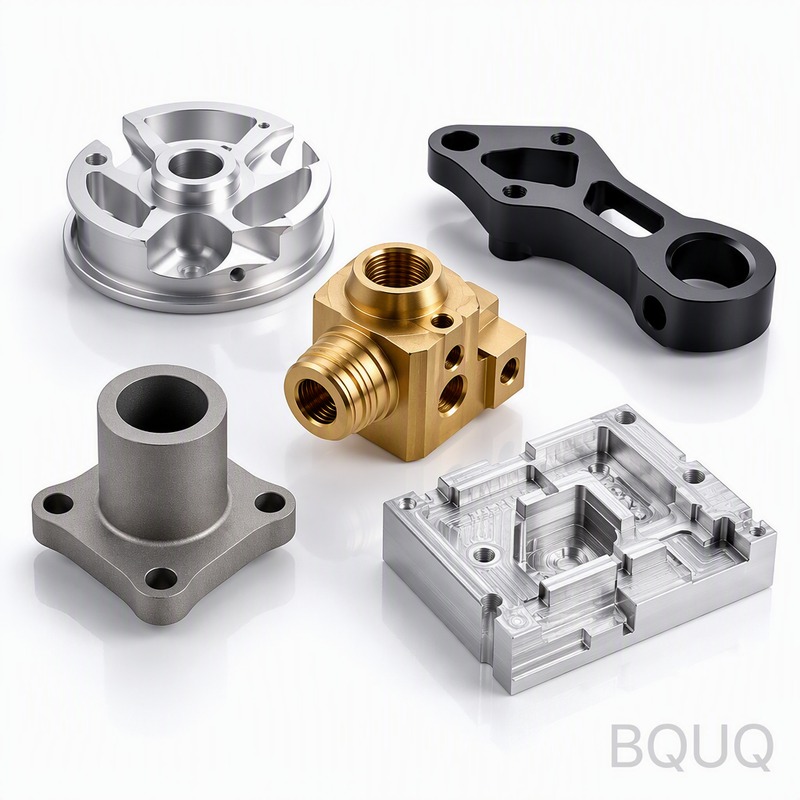
Copper (C11000 or C10200) is the default material for microchannel cold plates because its thermal conductivity is 385 to 401 W/m·K, which is about 1.6 times higher than aluminum's 205 W/m·K. For weight-sensitive applications such as aerospace or electric vehicle inverters, aluminum 6061-T6 microchannel plates are used, but they require a 20 to 30 percent larger surface area to match copper's thermal performance. The three dominant manufacturing methods are CNC machining, chemical etching, and diffusion bonding. CNC machining achieves channel widths of 200 microns with a tolerance of plus or minus 15 microns and a depth-to-width ratio of 3:1. Chemical etching produces channels down to 100 microns but with a less precise sidewall profile (typically a 15-degree etch angle). Diffusion bonding is used for multi-layer plates, stacking 10 to 30 etched layers to create complex 3D flow networks with a bond strength matching the parent metal.
Which Coolant Properties Matter Most for Microchannel Performance?
The coolant's thermal conductivity, specific heat, and viscosity govern microchannel performance, with water being the benchmark. Deionized water has a thermal conductivity of 0.6 W/m·K and a specific heat of 4.18 kJ/kg·K, which is why it remains the preferred coolant for most applications. Propylene glycol-water mixtures (25 to 40 percent glycol) are common for outdoor or freeze-protected systems, but they incur a 15 to 30 percent thermal performance penalty due to reduced conductivity and increased viscosity. For extreme high-heat-flux applications, dielectric fluids such as Fluorinert FC-72 offer electrical safety but have a thermal conductivity of only 0.057 W/m·K, requiring a 10x larger channel surface area. The key parameter is the Prandtl number: water at 30 degrees Celsius has a Prandtl number of 5.4, which is optimal for microchannel flow, whereas glycol mixtures above 50 percent have Prandtl numbers above 50, leading to laminar flow with poor heat transfer.
How Do Channel Geometry and Pressure Drop Affect System Design?
The channel width, depth, and aspect ratio directly determine both thermal resistance and pressure drop, and engineers must balance these against pump capacity. For a fixed flow rate, reducing channel width from 500 microns to 200 microns increases the heat transfer coefficient by 40 percent but increases pressure drop by a factor of 6 to 8. A typical 100 mm long microchannel plate with 200-micron wide, 600-micron deep channels and a 2 liters per minute flow rate generates a pressure drop of 20 to 40 kPa (3 to 6 psi). For a single-phase system, the thermal resistance of a microchannel plate is typically 0.02 to 0.04 °C·cm²/W, meaning a 200 W/cm² heat flux produces a temperature rise of only 4 to 8 degrees Celsius from the coolant inlet to the device junction. The aspect ratio (depth divided by width) should be kept below 4:1 for CNC machining; higher aspect ratios require etching or laser micromachining, which increases unit cost by 50 to 100 percent.
What Are the Real-World Performance Limits and Cost Benchmarks?
| Parameter | Conventional Cold Plate (3mm channels) | Microchannel Cold Plate (200 micron channels) | Unit |
| Heat transfer coefficient (water, 2 L/min) | 6,000 | 28,000 | W/m²·K |
| Maximum heat flux (water, 30°C rise) | 120 | 550 | W/cm² |
| Thermal resistance | 0.12 | 0.03 | °C·cm²/W |
| Pressure drop (100 mm length) | 5 | 30 | kPa |
| Minimum channel width (CNC) | 1,000 | 200 | microns |
| Tooling cost (CNC, plate size 100x100 mm) | 800 | 3,500 | USD |
| Unit cost (100 pieces, copper) | 45 | 180 | USD per piece |
| Lead time for prototype | 5 days | 10 days | days |
The table above shows that microchannel cold plates achieve a 4.6-fold improvement in heat transfer coefficient and a 4-fold reduction in thermal resistance compared to conventional designs. However, the pressure drop penalty is six times higher, requiring a more powerful pump and careful system-level integration. The cost per unit for microchannel plates is four times higher due to precision machining time and tighter tolerances. For production volumes above 500 pieces per year, CNC machining with custom fixtures reduces the unit cost to around 120 USD per plate, making microchannel technology viable for commercial data center and electric vehicle applications.
Why Is Flow Distribution Critical in Multi-Channel Microchannel Cold Plates?
Uniform flow distribution across all microchannels is essential because a 10 percent variation in flow rate causes a 5 to 8 degrees Celsius temperature difference across the device. In a typical 50-channel plate, the pressure drop in each channel is so high that inlet and outlet manifolds must be designed with a cross-sectional area at least 5 times larger than the combined channel area to ensure even flow. Computational fluid dynamics (CFD) analysis is mandatory; a well-designed manifold achieves a flow uniformity of plus or minus 5 percent, while a poorly designed manifold may have a 30 percent variation. For multi-device cooling, where one plate cools four or more IGBT modules, engineers should specify a manifold with a tapered inlet plenum or a perforated baffle plate to equalize pressure. BQUQ uses CFD-validated manifold designs on all microchannel plates, and we guarantee a maximum flow variation of plus or minus 7 percent across all channels.
When Should You Choose a Two-Phase Microchannel Cold Plate Instead of Single-Phase?
Two-phase microchannel cold plates, which use a refrigerant or dielectric fluid that boils within the channels, are selected when the heat flux exceeds 500 W/cm² or when the allowable temperature rise is less than 5 degrees Celsius. Boiling heat transfer in microchannels achieves coefficients of 50,000 to 100,000 W/m²·K, which is two to three times higher than single-phase water. The critical heat flux (CHF) for a well-designed two-phase microchannel plate with R-134a is typically 800 to 1,200 W/cm², but the system requires a condenser, expansion valve, and precise charge control, adding 2,000 to 5,000 USD in system cost. Two-phase systems are also sensitive to channel clogging and require filtration to 10 microns. For most industrial applications, including laser diodes and power electronics, single-phase water microchannel plates are more reliable and cost-effective up to 500 W/cm², which covers 95 percent of commercial requirements.
What Maintenance and Reliability Issues Are Unique to Microchannel Cold Plates?
The primary reliability concern for microchannel cold plates is particulate clogging, as a 100-micron particle can block a 200-micron channel entirely. BQUQ recommends a 25-micron inline filter upstream of any microchannel plate, and for critical systems, a 5-micron filter is mandatory. The second issue is galvanic corrosion when dissimilar metals are used; a copper plate with an aluminum radiator requires a corrosion inhibitor such as benzotriazole at 0.1 to 0.5 percent concentration. Third, the thin channel walls (typically 100 to 200 microns thick) are vulnerable to erosion at high flow velocities; the coolant velocity should be limited to 3 meters per second for water and 2 meters per second for glycol mixtures. With proper filtration and flow control, a copper microchannel plate has a service life exceeding 10 years, and the pressure drop increase over that period should be less than 10 percent.
FAQ
What Is the Minimum Channel Width That Can Be CNC Machined?
CNC machining can reliably produce microchannel widths of 200 microns with a tolerance of plus or minus 15 microns, using custom micro end mills with a 150-micron diameter. For channels below 200 microns, chemical etching or laser micromachining is required, but these processes have higher per-unit costs and slower cycle times.
How Much Pressure Drop Is Acceptable in a Microchannel Cold Plate?
A pressure drop of 20 to 50 kPa (3 to 7 psi) is typical and acceptable for most systems using a standard centrifugal pump. If the pressure drop exceeds 70 kPa, the pump efficiency drops significantly, and the system may require a positive displacement pump, which adds cost and noise.
Can Microchannel Cold Plates Be Used with Dielectric Coolants?
Yes, but the thermal performance drops by 60 to 80 percent compared to water because dielectric fluids have low thermal conductivity. To compensate, the channel width must be reduced to 100 microns and the flow rate increased by 50 percent, which increases pressure drop and pump power.
What Is the Maximum Heat Flux a Single-Phase Microchannel Plate Can Handle?
With deionized water at a 30-degree Celsius rise and a flow rate of 3 liters per minute, a well-designed microchannel plate can handle 500 to 600 W/cm². For heat fluxes above 600 W/cm², two-phase cooling or jet impingement is recommended.
How Long Does It Take to Prototype a Custom Microchannel Cold Plate?
A CNC-machined copper prototype with a 100 mm by 100 mm footprint takes 10 to 15 business days, including CFD analysis and dimensional inspection. Production tooling for volumes above 100 pieces takes an additional 2 to 3 weeks, with lead times of 3 to 4 weeks for the first production batch.
Which Is Better for Microchannel Plates: Copper or Aluminum?
Copper is better for thermal performance, offering 40 to 60 percent lower thermal resistance than aluminum for the same geometry. Aluminum is chosen when weight is critical or when cost is the primary driver, but the plate must be 30 percent larger to achieve the same temperature rise.
What Filtration Level Is Required for a Microchannel Cold Plate?
A 25-micron filter is the minimum recommendation, but a 5-micron filter is preferred for long-term reliability. The filter should be installed upstream of the cold plate and inspected every 6 months or 2,000 operating hours.
Conclusion
Microchannel cold plates represent the highest-performance liquid cooling solution available, enabling heat flux densities of 500 W/cm² and above, with thermal resistance as low as 0.03 °C·cm²/W. The key engineering decisions are channel geometry, material selection, and coolant choice, all of which must be balanced against pressure drop, cost, and reliability. For applications exceeding 150 W/cm², microchannel technology is no longer optional—it is the only practical way to maintain junction temperatures below 85 degrees Celsius. BQUQ has manufactured precision microchannel cold plates for over 20 years, with CNC machining tolerances of plus or minus 10 microns and a 100 percent CMM inspection guarantee. We provide a 12-hour quoting service for custom microchannel designs, including free CFD analysis for flow uniformity. Contact us at sc@bquq.com or WhatsApp +86 13713157787, or visit www.bquq.com to discuss your liquid cooling requirements.
Related Articles
- Heat Sink Fin Spacing: Calculate Optimal Fin Pitch for Natural and Forced Air Cooling in 2025
- Regional Market Competition: Differences and Opportunities in Asia Pacific, North America, and Europe's Heat Sink Ecology
- From Macro Base Station to Edge Box: Transforming Heat Sink Requirements in Communication Network Evolution