CNC Machining Materials Guide 2025: Choosing Aluminum, Steel, Brass, and PlasticsSelecting the right material for CNC machined parts is the single most consequential decision in th
CNC Machining Materials Guide 2025: Choosing Aluminum, Steel, Brass, and Plastics
CNC Machining Materials Guide 2025: Choosing Aluminum, Steel, Brass, and Plastics
Selecting the right material for CNC machined parts is the single most consequential decision in the design-to-production cycle. It affects mechanical performance, surface finish, cost per unit, and lead time. For engineers sourcing from contract manufacturers, the choice is rarely about "best" material in absolute terms—it is about the best trade-off for a specific load case, environment, and budget. This guide compares the four most common material families in CNC machining—aluminum, steel, brass, and engineering plastics—using quantifiable data on strength, machinability, thermal behavior, and cost. By the end, you will have a decision framework that translates material properties into shop-floor reality.
1. The Baseline: How Material Choice Drives Cost and Lead Time
CNC machining cost is not linear with material price. A $3/kg plastic blank can produce a part that costs more per cubic centimeter than a $2/kg aluminum part, simply because of cycle time, tool wear, and finishing requirements. The following table summarizes typical 2025 benchmark data for small-to-medium batch runs (100–500 pieces) on 3-axis CNC mills. Prices are indicative for a Chinese precision factory with 20 years of export experience.
| Material (Grade) | Material Cost (USD/kg) | Machinability Rating (1-10, 10=best) | Achievable Tolerance (mm) | Surface Finish Ra (µm) | Max Service Temp (°C) | Relative Part Cost (per cm³ removed) | ------------------ | ------------------------ | -------------------------------------- | --------------------------- | ------------------------ | ------------------------ | --------------------------------------- | Aluminum 6061-T6 | 2.5 – 3.5 | 9 | ±0.025 | 0.8 – 1.6 | 150 (structural) | 1.0 (baseline) | Aluminum 7075-T6 | 4.0 – 5.0 | 7 | ±0.025 | 0.8 – 1.6 | 130 | 1.4 | Steel 1018 (CRS) | 1.0 – 1.5 | 5 | ±0.050 | 1.6 – 3.2 | 300 | 1.6 | Steel 4140 (HT) | 1.5 – 2.5 | 4 | ±0.050 | 1.6 – 3.2 | 400 | 2.0 | Stainless 304 | 3.0 – 4.0 | 3 | ±0.075 | 1.6 – 3.2 | 800 | 2.5 | Brass C36000 | 6.0 – 8.0 | 10 | ±0.025 | 0.4 – 0.8 | 200 | 1.2 | POM (Acetal) | 3.0 – 4.0 | 8 | ±0.050 | 0.8 – 1.6 | 100 | 0.7 | PTFE | 12 – 18 | 4 | ±0.100 | 1.6 – 3.2 | 260 | 2.2 | PEEK (30% GF) | 60 – 80 | 3 | ±0.075 | 1.6 – 3.2 | 250 | 5.0 |
|---|
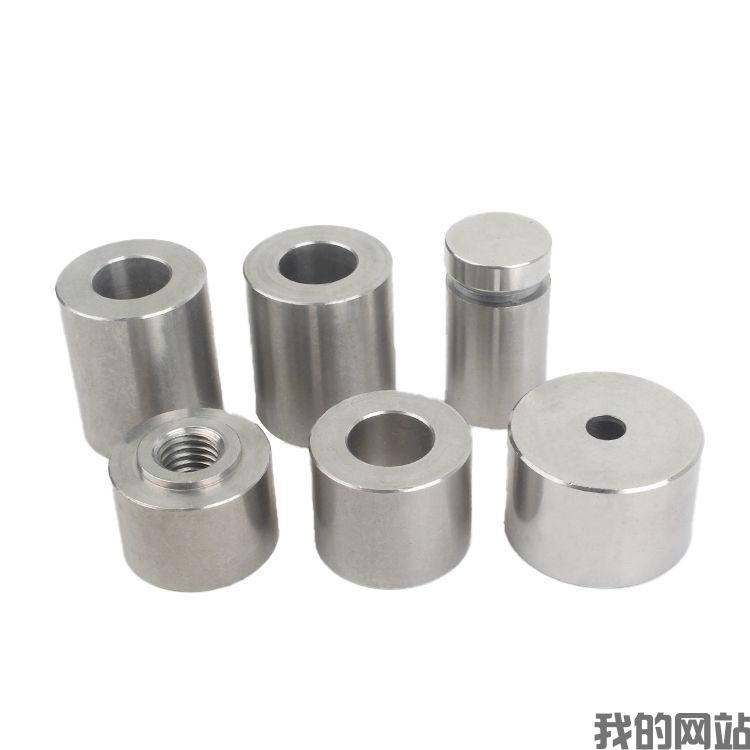
Note: Machinability rating combines tool life, chip formation, and required spindle power. Relative part cost includes machining time and tooling amortization, not just raw material.
2. Aluminum Alloys: The Default for Structural and Thermal Applications
Aluminum 6061-T6 is the workhorse. Its yield strength is approximately 276 MPa (40,000 psi), which is adequate for most brackets, housings, and heat sinks. The thermal conductivity of 6061-T6 is 167 W/m·K, making it the preferred choice for electronics cooling—far superior to steel (50 W/m·K) and brass (109 W/m·K). For aerospace or high-stress applications, 7075-T6 offers a yield strength of 503 MPa (73,000 psi), but it is more prone to stress corrosion cracking and costs roughly 40% more per kilogram.
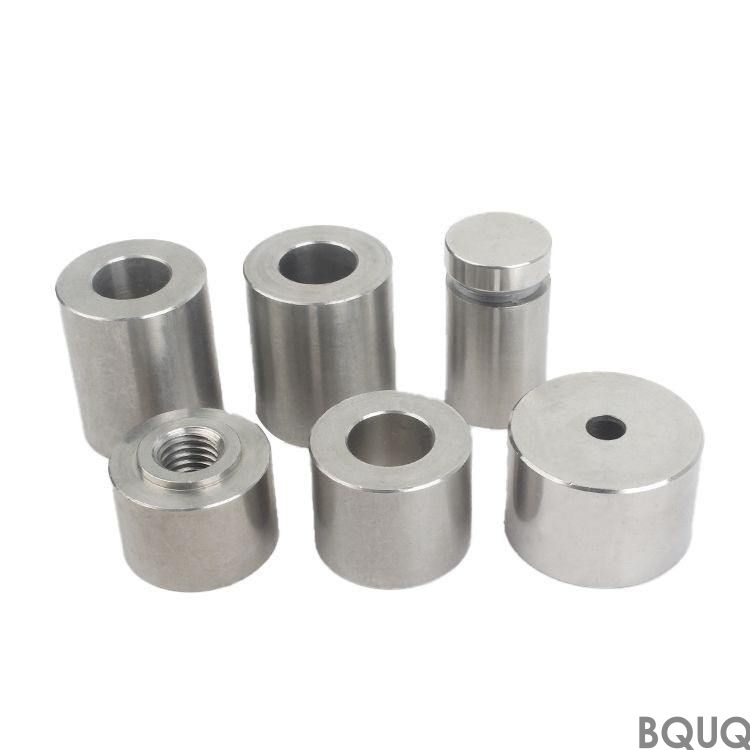
Design rule: For parts with thin walls (under 1.5 mm), aluminum is forgiving due to its high stiffness-to-weight ratio (E=68.9 GPa, density 2.7 g/cm³). However, avoid sharp internal corners—use a minimum radius of 0.8 mm to prevent stress risers and tool chatter. Aluminum machines beautifully with high spindle speeds (10,000–15,000 RPM) and feeds of 0.1–0.2 mm/tooth, yielding cycle times 20–30% faster than steel for the same geometry.
3. Steel and Stainless: When Strength and Wear Outweigh Weight
Low-carbon steel 1018 (cold rolled) has a yield strength of 370 MPa and excellent weldability. It is the cheapest option per kilogram but not per part, due to slower machining—tool wear is 3–5x higher than aluminum. For moving parts, shafts, or gears, alloy steel 4140 (quenched and tempered to 28–32 HRC) provides 655 MPa yield strength and good fatigue resistance. The trade-off: 4140 requires carbide inserts with coolant at 20–30 bar; without adequate cooling, you risk work hardening.
Stainless 304 is a common mistake for cost-sensitive projects. It has a yield strength of 215 MPa (annealed) but work-hardens rapidly, making threading and deep drilling difficult. Use 303 stainless instead for machined components—it has a machinability rating of 60% (relative to 1212 free-cutting steel) versus 45% for 304. If you need corrosion resistance and magnetic properties, 430F is a ferritic alternative with better machinability.
Cost reality: A 304 stainless part will cost 2.5x an identical 6061 part. Only specify stainless when the operating environment exceeds 150°C continuous or requires chemical passivation. For room-temperature indoor use, anodized aluminum or nickel-plated brass often suffices at half the cost.
4. Brass: The Overlooked Precision and Electrical Candidate
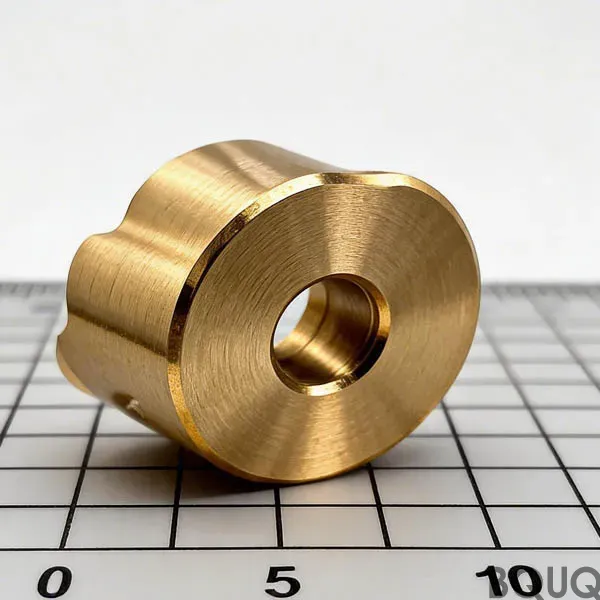
Brass C36000 (free-machining brass) is the fastest-to-machine metal in this guide—rated 100% on the machinability index. It produces short, broken chips, allowing feeds of 0.2–0.3 mm/tooth and surface speeds up to 300 m/min. This translates to cycle times 40% faster than aluminum for small, intricate parts. Brass is ideal for electrical connectors, valve bodies, and decorative hardware. Its electrical conductivity is 28% IACS (copper standard), sufficient for terminals and grounding components.
However, brass is heavy (8.5 g/cm³) and expensive per kilogram (USD 6–8). The real value appears in high-volume, small parts (under 20 mm diameter) where material waste is low and machining time dominates. For a 10 mm diameter bushing, the cost difference between brass and 6061 aluminum is often less than 15% in final part price, while brass provides superior wear resistance against steel shafts.
5. Engineering Plastics: Lightweight, Chemical Resistance, and Low Friction
The plastic category is not a monolith. POM (acetal) is the default for gears, bushings, and jigs. It has a low coefficient of friction (0.2 against steel), absorbs less than 0.2% moisture, and maintains dimensional stability to ±0.05 mm. For food-contact or low-friction applications, PTFE (Teflon) excels but is soft—expect a Ra of 1.6 µm or worse, and avoid tolerances tighter than ±0.1 mm. PTFE also cold-flows under load, so it is unsuitable for structural parts.
PEEK (30% glass-filled) is the high-performance outlier. It sustains continuous service at 250°C, resists most solvents, and has a tensile strength of 160 MPa. But at USD 60–80/kg and a machinability rating of 3/10, it is a specialty material. A PEEK part costs 5x an aluminum equivalent. Use it only for medical implants, semiconductor fixtures, or aerospace bushings where no metal meets the requirements.
Design rule for plastics: Always design for larger radii (1.5 mm minimum) and avoid sharp threads—use thread-forming inserts instead. Plastics expand 5–10x more than aluminum (CTE of POM is 110 x 10⁻⁶/°C versus 23 x 10⁻⁶/°C for 6061), so never specify tight tolerances over large dimensions unless the part is temperature-controlled during inspection.
6. Decision Matrix and Common Pitfalls
To make the selection systematic, apply this three-step filter:
1. **Thermal and chemical environment**: Above 150°C continuous? Exclude aluminum and POM. Above 260°C? Exclude brass and PTFE. Chemical exposure to acids? Stainless or PEEK. 2. **Mechanical load**: Yield strength below 300 MPa acceptable? Use 6061 or POM. Need >500 MPa? Use 7075 or 4140. 3. **Tolerance and surface finish**: Tighter than ±0.05 mm? Aluminum or brass. Ra below 1.0 µm? Brass or 6061 with secondary polishing.
**FAQ-style tips:**
- *Can I switch from aluminum to plastic to save cost?* Only if the part is non-structural and operates below 80°C. Otherwise, the added wall thickness for stiffness will negate material savings. - *Why is my stainless steel quote so high?* Because cycle time doubles and tool life drops by 70% compared to aluminum. Ask your supplier if 303 or 430F can substitute. - *What is the cheapest material for a one-off prototype?* POM (acetal) blank is cheap and machines fast, but it is not representative of metal properties. For functional metal testing, 1018 steel is the lowest cost per part for low volumes. - *How do I specify thread quality?* For aluminum and brass, specify class 2A/2B (UNF/UNC) or 6H/6g (metric). For plastics, always use oversized tap drills—recommend 75% thread engagement instead of 100%.
Conclusion: Match the Material to the Machine, Not Just the Datasheet
The best material for your CNC part is the one that meets the functional requirements at the lowest total cost, including machining time, surface treatment, and scrap rate. Aluminum 6061 remains the default for 70% of industrial parts. Steel is reserved for high-load and high-temperature. Brass wins on precision, speed, and electrical duty. Plastics are the choice for low friction and chemical resistance—but only if you accept their dimensional limits. For 2025, the smartest move is to send your supplier a clear load case and environmental spec, not just a material name. This allows the factory to propose the optimal grade and tolerance strategy.
At BQUQ Precision Manufacturing (Dongguan, China), we machine all four material families daily. Our engineers provide free DFM feedback on material selection within hours. For a no-obligation quote on your next project, send your 2D/3D files to our team—we respond within 12 hours with pricing and material recommendations. Contact us at sc@bquq.com or WhatsApp +86 13713157787. Visit www.bquq.com to view our material test reports and process capabilities.
Related Articles
- Rail Track Equipment Manufacturing 2025: Safety-Critical Precision and 5 Tolerance Standards
- CNC Precision Turned Parts for Medical Devices: Guide
- Aluminum Heat Sink CNC Machining: Best Practices Guide
Frequently Asked Questions
What is the best aluminum alloy for CNC machined parts that need high strength?
For high-stress applications, 7075-T6 is the best choice, offering a yield strength of 503 MPa (73,000 psi). However, it costs roughly 40% more per kilogram than 6061-T6 and is more prone to stress corrosion cracking, so it's not ideal for all environments.
How does material choice affect CNC machining cost and lead time?
Cost is not linear with material price. A plastic blank can cost more per cubic centimeter than aluminum due to cycle time, tool wear, and finishing. For example, PEEK (30% GF) has a relative part cost of 5.0 per cm³ removed, while aluminum 6061-T6 is 1.0, despite PEEK's higher raw material price.
Which material offers the best surface finish in CNC machining?
Brass C36000 achieves the best surface finish, with Ra values of 0.4–0.8 µm. Aluminum 6061-T6 and 7075-T6 also perform well at 0.8–1.6 µm, while steels and stainless 304 typically range from 1.6–3.2 µm, depending on the grade and machining conditions.
What is the maximum service temperature for aluminum 6061-T6 in structural applications?
Aluminum 6061-T6 has a maximum service temperature of 150°C for structural use. For higher temperatures, consider steel 1018 (300°C), 4140 (400°C), or stainless 304 (800°C), though these materials have lower machinability ratings and higher relative part costs.