Power semiconductor cooling revolution: the technological breakthrough of hardware heat sinks under high temperature and high pressure
Under the wave of carbon neutrality and electrification, power semiconductors are rapidly evolving from traditional silicon-based IGBTs to silicon carbide and gallium nitride. The working junction temperature has jumped from 125 ° C to 200 ° C or even higher, and the heat flux has increased several times. This brings unprecedented engineering challenges and innovation opportunities to hardware heat sinks directly attached to power modules.
The traditional die-casting aluminum heat sink exposes three major shortcomings when facing SiC modules: low thermal conductivity due to coarse grains, local hot spots caused by internal shrinkage, and solder fatigue caused by thermal expansion coefficient mismatch with SiC substrate. Therefore, the high-end power heat sink in 2026 has been fully shifted to the cold-forged aluminum and copper-aluminum composite route. The cold forging process applies thousands of tons of pressure on the aluminum billet below the recrystallization temperature to refine the grain to less than 5 μm, and the thermal conductivity is increased by 15% to 20% compared with the die casting. At the same time, the yield strength is greatly improved, which extends the life of the module by more than three times under the cycle load of -40 ° C to 175 ° C.
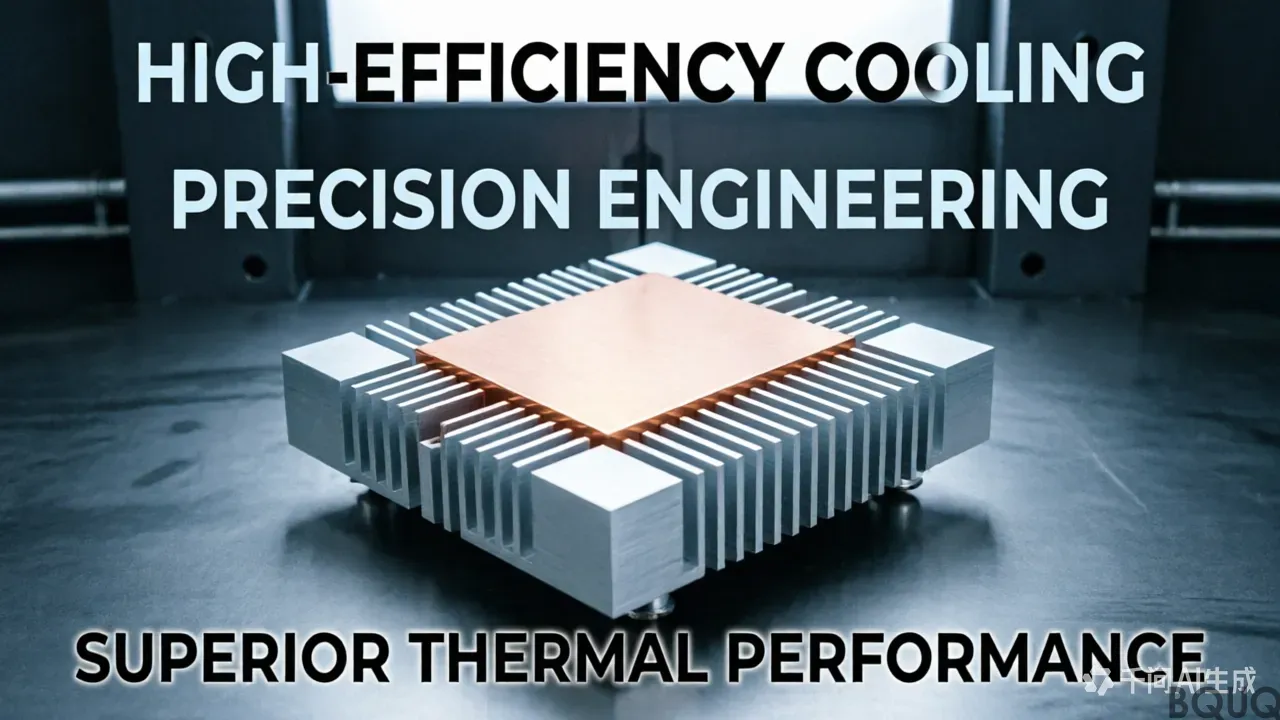
The copper-aluminum composite heat sink has become the first choice for high-power on-board power converters. Its structure is usually: the baseplate in contact with the power module is made of oxygen-free copper, which uses its ultra-high thermal conductivity of 400 W/m · K to quickly disperse heat laterally; the upper fin is made of aluminum alloy to reduce weight and cost. The bonding technology between copper and aluminum has experienced a leap from epoxy resin bonding to high-temperature vacuum brazing. The latest nickel-based brazing process can form a copper-aluminum intermetallic compound layer at 880 ° C, with a strength of more than 80 MPa and a thermal resistance as low as 0.02 K · cm ²/W, almost achieving metallurgical bonding. Some cutting-edge projects have even tried explosive welding, which directly bonds copper and aluminum atoms through instantaneous high pressure. The interface thickness is only nano-scale, and the thermal resistance is approaching the theoretical limit.
In addition to the material and structure, the macroscopic appearance of the heat sink is also changing. To match the double-sided cooling SiC module, the heat sink is no longer just a single-sided flat plate with fins, but has evolved into a double-sided three-dimensional flow channel element with precisely machined grooves and bosses. These grooves are embedded with spring contacts that directly contact the upper surface of the SiC chip, and the back surface carries away heat through the liquid-cooled substrate, forming a three-dimensional thermal management path of "double-sided heat dissipation + liquid cooling". This design reduces the total thermal resistance from the chip to the coolant to one-fifth of that of traditional single-sided aluminum heat sinks.
Surface treatment is also relevant to the long-term reliability of the power module. When the power module operates, the voltage can reach more than 1200V. If the heat sink has burrs or sharp edges, it is easy to cause corona discharge. Therefore, the heat sink for high-voltage applications gradually adopts chemical deburring and electrochemical polishing, so that the surface roughness Ra value is reduced to less than 0.2 μm. At the same time, some models of heat sinks require insulation pressure resistance above 2500V, which has led to the integrated sintering technology of high thermal conductivity ceramic insulation gaskets and heat sinks, reducing the number of thermal interfaces from three layers to one layer, which not only improves the voltage resistance but also reduces the thermal resistance.
The metamorphosis of metal heat sinks in the field of power semiconductors shows that it has been transformed from a simple heat hauler to a core structural component that affects the electrical performance and life of power modules. For heat sink manufacturers, the depth of knowledge of material metallurgy, precision molding and interface physics will determine whether they can occupy a place in the wave of automotive electric drive and energy infrastructure.
BQUQ is a professional metal heat sink manufacturer, please send us drawings, and our company will quote you within 12 hours.
Frequently Asked Questions
Why are traditional die-casting aluminum heat sinks no longer suitable for SiC power modules?
Traditional die-casting aluminum heat sinks have three major shortcomings when facing SiC modules: low thermal conductivity due to coarse grains, local hot spots caused by internal shrinkage, and solder fatigue from thermal expansion coefficient mismatch with the SiC substrate. These issues become critical as junction temperatures rise to 200°C or higher.
What performance improvements does cold forging offer over die casting for heat sinks?
Cold forging applies thousands of tons of pressure below the recrystallization temperature, refining grain to less than 5 μm. This increases thermal conductivity by 15% to 20% compared to die casting and greatly improves yield strength, extending module life by more than three times under cyclic loads from -40°C to 175°C.
How is the copper-aluminum composite heat sink structured and what are its benefits?
The baseplate contacting the power module uses oxygen-free copper with ultra-high thermal conductivity of 400 W/m·K for rapid lateral heat spreading, while the upper fins use aluminum alloy to reduce weight and cost. This combination makes it the first choice for high-power on-board power converters.
What bonding technology is used for copper-aluminum composite heat sinks and what performance does it achieve?
The latest nickel-based brazing process forms a copper-aluminum intermetallic compound layer at 880°C, achieving near metallurgical bonding. This provides a strength exceeding 80 MPa and thermal resistance as low as 0.02 K·cm²/W, a significant leap from earlier epoxy resin bonding methods.