A multitasking CNC machine, also known as a turn-mill or mill-turn center, is a single machining platform that integrates turning, milling, drilling, tapping, and often gear hobbin
What Are Multitasking CNC Machines and Why Are They Now Standard in Precision Manufacturing?
A multitasking CNC machine, also known as a turn-mill or mill-turn center, is a single machining platform that integrates turning, milling, drilling, tapping, and often gear hobbing or grinding into one automated setup. For precision manufacturers like BQUQ, the direct answer to the question of rising adoption is simple: a multitasking machine eliminates part re-fixturing errors, reduces cycle time by up to 40%, and achieves a repeatable tolerance of ±0.005 mm in a single clamping. This capability directly translates to lower per-part cost for complex geometries, which is why adoption among high-mix, high-precision factories in Dongguan has increased from roughly 15% of new machine purchases in 2015 to over 60% in 2024.
What Exactly Defines a Multitasking CNC Machine Compared to a Standard CNC Lathe?
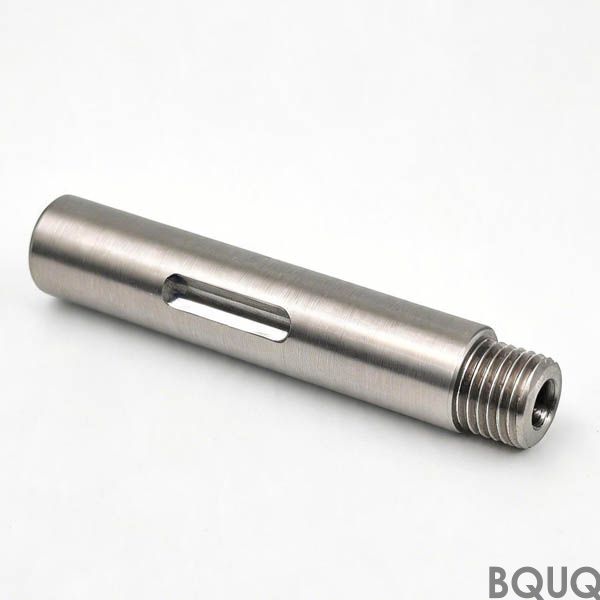
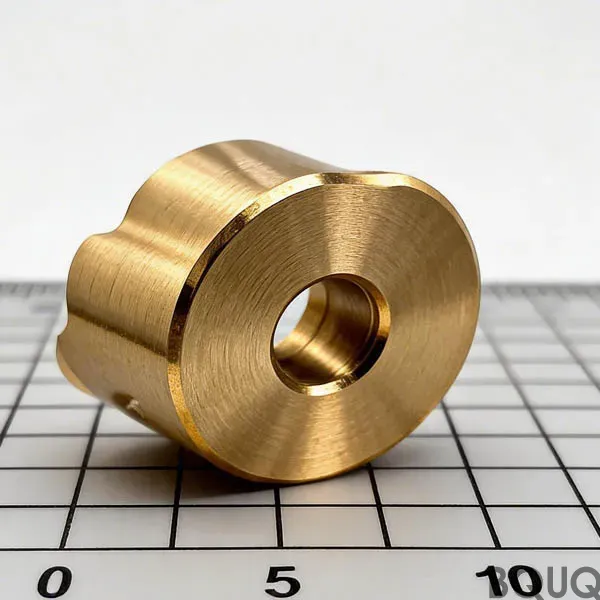
The fundamental distinction lies in the machine's kinematic structure. A standard CNC lathe has a single spindle and a turret that moves in the X and Z axes, limiting operations to rotational symmetry. A multitasking machine adds a B-axis milling head that can index and interpolate in multiple planes, plus a C-axis on the spindle that allows for precise angular positioning. For example, at BQUQ, our DMG MORI NTX 2000 machines feature a counter-spindle and a tool magazine holding 120 tools. This configuration allows us to machine a complex heat sink base with a threaded boss, cross-drilled coolant holes, and a milled sealing surface in one operation. The alternative is five separate setups on conventional equipment, which introduces cumulative positional errors of up to 0.02 mm. The multitasking approach holds true position within 0.005 mm because the part datum never changes.
How Much Does a Multitasking CNC Machine Cost and What Is the ROI?
The capital expenditure is significant, but the return on investment (ROI) calculation favors multitasking for complex parts. A production-ready multitasking center with a 65 mm bar capacity and full C/Y/B axis capability typically costs between $250,000 and $450,000 USD. In contrast, a high-precision lathe costs $80,000 and a vertical machining center costs $100,000. However, the operational cost per part tells the story. For a typical stainless steel medical component requiring 12 operations, standard machining requires 15 minutes of labor and 4 setups. Multitasking does it in 6 minutes with 1 setup. At a shop rate of $80 per hour, the multitasking cost per part is $8.00 versus $20.00 for conventional. With a production volume of 5,000 parts annually, the savings of $60,000 per year justifies the premium paid over two machines in approximately 2.5 years, without accounting for reduced scrap rates.
Why Is "One Setup" Critical for Achieving Tight Tolerances in Complex Parts?
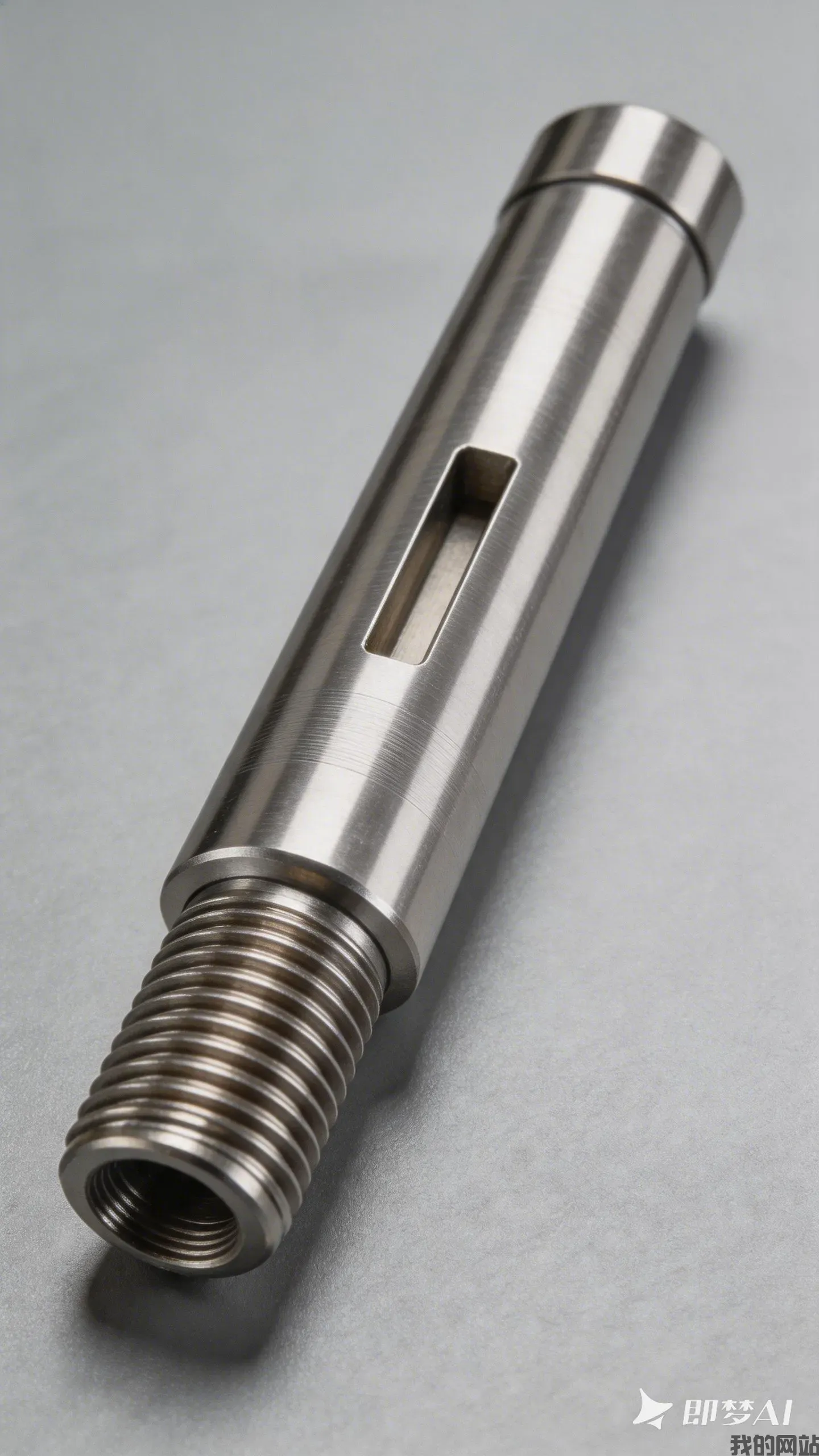
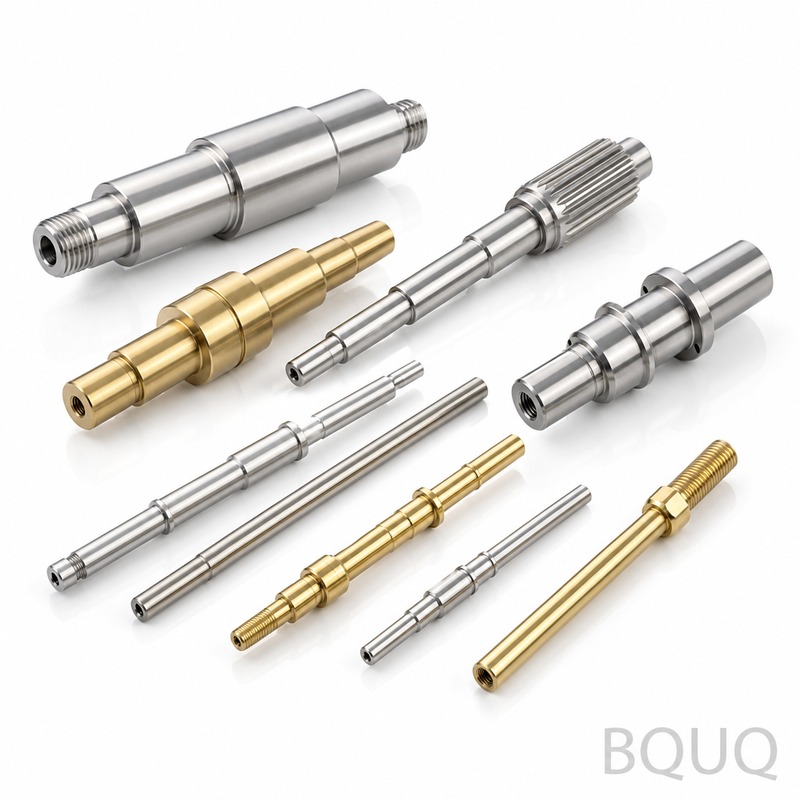
The physics of machining dictates that every re-clamping introduces stress and geometric deviation. When you transfer a part from a chuck to a fixture, the clamping force changes the elastic deformation of the workpiece. For aluminum parts with thin walls, this deformation can exceed 0.05 mm after unclamping. In a multitasking machine, the part is machined while supported by a steady rest or the counter-spindle, allowing roughing and finishing to occur without stress relief between operations. At BQUQ, we regularly hold a cylindricity of 0.008 mm on parts that are 150 mm long. This is impossible to guarantee if the part is removed and re-chucked. Furthermore, features machined in the same setup have a perfect spatial relationship. For example, a precision shaft with a milled keyway and a cross-drilled hole will have the keyway's centerline aligned to the hole within 0.01 degrees, a feature critical for hydraulic valve performance.
Which Industries Are Driving the Demand for Multitasking CNC Capabilities?
The primary adopters are the medical device, aerospace, and automotive EV sectors, all of which demand high complexity with traceability. In the medical sector, surgical bone drills and dental implants require a single piece of titanium or stainless steel to be turned, milled, and threaded without surface contamination between steps. Aerospace relies on this technology for hydraulic manifolds and landing gear components, where a single billet of aluminum or Inconel must be completely machined to reduce assembly weight and potential leak points. The electric vehicle industry uses multitasking for motor shafts and gearbox components, where a single shaft might require spline rolling, bearing journals, and a milled oil pump pocket. The common thread is liability: fewer setups mean fewer chances for human error, and a digital "part complete" record after one cycle is invaluable for regulatory compliance.
How Does the Programming and Tooling Strategy Differ for Multitasking Machines?
Programming is the largest hidden cost. Unlike simple 2-axis lathe programming, a multitasking machine requires simultaneous synchronization of two spindles and one milling head. This is typically done using CAM software like Siemens NX or Mastercam Mill-Turn. A skilled programmer can generate the code for a complex part in 8 hours, whereas a simple part might take 2 hours. Tooling strategy also shifts. You must use driven tools with high-pressure coolant through the tool, typically at 70 bar (1,015 psi), to evacuate chips effectively in deep bores. At BQUQ, we standardize on Capto C4 tooling for its rigidity and quick-change capability. The key to successful operation is the "tool lifecycle matrix." Because the machine runs unattended for long periods, we program tool life limits at 85% of manufacturer specification. For example, a carbide insert for rough turning Inconel 718 is rated for 15 minutes of cutting; we replace it at 12.75 minutes to prevent catastrophic breakage inside the machining envelope.
What Are the Realistic Cycle Time Reductions and Scrap Rate Improvements?
The data from our production floor over the last three years shows a consistent pattern. For a part that previously required four separate machines, the multitasking machine reduces total cycle time by 35% to 45%. This is not just from reduced handling; it is from reduced "cutting air" time. The machine can overlap operations, such as milling a flat with the B-axis while the main spindle is indexing the part for the next drilling operation. Scrap rates improve even more dramatically. The table below compares average metrics from BQUQ's production data for a 304 stainless steel valve body, comparing conventional process flow versus a single multitasking setup.
| Process Metric | Conventional 4-Machine Flow | Multitasking Single Setup |
| Total Cycle Time (Minutes) | 18.5 | 10.2 |
| Number of Setups | 4 | 1 |
| Scrap Rate (Percentage) | 3.8% | 0.9% |
| Dimensional Variation (Standard Deviation in mm) | 0.012 | 0.004 |
| Operator Labor per Part (Minutes) | 6.0 | 0.5 |
| Energy Consumption (kWh per part) | 4.1 | 2.8 |
When Does a Multitasking Machine Become the Wrong Choice for Production?
Despite the advantages, there are clear cases where a multitasking machine is not cost-effective. For high-volume production of simple parts, such as basic M8 screws or simple spacers with no cross features, a dedicated single-purpose lathe or screw machine is faster and cheaper. The multitasking machine's spindle acceleration and turret indexing times are slower than a high-speed automatic lathe. Additionally, the tool change time for a milling cutter on a multitasking machine is typically 3.5 seconds, whereas a turret lathe can index a tool in 0.8 seconds. For parts with a cycle time under 30 seconds, the overhead of the complex machine control and the higher hourly rate ($120/hour for multitasking vs. $70/hour for a simple lathe) makes the simple lathe the logical choice. We advise our clients to use multitasking only if the part has features that require a second operation or if the tolerance stack-up from multiple setups would be unacceptable.
What Are the Key Maintenance and Thermal Stability Requirements for Multitasking Machines?
Thermal growth is the enemy of precision. A multitasking machine has multiple heat sources: the main spindle motor, the B-axis drive, and the hydraulic system. To maintain the ±0.005 mm tolerance, the machine must be kept in a controlled environment. At BQUQ, our shop floor is climate-controlled to 20 degrees Celsius plus or minus 1 degree. The machines themselves feature a coolant chiller that maintains the cutting fluid at 18 degrees Celsius. This is critical because a coolant temperature change of 5 degrees Celsius can cause the spindle housing to expand by 0.015 mm. Preventative maintenance is also more intensive. The B-axis coupling requires lubrication and calibration checks every 500 operating hours. We also perform a ball-bar test every quarter to verify the circular interpolation accuracy, which must remain below 0.003 mm. Failure to maintain these parameters results in chatter and poor surface finish on hardened materials above 45 HRC.
What Is the Future Trend for Multitasking CNC Technology in the Next Five Years?
The trend is moving towards "complete machining" with integrated automation and additive capabilities. We are seeing the introduction of laser cladding heads that can be mounted in the tool turret, allowing for repair welding of worn features before finish machining, all in the same setup. The other major trend is the "lights-out" operation. Modern multitasking machines are equipped with in-process gauging and tool breakage detection. At BQUQ, we run our multitasking cells unattended for 8 hours overnight. The machine automatically measures a critical diameter after roughing, adjusts the wear offset for the finishing tool, and then verifies the final dimension with a touch probe. The software tracks the data and flags any part that deviates beyond the control limits. This automation is the primary reason we can offer a 12-hour quoting turnaround, as our capacity is predictable and our real-time data is accurate.
FAQ Section
What is the typical payback period for a multitasking CNC machine?
The payback period is typically 2 to 3 years for a machine running 4,000 hours per year on complex parts. This assumes a 35% reduction in cycle time and a 2% reduction in scrap rate compared to conventional methods. For simple parts, the payback may extend beyond 5 years.
Can a multitasking machine replace both a lathe and a milling machine?
Yes, for parts that are primarily rotational but have secondary milling or drilling features. It cannot replace a large 5-axis machining center for large prismatic parts like engine blocks, as the work envelope is typically limited to a swing diameter of 300 mm to 500 mm and a length of 1,000 mm.
How long does it take to program a complex part for a multitasking machine?
A complex part requiring 20 or more tools takes 8 to 16 hours of CAM programming time for a skilled engineer. This is longer than standard machining, so we recommend design-for-manufacturing reviews to simplify tool paths and reduce programming costs.
What materials are difficult to machine on a multitasking machine?
Materials with high work-hardening rates, such as Inconel 718 and titanium Ti-6Al-4V, are difficult because they require rigid setups and low speeds. However, the counter-spindle support in a multitasking machine actually improves rigidity, making these materials easier to handle than on a standard lathe with a tailstock.
Is operator training significantly more difficult for multitasking machines?
Yes, the learning curve is steep. A standard CNC operator requires about 3 months of training to become productive on a multitasking machine. The operator must understand synchronized spindle transfer and collision avoidance, which requires a detailed understanding of 3D space and machine kinematics.
How does multitasking affect the surface finish quality?
Surface finish improves because the finishing pass is taken on a machine that has already achieved thermal equilibrium. We consistently achieve Ra 0.4 micrometers on aluminum and Ra 0.8 micrometers on hardened steel, which meets most sealing surface requirements without additional grinding.
Conclusion and Recommendation
Multitasking CNC machines are no longer a luxury; they are a strategic necessity for any factory intending to compete in high-precision, complex component manufacturing. The technology offers a definitive solution to the challenges of tolerance stack-up, labor costs, and production lead times. At BQUQ, we have invested heavily in this technology to ensure that your parts are machined correctly the first time, every time. We recommend that engineers designing parts with multiple features consider the multitasking process from the start, as it allows for features that would be impossible to hold with conventional fixturing.
For an immediate evaluation of your part drawings and a detailed cost comparison between conventional and multitasking methods, our engineering team is ready to assist. We provide a 12-hour quoting service to give you accurate pricing and feasibility feedback without delay.
Contact us at Email: sc@bquq.com, WhatsApp: +86 13713157787, or visit our website at www.bquq.com to discuss your next project.