"Fix collet chuck slippage, runout and tool pull-out: bore fit, torque, taper cleanliness and wear. A structured guide from the BQUQ engineering team."
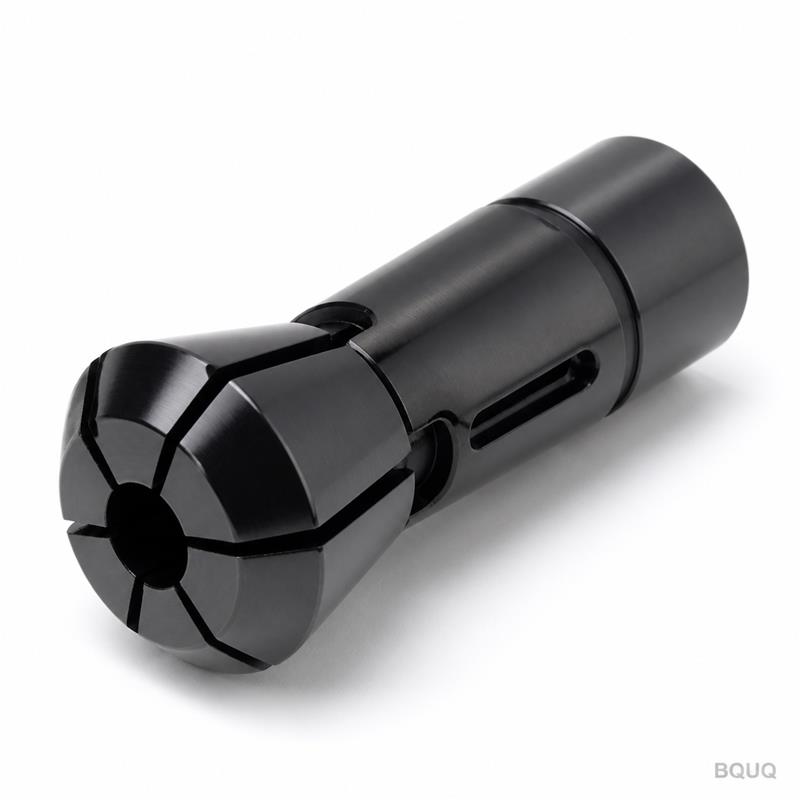
"Collet Chuck Problems: Slippage, Runout and Pull-Out — Causes and Fixes"
Most collet chuck failures are not failures at all — they are mismatches: a collet bored for the wrong stock size, a nut torqued by feel, a taper carrying one grain of swarf, or a chuck holding a part it was never sized for. Slippage, runout and pull-out each have a short list of causes, and every one of them is found by measurement before it is found by scrapped parts.
When a collet chuck starts slipping, running out or pulling the work loose, the instinct is to blame the collet. In practice the collet is usually the last thing wrong — it is a passive steel sleeve doing exactly what the geometry around it allows. The grip comes from the closing force, the friction on the bore, and the match between bore and stock. Runout comes from the whole chain of seats and tapers. This guide gives you a structured path from symptom to cause to fix, without replacing parts at random.
Symptom 1: Work Slipping or Spinning in the Collet
Work slippage means the grip force at the contact surface is smaller than the cutting force trying to rotate or pull the work. The cause list starts with bore mismatch: a collet gripped over a few hundredths of a millimeter of collapse grips far harder than one forced to collapse at the edge of its range — or worse, one that barely touches the stock at two points because the bore is oversize. Oil, coolant or scale on the bore cuts friction the same way water cuts a brake's grip. And on worn collets the gripping segments fatigue and lose their spring, so the collet no longer snaps closed on the stock even when the chuck cycles correctly.
| Likely cause | How to check | Fix |
|---|---|---|
| Bore oversize or undersize for stock | Micrometer the bar; check collet spec | Order collet to measured stock size |
| Oil/coolant on bore or bar | Wipe and retest grip | Clean both; check coolant wash |
| Collet at end of collapse range | Compare bore to bar | Re-bore or replace collet |
| Taper dirty or worn | Inspect seat, re-seat collet | Clean taper; replace if worn |
| Closing force too low | Check draw tube stroke and pressure | Adjust stroke/pressure per spec |
The fix order matters: clean first, because it is free; then measure the bore-to-bar fit, because it is the most common real cause; then suspect force and wear. If the work still slips after all four, measure the actual grip with a force gauge instead of guessing.
Symptom 2: Runout Climbing or Inconsistent
Runout is the most diagnosed and least understood collet complaint, because it is always a stack. When parts come out eccentric, the error can live in the spindle nose, the chuck seat, the collet, the nut, or the bar itself. The measurement routine separates them: mount a ground test bar in the collet, torque the nut to spec, and read an indicator at the nose and at 25–50 mm out. High reading at the nose points at the seat or collet; high reading only at distance points at tilt or bar straightness.
| Check | Tool | What it tells you |
|---|---|---|
| Chuck taper cleanliness | Visual, solvent wipe | Dirt here ruins every collet |
| Collet seating | Indicator on collet OD | Collet not seating square |
| Nut torque | Torque wrench | Under/over torque changes collapse |
| Test bar straightness | Rotate bar in collet | Bar error pollutes the reading |
| Spindle nose runout | Master holder + indicator | Machine condition baseline |
A common pattern: runout is fine at low speed and worsens with each re-grip. That usually means the collet bore no longer matches the bar after wear, or the bar itself is not straight — bars arrive bent more often than shops admit. Read more on the full error chain in our collet runout explainer.
Symptom 3: Tool Pull-Out in Toolholding Collets
On the toolholding side — ER collet chucks in milling spindles and turrets — the failure mode is the tool pulling out of the collet under axial load. The causes mirror the workholding list: under-torqued nut, a shank at the bottom of the collet's step range, oil between collet and shank, or a worn nut thread that cannot develop the designed pull. ER collets grip by being collapsed a controlled amount; an 8 mm collet on a 7.9 mm shank grips noticeably worse than the same collet on an 8.00 mm shank.
| Likely cause | Check | Fix |
|---|---|---|
| Nut under-torqued | Torque wrench vs maker spec | Re-torque to spec |
| Shank under size | Micrometer the shank | Correct collet size or new shank |
| Collet worn or cracked slots | Visual inspection | Replace collet |
| Oily shank | Wipe and retest | Clean; consider dry shanks |
| Wrong nut for holder | Compare threads | Match nut to holder maker |
Torque is the first suspect and the cheapest fix: most pull-out incidents happen because the nut was tightened by feel, and the difference between "tight" and the maker's N·m number is exactly the grip that holds the tool. A torque wrench on the collet nut belongs in every tool crib, not just the clean room.
Symptom 4: Pull-Back Drift and Length Problems
Workholding collets that pull the bar back on closing cause length drift, and chucks whose collets seat inconsistently cause the same symptom from the other direction. If part lengths wander between cycles, first confirm whether the collet action is dead-length or pull-back — the difference is explained in our dead-length vs pull-back guide — then check that the bar seats against the same stop every feed, and that the collet closes fully every cycle. A collet that half-closes because the seat is dirty or the draw stroke is short grips late and moves the bar differently each time.
A Diagnosis Order That Works
When a collet chuck misbehaves, run this sequence before touching any replacement part: clean the taper and collet; measure the bar and the collet bore; verify full collet closure and draw stroke; torque everything to spec with a wrench; then measure the result with a test bar or test part. That order solves the large majority of "collet problems" — and the cases that survive it are genuine wear, which our collet maintenance guide covers with inspection intervals and replacement criteria.
None of this troubleshooting works if the collet itself was made loosely. A collet's bore, taper and slots must be concentric to fractions of a hundredth so that cleaning, torque and sizing can do their jobs. BQUQ machines auto-lathe spring collets, Swiss power chucks and tool-holder collet chucks on CNC equipment with ±0.005 mm capability — heat treated, checked per batch and shipped with inspection data from its ISO9001 factory in Dongguan. Send your symptom notes, drawings and stock sizes to sc@bquq.com for a quotation within 12 working hours.
Email sc@bquq.com or WhatsApp +86 137 1315 7787 with your PDF/DXF/STEP file. An engineer reviews it and replies with price, lead time and DFM notes on working days.
Frequently Asked Questions
Q: Why does my collet chuck slip on some bars but not others?
A: Because grip depends on bore-to-bar fit, friction and collapse range — not on the chuck alone. Bars at the edge of a collet's range, oily bars or slightly undersized bars slip while well-matched clean bars hold. Match the collet to the measured stock.
Q: How do I know if runout is the collet or the chuck?
A: Measure the assembly with a ground test bar at the nose and at 25–50 mm out. Then clean and re-seat the collet and measure again. If the number moves with the collet, the collet or seat is the cause; if it stays, suspect the chuck or spindle.
Q: What torque should I use on a collet nut?
A: The holder or nut maker's specified value — ER25 nuts commonly run around 100–120 N·m and other sizes scale from there, but the maker's number for your specific nut is the only correct one. Tightening by feel is the leading cause of tool pull-out.
Q: Can a worn collet cause both slippage and runout?
A: Yes. Fatigued or cracked segments lose spring and grip, and uneven segment wear lets the bar or tool sit off-center. If a collet fails after cleaning, sizing and torque checks, replace it and compare the test-bar readings before and after.
Q: How often should collets be replaced?
A: There is no fixed interval — it depends on cycles, material and care. Inspect at job changes for cracked slots, wear steps, rust and lost spring. Replace when a collet no longer holds or centers correctly after cleaning, and track test-bar runout over time to catch gradual wear.
Authored by the BQUQ Engineering Team. BQUQ is an ISO9001-certified source factory in Dongguan, China, running CNC machining, metal stamping, custom springs, heat sink and collet lines under one roof. Send drawings to sc@bquq.com or WhatsApp +86 13713157787 for a quote within 12 working hours. www.bquq.com