Inspect parts from Chinese factories: AQL sampling, defect classes, third-party labs, pre-shipment steps. BQUQ ships batch inspection reports as standard.
Quality Inspection in China: AQL, Third-Party Labs and Pre-Shipment Checks
Quality inspection of Chinese-made parts runs on AQL sampling, and the two numbers that matter are the defect classes you assign (critical, major, minor) and the AQL levels you set for each. A standard general inspection at Level II with AQL 1.0 for majors and 4.0 for minors is a sane default for precision parts — and it only works if the inspection point, the checklist and the acceptance rules are written into the order before production starts.
Inspection is not a test performed at the end; it is a control system with defined points. In China trade the system has three practical layers: the factory's own in-process and final checks, an optional third-party pre-shipment inspection, and your own incoming inspection or testing. This guide explains the AQL mechanics, where third-party labs add value, and how to structure a pre-shipment check that actually protects you.
AQL in Plain Language
Acceptable Quality Limit (AQL) is the maximum percent of defective units that a sampling plan will, on average, accept. It is not "the factory may ship this many bad parts" — it is a statistical agreement about how much sampling confidence costs what. Lower AQL means larger sample sizes, more inspection cost, and higher confidence.
| AQL value | Defect level it suits | Typical sample implication |
|---|---|---|
| 0.10–0.65 | Critical/safety features | Large samples; often 100% inspection for true criticals |
| 1.0 | Major defects, precision parts (typical default) | Moderate samples per ISO 2859-1 tables |
| 2.5 | General functional defects | Standard commercial sampling |
| 4.0 | Minor/cosmetic defects | Smaller samples, faster checks |
The standard reference is ISO 2859-1 (ANSI/ASQ Z1.4), the same table system used globally. Sample size is determined by the lot size and the inspection level; General Inspection Level II is the default, Level I for low-risk parts and lower cost, Level III when history or risk demands more evidence.
| Lot size | Level II sample (code letter) | AQL 1.0 accept/reject (majors) | AQL 4.0 accept/reject (minors) |
|---|---|---|---|
| 51–90 | 13 (E) | 0 / 1 | 1 / 2 |
| 151–280 | 32 (G) | 1 / 2 | 3 / 4 |
| 501–1,200 | 80 (J) | 2 / 3 | 5 / 6 |
| 3,201–10,000 | 200 (L) | 5 / 6 | 10 / 11 |
The takeaway: AQL does not eliminate bad parts, it quantifies the risk you accept and the sampling effort that buys. If a defect is truly unacceptable, it is not a "major at AQL 1.0" — it is a critical requiring 100% inspection or a process change.
Defect Classes: Decide Before Production
The entire AQL system depends on classifying defects before the parts exist. This is a design and engineering decision, not an inspection decision. Write the classification into the order: what is critical (safety, function, fit), what is major (assembly failure, out-of-spec on named dimensions), what is minor (cosmetic).
| Class | Definition | Example for a machined part | Typical AQL |
|---|---|---|---|
| Critical | Safety, regulatory, or total function failure | Wrong material, missing thread, crack | 0 / reject lot; often 100% check |
| Major | Will cause failure or rework in assembly | Critical dimension out of tolerance | 1.0–1.5 |
| Minor | Does not affect function; cosmetic or slight | Small scratch, slight edge burr | 4.0 |
Vague classifications produce vague reports. "Minor burrs acceptable" becomes a negotiation at the inspection table. "Burr under 0.1 mm on edges per sample photo" is inspectable. The effort you put into the checklist before production is returned tenfold at pre-shipment.
Third-Party Inspection and Labs: When They Pay
Independent inspection companies — SGS, Bureau Veritas, TÜV and equivalents — operate across China with standardized reporting. Their value is not that they measure better than the factory; it is that they are independent and their reports travel. Typical cost for a man-day of pre-shipment inspection runs a few hundred US dollars plus travel, which is cheap relative to the batch value it guards.
| Service | What it does | When it earns its cost |
|---|---|---|
| Pre-shipment inspection (PSI) | Samples per your AQL at the factory before loading | First orders, new suppliers, high-value batches |
| During-production inspection | Checks process and key features mid-run | Long runs, complex parts, quality history gaps |
| Container loading supervision | Verifies what actually gets loaded | Mixed loads, consolidation shipments |
| Laboratory testing | Material verification, plating thickness, hardness, RoHS | When MTRs alone are not enough — see material certificates |
| Calibration services | Verifies factory gauge accuracy | Audit follow-up, dispute resolution |
Third-party inspection is a control, not a substitute for a good supplier. The factories that welcome it — and put it in the schedule without friction — are usually the ones that would pass anyway. The ones that resist it are telling you where their confidence actually sits. Our remote factory audit guide shows how to qualify a supplier so that the first third-party inspection is confirmation rather than discovery.
What a Professional Pre-Shipment Inspection Looks Like
A structured PSI follows a fixed sequence, and you should receive the plan before the inspector goes. Typical steps: confirm order and PO documents, verify quantity and packaging against the packing list, draw the AQL sample per your agreed classes, check critical dimensions and features with calibrated instruments, verify material identification where marked, photograph defects and conforming samples, and issue a report with accept/reject per class.
| Report element | What to check when it arrives |
|---|---|
| Sample size and code letter | Matches your agreed level and lot size |
| Result per defect class | Accept/reject numbers against your AQL |
| Dimensional results | Real measured values, not pass/fail only |
| Photos of defects | Clear, dated, tied to part and location |
| Instruments used | Calibrated, IDs recorded |
| Overall decision | Matches the class results, no silent override |
A report that only says "passed" is a receipt, not a report. Real measured values let you trend a supplier's process over orders — drifting dimensions are how you catch a tool wearing out before it makes scrap. Batch reports are also where traceability documents like mill certificates get attached; our material certificates guide explains what should accompany the parts.
Inspection as Standard Practice: A Factory Example
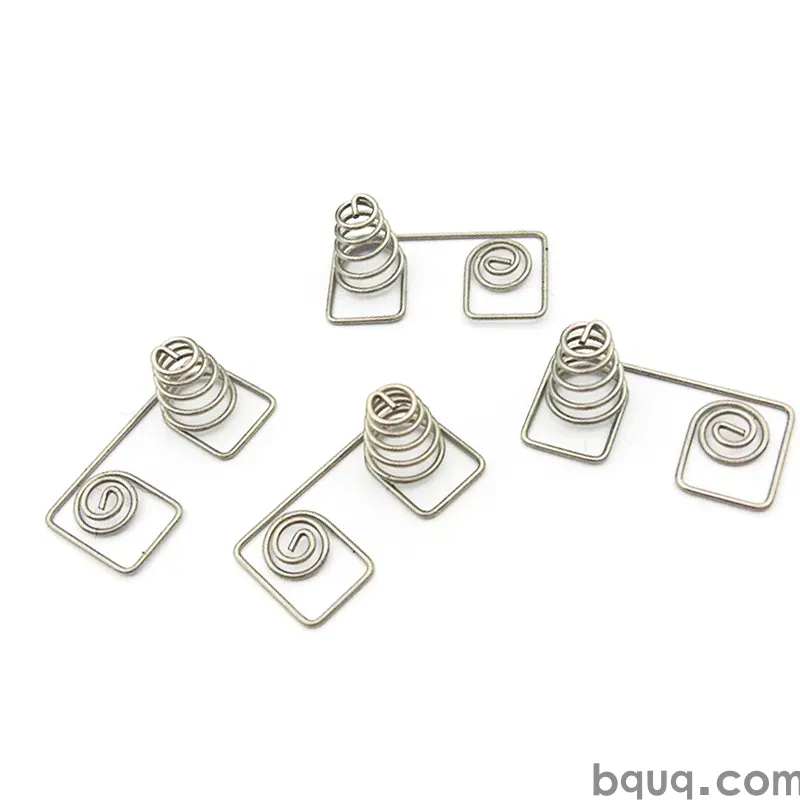
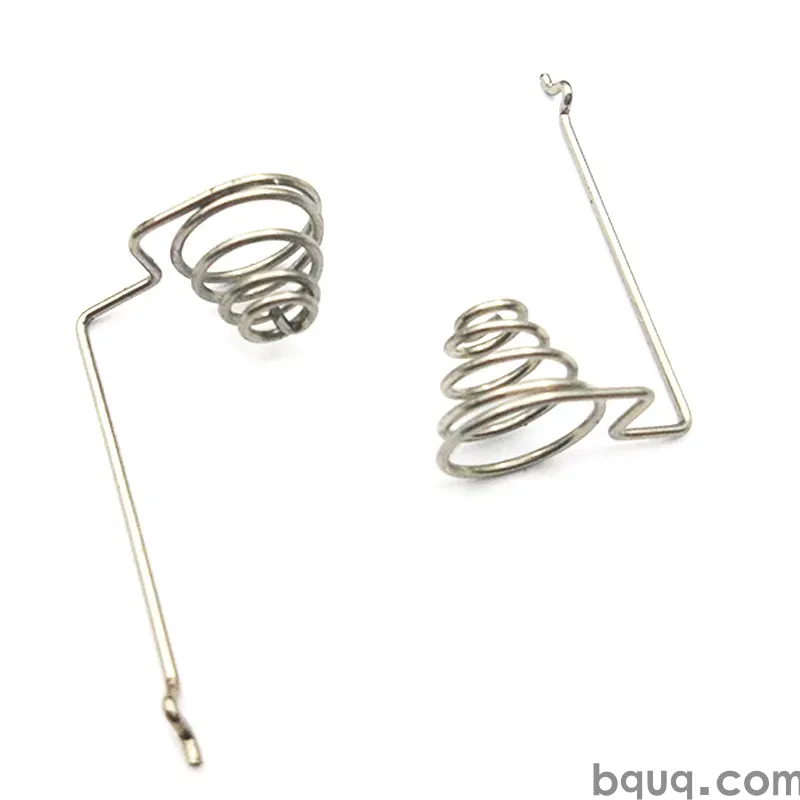
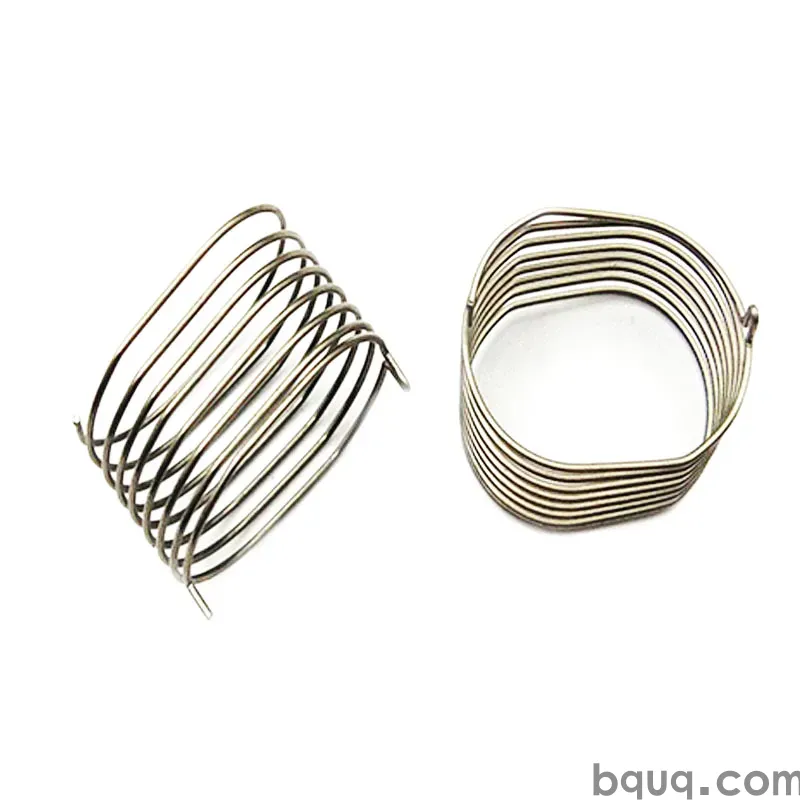
Inspection only protects you if the factory treats it as normal. As a reference point, here is how BQUQ structures it: we are ISO 9001 certified, our production tolerance for critical machined features is ±0.005 mm verified by on-site CMM, and every batch ships with a dimensional inspection report covering the features agreed in the order — offered as standard, not as a paid extra. On springs, load and rate are checked per batch against the drawing values; on machined parts, the agreed critical dimensions carry measured values and instrument references. We accept third-party pre-shipment inspection on any order; we ask only that it is in the schedule so parts are not held at the door waiting for an inspector. If you want to see the format before ordering, we will share a sample batch report — the same way a factory should be willing to show its work before it is paid for it. Start the process by sending a drawing for a quote on our CNC turning parts or custom springs lines, or read our profile for the certification and quality system details.
Email sc@bquq.com or WhatsApp +86 137 1315 7787 with your PDF/DXF/STEP file. An engineer reviews it and replies with price, lead time and DFM notes on working days.
Frequently Asked Questions
Q: What AQL should I use for precision machined parts?
A practical default is General Inspection Level II with AQL 1.0 for major defects and 4.0 for minors, with true criticals pulled out for 100% inspection. Tighten to 0.65 or Level III when history or risk demands more confidence — and expect larger samples.
Q: What is the difference between AQL and IQC/OQC?
AQL is the sampling rule; IQC/OQC (incoming/outgoing quality control) are the factory's own checkpoints. AQL governs how many parts you inspect and what you accept. Factory OQC reports and your AQL-based inspection are complementary, not either/or.
Q: Should I use a third-party inspector for every order?
Not necessarily. Use third-party PSI for first orders, new suppliers, and high-value batches. For repeat orders from a proven factory, audited factory reports plus your own incoming checks usually suffice — spend the inspection budget where the risk is.
Q: What if the inspection fails?
The factory sorts the lot, rechecks, and you agree on reinspection — typically at the factory's cost. The failure should also trigger a correction plan. This only works cleanly if the defect classes and AQL were written into the order before production.
Q: Do Chinese factories provide inspection reports normally?
Serious ones do, as standard practice. BQUQ ships each batch with a dimensional inspection report for the agreed features, and will share a sample report before you order. A factory that cannot produce a real batch report is a factory you should not be testing with volume.
Authored by the BQUQ Engineering Team. BQUQ is an ISO9001-certified source factory in Dongguan, China, running CNC machining, metal stamping, custom springs, heat sink and collet lines under one roof. Send drawings to sc@bquq.com or WhatsApp +86 13713157787 for a quote within 12 working hours. www.bquq.com