Deep cavity machining and extended reach operations present a classic engineering dilemma: the longer the tool holder, the greater the deflection and the higher the risk of chatter
How Can Tool Holder Collet Chuck Extension Bars Reach Deep Without Losing Stiffness?
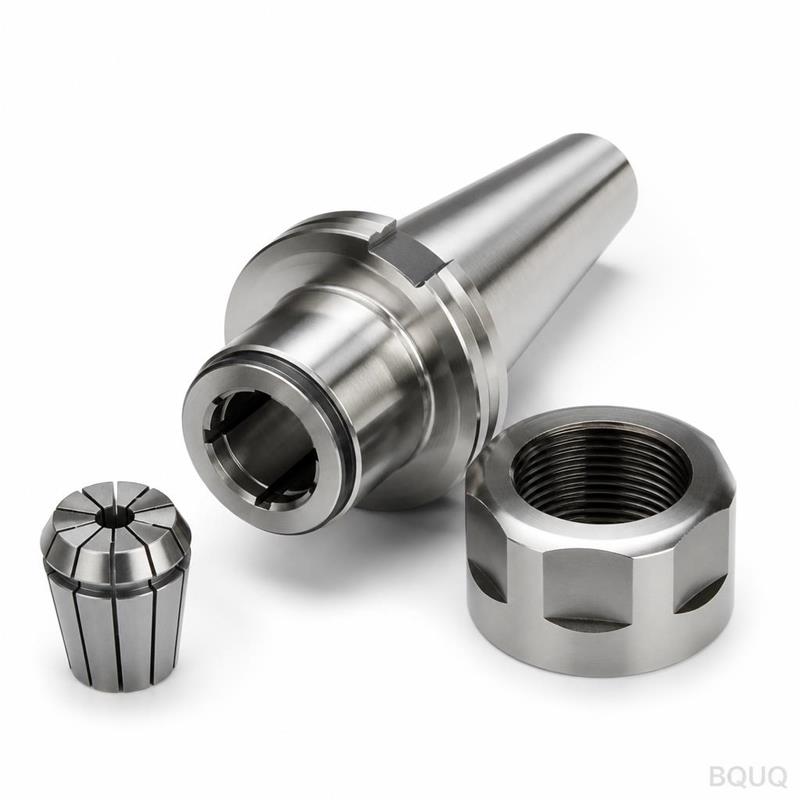
Deep cavity machining and extended reach operations present a classic engineering dilemma: the longer the tool holder, the greater the deflection and the higher the risk of chatter. The direct answer is that modern tool holder collet chuck extension bars maintain stiffness through a combination of optimized steel alloy selection, tapered geometric profiles, and precision-ground collet interfaces that minimize runout and maximize clamping force. By using hardened H13 tool steel or equivalent materials with a Young's modulus above 200 GPa, and employing a slim, stepped-shank design, these bars achieve extension ratios of up to 5:1 while retaining a static stiffness of over 20 N/µm at the gauge line.
What Are the Core Design Principles Behind Stiff Extension Bars?
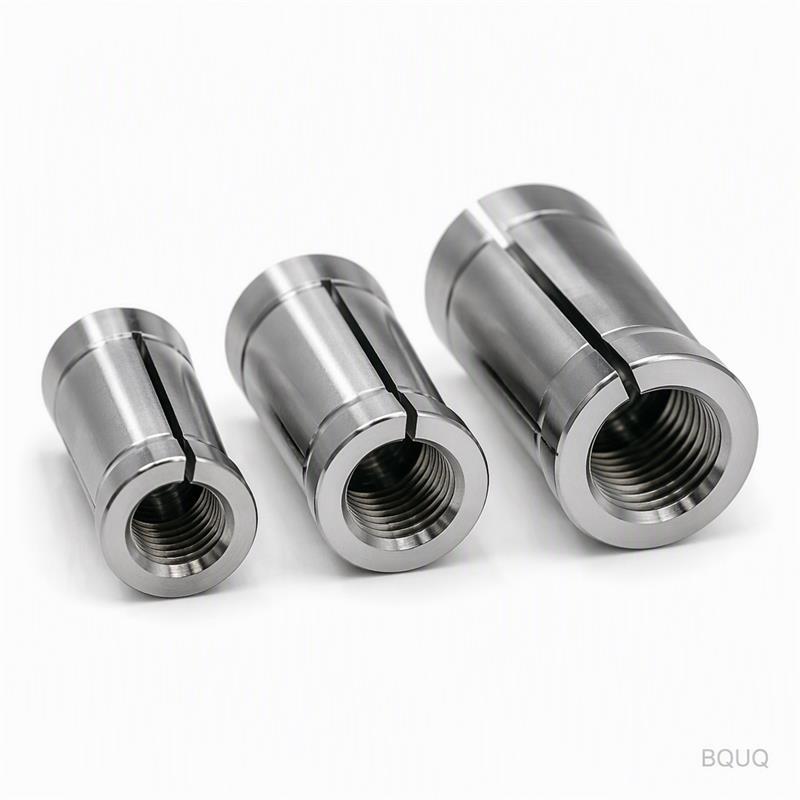
The stiffness of an extension bar is governed by its moment of inertia, which scales with the fourth power of the diameter. Therefore, the primary design strategy is to maximize the outer diameter (OD) for as much of the length as possible, tapering down only near the nose. A typical 20 mm diameter extension bar with a 100 mm reach will have a wall thickness of 8 mm, providing a cross-sectional area that resists bending. Additionally, the transition zone between the shank and the extension is radiused, not sharp-cornered, to eliminate stress risers that could cause micro-fractures under cyclic loading. The internal bore, which houses the collet, is ground to a tolerance of H7, ensuring that the collet seats perfectly concentric to the shank axis, typically within 0.003 mm TIR (Total Indicator Reading).
How Does the Collet Interface Affect Stiffness and Runout?
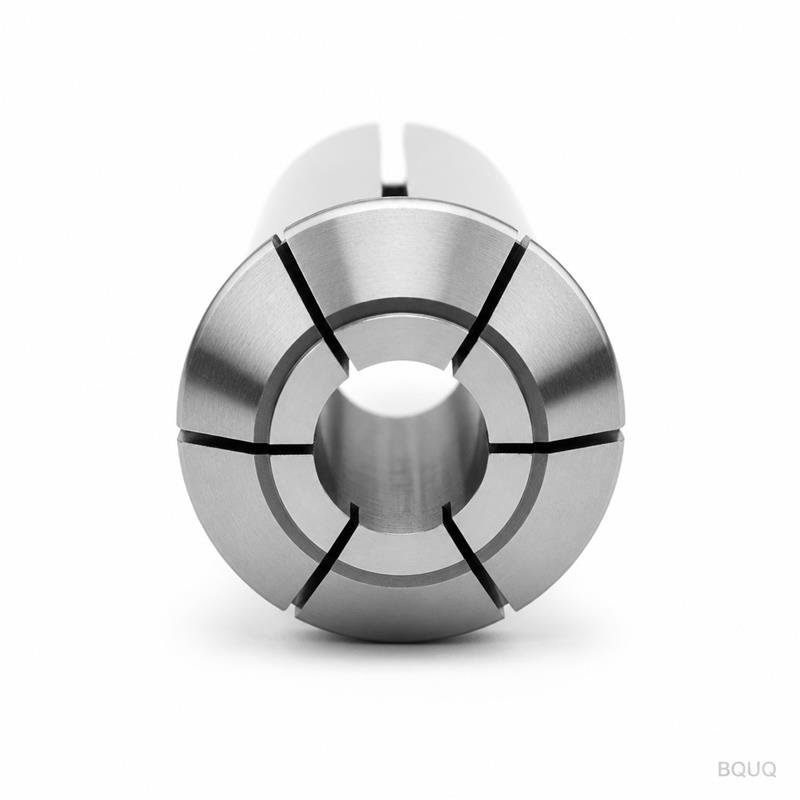
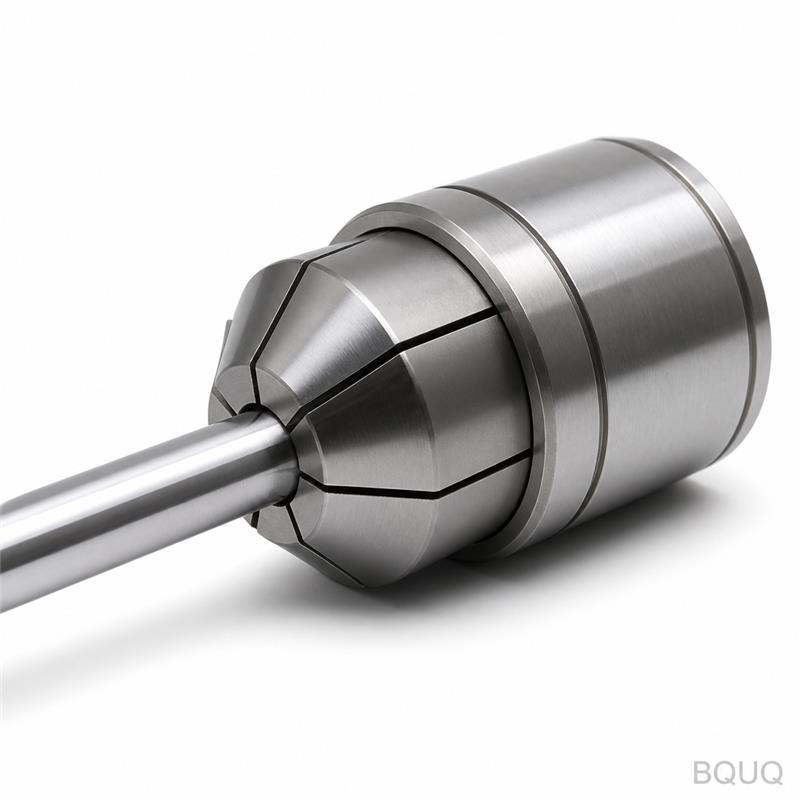
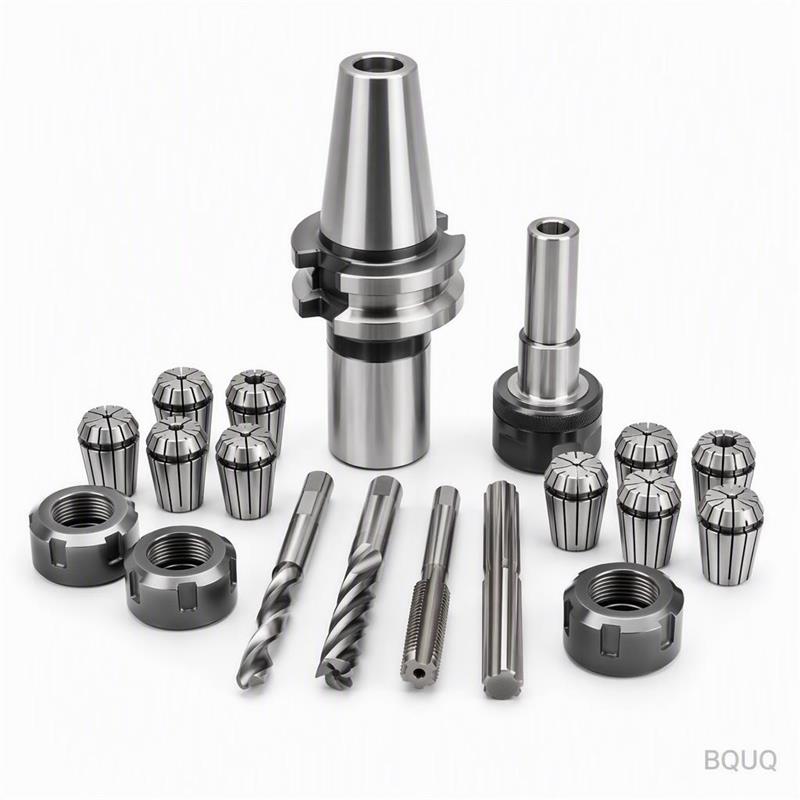
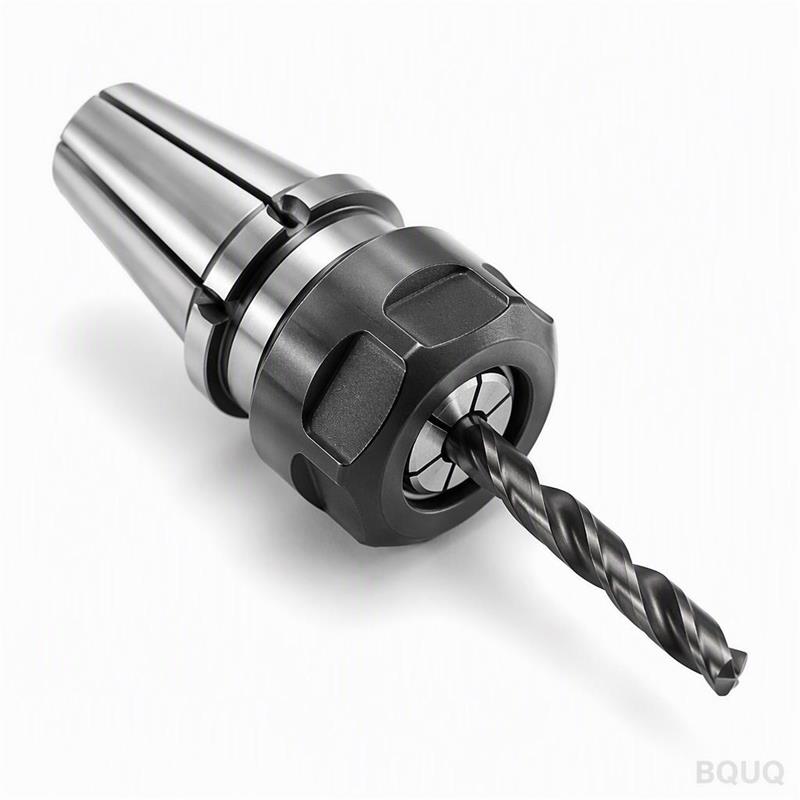
The collet interface is the weakest link in the system; a high-quality extension bar is useless if the collet cannot transfer clamping force evenly. Most professional extension bars use ER collets (ER16, ER20, ER32) or high-precision hydraulic chucks. For ER collets, the critical factor is the collet nut torque. A standard ER32 collet requires a tightening torque of 120 Nm, which generates a radial clamping force of approximately 15 kN. This force deforms the collet elastically, gripping the tool shank with a uniform pressure of about 300 MPa. However, runout is directly correlated with collet quality. A precision-ground ER collet, certified to DIN 6499, will hold runout at 0.005 mm at 3x diameter from the nose. For applications requiring less than 0.003 mm runout, a hydraulic expansion chuck is recommended, as it uses hydraulic pressure to provide a 360-degree clamping surface, eliminating the three-point contact issues common with slotted collets.
Which Materials Are Best for Maximizing Static and Dynamic Stiffness?
Material selection is not merely about hardness; it is about the modulus of elasticity (Young's modulus) and damping capacity. Standard carbon steel (AISI 1045) has a Young's modulus of 205 GPa, but its damping ratio is low, leading to chatter. High-end extension bars use pre-hardened tool steel like H13 or 42CrMo4, heat-treated to 48-52 HRC. The heat treatment increases yield strength to approximately 1,400 MPa, allowing the bar to withstand higher bending moments without plastic deformation. For ultra-lightweight applications, titanium alloy (Ti-6Al-4V) is used, offering a Young's modulus of 114 GPa but a density only 60% of steel. This is beneficial for reducing spindle load, but the stiffness is lower, so titanium bars are limited to reach-to-diameter ratios of 3:1. The table below compares typical materials used in extension bar manufacturing.
| Material Grade | Young's Modulus (GPa) | Hardness (HRC) | Damping Ratio | Max Recommended Reach Ratio |
| H13 Tool Steel | 210 | 48-52 | 0.005 | 5:1 |
| 42CrMo4 Alloy Steel | 205 | 45-48 | 0.004 | 4:1 |
| Ti-6Al-4V Titanium | 114 | 36-40 | 0.008 | 3:1 |
| Tungsten Carbide (Solid) | 600 | 70-75 | 0.002 | 6:1 |
| Inconel 718 | 200 | 40-45 | 0.006 | 4:1 |
Why Does Length-to-Diameter Ratio Determine the Maximum Safe Reach?
The length-to-diameter (L/D) ratio is the single most important specification for predicting deflection. For a cantilevered beam, deflection increases with the cube of the length. This means that doubling the reach of a 20 mm bar from 50 mm to 100 mm results in an 8-fold increase in deflection under the same cutting force. Practically, this dictates that for a 4:1 L/D ratio, the maximum allowable radial cutting force is approximately 1,200 N before deflection exceeds 0.01 mm. For a 5:1 ratio, this drops to 600 N. Beyond a 6:1 ratio, even solid carbide bars will exhibit excessive vibration unless the spindle speed is reduced by 40% to avoid resonance. Therefore, when machining deep pockets, you must calculate the actual cutting force and compare it to the bar's stiffness curve to select the correct diameter.
How Can You Reduce Vibration and Chatter in Deep Reach Applications?
Chatter is a self-excited vibration that occurs when the cutting frequency coincides with the natural frequency of the tool holder. Extension bars with high L/D ratios have low natural frequencies, typically between 800 and 1,500 Hz. To mitigate this, manufacturers use "tuned" or "anti-vibration" bars that contain a damping element, usually a heavy metal core (tungsten) suspended in an elastomer. This mass damper absorbs vibrational energy, reducing the amplitude of chatter by up to 60% compared to solid bars. Additionally, increasing the rake angle of the cutting tool from 6 degrees to 12 degrees reduces cutting forces by 25%, which lowers the excitation energy. Finally, the machining strategy should favor trochoidal milling (high-speed, low radial engagement) which reduces the radial force component, allowing the extension bar to operate within its elastic limit.
What Tolerances and Surface Finishes Can Be Expected with Extension Bars?
The achievable tolerance is directly dependent on the bar's runout and deflection. With a high-quality hydraulic chuck extension bar (runout < 0.003 mm) and a stable cutting process, you can hold positional tolerances of +/- 0.01 mm and a surface finish of Ra 0.4 µm in aluminum alloys. In hardened steel (45 HRC), expect tolerances to open up to +/- 0.02 mm due to increased cutting forces and thermal expansion. The thermal growth of a steel extension bar is significant: a 100 mm bar will elongate by 0.012 mm for every 10 degrees Celsius increase in temperature. Therefore, for precision work, coolant application must be consistent to maintain thermal stability. The table below illustrates the practical limits for a 20 mm diameter bar with a 100 mm reach.
| Cutting Condition | Max Radial Force (N) | Expected Deflection (mm) | Achievable Tolerance (mm) | Surface Finish Ra (µm) |
| Aluminum 6061, 10,000 RPM | 900 | 0.008 | +/- 0.010 | 0.4 |
| Mild Steel 1020, 6,000 RPM | 700 | 0.006 | +/- 0.015 | 0.8 |
| Hardened Steel 45 HRC, 4,000 RPM | 450 | 0.004 | +/- 0.020 | 1.2 |
| Titanium Grade 5, 3,000 RPM | 350 | 0.003 | +/- 0.025 | 1.6 |
When Should You Choose a Solid Carbide Extension Bar Over a Steel Bar?
Solid carbide extension bars are the ultimate solution for extreme stiffness, offering a Young's modulus three times that of steel. This allows for L/D ratios of up to 6:1 with minimal deflection. However, solid carbide is brittle and expensive, with a price point roughly 5 to 8 times higher than a comparable steel bar. For example, a basic 20 mm x 100 mm steel extension bar costs approximately USD 150, while a solid carbide equivalent costs USD 900. You should choose solid carbide only when machining hardened materials (above 50 HRC) or when the reach ratio exceeds 5:1 and vibration cannot be controlled by speed adjustments. For general purpose machining in aluminum and mild steel, a steel bar with a tuned damper is more cost-effective and durable, as it is less prone to catastrophic failure from accidental tool crash.
What Are the Best Practices for Maintenance and Inspection?
To maintain the stiffness and accuracy of extension bars, you must inspect the collet taper and the internal bore for wear or nicks. A damaged taper will cause the collet to seat improperly, increasing runout by up to 0.01 mm. Clean the taper and the collet with a lint-free cloth and apply a light coat of anti-seize lubricant to the collet nut threads to ensure consistent torque. Calibrate the runout of the assembled tool holder using a dial indicator at the nose and at 50 mm from the nose; the difference should not exceed 0.005 mm. If runout increases beyond this, replace the collet, not the bar, as collets are sacrificial components. The extension bar itself should be checked for straightness every 200 operating hours using a precision straight edge; any bend greater than 0.02 mm over the entire length requires replacement.
FAQ Section
What is the maximum safe extension length for a standard collet chuck?
The maximum safe extension length for a standard ER collet chuck is typically 4 times the shank diameter. Beyond this ratio, deflection and chatter become unmanageable in steel. Use a solid carbide or anti-vibration bar for longer reaches.
How much does a high-quality extension bar cost?
A high-quality steel extension bar with a hydraulic chuck interface costs between USD 250 and USD 600 depending on length and precision. Solid carbide versions range from USD 800 to USD 1,500. Tooling cost is justified by the reduction in scrap and the ability to machine complex parts in one setup.
Can extension bars be used with through-coolant systems?
Yes, most extension bars are available with through-coolant capabilities, allowing coolant to pass through the center and exit near the cutting edge. This is essential for deep-hole machining to flush chips and control heat. Ensure the bar and collet are compatible with your machine's coolant pressure, typically up to 70 bar.
Which clamping system provides the best runout accuracy?
Hydraulic chucks provide the best runout accuracy, maintaining 0.003 mm TIR or better. Shrink-fit holders are second, with runout around 0.004 mm, but they require induction heating equipment. Standard ER collets are the least accurate, with runout between 0.005 and 0.010 mm.
Why does chatter occur more frequently with longer extension bars?
Chatter occurs because longer bars have lower natural frequencies and lower stiffness. The cutting force excites the bar's natural frequency, causing resonance. Anti-vibration bars with internal dampers are designed to absorb this energy and break the resonance loop.
How often should I replace the collet in an extension bar?
Replace the collet when the measured runout exceeds 0.008 mm at 3x the tool diameter, or when you see signs of wear or discoloration on the gripping surface. A typical collet lasts for 500 to 1,000 tool changes under normal conditions.
Can I machine hardened steel with a standard steel extension bar?
It is not recommended to machine steel above 45 HRC with a standard steel bar due to high cutting forces and the risk of deflection. Use a solid carbide or a heavy-duty steel bar with a tuned damper and reduce cutting parameters by 30% to maintain accuracy.
Conclusion
Selecting the right tool holder collet chuck extension bar requires a careful balance of reach, stiffness, and cost. Always prioritize the lowest L/D ratio possible, as deflection grows geometrically with length. For most applications, a hardened steel bar with a precision-ground ER collet and a tuned damper offers the best compromise of rigidity and value. When your geometry demands extreme reach or your materials are difficult to cut, invest in solid carbide or hydraulic systems to protect your part quality and machine spindle. At BQUQ, we apply 20 years of CNC machining experience to build custom tooling solutions that maximize your process stability. For a fast, accurate assessment of your deep-reach machining needs, contact us for a quote within 12 hours. Email us at sc@bquq.com, reach us on WhatsApp at +86 13713157787, or visit our website at www.bquq.com.