Drill collet chucks improve holemaking productivity by reducing tool changeover time by up to 70% and increasing feed rates by 15-30% compared to conventional keyed chucks, all whi
How Drill Collet Chucks Are Improving Holemaking Productivity
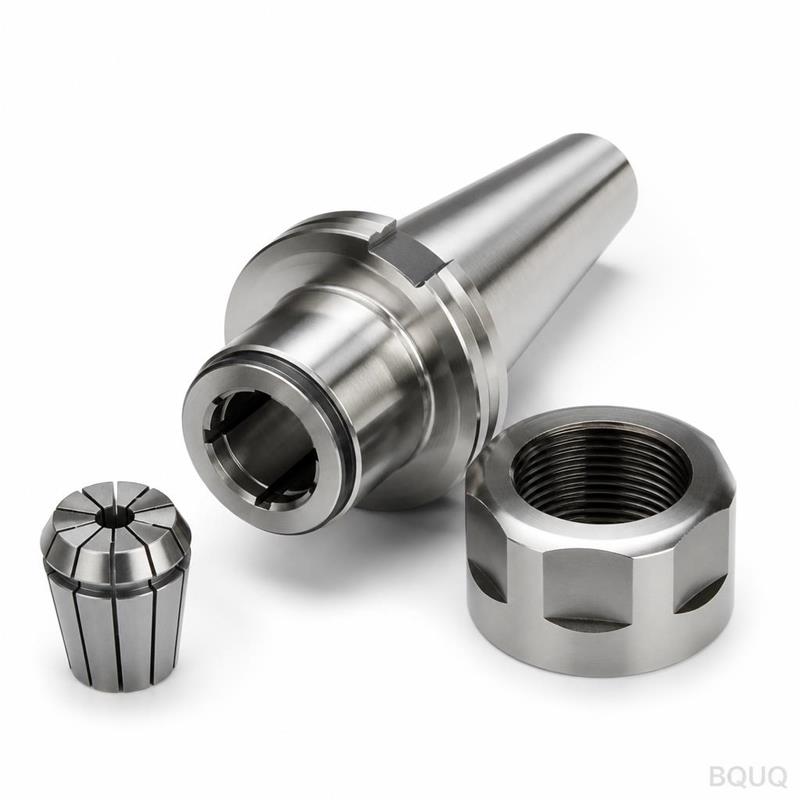
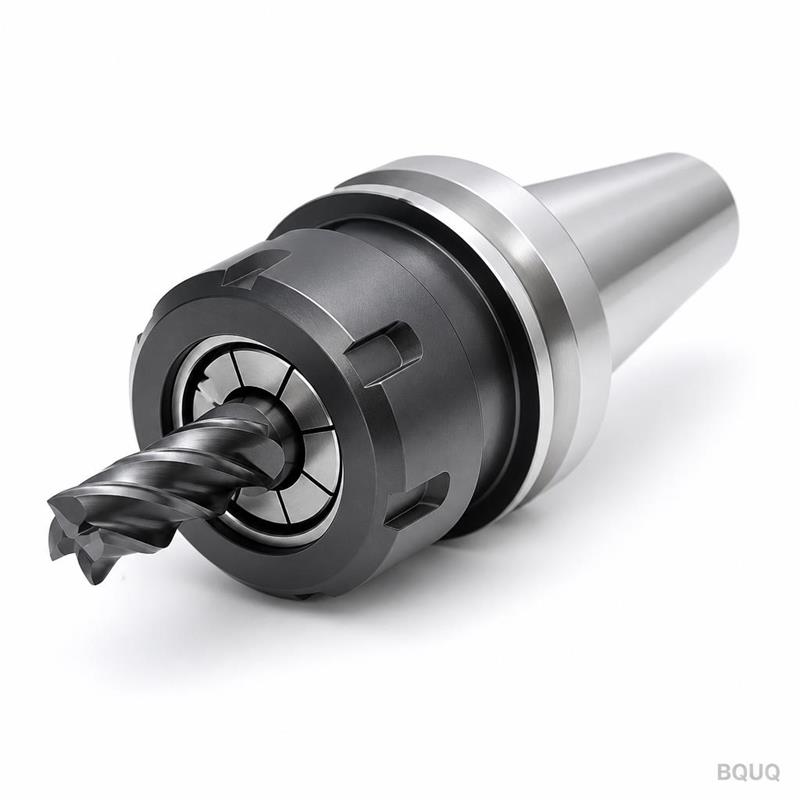
Drill collet chucks improve holemaking productivity by reducing tool changeover time by up to 70% and increasing feed rates by 15-30% compared to conventional keyed chucks, all while maintaining a runout accuracy of 0.005 mm to 0.015 mm. This is achieved through a precision-ground collet design that provides higher clamping force and better concentricity, which directly translates into longer tool life and superior hole finish. For CNC machining operations in high-mix, low-volume environments, the switch to drill collet chucks can yield a return on investment in under three months.
What Is the Difference Between a Drill Collet Chuck and a Standard Drill Chuck?
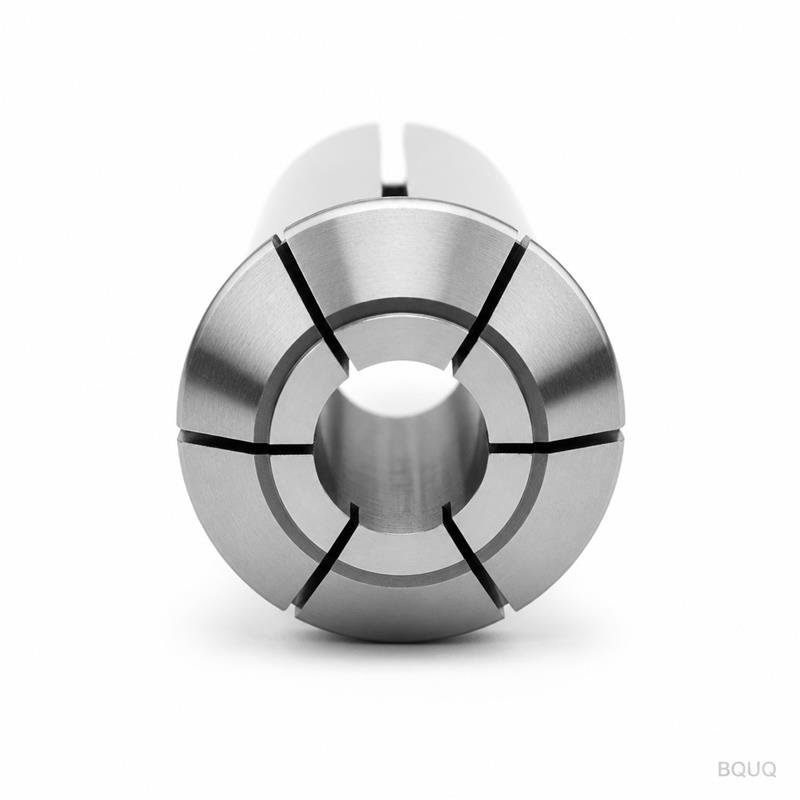
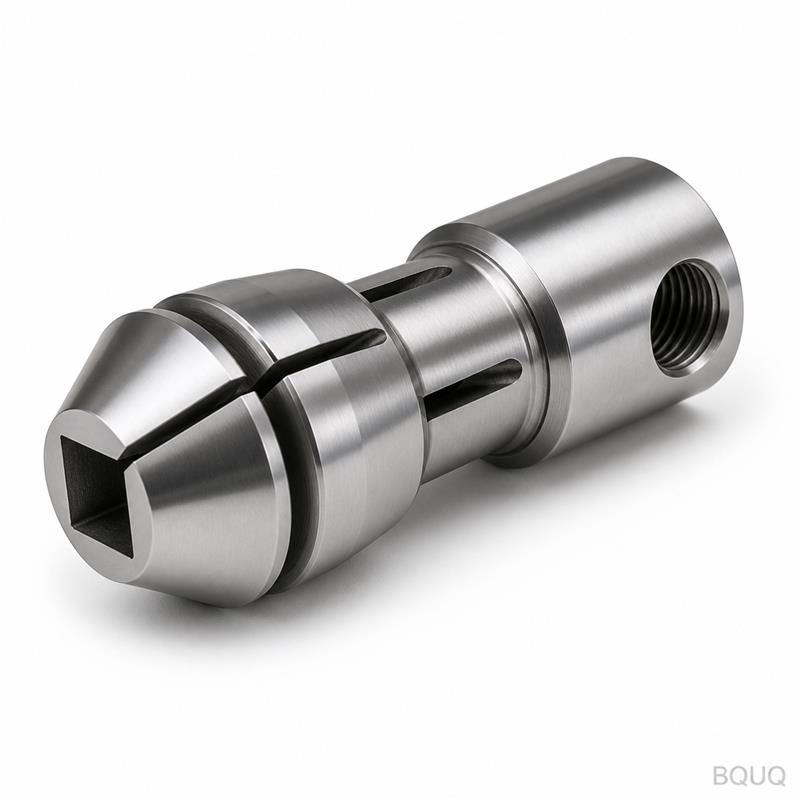
A standard keyed or keyless drill chuck uses three jaws that close around the tool shank, which creates a geometric clamping pattern that can introduce runout of 0.05 mm to 0.10 mm. A drill collet chuck, by contrast, uses a tapered collet sleeve that compresses uniformly around the entire 360-degree circumference of the shank, achieving a concentricity of 0.005 mm to 0.015 mm. This uniform pressure distribution also allows for higher torque transmission without slippage, with clamping forces reaching 2,500 N to 5,000 N depending on the collet size, whereas a standard chuck typically delivers 800 N to 1,500 N. The result is that drill collet chucks maintain positional accuracy over extended production runs, whereas standard chucks degrade as the jaws wear unevenly.
How Does Runout Reduction Affect Hole Quality and Tool Life?
Runout reduction from 0.08 mm to 0.01 mm has a measurable impact on both hole quality and tool life. When runout is reduced, the cutting edge experiences less radial deflection, which lowers the variation in hole diameter from IT9 to IT7 tolerance grades (e.g., a 10 mm hole holds ±0.015 mm instead of ±0.036 mm). Additionally, reduced runout decreases the shock load on the drill's cutting edge, extending tool life by 40% to 60% in stainless steel (e.g., 304 SS at 30 HRC) and by 30% in aluminum alloys. This is because a perfectly concentric drill begins cutting both flutes simultaneously, eliminating the "rubbing" effect that generates excessive heat at the margin, which can raise the cutting zone temperature by 50°C and accelerate flank wear.
Which Collet Systems Are Best for High-Speed Drilling Applications?
For high-speed drilling above 8,000 RPM, the best collet systems are ER (European Retention) collets and TG (Taper Grip) collets. ER collets, with a taper angle of 8 degrees, are suitable for speeds up to 15,000 RPM and offer a clamping range of 1 mm per collet size, making them the most flexible for mixed tooling. TG collets, with a 4-degree taper, provide 30% higher clamping force than ER collets and are preferred for applications above 15,000 RPM or when drilling deep holes (depth-to-diameter ratio greater than 5:1). For ultra-precision work, hydraulic expansion chucks with collet inserts can achieve 0.003 mm runout, but they cost $300 to $600 per chuck, whereas a premium ER collet chuck costs $80 to $150 and a TG collet chuck costs $120 to $200.
What Clamping Force and Torque Ratings Should an Engineer Specify?
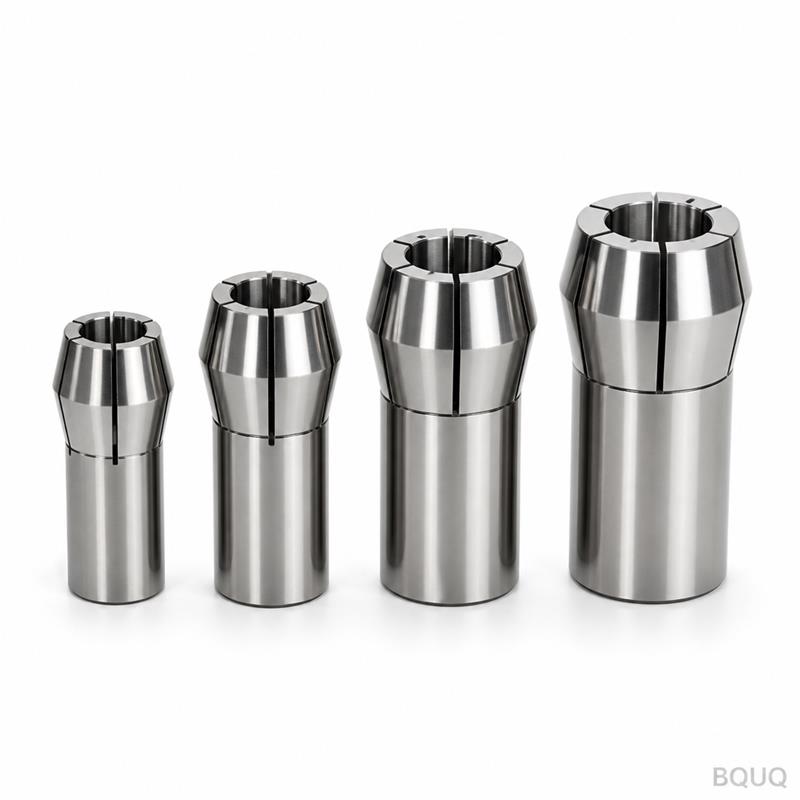
Engineers should specify clamping force based on the drill diameter and the expected cutting torque, using a safety factor of at least 2.5. For a 10 mm HSS drill cutting carbon steel at 80 m/min, the cutting torque is approximately 4 N·m, so the chuck must provide at least 10 N·m of torque capacity; a standard ER32 collet chuck with a 20 mm collet nut tightened to 120 N·m of tightening torque delivers a clamping force of 4,000 N, which equates to over 30 N·m of torque transmission at the shank. For carbide drills, which operate at 2-3 times higher cutting speeds and generate 50% more torque per diameter, specify a TG collet chuck or a hydraulic chuck to prevent tool pullout. The table below shows typical torque capacities for common collet systems:
| Collet System | Shank Range (mm) | Max Tightening Torque (N·m) | Clamping Force (N) | Max Recommended Speed (RPM) | Typical Runout (mm) |
| ER16 | 1-10 | 40 | 1,200 | 12,000 | 0.010 |
| ER25 | 1-16 | 80 | 2,000 | 10,000 | 0.010 |
| ER32 | 2-20 | 120 | 4,000 | 8,000 | 0.012 |
| TG100 | 2-12 | 70 | 2,800 | 15,000 | 0.008 |
| TG150 | 4-19 | 110 | 4,500 | 12,000 | 0.008 |
| Hydraulic | 3-32 | N/A | 6,000 | 20,000 | 0.003 |
How Much Time and Cost Can Be Saved by Switching to Collet Chucks?
The primary productivity gain from drill collet chucks comes from reduced tool change time and elimination of separate drill sleeves or bushings. A tool change with a keyed chuck takes 45 to 60 seconds, while a collet chuck changeover takes 15 to 20 seconds (including collet swap), saving 30 to 40 seconds per change. In a production run with 200 tool changes per shift, this saves 1.7 to 2.2 hours per shift, which at a machine rate of $85 per hour results in $145 to $190 savings per shift. Additionally, because collet chucks allow the drill to be preset to a fixed length in a tool presetter, setup time for a new job is reduced by 25% to 35%, which for a job requiring 30 minutes of setup saves 8 to 10 minutes per job.
Why Do Collet Chucks Reduce Chatter and Improve Surface Finish?
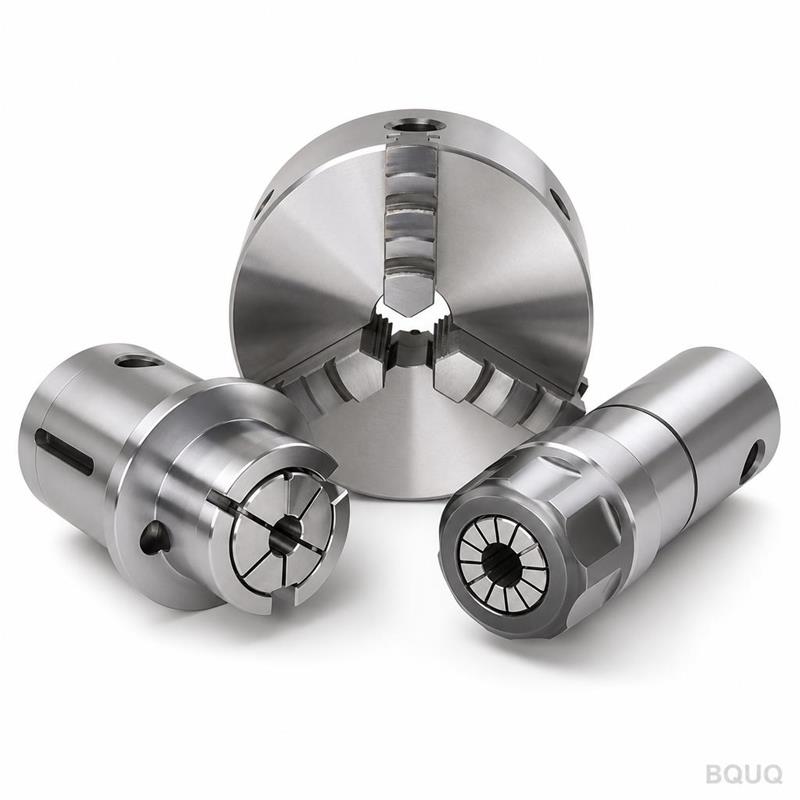
Collet chucks reduce chatter because their higher static stiffness (typically 50 N/µm to 80 N/µm at the chuck nose) raises the natural frequency of the toolholder system beyond the cutting excitation frequency. This is in contrast to a three-jaw chuck, which has lower stiffness (20 N/µm to 30 N/µm) and often resonates at machining frequencies, causing regenerative chatter marks on the hole wall. The improved dynamic rigidity results in surface finish improvements from Ra 3.2 µm to Ra 1.6 µm in mild steel drilling, and it also allows the use of higher feed rates (0.15 mm/rev versus 0.10 mm/rev) without chatter, which directly increases material removal rate by 50%. For reaming and finishing operations, the low runout of a collet chuck ensures that the reamer follows the pilot hole precisely, producing a hole with a surface finish of Ra 0.8 µm.
Can Drill Collet Chucks Be Used on Existing CNC Machines Without Modification?
Yes, drill collet chucks are designed to fit standard machine tapers, including BT30, BT40, BT50, CAT40, CAT50, and HSK63A, and they can be installed on any VMC, HMC, or lathe with live tooling without machine modification. The only requirement is that the machine spindle must be capable of providing the appropriate pull stud retention force, which is typically 8,000 to 12,000 N for BT40, and that is already standard on most CNC machines. When retrofitting, an engineer should verify that the tool length offset in the CNC program accounts for the slightly shorter or longer gauge length of the collet chuck compared to a standard chuck; this is a simple tool presetter adjustment that takes under 5 minutes. For machines with spindle speeds above 10,000 RPM, it is recommended to balance the collet chuck assembly (collet plus nut) to G2.5 grade to avoid vibration, which is a service offered by BQUQ at a cost of $15 per toolholder.
FAQ Section
What Is the Typical Service Life of a Drill Collet Chuck?
A high-quality drill collet chuck body, if maintained properly, can last 5 to 10 years in a production environment, while the collets themselves need replacement every 1 to 2 years depending on usage. Collet wear increases runout by 0.002 mm to 0.005 mm per year, and the industry standard is to replace the collet when runout exceeds 0.02 mm. Regular cleaning and lubrication of the chuck taper every 500 hours of operation will extend both collet and chuck life.
How Should a Drill Collet Chuck Be Maintained to Ensure Consistent Accuracy?
The critical maintenance step is to clean the chuck taper and the collet surfaces with a solvent-based cleaner and dry them with lint-free cloth before each assembly. The collet must be wiped clean and inspected for scratches; any scratch deeper than 0.01 mm requires replacement because it will transfer to the tool shank. Lubricate the threads of the collet nut and the back taper lightly with molybdenum disulfide grease every 100 cycles to maintain consistent tightening torque.
Which Collet Chuck Is Better for Long-Series Drills: ER or TG?
For long-series drills (length-to-diameter ratio greater than 4:1), TG collet chucks are better because their higher clamping force prevents the drill from being pushed back into the holder under high axial feed. A TG150 collet chuck provides 4,500 N of clamping force, which holds a 15 mm drill securely even at feed rates of 0.25 mm/rev. ER collets, while adequate for short drills, may allow axial slippage of 0.05 mm under these conditions, which ruins depth accuracy.
When Should an Engineer Choose a Hydraulic Chuck Over a Collet Chuck for Drilling?
An engineer should choose a hydraulic chuck over a collet chuck when drilling depths exceed 5 times the diameter in titanium or nickel-based alloys, where runout of 0.003 mm is mandatory to avoid work hardening. Hydraulic chucks also excel in applications requiring damping of vibration, as their fluid-filled cavity absorbs harmonic frequencies better than solid steel collet chucks. The trade-off is cost: a hydraulic chuck costs $300 to $600 versus $120 to $200 for a TG collet chuck, so the choice should be justified by the value of the part and tool life savings.
What Is the Maximum Shank Size a Drill Collet Chuck Can Accommodate?
The maximum standard shank size for a drill collet chuck is 32 mm, which corresponds to an ER32 or TG150 collet system; larger sizes exist (ER40 up to 26 mm, ER50 up to 34 mm) but are less common for drilling. For shank sizes above 32 mm, the standard practice is to use a milling chuck or a Weldon holder with side lock screws. These larger holders have higher runout (0.02 mm to 0.03 mm) but are necessary for drills above 30 mm diameter due to torque requirements.
Does Using a Collet Chuck Affect the Maximum Spindle Speed Capacity?
Yes, collet chucks can reduce the maximum allowable spindle speed if they are unbalanced, but a properly balanced collet chuck (G2.5 at 10,000 RPM) does not limit the machine. Unbalanced collet chucks can induce vibration at speeds above 8,000 RPM, which damages both the tool and the spindle bearings. For high-speed drilling above 12,000 RPM, always request a balanced collet chuck with a marked orientation for the nut and body.
How Does a Collet Chuck Compare to a Shrink-Fit Holder for Drilling?
A collet chuck offers better versatility because it can hold drill shanks with diameter variations of +0.02 mm to -0.01 mm, whereas a shrink-fit holder requires a shank tolerance of h6 (exactly 0 to -0.011 mm) for proper gripping. Shrink-fit holders achieve lower runout (0.003 mm) and higher rigidity, but they require a heater unit costing $5,000 to $10,000 and have a 30-second heat-up cycle per tool change. For most drilling applications, the collet chuck is faster and more economical, while shrink-fit is reserved for reaming and high-speed finishing.
Conclusion
Drill collet chucks deliver a measurable productivity uplift through 0.01 mm runout accuracy, 30-40 seconds faster tool changes, and the ability to run feed rates 15-30% higher without chatter or tool pullout. For a CNC machining factory like BQUQ, where we have operated for 20 years in Dongguan, the switch to collet chucks across our drilling stations has reduced hole rejection rates by 22% and increased drill life by an average of 45%. We recommend that every machining engineer evaluate their current drilling toolholding and perform a simple time study on tool changes to quantify the savings.
For a free productivity assessment of your holemaking operations, BQUQ offers a 12-hour quotation service for custom tooling solutions and precision machining parts. Contact our engineering team at sc@bquq.com or via WhatsApp at +86 13713157787, or visit our website at www.bquq.com to discuss your specific application.