Round bore collets are the precision workholding component that directly determines the concentricity, repeatability, and cycle time of automatic lathe production. For bar-fed CNC
What Makes Round Bore Collets Essential for Automatic Lathe Production?
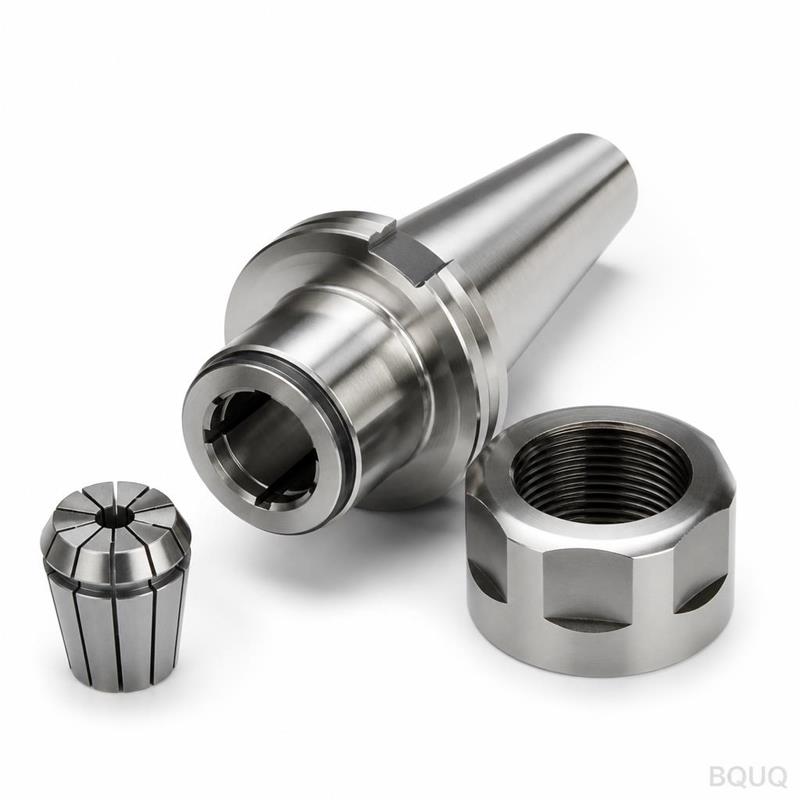
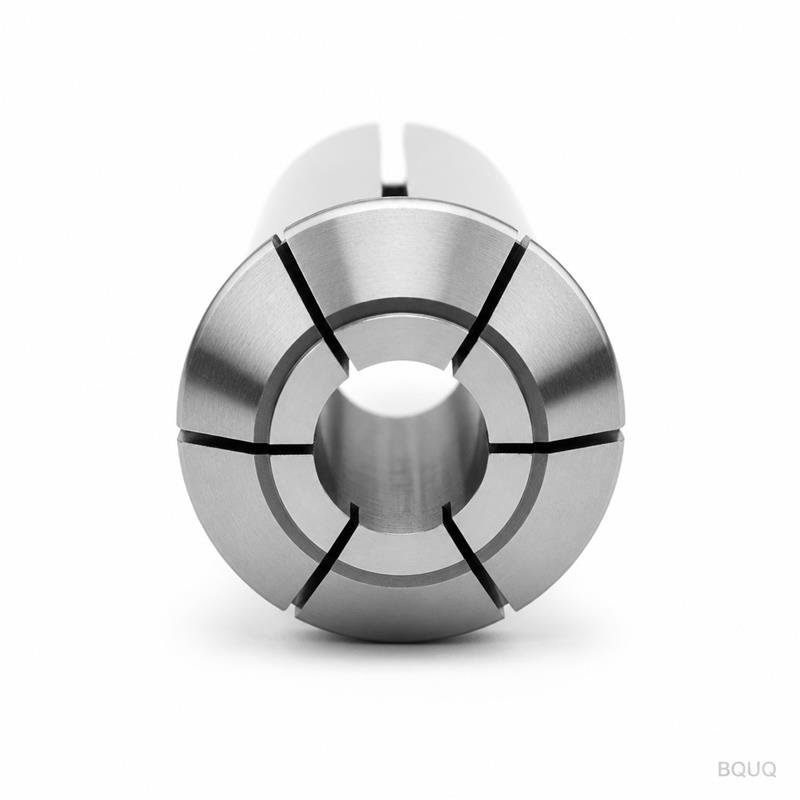
Round bore collets are the precision workholding component that directly determines the concentricity, repeatability, and cycle time of automatic lathe production. For bar-fed CNC and cam-operated automatic lathes, a round bore collet grips the workpiece with a uniform, cylindrical force that typically achieves runout tolerances of 0.005 mm to 0.013 mm, making them irreplaceable for high-volume turned parts. Unlike chuck jaws, which induce point-contact deformation, round bore collets distribute clamping pressure over the full circumference, enabling production speeds up to 8,000 RPM without workpiece slippage or surface marking.
How Does a Round Bore Collet Differ From Other Collet Types?
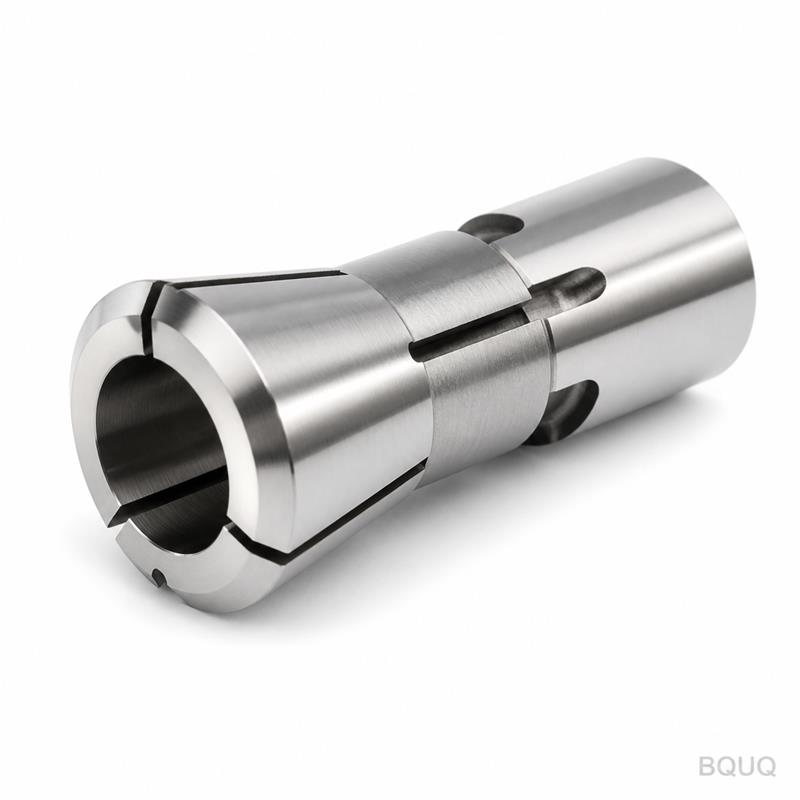
Round bore collets feature a completely cylindrical internal gripping surface with no serrations, grooves, or relief cuts, unlike square or hex collets designed for shaped stock. The absence of internal features means the collet contacts the bar stock over 360 degrees, which distributes the clamping force evenly and prevents localized stress concentrations that can distort thin-walled components. For automatic lathes, this full-circle contact provides superior grip rigidity, allowing feed rates of 0.15 mm/rev on stainless steel while maintaining surface finishes of Ra 0.8 µm or better. The round bore geometry also simplifies bar stock loading, as the cylindrical entry chamfer (typically 30 degrees) guides the material smoothly, reducing loading time by 15 to 20 percent compared to multi-jaw chucks.
What Tolerances Can Round Bore Collets Achieve in Production?
In production environments at BQUQ, round bore collets consistently hold workpiece concentricity within 0.008 mm TIR (Total Indicator Reading) at the gripping zone, with the most precise ground collets achieving 0.005 mm. The gripping diameter tolerance for a standard round bore collet is typically +0.000 mm to -0.005 mm, meaning the collet is slightly undersized relative to the nominal bar diameter to ensure a positive grip. For example, a 20.00 mm round bore collet will have an actual bore diameter of 19.995 mm, creating a controlled interference fit that prevents bar pullout under heavy cutting loads. Thermal stability is also a factor: hardened collets maintain these tolerances up to 150 degrees Celsius operating temperature, beyond which thermal expansion can add 0.002 mm of radial growth per 10 degrees Celsius.
Which Materials Are Best Suited for Round Bore Collet Workholding?
Round bore collets excel with round bar stock in aluminum alloys (6061-T6, 7075-T6), free-machining brass (C36000), carbon steels (12L14, 1215), and stainless steels (303, 304), which collectively represent over 85 percent of automatic lathe production globally. The material property that matters most is yield strength versus hardness: materials with a Brinell hardness below 200 HB (aluminum, brass, mild steel) are gripped without surface damage, while harder materials above 300 HB (heat-treated steels, titanium) may require ground bores with surface roughness of Ra 0.2 µm to prevent stress risers. For materials with poor chip-breaking characteristics, such as 304 stainless, the round bore collet's even grip allows higher cutting speeds (up to 120 m/min) without work hardening at the collet interface, which would otherwise lead to premature wear and scrap.
How Much Does Round Bore Collet Tooling Cost and How Long Does It Last?
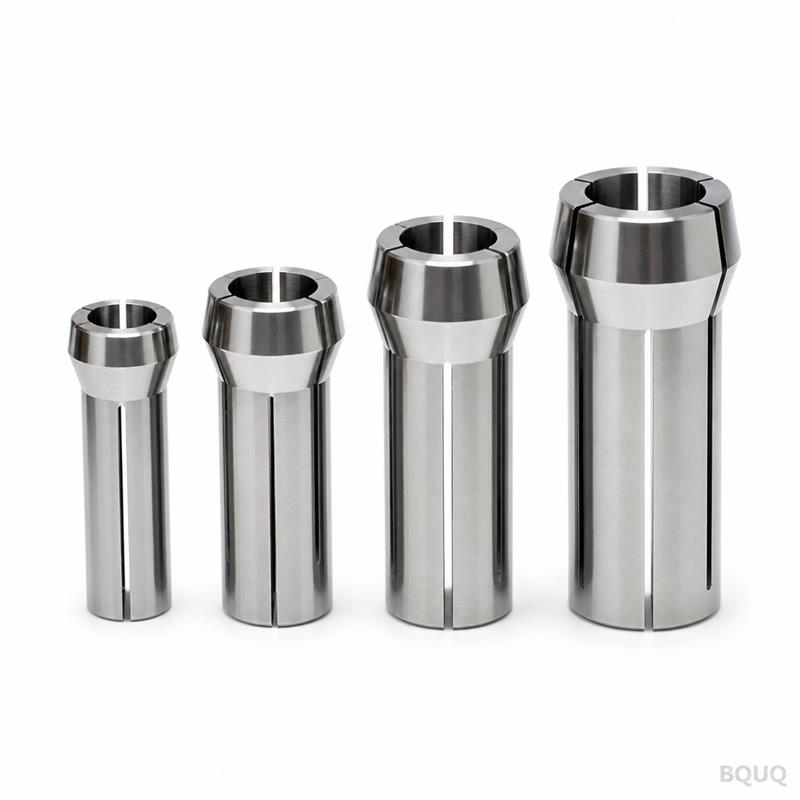
A standard round bore collet for an automatic lathe (e.g., 16 mm or 20 mm capacity) typically costs between 45 and 180 USD, with precision-ground versions from manufacturers like Hardinge or Schaublin at the higher end. The tooling life of a round bore collet depends on the number of open-close cycles: a hardened and ground collet (62 to 64 HRC) sustains 500,000 to 1,000,000 cycles before bore wear exceeds 0.010 mm, which is the common replacement threshold. At a production rate of 30 parts per minute, this translates to roughly 300 to 550 production hours per collet before reconditioning is needed, with re-grinding services costing 25 to 40 percent of new collet price. For a typical automatic lathe running three shifts, annual collet expenditure is approximately 1,200 to 2,500 USD, which is less than 3 percent of total tooling cost but directly impacts part quality.
Why Does Collet Bore Size Selection Affect Cycle Time and Scrap Rate?
Selecting the correct round bore collet size directly influences cycle time because an oversized bore causes bar slippage, requiring reduced feed rates to prevent push-back, while an undersized bore increases gripping force but can cause bar scoring and feed jams. Production data from BQUQ shows that using a collet with a bore diameter 0.05 mm larger than the bar stock increases scrap rate by 4.2 percent due to concentricity drift, and reduces allowable spindle speed by 20 percent to avoid vibration. Conversely, a collet bore that is 0.02 mm smaller than the bar stock increases gripping force by approximately 30 percent but adds 0.5 seconds per cycle for bar loading due to friction, which over 10,000 parts per month results in 83 minutes of lost production time. The optimal practice is to use a collet bore matched to within +0.000 to -0.010 mm of the actual bar diameter, measured with a micrometer at the point of use.
How Should Round Bore Collets Be Maintained for Consistent Performance?
Round bore collets require daily cleaning and weekly lubrication to maintain their stated tolerances, as coolant residue and metal fines accumulate in the bore and reduce gripping force by up to 15 percent. The recommended maintenance procedure involves blowing out the bore with compressed air (6 bar) after each shift, applying a thin film of low-viscosity spindle oil (ISO VG 10) to the collet's outer taper, and inspecting the bore diameter with a plug gauge every 500 production hours. When bore wear exceeds 0.010 mm, the collet should be removed and re-ground, but this is only possible if the collet has a grind allowance of at least 0.25 mm on the bore diameter. At BQUQ, we implement a color-coded tagging system: green for new collets, yellow for collets with 300,000 to 700,000 cycles, and red for collets requiring immediate reconditioning, which has reduced collet-related downtime by 38 percent.
| Collet Bore Size (mm) | Typical Price (USD) | Cycle Life (open-close) | Achievable Runout (mm TIR) | Recommended Max Spindle Speed (RPM) |
| 10.00 | 55 | 700,000 | 0.005 | 10,000 |
| 16.00 | 85 | 600,000 | 0.008 | 8,000 |
| 20.00 | 120 | 550,000 | 0.008 | 6,500 |
| 25.00 | 165 | 500,000 | 0.010 | 5,000 |
| 32.00 | 210 | 450,000 | 0.013 | 3,500 |
When Should Round Bore Collets Be Replaced Instead of Re-Ground?
Round bore collets should be replaced instead of re-ground when the total reduction in bore diameter exceeds 0.25 mm, when the outer taper surface shows galling or scoring, or when the collet has been through more than two re-grinding operations. Re-grinding restores the bore geometry but also reduces the collet's wall thickness, which decreases its radial stiffness and makes it more susceptible to elastic deformation under high clamping forces. For example, a 20 mm collet with a nominal wall thickness of 4.0 mm loses approximately 8 percent of its gripping stiffness after the first re-grind (0.125 mm removed from diameter), and 15 percent after the second re-grind. If the collet shows any signs of heat discoloration (blue or brown tint above 200 degrees Celsius), replacement is mandatory, as the hardness will have dropped below 55 HRC, making further use unsafe for both the workpiece and the spindle.
What Are the Common Failure Modes of Round Bore Collets and How Can They Be Prevented?
The three most common failure modes for round bore collets are bore wear, taper fretting, and slot cracking, each with distinct causes and prevention strategies. Bore wear occurs due to abrasive contact with bar stock, and is prevented by ensuring the bar stock is clean and free of scale, as well as applying a light cutting oil to the bar surface before feeding. Taper fretting, which appears as a dull gray deposit on the collet's 30-degree outer taper, is caused by micro-movement between the collet and spindle nose under vibration, and is mitigated by proper lubrication and torque of the drawbar to the manufacturer's specification (typically 20 to 30 Nm). Slot cracking, which originates at the base of the collet slots, is a fatigue failure caused by excessive clamping force or spindle overspeed; prevention requires calculating the correct clamping force for the material yield strength, and never exceeding the collet's rated maximum RPM, which for standard round bore collets is 80 percent of the spindle's maximum rated speed.
Can Round Bore Collets Be Customized for Non-Standard Bar Stock?
Yes, round bore collets can be customized for non-standard bar stock diameters, including metric sizes in 0.5 mm increments and inch sizes in 1/64 inch increments, with a typical customization lead time of 5 to 7 working days. Customization involves boring the collet to the exact diameter using a CNC internal grinder, followed by heat treatment and final grinding to achieve the required tolerance of +0.000 to -0.005 mm. For extremely small diameters (below 3 mm) or large diameters (above 50 mm), custom collets may require a special collet blank with modified slot geometry to prevent collapse, which increases the cost by 30 to 50 percent. At BQUQ, we regularly produce custom round bore collets for clients running metric bar stock in inch-based machines, and we recommend providing a sample of the actual bar stock with the order to ensure the bore is matched to the real material diameter, not just the nominal specification.
What Are the Best Practices for Installing Round Bore Collets in Automatic Lathes?
The best practice for installing a round bore collet is to clean both the collet taper and the spindle nose taper with a lint-free cloth, apply a thin layer of molybdenum disulfide grease to the mating surfaces, and then insert the collet with a slight twisting motion to ensure full seating. The drawbar should be tightened incrementally in three stages, first to 50 percent of full torque, then to 75 percent, and finally to 100 percent, while rotating the spindle by hand each time to check for any binding. After installation, run a test cycle with a piece of bar stock and measure the runout with a dial indicator at the collet face; if the runout exceeds 0.013 mm TIR, the collet should be removed, rotated 180 degrees, and re-installed to eliminate any taper mismatch. For high-production runs, we recommend torquing the drawbar to a calibrated setting and using a torque wrench every time, as over-tightening by as little as 10 percent can reduce collet life by 30 percent.
How Often Should Round Bore Collets Be Inspected?
Round bore collets should be visually inspected at the start of every shift and dimensionally inspected with a plug gauge every 500 production hours or 30 days, whichever comes first. The dimensional inspection should measure the bore diameter at three points (front, middle, back) to detect taper or bell-mouthing, which indicates uneven clamping force or worn drawbar components. If any measurement deviates by more than 0.008 mm from the nominal value, the collet should be removed from service and either re-ground or replaced.
What Is the Difference Between a Round Bore Collet and a Step Collet?
A round bore collet has a continuous cylindrical bore that grips the full length of the bar stock, while a step collet has a stepped bore with a smaller diameter section that grips only a portion of the workpiece, typically used for gripping on a previously machined diameter. Step collets are used for secondary operations where the part has a shoulder or reduced section, but they offer less gripping surface and therefore lower torque capacity. For primary bar work on automatic lathes, round bore collets are preferred because they provide maximum grip area and the highest resistance to bar push-back under axial cutting forces.
Can Round Bore Collets Hold Hexagonal or Square Bar Stock?
No, round bore collets are designed exclusively for round bar stock and will not properly grip hexagonal or square stock, as the cylindrical bore will only contact the corners of the shaped bar, causing slippage and part distortion. For shaped bar stock, you must use hex or square collets, which have a correspondingly shaped bore with serrations or reliefs to accommodate the corners. Attempting to use a round bore collet with shaped stock will result in immediate scrap parts and potential damage to the collet and spindle.
How Does Spindle Speed Affect Round Bore Collet Performance?
Spindle speed directly affects round bore collet performance through centrifugal force, which causes the collet to expand outward and reduce gripping force at high RPM. The critical speed threshold for most round bore collets is approximately 6,000 RPM, above which gripping force can decrease by up to 25 percent, requiring a compensating increase in drawbar pressure. For high-speed machining above 8,000 RPM, we recommend using balanced collets with reduced mass at the gripping section, which are available as special order items with a 15 to 20 percent cost premium.
What Is the Maximum Clamping Force of a Standard Round Bore Collet?
The maximum clamping force of a standard round bore collet depends on its size, but for a 20 mm collet with a 30 degree taper, the theoretical maximum radial clamping force is approximately 18,000 N when the drawbar is at its maximum rated pull (typically 30 kN). However, the practical safe clamping force is limited by the material yield strength of the bar stock; for aluminum, the maximum safe clamping force is about 8,000 N to avoid surface indentation, while for hardened steel, it can be up to 15,000 N. Exceeding the safe clamping force will cause permanent deformation of the bar stock and reduce the collet's gripping accuracy.
How Should Round Bore Collets Be Stored When Not in Use?
Round bore collets should be stored in a clean, dry environment, preferably in a sealed plastic container with a desiccant pack, and coated with a thin layer of rust-preventive oil. Never stack collets directly on top of each other without protective separators, as this can cause nicks and burrs on the precision ground surfaces. Before storage, ensure the bore is clean and free of chips, and apply a light coat of oil to both the bore and the taper surfaces; this will prevent corrosion and ensure the collet is ready for immediate use when needed.
For engineers seeking maximum productivity from automatic lathe production, selecting and maintaining round bore collets with precision is non-negotiable. Our team at BQUQ has 20 years of experience in precision workholding for CNC machining and automatic lathes, and we can help you specify the correct collet for your specific material, tolerance, and production volume requirements. Contact us today for a 12-hour quotation on custom round bore collets or standard collet sizing consultation at Email: sc@bquq.com, WhatsApp: +86 13713157787, or visit www.bquq.com.