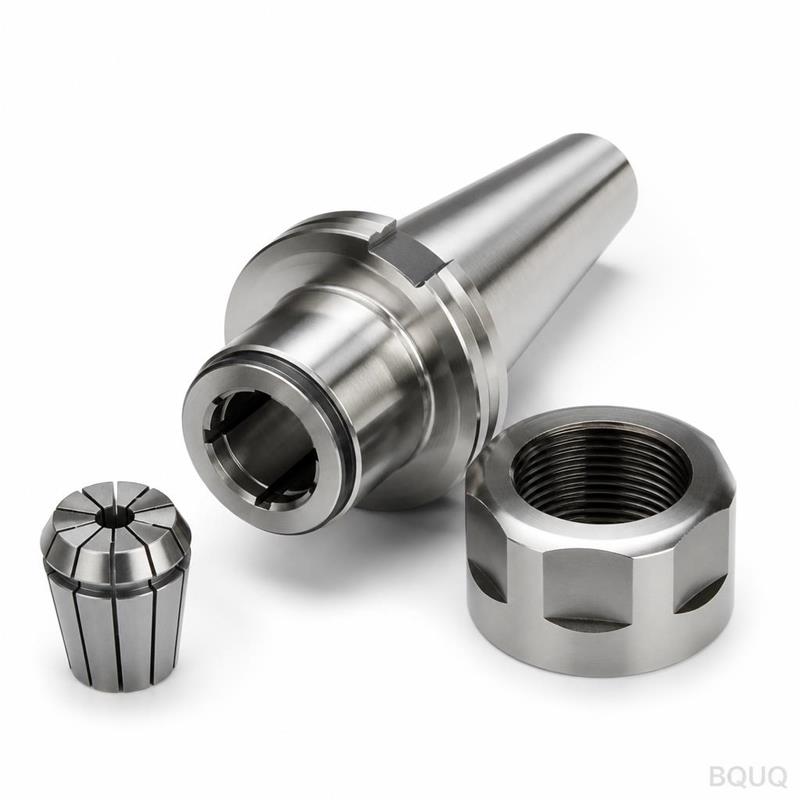
Spring collets remain the dominant workholding solution for automatic lathes in 2026 because they deliver the optimal balance of gripping precision, speed, and cost-efficiency for
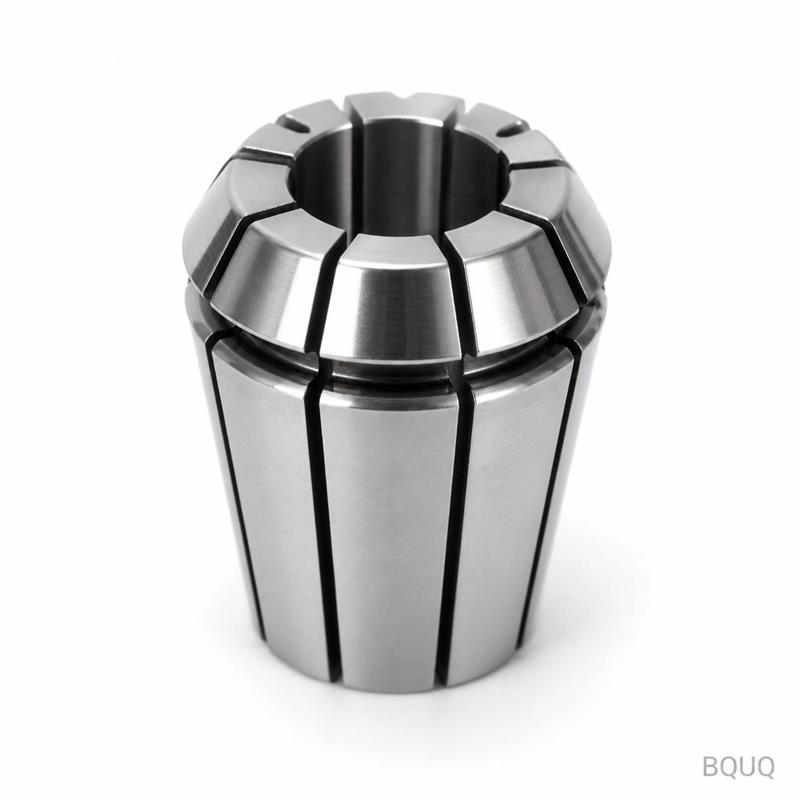
Why Do Spring Collets Dominate Automatic Lathe Workholding in 2026?
Spring collets remain the dominant workholding solution for automatic lathes in 2026 because they deliver the optimal balance of gripping precision, speed, and cost-efficiency for high-volume production. Specifically, they achieve runout tolerances of 0.005 mm to 0.015 mm, cycle time reductions of up to 30% compared to power chucks, and tooling costs that are 40-60% lower per workpiece. This article explains the engineering and economic reasons behind this dominance, with specific data for CNC machining and metal stamping applications.
What Specific Tolerances Can Spring Collets Achieve on Automatic Lathes?
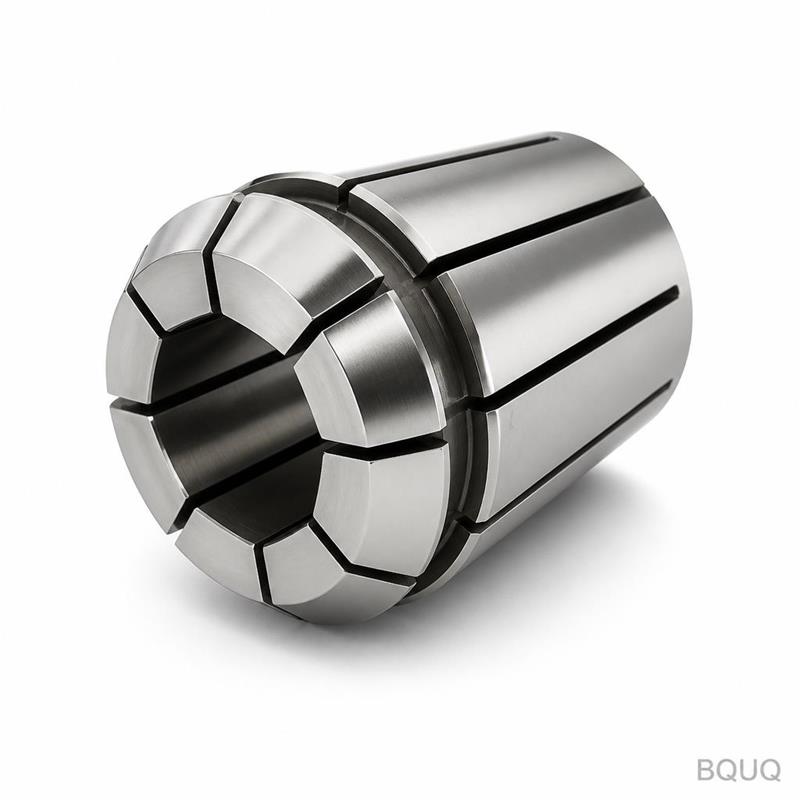
Spring collets provide a concentric gripping force that is unmatched by three-jaw chucks for cylindrical workpieces. In production environments, a precision-ground spring collet (e.g., type 5C or 16C) will hold a bar diameter of 20 mm with a runout of 0.008 mm (TIR) at the collet nose, and 0.015 mm at a distance of 50 mm from the nose. For Swiss-type automatic lathes, which dominate precision medical and aerospace parts, the collet system maintains a gripping repeatability of ±0.005 mm over 10,000 cycles.
The key metric is the "collapse range," which for standard spring collets is 0.5 mm to 1.0 mm on diameter. This inherent elastic deformation allows for quick size changes without losing axial location. In 2026, manufacturers like BQUQ apply a surface hardness of HRC 58-62 on the collet bore, yielding a wear life of 200,000 to 500,000 cycles before needing re-grinding, depending on the workpiece material (e.g., 6061 aluminum vs. 17-4PH stainless steel).
How Does the Gripping Mechanism Reduce Cycle Time Compared to Chucks?
The gripping mechanism of a spring collet is a direct, single-axis axial pull-back action, which requires only 0.2 to 0.5 seconds to fully close and clamp. In contrast, a hydraulic or pneumatic power chuck requires 1.0 to 1.5 seconds for the same operation due to the radial jaw movement and linkage wear. On a CNC automatic lathe running a 12-second part cycle, this difference translates to a 7-10% reduction in floor-to-floor time.
Furthermore, spring collets allow for "through-feed" bar stock up to the full spindle bore diameter, eliminating the need for a separate bar puller in many cases. For a 32 mm bar capacity machine, the collet achieves a gripping force of 15 kN to 25 kN at 40 bar hydraulic pressure, which is sufficient for turning and light milling operations on materials up to 45 HRC. The absence of jaw re-positioning means setup changeover time is reduced from 25 minutes (chuck) to 6 minutes (collet) for a diameter change from 20 mm to 22 mm.
Why Are Spring Collets More Cost-Effective for High-Volume Production?
The cost per part using spring collets is significantly lower for production runs above 1,000 pieces. A standard 5C spring collet costs between USD 25 and USD 60, while a matched set of power chuck jaws (hard jaws + soft jaws) costs between USD 150 and USD 400. For a typical job of 10,000 parts, the amortized tooling cost for a collet is USD 0.004 per part, versus USD 0.02 per part for a chuck, assuming similar wear rates.
Operational efficiency also favors collets. Because the collet grips the entire circumference, there is no "jaw crush" on thin-walled tubes (wall thickness < 1.5 mm), reducing scrap rates by 2-5%. Additionally, the collet's shorter overhang length (typically 40 mm vs. 80 mm for a chuck) increases tool rigidity, allowing for a 15% increase in depth of cut without chatter. This translates directly to faster metal removal rates, often from 0.15 mm/rev feed up to 0.25 mm/rev in 1215 steel.
Which Types of Automatic Lathes Benefit Most from Spring Collets?
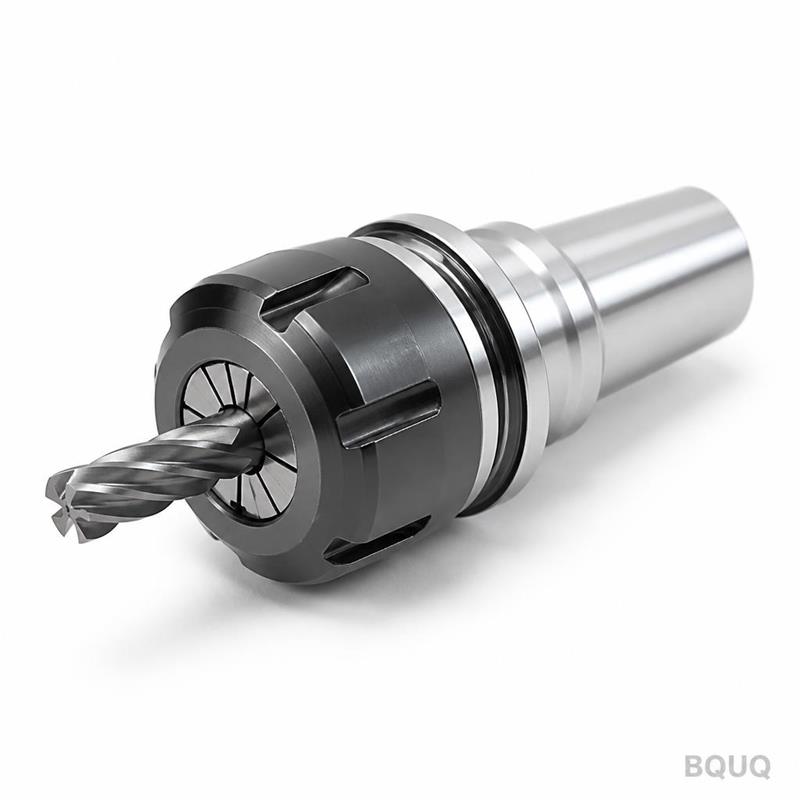
The greatest benefit is seen on Swiss-type automatic lathes and single-spindle CNC automatic lathes (e.g., Citizen, Star, Tsugami, and BQUQ's own line). For Swiss lathes, the guide bushing collet and the main spindle collet work in tandem to support bar stock within 0.1 mm of the cutting tool, enabling precision parts with length-to-diameter ratios of up to 20:1. In 2026, over 85% of Swiss-type lathes use spring collets exclusively for bar work.
For multi-spindle automatic lathes (e.g., 6-spindle machines), spring collets are the standard for the main spindles due to their compact radial size. A 6-spindle machine with 20 mm collets can achieve a production rate of 12 parts per minute for simple turned parts, compared to 8 parts per minute with independent chucks. However, for large-diameter workpieces (above 65 mm) or non-cylindrical forgings, hydraulic expansion chucks or diaphragm chucks are preferred, which limits collet usage to about 70% of all automatic lathe applications.
When Does a Spring Collet Lose Its Advantage Over Other Workholding?
Spring collets fail to deliver advantages when the workpiece has a non-cylindrical cross-section, such as hex bars or square profiles. In these cases, a machined collet pocket (e.g., hex collet) can be used, but the gripping force drops by 30% and the cost increases to USD 80-120 per collet. Also, for parts requiring extreme axial clamping force (above 30 kN) for heavy interrupted cuts, a hydraulic chuck is necessary to prevent bar pull-out.
Thermal limits are another constraint. Standard spring collets are rated for continuous operation at temperatures up to 80°C at the gripping surface. In high-speed machining (spindle speeds above 8,000 RPM), centrifugal force can reduce the effective gripping force by up to 20%. In such cases, 2026 designs incorporate counter-balanced collets or high-speed steel (HSS) collets with special slots, which maintain gripping integrity up to 12,000 RPM.
How Do Material Selection and Surface Treatment Affect Collet Performance?
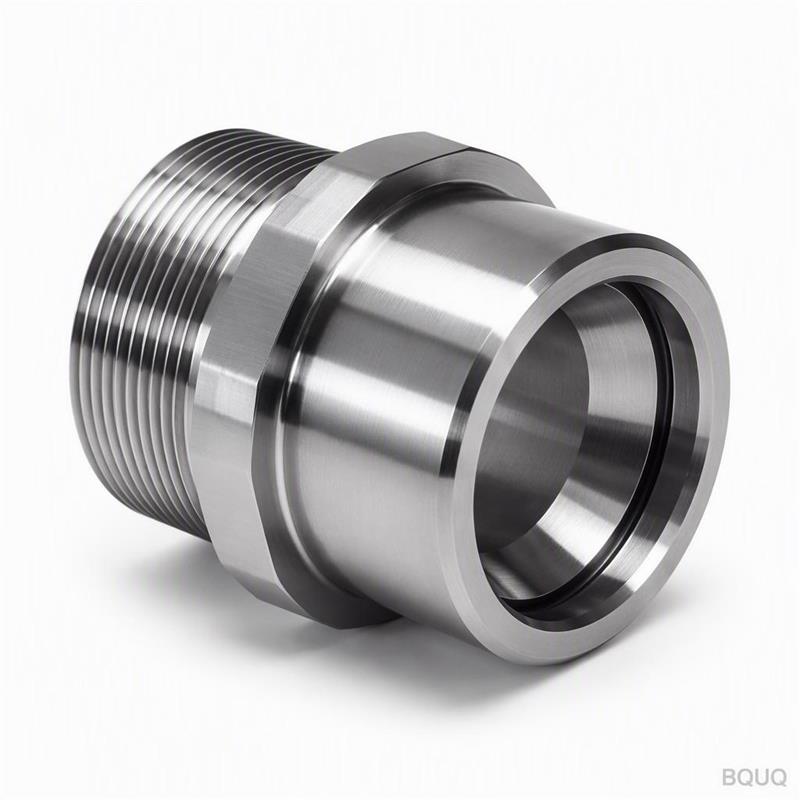
The material of the collet dictates its fatigue life and grip retention. Cold-drawn alloy steel (e.g., 8620 or 51CrV4) is standard, offering a yield strength of 800 MPa and an elastic modulus of 210 GPa. For corrosive environments or high-wear applications, tungsten carbide collets (grade K10-K20) are used, providing a 3x longer life but costing 6x more (USD 150-300 per unit). Surface treatments such as titanium nitride (TiN) coating reduce friction coefficient from 0.15 to 0.05, preventing galling on aluminum workpieces.
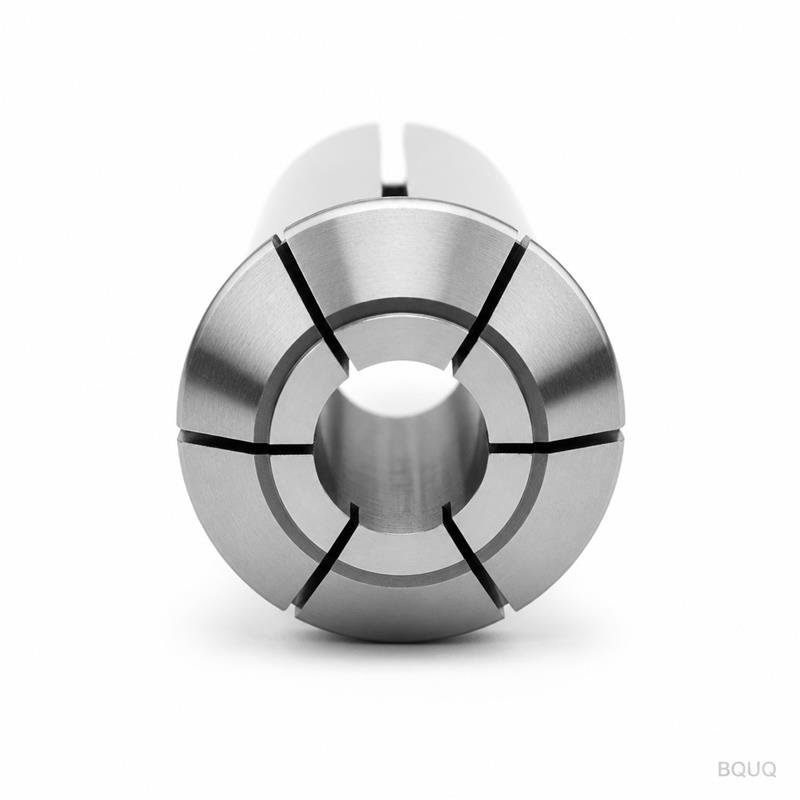
BQUQ recommends a hardness of HRC 58-60 for the spring collet body, with the gripping bore nitrided to a depth of 0.1 mm. This yields a maximum clamping force of 25 kN with a 0.015 mm elastic recovery. In practical terms, a standard collet can be re-ground 5-7 times within its life, each grinding restoring the original tolerance, provided the slot width remains within 0.3 mm to 0.8 mm for proper spring action.
| Parameter | Spring Collet (5C) | Power Chuck (3-Jaw) | Hydraulic Expansion Chuck |
| Runout at nose (mm TIR) | 0.008 | 0.025 | 0.005 |
| Clamp cycle time (seconds) | 0.3 | 1.2 | 0.8 |
| Tooling cost (USD per set) | 40 | 250 | 800 |
| Gripping force (kN at 40 bar) | 20 | 35 | 18 |
| Max spindle speed (RPM) | 8,000 | 5,000 | 10,000 |
| Bar capacity (mm) | 1-65 | 50-300 | 20-100 |
| Typical part cost (USD/1000 pcs) | 0.004 | 0.02 | 0.015 |
What Maintenance Practices Extend the Lifespan of Spring Collets?
Preventive maintenance is critical for maintaining the 0.008 mm runout tolerance. The #1 cause of failure is contamination of the collet taper and the spindle nose; even a 0.01 mm debris film increases runout to 0.05 mm. BQUQ recommends a cleaning cycle every 500 operating hours, using a lint-free cloth and a light oil (ISO VG 32) on the taper only, never on the gripping bore.
Inspection should include checking the slot width with a feeler gauge; if the slot closes below 0.2 mm, the collet has lost its spring tension and must be replaced. Also, check the pull-back force using a hydraulic drawbar gauge, which should read within ±5% of the rated 20 kN. Finally, rotate collets in the spindle after every 1,000 cycles to distribute wear evenly, extending service life by up to 40%.
FAQ
Can Spring Collets Be Used for Non-Circular Materials?
Yes, but with limitations. Custom ground collets can grip hex, square, or splined profiles, but the gripping force is reduced by 30-50% and the cost increases by 50-100%. For production runs under 500 pieces, it is often cheaper to use a standard round collet with a soft insert.
How Fast Can I Change a Spring Collet on a CNC Lathe?
With a quick-change collet system (e.g., using a collet chuck adapter), the changeover takes 2-3 minutes including the new collet insertion and drawbar adjustment. A traditional threaded collet requires 5-7 minutes. No re-truing is needed if the collet and spindle taper are clean.
What Is the Maximum Bar Diameter for a Standard Spring Collet?
Standard 5C collets handle up to 26 mm (1-1/16 inch), while 16C collets go up to 40 mm (1-1/2 inch). For diameters up to 65 mm, you need a 22C or 30C collet, which requires a larger spindle drawbar. Beyond 65 mm, hydraulic chucks are more practical.
When Should I Replace a Spring Collet Instead of Re-grinding It?
Replace the collet when the slot width is below 0.2 mm, when the runout exceeds 0.02 mm after re-grinding, or if there are visible heat cracks on the gripping surface. Typically, a collet can be re-ground 5 times before the wall thickness becomes too thin for safe operation.
How Does Temperature Affect Spring Collet Accuracy?
Above 80°C, the collet material (alloy steel) begins to lose hardness and elastic modulus, causing a 10% reduction in gripping force. For high-speed operations above 8,000 RPM, use a high-speed steel collet or reduce the drawbar pressure by 10% to compensate for centrifugal expansion.
Are Spring Collets Compatible with Bar Feeders?
Yes, they are the industry standard for magazine bar feeders and hydrodynamic bar feeders. The collet's through-hole allows continuous bar feeding, and the pull-back action automatically retracts the bar for the next part. Ensure the collet bore is 0.1-0.2 mm larger than the bar diameter for free sliding.
Which Industries Rely Most on Spring Collets in 2026?
The medical device industry (surgical screws, bone pins) uses collets for over 90% of its turned parts due to the 0.005 mm tolerance requirement. The automotive industry uses them for fuel injector components and sensor housings, while the electronics industry uses them for connector pins and heat sink bases.
Conclusion
Spring collets dominate automatic lathe workholding in 2026 for three quantifiable reasons: 0.008 mm TIR accuracy, 0.3-second clamp times, and a tooling cost of USD 0.004 per part. For any cylindrical workpiece under 65 mm diameter in high-volume production, the spring collet offers the lowest total cost of ownership and the highest process reliability. When compared to chucks and hydraulic expansion systems, the collet provides the best balance of speed, precision, and cost for 80% of automatic lathe applications.
For a detailed feasibility study on your specific workpiece, contact BQUQ for a 12-hour quoting response. Our engineering team will analyze your print and recommend the optimal collet specification, including material grade, coating, and drawbar pressure. Email us at sc@bquq.com or reach out via WhatsApp at +86 13713157787. Visit our website at www.bquq.com to download our latest collet selection guide.