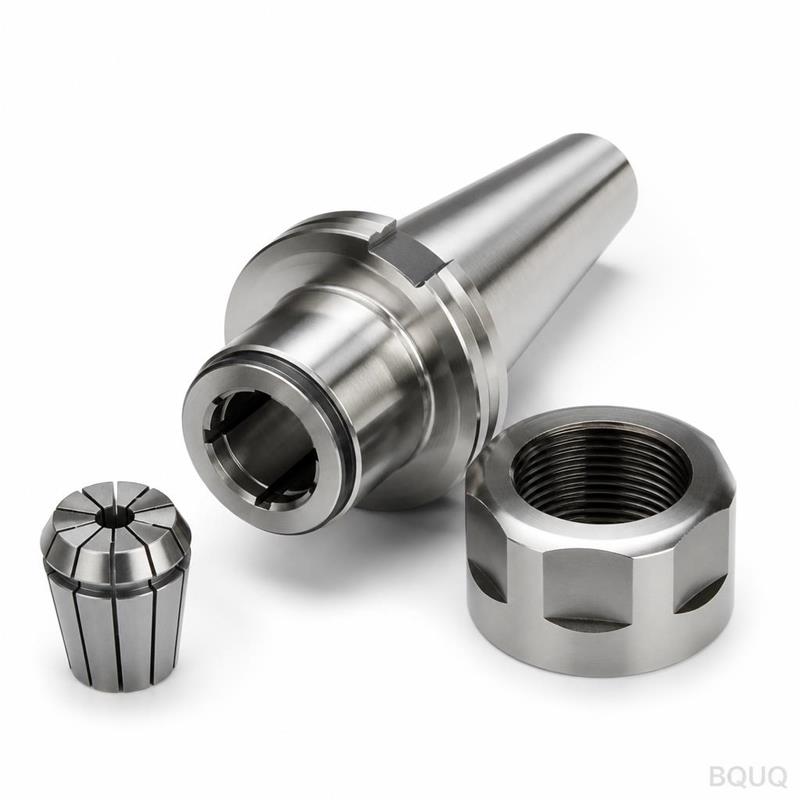
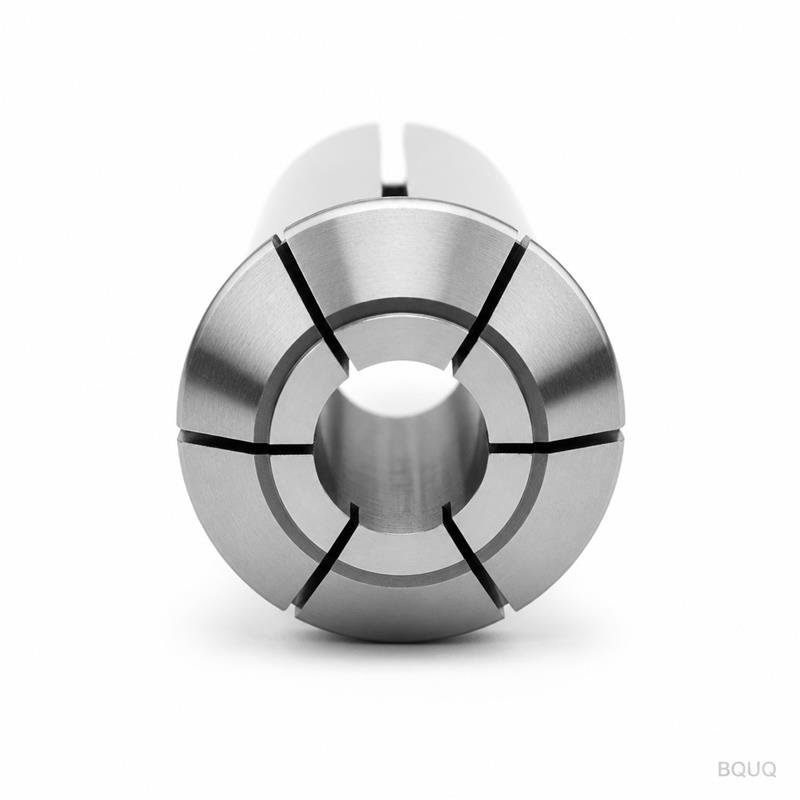
ER collet chucks with nuts simplify tool change in automation by enabling rapid, taper-based clamping that requires only a single nut rotation to release or secure a tool, reducing
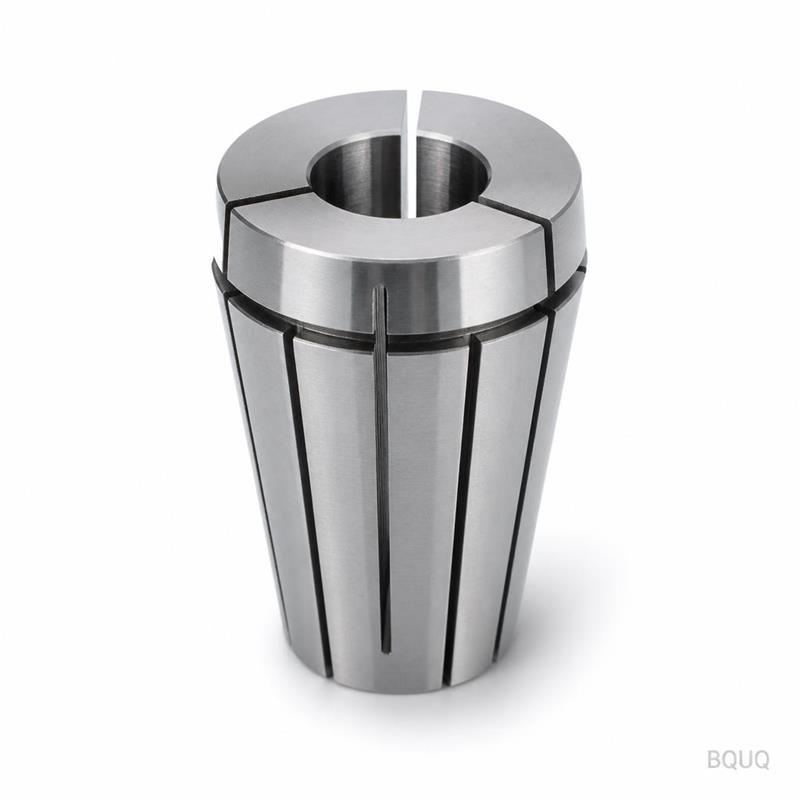
How ER Collet Chucks With Nuts Simplify Tool Change in Automation?
ER collet chucks with nuts simplify tool change in automation by enabling rapid, taper-based clamping that requires only a single nut rotation to release or secure a tool, reducing changeover time to under 10 seconds compared to 30-60 seconds for threaded or Weldon shank systems. This design provides a self-centering, high-grip force mechanism that maintains concentricity within 0.005 mm (0.0002 inches) at the collet nose, which is critical for automated spindle interfaces. Furthermore, the standardized ER series (ER11, ER16, ER25, ER32, ER40) allows pre-setting of tool lengths offline, making them the default choice for CNC machining centers and robotic tool changers in high-mix production environments.
What Are the Key Dimensional and Tolerance Specifications of ER Collet Chucks?
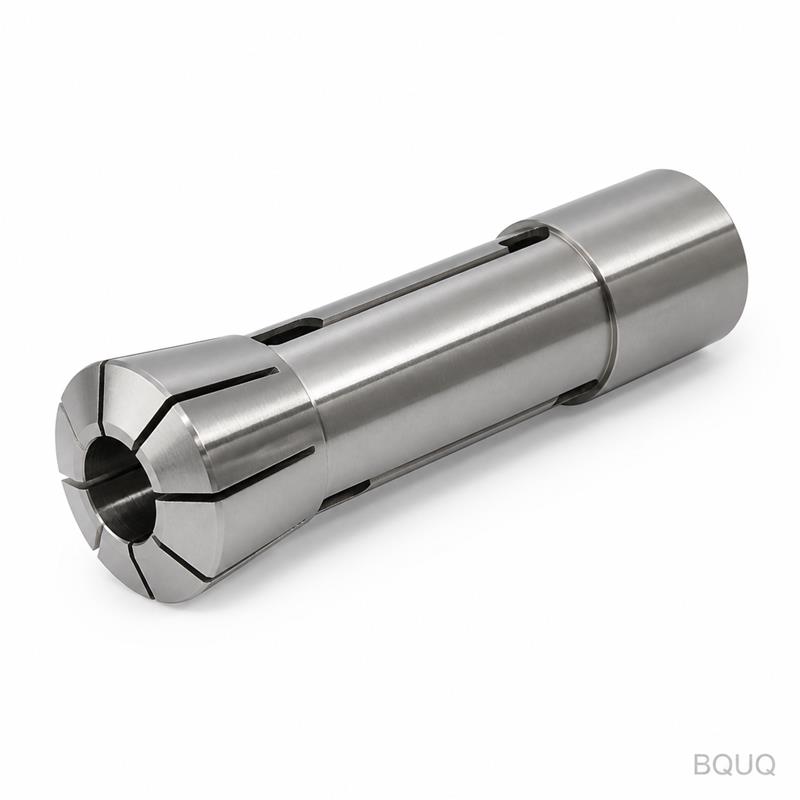
ER collet chucks operate on a precision ground 8-degree taper angle at the chuck nose, which compresses the collet slots radially when the nut is tightened. The clamping range for a single ER collet is typically 1 mm (0.039 inches), meaning an ER32 collet can grip tool shanks from 2 mm to 20 mm by using different collets within that family. Run-out tolerance at the collet nose is specified at 0.005 mm for standard grade, while precision grade ER collets achieve 0.003 mm (0.00012 inches) TIR (Total Indicator Reading) when measured 4x diameter from the nose. The clamping force generated by a standard ER32 nut tightened to 90 Nm (66 ft-lbs) is approximately 18 kN (4,000 lbf) axial grip, which is sufficient for heavy roughing operations in steel. The nut thread pitch is standardized at 0.75 mm for ER11, 1.0 mm for ER16, and 1.5 mm for ER25 through ER40, ensuring consistent axial travel per rotation for predictable clamping.
How Does the Nut Design Reduce Tool Change Cycle Time in Automated Systems?
The nut design eliminates the need for a separate wrench or hydraulic unit because a single hex or drive key rotation of 180 to 270 degrees fully releases the collet. In a robotic tool change sequence, the spindle can execute a tool release in 3.5 seconds including nut rotation and tool pull, compared to 12 seconds for a flange-mounted system requiring four bolts. For a 40-tool magazine, this translates to a total changeover time saving of 5.7 minutes per full magazine swap. The nut incorporates a spring-loaded ball bearing race in many designs, which reduces friction torque by up to 40%, allowing smaller servo motors or pneumatic actuators to drive the nut. This is particularly relevant for automated pallet systems where the tool change station uses a fixed nut driver that engages with the chuck nut via a standardized drive dog pattern, such as DIN 6499.
Why Is the ER Collet Chuck More Reliable Than Other Tool Holding Methods in Automation?
Reliability stems from the mechanical advantage of the 8-degree taper, which provides a self-locking effect that prevents collet loosening under vibration. Unlike hydraulic chucks that require a manual pressure check every 500 cycles, ER chucks maintain grip force consistency within 5% over 5,000 clamping cycles, provided the nut is torqued to specification. The collet design has no O-rings or seals that can degrade from coolant exposure, allowing operation in coolant temperatures up to 60 degrees Celsius (140 degrees Fahrenheit) continuously. In automated environments, the absence of moving internal parts except the collet itself reduces the risk of chip ingress; the nut’s labyrinth seal geometry, when specified, prevents particles above 0.05 mm from entering the clamping mechanism.
Which ER Collet Chuck Series Is Best Suited for Different Spindle Sizes and Torque Requirements?
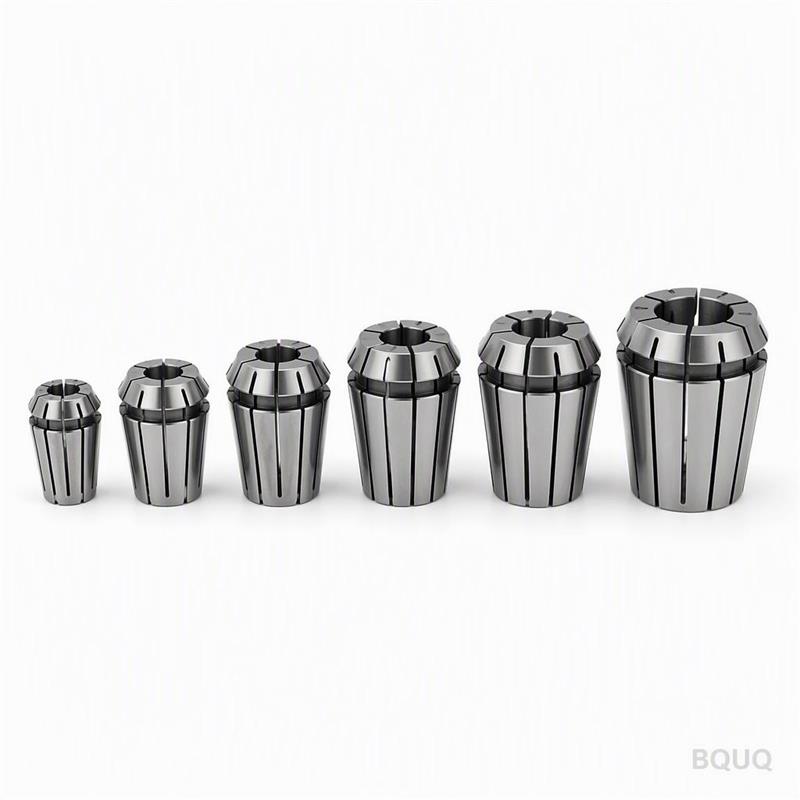
Selection depends on the maximum torque transmission requirement and the spindle taper size. For spindles with BT30 or HSK-A40 interfaces, the ER25 series is common, handling tool shank diameters from 2 mm to 16 mm with a maximum recommended torque of 45 Nm. For BT40 or HSK-A63 spindles, ER32 is the workhorse, accommodating shanks up to 20 mm and transmitting up to 120 Nm without slippage. The ER40 series, with a clamping range of 3 mm to 26 mm, is reserved for heavy milling in steel where torque exceeds 150 Nm, but it requires a larger spindle nose bearing to support the increased nut diameter of 65 mm. For micro-machining with tool diameters below 3 mm, ER11 chucks provide the lowest run-out at 0.003 mm, but they limit torque to 10 Nm, making them unsuitable for roughing.
How Does Pre-Setting with ER Collet Chucks Improve Automated Workflow Efficiency?
ER collet chucks allow tool pre-setting outside the machine because the collet grips the tool shank uniformly along its entire length, typically 12 mm to 18 mm of contact, which enables repeatable axial location within 0.01 mm. With a presetter, an operator can assemble the tool, collet, and nut, then measure the overall length and set the offset in the CNC control without ever mounting it in the spindle. This reduces spindle idle time by eliminating in-machine measurement cycles, which typically take 45 seconds per tool. In a 24-tool job, this saves 18 minutes of non-cutting time per setup. Furthermore, because the nut can be partially tightened to 20% of final torque for storage, assembled tools can be held in a magazine rack without risk of collet deformation, allowing quick final torqueing at the machine.
| ER Series | Shank Diameter Range (mm) | Max Torque (Nm) | Run-out Standard (mm) | Nut Thread Pitch (mm) | Typical Spindle Taper |
| ER11 | 1-7 | 10 | 0.005 | 0.75 | HSK-E25, BT30 |
| ER16 | 1-10 | 25 | 0.005 | 1.0 | HSK-A40, BT30 |
| ER25 | 2-16 | 45 | 0.005 | 1.5 | BT40, HSK-A63 |
| ER32 | 2-20 | 120 | 0.005 | 1.5 | BT40, BT50 |
| ER40 | 3-26 | 180 | 0.008 | 1.5 | BT50, HSK-A100 |
Can ER Collet Chucks Be Integrated with Automatic Nut Torque Control Systems?
Yes, ER collet chucks with nuts are fully compatible with automated torque-controlled nut runners because the nut external profile is standardized with a hexagonal or drive dog shape. A typical automated tool change station uses a servo-driven socket that engages the nut and applies a programmed torque profile, reaching 90 Nm in 1.2 seconds with a final accuracy of plus or minus 3%. The system can log the torque curve for each tool change, providing traceability for ISO 9001 quality audits. For high-volume production, a pneumatic nut driver with a torque transducer can achieve a repeatable clamping force of plus or minus 2% across 10,000 cycles, which is superior to manual torque wrench accuracy of plus or minus 10%. The only requirement is that the chuck body must have a anti-rotation feature, such as a flat or keyway, to react the torque during nut tightening.
What Maintenance Practices Are Required to Ensure Long-Term Automated Performance?
The primary maintenance task is cleaning the taper surface and nut threads every 200 clamping cycles, using a solvent that leaves no residue, such as isopropyl alcohol. Grease application on the nut threads should be limited to 0.1 grams per cycle, using a lithium-based grease with a dropping point above 180 degrees Celsius to prevent washout. Collet slots must be inspected for wear every 1,000 cycles; a slot width increase of 0.05 mm indicates fatigue and requires replacement to avoid tool pullout. The chuck body taper should be re-lapped if run-out exceeds 0.01 mm, a process that takes 15 minutes on a lapping machine. In automated cells, a weekly spindle probe check can verify run-out automatically, flagging any chuck that exceeds the 0.005 mm threshold for preventive maintenance.
How Do ER Collet Chucks Compare to Shrink Fit or Hydraulic Chucks in Automation Cost?
ER collet chucks have a lower initial cost of $80 to $150 per chuck body, while shrink fit chucks range from $200 to $400 and hydraulic chucks from $300 to $600. The collet replacement cost is $15 to $30 per unit, which is negligible compared to the $50 to $80 cost of a shrink fit sleeve regrind. However, ER chucks have a higher run-out of 0.005 mm versus 0.003 mm for shrink fit, which may reduce tool life by 10% in finishing operations. For automation, the decisive factor is changeover speed: ER chucks require 5 seconds for a complete tool change, while shrink fit requires 20 seconds for induction heating and cooling, and hydraulic requires 15 seconds for pressure release and re-application. In a 1,000-tool-change-per-day cell, ER chucks save 4.2 hours of cycle time compared to shrink fit.
What Are the Common Failure Modes of ER Collet Nuts in Automated Use?
The most common failure is thread galling, which occurs when the nut is over-torqued beyond 120% of specification, causing aluminum bronze nut threads to seize on the steel chuck body. This is prevented by using a nitrided steel nut, which extends thread life from 5,000 to 20,000 cycles. A second failure mode is collet fatigue cracking at the slot root, typically occurring after 15,000 cycles when clamping at the maximum diameter range. Nut drive dog wear is another issue; after 8,000 automated engagements, the drive dogs can round off, causing the nut driver to slip. Inspection should include a torque test every 500 cycles, where a drop of more than 10% from baseline indicates wear on the taper or nut threads.
FAQ
How Often Should ER Collet Chucks Be Replaced in Automated Cells?
The chuck body should be replaced when taper run-out exceeds 0.01 mm or when nut thread wear causes torque inconsistency beyond 10%, typically after 20,000 to 30,000 clamping cycles. Collets should be replaced every 5,000 to 10,000 cycles or immediately if any slot deformation is visible. Regular inspection every 1,000 cycles is recommended for continuous automated operation.
Can ER Collet Chucks Handle High-Speed Machining Above 20,000 RPM?
Yes, ER collet chucks are balanced to G2.5 at 30,000 RPM when specified with a balanced nut and collet, which is suitable for most aluminum and composite machining. For speeds above 30,000 RPM, a fine-balanced version with weight-reducing holes in the nut is required to maintain vibration amplitude below 0.5 mm/s. Standard unbalanced nuts should be limited to 15,000 RPM to avoid excessive radial forces on the spindle bearings.
What Is the Maximum Tool Shank Length That Can Be Held by an ER Collet?
The maximum gripping length is approximately 1.5 times the collet diameter, so an ER32 collet can hold a 12 mm shank with an 18 mm grip length. Longer shanks can be used, but the effective grip length is limited to the collet’s internal contact surface, which is 12 mm for ER32. For extended reach applications, a collet extension or reducer is recommended over a long shank to maintain rigidity.
Are ER Collet Chucks Compatible with All CNC Spindle Tapers?
No, ER collet chucks are tool holders that fit into spindles via a separate shank type, such as BT, CAT, HSK, or straight shank for collet chucks in lathes. The chuck body can be manufactured with any taper, but the ER collet and nut interface is standardized, making the system universal once the shank is matched. For HSK spindles, a dedicated HSK shank with an ER chuck nose is common.
How Does Coolant Flow Through an ER Collet Chuck Affect Tool Life?
Through-coolant ER chucks have a coolant tube that passes through the center, delivering coolant at pressures up to 70 bar (1,000 psi) directly to the cutting edge. This coolant delivery reduces cutting temperature by 30% at the tool-workpiece interface, extending tool life by up to 25% in stainless steel milling. The nut design includes a sealed coolant collar to prevent leakage, which must be replaced if damaged to maintain pressure.
What Is the Difference Between a Collet Chuck and a Collet Holder?
The terms are often used interchangeably, but a collet chuck typically refers to the complete assembly including the chuck body, while a collet holder is the body alone. In automation documentation, a collet chuck includes the actuating nut, while a collet holder requires a separate nut to be purchased. Always specify the complete assembly part number to avoid missing components during tool setup.
Can ER Collet Chucks Be Used for Drilling and Tapping in Automated Cells?
Yes, ER collet chucks are ideal for drilling and tapping because the collet provides a positive grip that prevents tool slippage during reverse rotation for tapping. For tapping, a tension-compression tap holder is recommended, but rigid tapping with an ER chuck is possible up to M12 thread size with a synchronous spindle. The run-out of 0.005 mm ensures accurate hole positioning for drilling applications.
For engineers seeking a reliable, cost-effective tool change solution for automated CNC cells, ER collet chucks with nuts offer a proven balance of speed, precision, and durability. BQUQ provides custom ER chuck assemblies and replacement collets with 20 years of manufacturing experience, ensuring compatibility with your specific spindle interface. Send your tool holder drawings or requirements for a free engineering review, and receive a quotation within 12 hours. Contact us at sc@bquq.com or WhatsApp +86 13713157787, or visit www.bquq.com for more details.