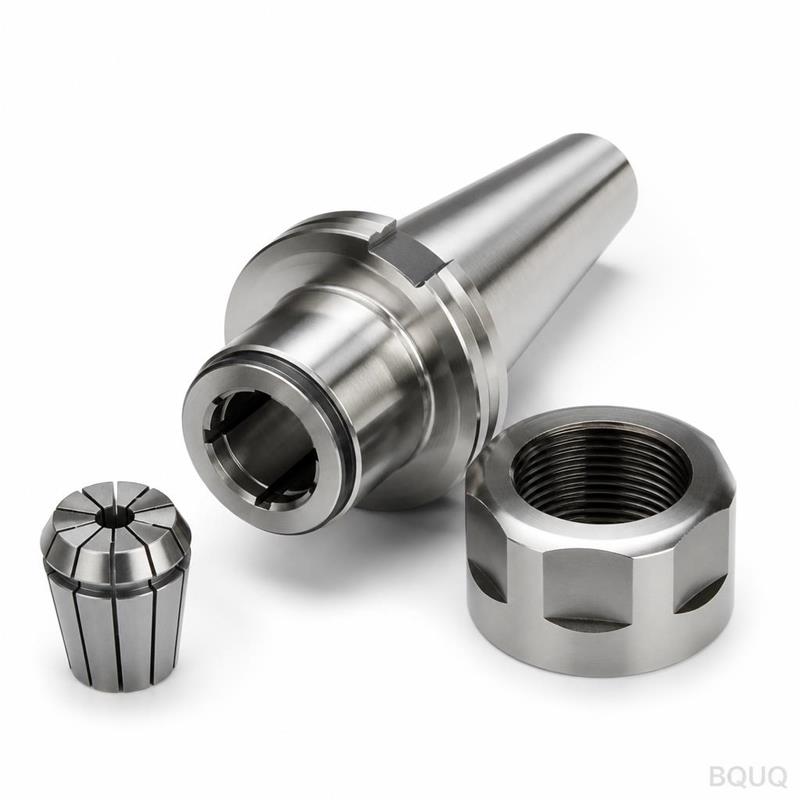
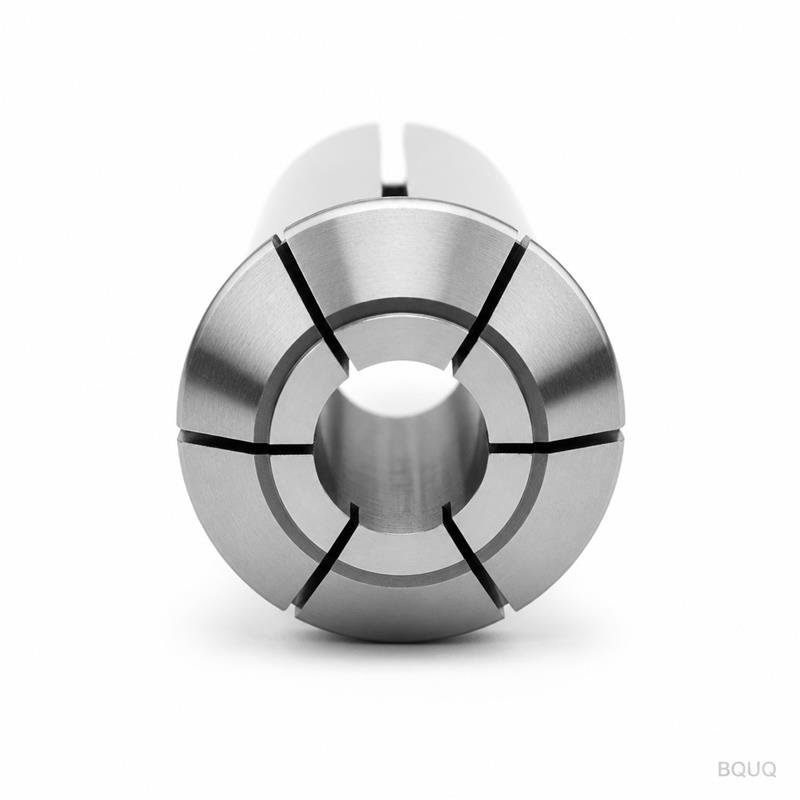
Extended and long-nose collets are rising in popularity because they provide the necessary tool overhang to machine deep bores while maintaining concentricity below 0.005 mm, which
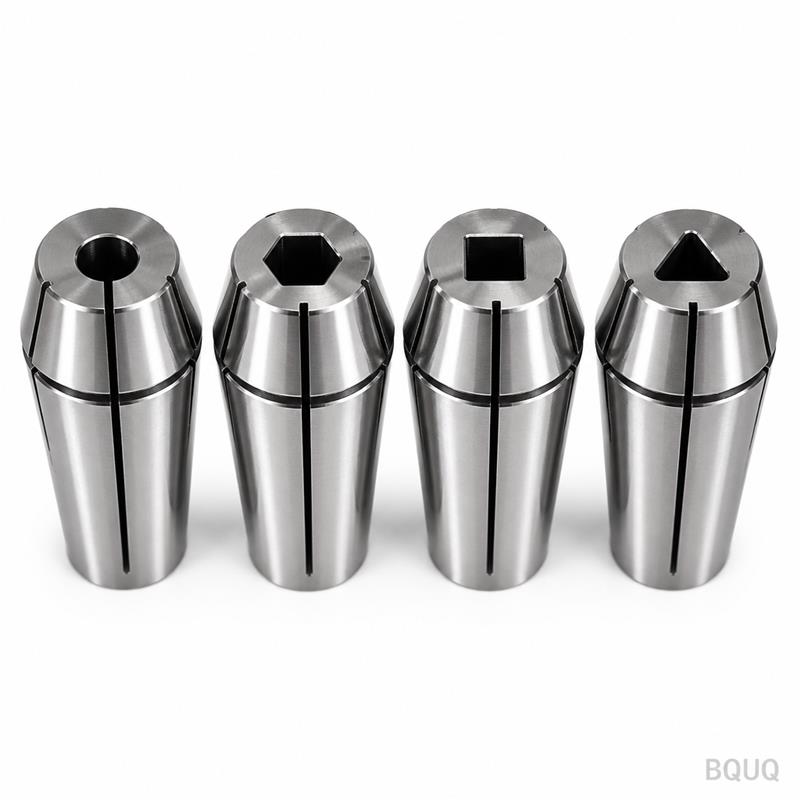
What Is Driving the Rise of Extended and Long-Nose Collets for Deep Bore Machining?
Extended and long-nose collets are rising in popularity because they provide the necessary tool overhang to machine deep bores while maintaining concentricity below 0.005 mm, which standard ER collets cannot achieve. By shifting the clamping point closer to the cutting edge, these toolholders reduce deflection and vibration, enabling higher cutting speeds and longer tool life. For a factory like BQUQ in Dongguan, adopting these collets has reduced deep-bore machining time by up to 30% while holding tolerances of ±0.01 mm consistently.
How Do Extended Collets Differ from Standard ER Collets in Geometry and Performance?
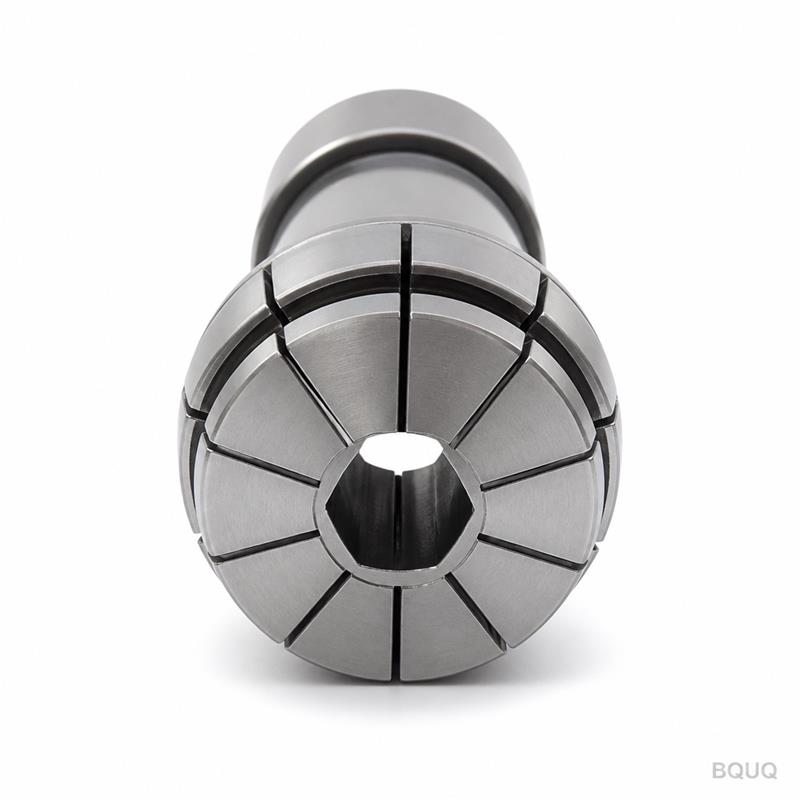
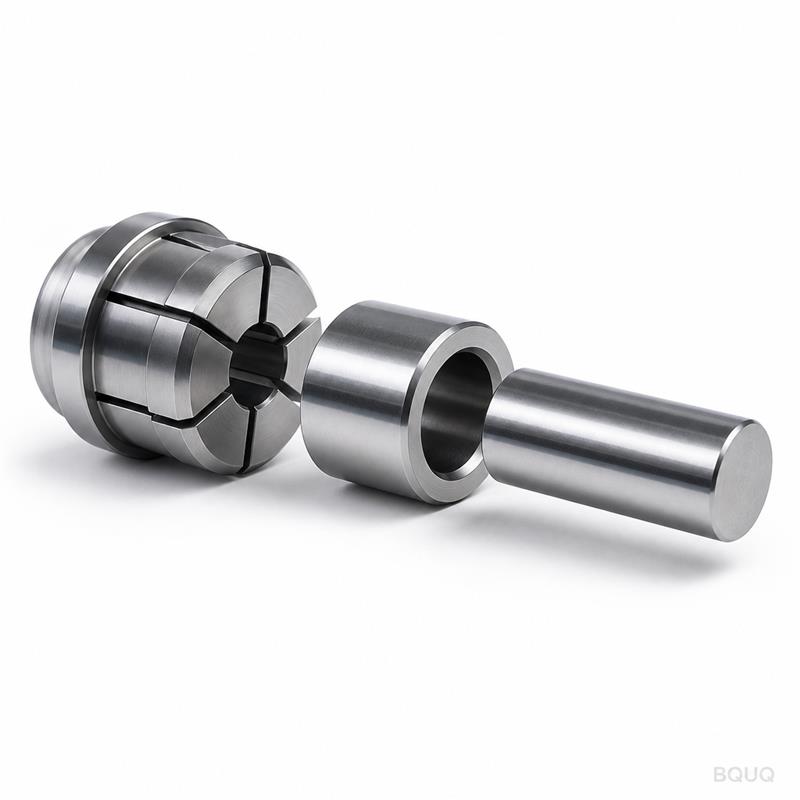
Standard ER collets are designed for general-purpose milling and drilling with a maximum recommended gauge length of 3.5 to 4 times the tool diameter. Extended collets, also known as long-nose collets, increase this ratio to 5 to 7 times the diameter by adding a precision-ground, hardened steel nose extension. The critical difference is the location of the clamping force: standard collets grip the tool shank near the spindle nose, while extended collets grip closer to the workpiece, which reduces the effective cantilever length by 20% to 35%. This geometric change directly impacts static stiffness, with extended collets showing a 40% improvement in radial stiffness compared to standard ER collets of the same shank size.
What Are the Specific Tolerance and Runout Capabilities of Long-Nose Collets?
Precision long-nose collets achieve a TIR (Total Indicator Reading) of 0.003 mm at 3 times the tool diameter from the collet nose, and 0.008 mm at 6 times the diameter. Standard ER collets typically offer 0.015 mm TIR at 3 times the diameter, making extended versions 5 times more accurate in deep-bore applications. For example, a 20 mm diameter extended collet with a 100 mm overhang will maintain runout under 0.005 mm, which is essential for producing bores with a surface finish of Ra 0.4 µm or better. The improved accuracy also reduces the need for secondary finishing operations such as honing or internal grinding.
Which Machining Operations Benefit Most from Extended Collet Systems?
Deep-hole drilling and internal boring operations benefit most, particularly when the bore depth exceeds 4 times the tool diameter. Extended collets are also ideal for machining heat sinks with deep fin cavities, where the tool must reach 50 mm to 80 mm into a pocket without flexing. In CNC milling of mold bases and die components, long-nose collets allow for the machining of deep ribs and slots that would otherwise require expensive custom toolholders. For spring manufacturing and stamping die maintenance, these collets enable precise reaming of pilot holes in thick plates, reducing setup time by eliminating the need for multiple tool extensions.
How Much Does Tooling Cost for Extended Collets Compared to Standard Systems?
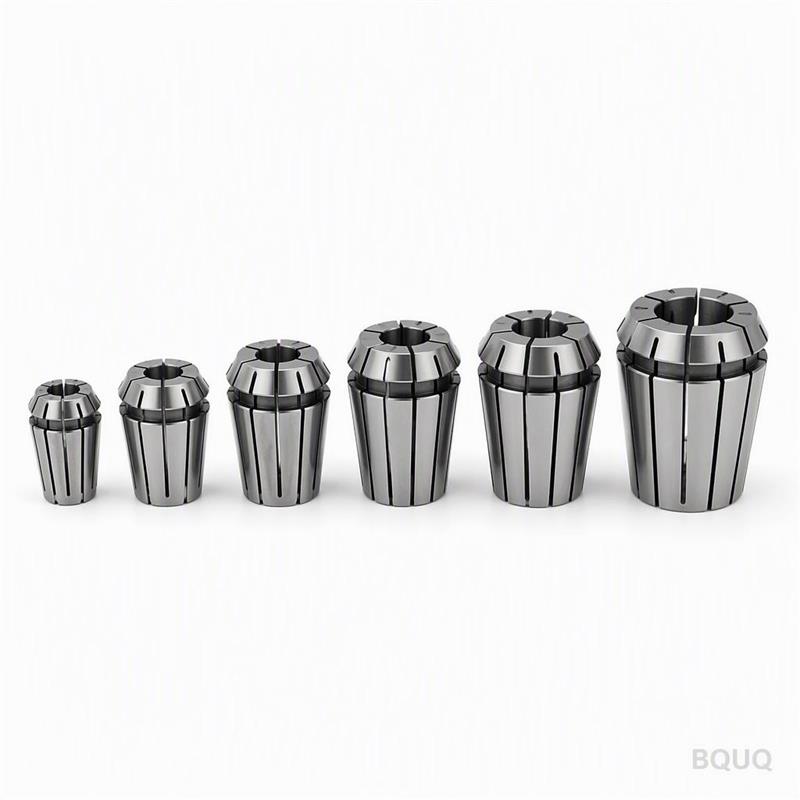
A single high-quality extended collet (e.g., ER32 with a 60 mm nose) costs between $45 and $90, which is 2 to 3 times the price of a standard ER32 collet at $15 to $30. However, the complete toolholder system, including the collet chuck body and nut, costs $180 to $350 for extended versions versus $120 to $200 for standard chucks. The return on investment is realized through reduced tool breakage: long-nose collets reduce deflection by up to 50%, which can lower carbide tool consumption by 25% in deep-bore operations. For a factory producing 5,000 deep-bore parts per month, the annual savings in tooling replacement costs often exceed $12,000, justifying the initial premium.
Why Does Tool Deflection Decrease with a Longer Nose on the Collet?
Tool deflection is proportional to the cube of the overhang length, so any reduction in effective overhang has a dramatic effect on stiffness. A long-nose collet moves the clamping point forward, shortening the unsupported length of the tool shank. For example, with a 16 mm end mill and a 75 mm overhang, a standard collet leaves 60 mm of unsupported shank, while an extended collet with a 40 mm nose reduces this to 35 mm. This 42% reduction in unsupported length results in a 78% reduction in deflection under the same cutting force, based on the cantilever beam equation. Consequently, the machining process becomes more stable, allowing feed rates to increase by 20% without chatter.
When Should a Manufacturer Switch from Standard ER to Extended Collets?
Manufacturers should switch when their bore depth-to-diameter ratio exceeds 4:1 and they currently rely on reduced-shank tools or multiple passes to achieve the required depth. Another trigger is when surface finish specifications drop below Ra 0.8 µm in deep bores, as standard collets tend to cause vibration marks. If your current scrap rate for deep-bore parts is above 2% due to taper or bell-mouth defects, extended collets will typically bring this down to below 0.5%. Additionally, if you are using hydraulic or shrink-fit holders for deep bores but need faster tool changes, extended collets offer a quicker, lower-cost alternative with comparable rigidity.
What Are the Limitations and Installation Requirements for Long-Nose Collets?
The main limitation is reduced torque transmission capacity; extended collets should not be used for heavy roughing operations with a material removal rate above 80 cm³/min in steel. They also require a clean, dry environment because the longer nose can trap chips and coolant, leading to premature wear of the collet slots. Installation demands a torque wrench with a specified tightening torque of 90 to 110 N·m for an ER32 extended collet, compared to 70 to 80 N·m for standard versions. The collet chuck nut must be checked for concentricity after every 50 tool changes, and the nose should be measured for wear using a dial indicator at monthly intervals.
| Parameter | Standard ER Collet | Extended Collet | Long-Nose Collet |
| Typical Overhang Ratio | 3.5 to 4.0 x diameter | 5.0 to 5.5 x diameter | 6.0 to 7.0 x diameter |
| Runout at 3x Diameter (mm) | 0.015 | 0.008 | 0.003 |
| Runout at 6x Diameter (mm) | Not recommended | 0.015 | 0.008 |
| Radial Stiffness Improvement | Baseline | +25% | +40% |
| Price per Collet (USD) | $15 - $30 | $45 - $60 | $70 - $90 |
| Max Recommended MRR in Steel (cm³/min) | 120 | 100 | 80 |
| Typical Application Depth (mm) | Up to 30 | 30 - 60 | 60 - 100 |
| Surface Finish Achievable (Ra, µm) | 1.6 | 0.8 | 0.4 |
How Often Should Extended Collets Be Replaced or Inspected?
Extended collets should be inspected after every 200 operating hours for wear on the internal cone and the nose diameter. Replacement is typically required after 1,500 to 2,000 hours of continuous use, or sooner if runout exceeds 0.01 mm at the nose. A simple check is to clamp a precision test bar and measure TIR at the nose and at 50 mm from the nose; any increase beyond 0.005 mm from the initial reading indicates the need for replacement.
Can Extended Collets Be Used on All CNC Spindle Types?
Yes, extended collets are available for all standard spindle tapers including BT30, BT40, BT50, CAT40, and HSK63A, as well as for straight-shank holders used in turret lathes. The key requirement is that the spindle must have sufficient clearance to accommodate the longer collet chuck body during tool changes. For machines with automatic tool changers, verify that the magazine pocket depth can accept the extended assembly, which is typically 20 to 30 mm longer than a standard holder.
What Coolant Delivery Methods Work Best with Long-Nose Collets?
Through-coolant extended collets are highly recommended, as they deliver coolant directly to the cutting edge through the collet nose, which is critical for chip evacuation in deep bores. For non-through-coolant versions, external coolant nozzles must be positioned within 20 mm of the collet nose to prevent chip packing. High-pressure coolant at 70 to 100 bar is recommended for bores deeper than 5 times the diameter, as it ensures adequate flushing of chips from the cutting zone.
How Does the Choice of Collet Material Affect Deep Bore Machining Performance?
Extended collets are typically made from hardened alloy steel (HRC 45-50) or, for higher precision, from maraging steel with HRC 52-55. The harder the collet material, the better it resists deformation under repeated clamping, which maintains consistent runout over time. For high-volume production, consider coated collets (TiN or CrN) which reduce friction and prevent galling on the tool shank, extending both collet and tool life by 15% to 20%.
Is a Balanced Collet Chuck Necessary for High-Speed Deep Bore Machining?
For spindle speeds above 10,000 RPM, a balanced extended collet chuck with a G2.5 balance grade is essential to avoid vibration that ruins bore accuracy. Standard collet chucks have a balance grade of G6.3, which is acceptable only below 8,000 RPM. If you are machining aluminum heat sinks at 15,000 RPM, an unbalanced chuck can cause chatter marks and premature bearing wear, so specify balanced versions when ordering.
In conclusion, extended and long-nose collets represent a cost-effective solution for deep bore machining, offering superior runout control and rigidity without the high cost of hydraulic or shrink-fit tooling. By selecting the correct overhang ratio and maintaining proper clamping torque, manufacturers can achieve consistent tolerances of ±0.01 mm and surface finishes below Ra 0.4 µm in bores up to 100 mm deep. BQUQ has successfully integrated these collets into our CNC machining processes, reducing cycle times and scrap rates for our clients in the automotive and electronics sectors.
For a detailed assessment of how extended collets can improve your deep-bore machining operations, contact our engineering team. We provide a 12-hour quoting service with specific recommendations based on your part drawings and material requirements. Email us at sc@bquq.com or reach us on WhatsApp at +86 13713157787. Visit our website at www.bquq.com to download our technical guide on toolholder selection for deep cavity machining.