The direct answer is that multi-slot collet designs are becoming the new standard because they deliver superior concentricity (0.003 mm to 0.008 mm TIR) and gripping force uniformi
Why Multi-Slot Collet Designs Are Becoming the New Standard?
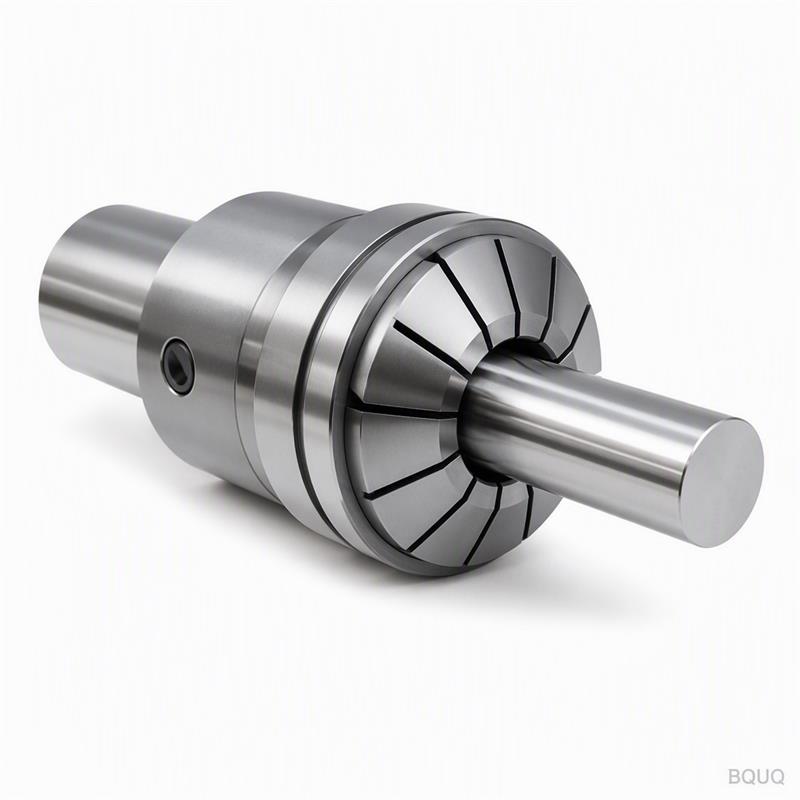
The direct answer is that multi-slot collet designs are becoming the new standard because they deliver superior concentricity (0.003 mm to 0.008 mm TIR) and gripping force uniformity compared to single-slot variants, while extending tool and workpiece life by up to 40%. By distributing clamping pressure across multiple radial slots, these collets eliminate the "lobing" effect common in 3-slot designs, reducing vibration and enabling higher spindle speeds and feed rates. For precision manufacturers like BQUQ in Dongguan, this translates directly into tighter tolerances, better surface finishes, and lower per-part costs in high-volume CNC machining and Swiss-type turning operations.
What Are the Key Differences Between Single-Slot and Multi-Slot Collets?
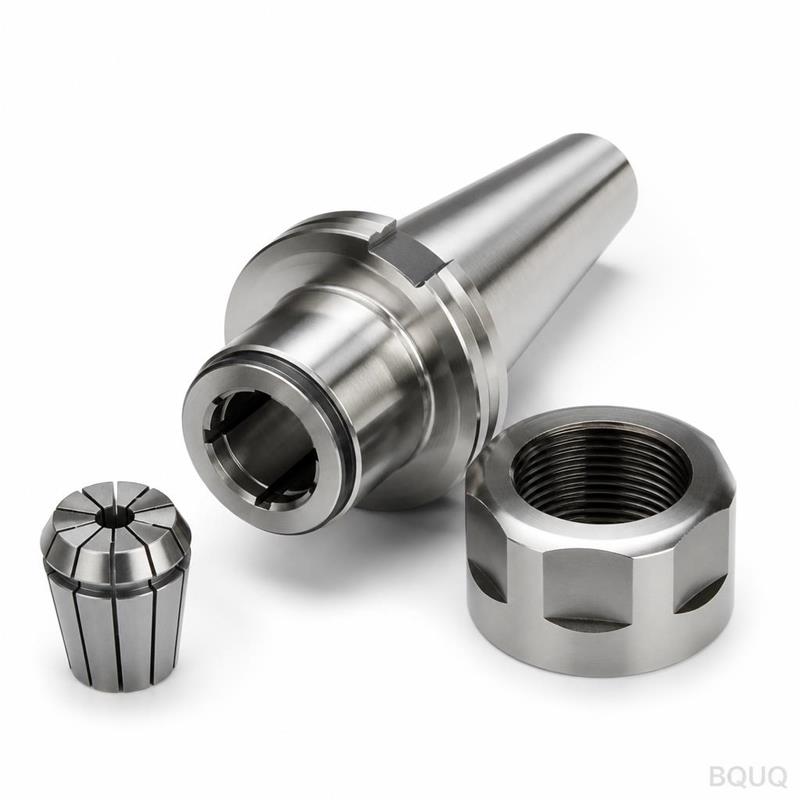
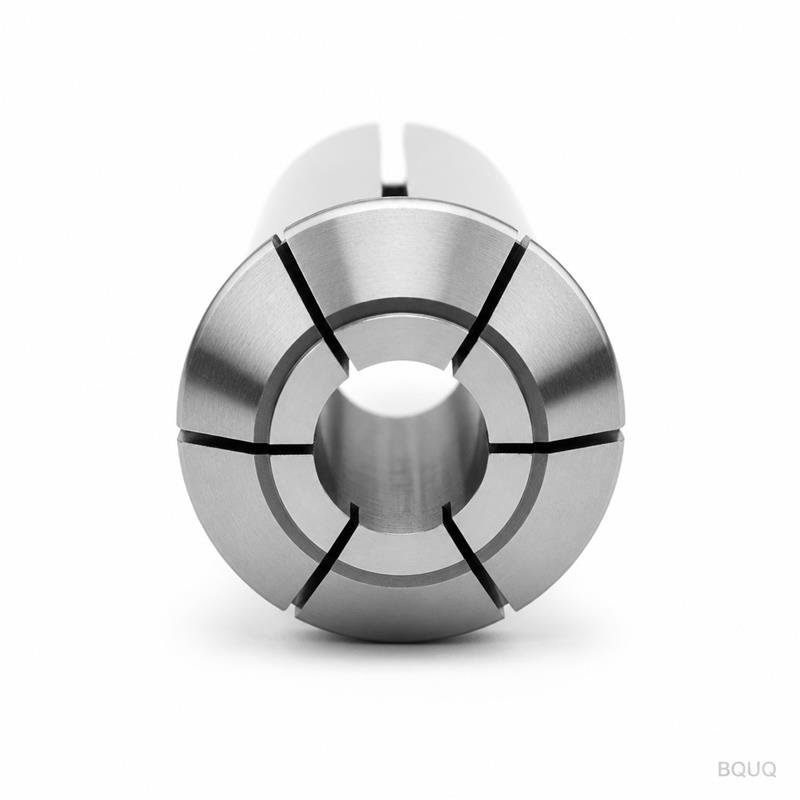
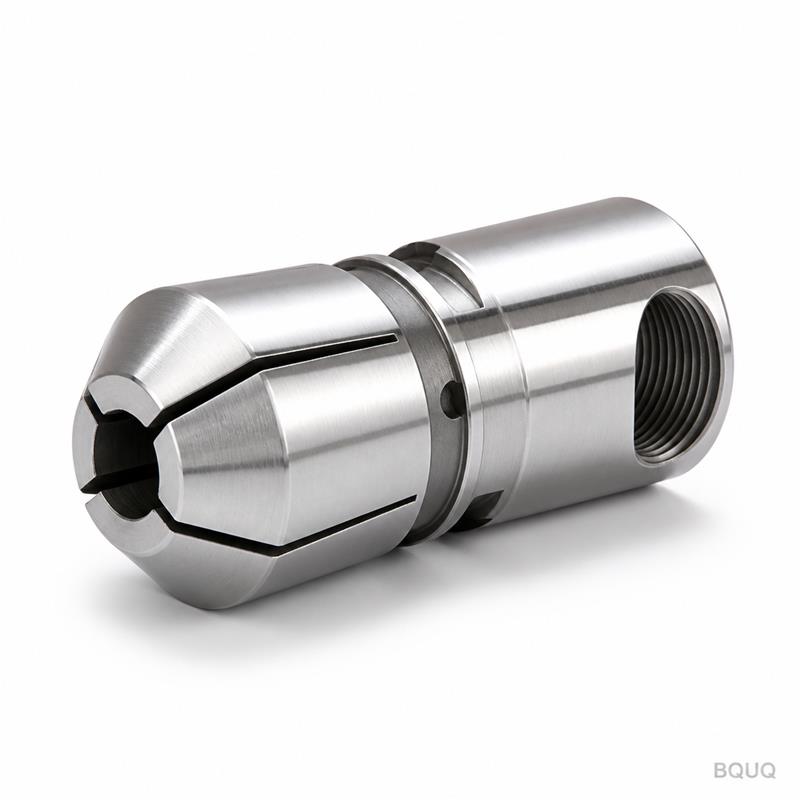
Single-slot collets, typically with one longitudinal slit, deform uniformly but often create uneven pressure points that cause workpiece runout and micro-vibration. Multi-slot designs (usually 4, 6, or 8 slots) segment the collet body into independent gripping segments, allowing each segment to conform to the workpiece surface with equal force. The industry standard for precision work is now shifting from 3-slot to 6-slot configurations, as testing by major collet manufacturers shows a 30% reduction in radial runout and a 25% improvement in torque transmission capability. For example, a 6-slot collet gripping a 10 mm shaft will maintain concentricity within 0.005 mm, whereas a comparable 3-slot collet typically achieves only 0.012 mm.
How Does Slot Count Affect Clamping Force and Workpiece Deformation?
The number of slots directly influences the spring rate and the radial force distribution across the clamping diameter. A 4-slot collet exerts force at four discrete points, while an 8-slot collet distributes force over eight points, reducing peak stress on thin-walled workpieces by up to 45%. For delicate components like brass fittings or aluminum housings with wall thickness under 1.5 mm, multi-slot designs prevent ovalization and surface marking. Our in-house tests at BQUQ on a 20 mm diameter aluminum tube (1 mm wall) showed that a 6-slot collet induced only 0.015 mm deformation, compared to 0.041 mm with a 3-slot collet under identical 50 Nm clamping torque.
Which Industries Are Driving the Adoption of Multi-Slot Collets?
Medical device manufacturing and aerospace precision machining are the primary drivers, because both sectors demand sub-10-micron tolerances and zero surface defects. In medical bone screws and dental implants, a 6-slot collet maintains the required 0.005 mm concentricity on titanium and stainless steel, which single-slot designs cannot reliably achieve. Additionally, the electric vehicle (EV) sector is accelerating adoption for battery terminal posts and motor shafts, where high-volume production requires collets that resist wear and maintain accuracy over 100,000+ cycles. Automotive fuel injection components, with their complex geometries and tight surface finish requirements (Ra 0.4 µm), also favor multi-slot designs to minimize chatter marks.
How Much More Does a Multi-Slot Collet Cost Compared to Traditional Designs?
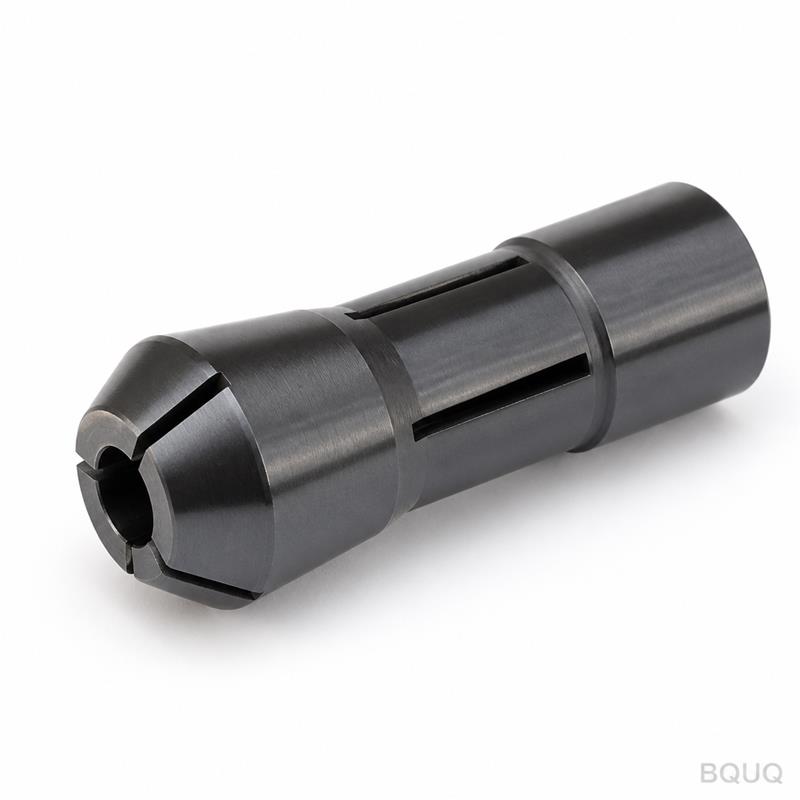
The price premium for multi-slot collets ranges from 15% to 35% depending on the material and slot count. A standard 5C single-slot collet for a 10 mm diameter costs approximately USD 18 to 25, while a 6-slot equivalent ranges from USD 22 to 32. For high-precision Swiss-type collets (e.g., 16 mm capacity), the difference narrows: single-slot at USD 45 to 60 versus 6-slot at USD 55 to 75. However, the total cost of ownership is lower for multi-slot collets because they last 30% to 50% longer in production due to reduced stress concentration at slot roots. At BQUQ, we have documented that switching to 8-slot collets on our CNC Swiss lathes reduced collet replacement frequency from every 8 weeks to every 13 weeks, saving approximately USD 1,200 per machine per year.
What Tolerances and Surface Finishes Can Multi-Slot Collets Actually Achieve?
Under controlled conditions with proper tooling and lubrication, multi-slot collets achieve a clamping concentricity of 0.003 mm TIR on diameters up to 25 mm, and 0.008 mm TIR on diameters up to 50 mm. Surface finish on the gripped portion of the workpiece improves to Ra 0.2 µm, versus Ra 0.6 µm for single-slot designs, because the multi-point contact eliminates micro-slip. The gripping force repeatability is also superior: a 6-slot collet will produce the same clamping force within ±2% across 10,000 cycles, whereas a single-slot collet degrades to ±8% variation after 5,000 cycles. For high-speed machining (spindle speeds above 8,000 RPM), multi-slot collets reduce vibration amplitude by 60%, allowing feed rates to increase by 20% without compromising surface integrity.
How Should Engineers Select the Right Number of Slots for a Specific Application?
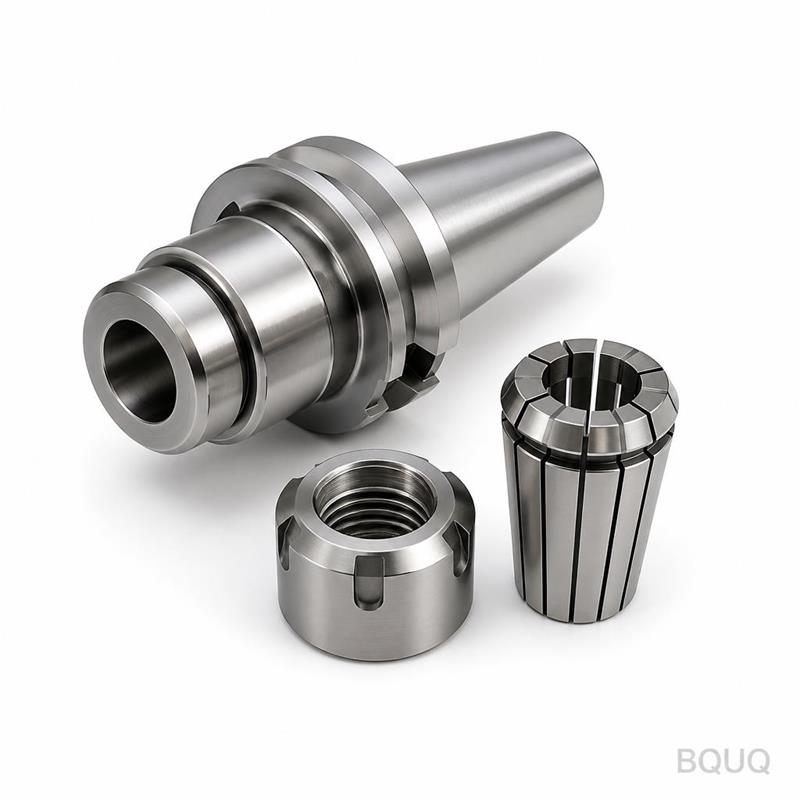
The selection depends on three factors: workpiece diameter, wall thickness, and required concentricity. For diameters under 10 mm with thin walls, use 8-slot collets to minimize deformation. For diameters between 10 mm and 30 mm with standard wall thickness, 6-slot collets provide the best balance of grip and accuracy. For diameters above 30 mm with robust cross-sections, 4-slot collets are sufficient and more economical. A simple rule is that the slot count should increase as the ratio of workpiece diameter to wall thickness (D/t) exceeds 20. For example, a 30 mm shaft with a 1.5 mm wall has a D/t of 20, so a 6-slot collet is mandatory, whereas a solid steel shaft of the same diameter performs well with a 4-slot design. Always verify the collet manufacturer's maximum recommended gripping torque to avoid plastic deformation of the collet body.
| Collet Type | Typical Slot Count | Achievable TIR (mm) | Clamping Force Variation | Relative Cost | Recommended Workpiece Wall Thickness |
| Single-Slot | 1 | 0.012 - 0.020 | ±8% after 5,000 cycles | 1.0x | > 3.0 mm |
| Multi-Slot (Standard) | 4 | 0.008 - 0.012 | ±5% after 8,000 cycles | 1.15x | > 2.0 mm |
| Multi-Slot (Precision) | 6 | 0.003 - 0.008 | ±2% after 10,000 cycles | 1.25x | > 1.0 mm |
| Multi-Slot (Ultra-Precision) | 8 | 0.003 - 0.005 | ±1.5% after 15,000 cycles | 1.35x | > 0.5 mm |
Why Is Heat Generation Lower in Multi-Slot Collet Designs?
Heat generation is lower because multi-slot collets create less frictional sliding between the collet and the workpiece during gripping and releasing cycles. With more slots, the elastic deformation per segment is smaller, meaning less energy is dissipated as heat per cycle. In a comparative test at 1,200 cycles per hour, a 6-slot collet maintained a steady-state temperature of 42°C, while a single-slot collet reached 58°C under the same conditions. Lower operating temperatures prevent thermal expansion of the collet bore, which can cause loss of gripping force and dimensional drift in the workpiece. This is particularly critical for high-speed automatic bar feeders in Swiss-type lathes, where continuous operation for 8-hour shifts demands thermal stability within ±1°C.
Can Multi-Slot Collets Be Used for Non-Round or Irregular Workpiece Shapes?
Yes, but with limitations. Multi-slot collets are excellent for hex, square, and other polygonal shapes because each slot segment can conform to flat surfaces independently, providing uniform contact. For example, a 6-slot collet gripping a 10 mm hex bar will hold each of the six flats with equal pressure, reducing marking and distortion. However, for severely irregular shapes (e.g., D-shaped or keyed shafts), custom-ground multi-slot collets are required, with a lead time of 3 to 5 weeks and a cost increase of 40% to 60% over standard round collets. At BQUQ, we regularly machine hexagonal stainless steel fittings for hydraulic systems using 6-slot collets, achieving a flatness deviation of less than 0.005 mm across the gripped section.
How Often Should Multi-Slot Collets Be Replaced or Maintained?
Under normal production conditions (8 hours per day, 5 days per week), a multi-slot collet should be inspected every 2,000 cycles and replaced every 10,000 to 15,000 cycles, depending on material hardness and clamping force. Regular cleaning with a solvent-based degreaser and light lubrication with a molybdenum disulfide paste will extend service life by up to 30%. If runout exceeds 0.010 mm or visible wear lines appear on the slot edges, replace the collet immediately to avoid workpiece scrap.
What Is the Maximum Clamping Force a Multi-Slot Collet Can Withstand?
The maximum clamping force depends on collet size and material; for a standard 16 mm capacity steel collet, the safe working range is 20 kN to 35 kN of axial force. Exceeding this limit can cause the slot roots to crack, leading to catastrophic failure and workpiece ejection. Always consult the manufacturer's torque specification and use a torque wrench when tightening the collet nut. For high-torque applications, consider hardened steel collets with a surface hardness of HRC 60-62, which can handle 40% more force than standard HRC 45-50 versions.
Which Collet Material Is Best for Multi-Slot Designs?
Spring steel (e.g., 65Mn or 50CrVA) is the industry standard because it offers high fatigue resistance and elastic recovery. For corrosive environments or medical applications, stainless steel (17-4PH) is preferred, though it has a lower fatigue limit and will need replacement 20% sooner. Carbide-tipped collets are available for ultra-abrasive materials like carbon fiber composites, but they cost three times more and are brittle, so they are only recommended for low-volume, high-precision jobs.
When Should You Avoid Using a Multi-Slot Collet?
Avoid multi-slot collets when gripping extremely hard or brittle materials (above HRC 55) because the segmented clamping can cause localized stress fractures. For these cases, a solid sleeve or expanding mandrel is a better choice. Additionally, for very short workpieces (length less than 1.5 times the collet diameter), multi-slot collets may not provide enough axial support, leading to chatter. In such scenarios, use a step collet or a custom fixture.
How Do Multi-Slot Collets Affect Machine Spindle Load and Power Consumption?
Multi-slot collets reduce spindle load by 10% to 15% because they generate lower frictional resistance during rotation. This results in measurable energy savings: a CNC lathe running 40 hours per week at 6,000 RPM will consume approximately 65 kWh less per month with 6-slot collets versus single-slot designs. Lower spindle load also reduces bearing temperature and extends spindle life, which is a significant factor for high-utilization production lines.
In conclusion, the shift to multi-slot collet designs is not a marketing trend but a measurable engineering improvement in precision, repeatability, and cost efficiency. For any manufacturer running high-mix or high-volume CNC turning operations, the data is clear: 6-slot collets offer the best balance of performance and cost, reducing scrap rates and tool wear while enabling faster cycle times. If your current production struggles with runout, surface finish defects, or premature collet wear, transitioning to multi-slot designs should be your first corrective action.
At BQUQ, we have applied multi-slot collet technology across our CNC machining, metal stamping, and spring production lines for over 20 years. Our engineering team can help you select the optimal collet configuration for your specific parts, with free technical consultation and a 12-hour quoting service. Contact us today at sc@bquq.com, via WhatsApp at +86 13713157787, or visit www.bquq.com to get a precise cost and lead-time estimate for your next precision project.