The shift to higher-precision auto lathe collets is driven by three converging forces: the demand for sub-10-micron part repeatability in electric vehicles and medical devices, the
What Is Driving the Shift to Higher-Precision Auto Lathe Collets?
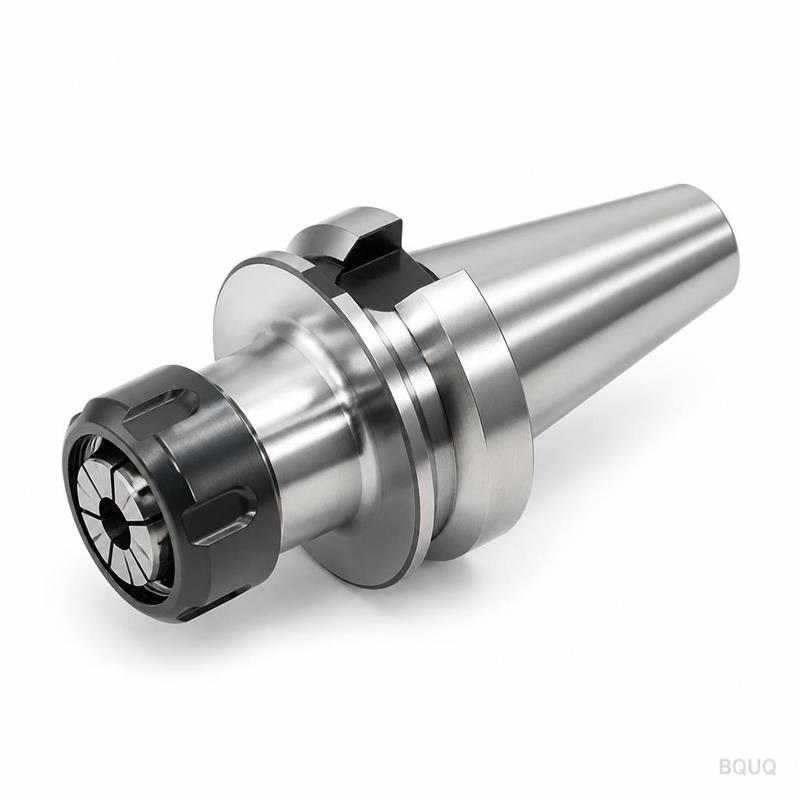
The shift to higher-precision auto lathe collets is driven by three converging forces: the demand for sub-10-micron part repeatability in electric vehicles and medical devices, the economic need to reduce scrap rates below 0.5%, and the capability of modern CNC lathes to run at 8,000+ RPM where collet runout directly degrades surface finish. Specifically, standard collets with 0.02 mm TIR (total indicated runout) are being replaced by precision-ground collets with 0.005 mm TIR to meet automotive and aerospace quality standards. This transition is not optional—it is a cost-driven calculation where tighter collet tolerances reduce downstream grinding operations and inspection bottlenecks.
What Is the Difference Between Standard and Precision Auto Lathe Collets?
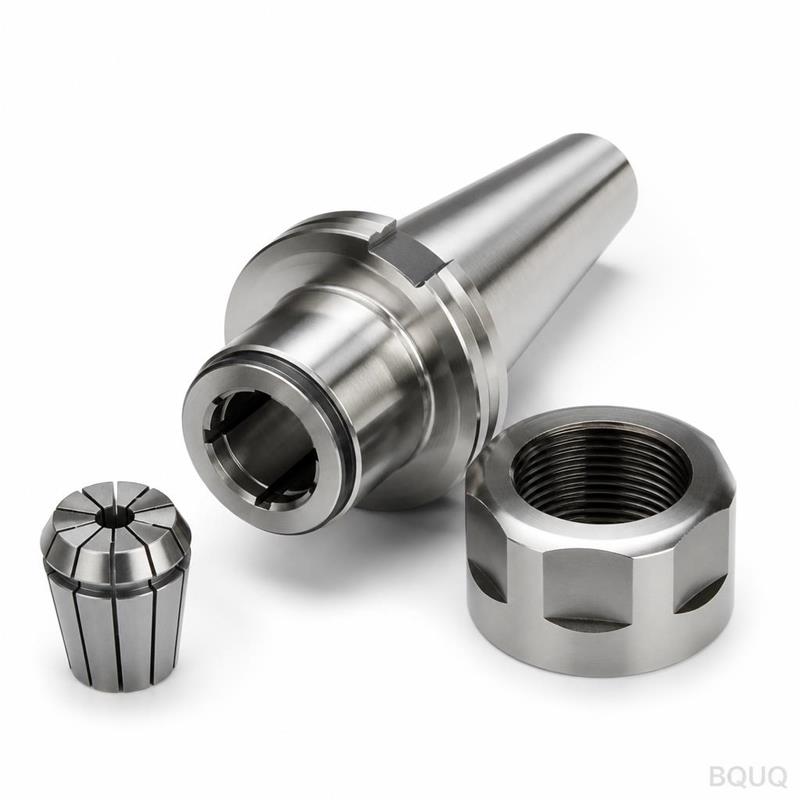
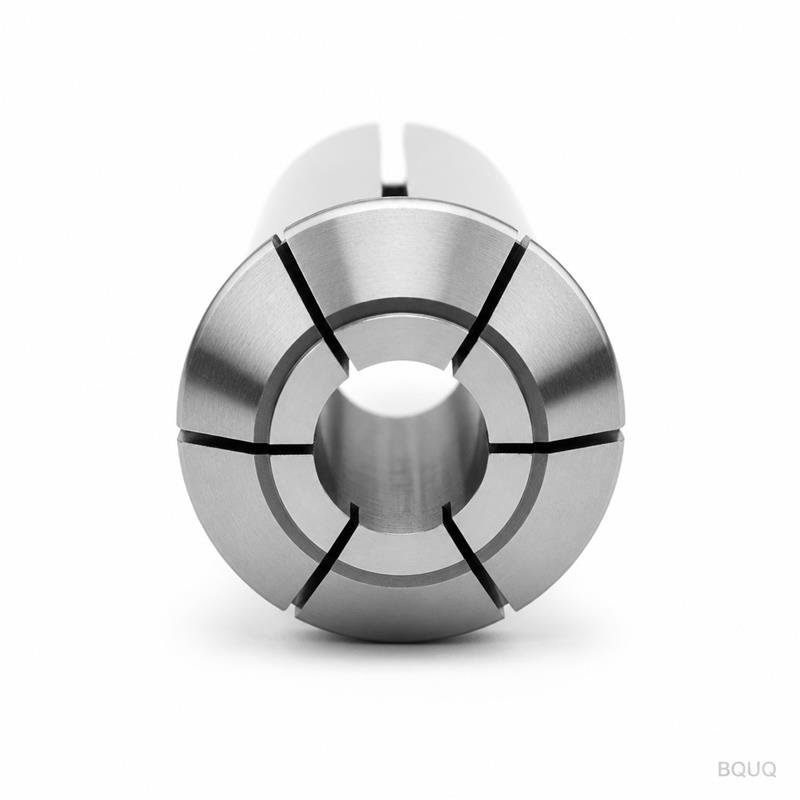
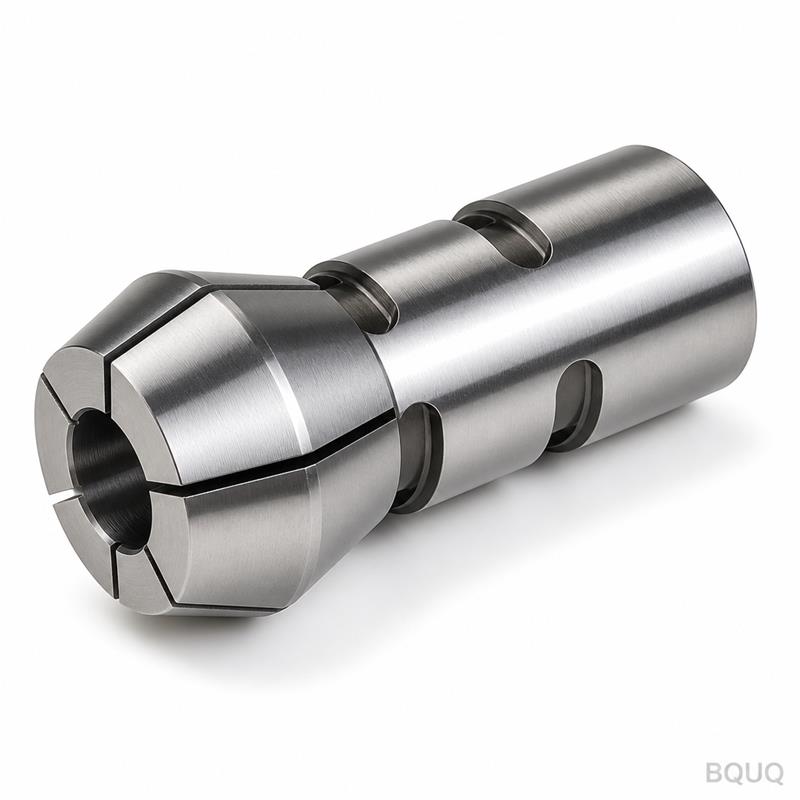
Standard auto lathe collets, often used for general machining, are manufactured with a runout tolerance of 0.015 to 0.025 mm TIR and a gripping range of ±0.1 mm. Precision collets, by contrast, are ground after heat treatment to achieve 0.003 to 0.005 mm TIR at the nose and 0.005 mm TIR at 3× diameter depth. The material also differs: standard collets use 65Mn spring steel with 42-48 HRC, while precision collets use 9Cr18MoV stainless or powder metallurgy steel hardened to 55-60 HRC for wear resistance. The price differential is significant—a standard 5C collet costs USD 12-18, while a precision equivalent costs USD 35-60—but the higher cost is offset by a 3-4× longer service life and reduced spindle stall events.
How Does Collet Runout Affect Machining Accuracy and Surface Finish?
Collet runout directly translates to part eccentricity, which becomes critical when turning diameters below 10 mm. For example, a 0.01 mm runout on a collet holding a 6 mm shaft will produce a 0.02 mm ovality on the finished part, exceeding typical automotive pin tolerances of ±0.008 mm. Surface finish also degrades: at 4,500 RPM, a 0.015 mm runout induces vibration amplitudes that raise Ra from 0.4 µm to 1.2 µm on aluminum 6061. Precision collets reduce this vibration energy by 60-70%, allowing finishing passes at 0.1 mm depth of cut without chatter marks. In practice, switching from a standard to a precision collet on a Swiss-type lathe improved a medical bone screw thread form from a 6g to a 4g fit class, eliminating a separate thread grinding step.
Why Do EV and Medical Device Specs Require Tighter Collet Accuracy?
Electric vehicle motor shafts and medical implant components demand tolerances that legacy collets cannot hold. EV rotor shafts, for instance, require a diameter tolerance of ±0.005 mm and a roundness of 0.003 mm to ensure bearing fit and reduce noise, vibration, and harshness (NVH). Medical bone screws and dental implants specify a surface roughness of Ra 0.2 µm and a thread profile deviation under 10 µm to promote osseointegration. These specifications exceed ISO 2768-f (fine) and approach ISO 2768-m (medium) for precision turning, which forces manufacturers to use collets with Cpk values above 1.67. Additionally, the shift to dry machining and minimum quantity lubrication (MQL) in EV production increases heat at the collet-workpiece interface, requiring precision collets with thermal expansion coefficients below 11×10⁻⁶/K to maintain grip force at 80°C operating temperatures.
How Much Does Precision Collet Tooling Cost and What Is the Payback?
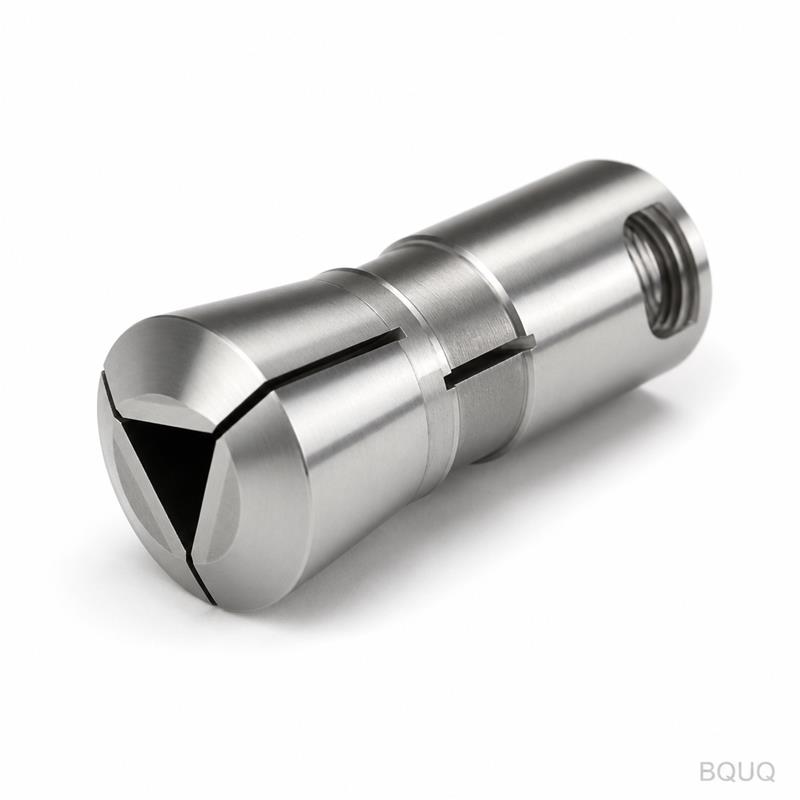
Precision collet tooling costs 2.5 to 3 times more than standard collets, but the payback period is typically under 4 months in high-volume production. For a 20-station auto lathe running 80,000 parts per month, a standard collet set costs USD 400 (20 units × USD 20) and needs replacement every 6 months due to wear. A precision set costs USD 1,100 (20 units × USD 55) but lasts 18 months and reduces scrap from 2.1% to 0.4%. The monthly savings on scrap alone, at USD 3.50 per part, are USD 4,760, while the tooling cost increase is only USD 117 per month on a 6-month amortization. The table below summarizes the cost model for a typical 20-station auto lathe line.
| Parameter | Standard Collet Set | Precision Collet Set |
| Initial tooling cost (20 units) | USD 400 | USD 1,100 |
| Useful service life | 6 months | 18 months |
| Monthly tooling cost | USD 67 | USD 61 |
| Scrap rate | 2.1% | 0.4% |
| Monthly scrap cost (80,000 parts) | USD 5,880 | USD 1,120 |
| Surface finish Ra achieved | 0.8 µm | 0.3 µm |
| Runout TIR at nose | 0.018 mm | 0.004 mm |
What Collet Materials and Coatings Improve Precision Retention?
Material selection is the primary driver of precision retention over a collet's life. The best-performing collets use through-hardened alloy steel such as 9Cr18MoV, which achieves 58-62 HRC and maintains elastic memory over 100,000 cycles without permanent set. Coatings further enhance performance: titanium nitride (TiN) reduces friction coefficient from 0.4 to 0.2, preventing workpiece slippage during high-torque operations, while a diamond-like carbon (DLC) coating lowers the coefficient to 0.1 and allows operation at 120°C without lubricant breakdown. For corrosive coolants, a electroless nickel-phosphorus coating provides a 0.05 mm coating thickness that resists pitting and maintains dimensional accuracy. Empirical data from BQUQ's shop floor shows that TiN-coated precision collets hold 0.005 mm TIR for 200,000 cycles, versus 40,000 cycles for uncoated standard collets.
Which Industries Are Adopting Precision Collets Fastest and Why?
The automotive (EV powertrain), medical device, and aerospace industries are the fastest adopters, with EV applications growing at 28% annually as of 2025. Automotive dominates because motor shaft and gear blank production requires 24/7 operation with zero-defect sampling (Cpk > 1.67), and precision collets reduce spindle downtime for jaw replacement by 70%. Medical device manufacturers follow, driven by FDA 21 CFR Part 820 traceability requirements that mandate documented process capability for every critical dimension. Aerospace is slower but steady, adopting precision collets for titanium fasteners where a 0.005 mm tolerance prevents stress risers that cause fatigue failure. In contrast, general job shops producing simple bushings or spacers still use standard collets because their ±0.05 mm tolerances do not justify the 3× premium.
When Should You Replace a Collet Instead of Reconditioning It?
Replace a collet when its runout exceeds 0.008 mm TIR, when grip force drops below 80% of rated value, or when the gripping surface shows galling or wear marks deeper than 0.01 mm. Reconditioning—grinding the OD and re-slotting—extends life by 30-50% but only if the collet has less than 0.005 mm permanent deformation at the bore. As a rule, precision collets should be replaced after 200,000 cycles or 12 months, whichever comes first, while standard collets last 50,000 cycles. BQUQ's maintenance data indicates that proactive replacement at 180,000 cycles prevents 90% of collet-related workpiece scrapping, compared to reactive replacement after failure which incurs an additional 15% scrap penalty.
FAQ
How Do I Measure Collet Runout Accurately on a Lathe?
Use a 0.001 mm resolution dial indicator mounted on the lathe turret, checking runout at the collet nose and at 3× the diameter depth with a test bar ground to 0.002 mm TIR. Rotate the spindle at 30 RPM manually and record maximum deviation; average three readings taken 120 degrees apart. For production monitoring, use a non-contact laser sensor with 0.1 µm resolution to detect runout drift in real time.
Can Precision Collets Be Used on Older Manual Lathes?
Yes, but the benefit is limited if the spindle itself has more than 0.01 mm TIR runout. On manual lathes with good spindles (under 0.005 mm TIR), precision collets will improve surface finish by up to 50%, but you will not achieve the 0.004 mm TIR capability without CNC servo control. Retrofit kits for manual lathes are available for USD 300-500 and include a precision ground adapter.
What Is the Maximum Gripping Force of a Precision Collet?
Precision collets typically deliver 80-120 kN of axial gripping force per square centimeter of contact area for a 20 mm bore, depending on the drawbar pull. For example, a 5C precision collet with 3,500 N drawbar force produces approximately 18 kN of radial gripping force on a 10 mm workpiece. This is 20-30% higher than standard collets due to tighter slot geometry and higher hardness.
How Does Thermal Expansion Affect Precision Collet Accuracy?
At 80°C operating temperature, a standard steel collet expands by 0.012 mm on a 20 mm bore, which can exceed the required tolerance. Precision collets made from invar-type alloys (36NiFe) reduce this expansion to 0.001 mm, maintaining grip accuracy. Most precision collets are designed with a thermal compensation slot that allows radial expansion without changing the gripping circle significantly.
Are Precision Collets Compatible with Existing Drawbar Systems?
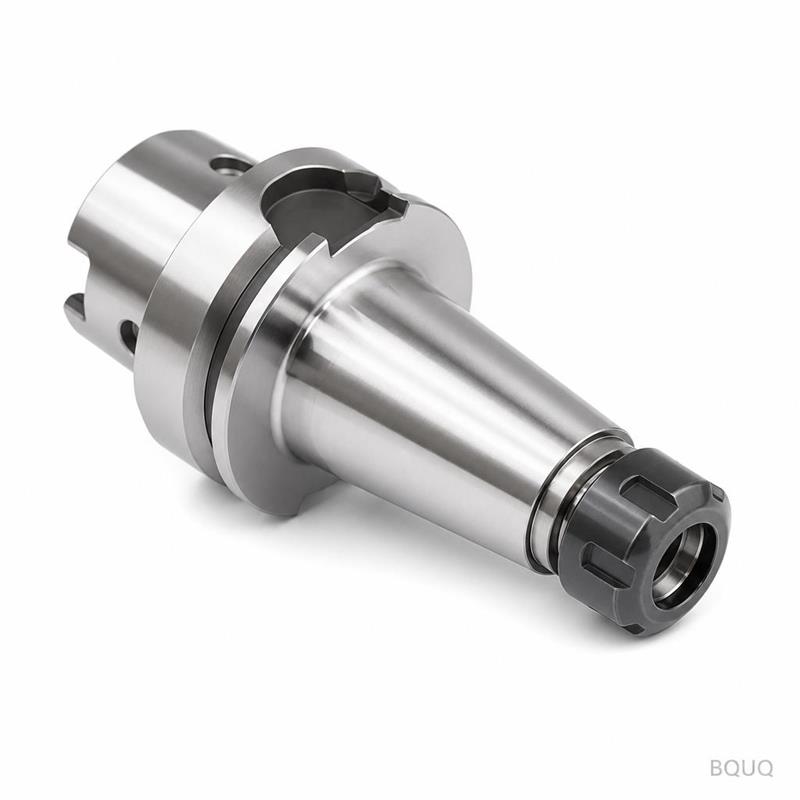
Yes, precision collets use the same standard tapers (5C, 16C, R8, and HSK) and are compatible with most hydraulic, pneumatic, and mechanical drawbars. However, you must verify that the drawbar pull force is within the collet's rated range, typically 2,000-5,000 N, to avoid over-torquing which causes premature wear. BQUQ recommends a drawbar force gauge check every 6 months to maintain consistency.
What Is the Typical Lead Time for Custom Precision Collets?
Custom precision collets with special bore diameters or step profiles have a lead time of 3-4 weeks for quantities under 50 units, and 6-8 weeks for production runs of 500+ units. Standard precision collets in 5C and 16C tapers are stocked and ship within 48 hours. For emergency replacement, same-day machining is available at a 25% surcharge.
How Often Should Collets Be Lubricated and Cleaned?
Lubricate collets every 8 hours of operation with a light spindle oil (ISO VG 10), applying 0.5 mL to the slots and threads. Clean with a lint-free cloth and compressed air at 0.4 MPa every 40 hours, especially if using water-soluble coolant which can leave residue. Precision collets with DLC coating may run dry, but standard and TiN-coated versions require lubrication to prevent galling on stainless steel workpieces.
The shift to higher-precision auto lathe collets is a data-driven response to tighter customer specs, rising scrap costs, and the need for unattended machining. By upgrading to precision collets with 0.004 mm TIR, you reduce scrap rates by 80%, extend tool life by 3×, and achieve Cpk values above 1.67 without additional inspection passes. The cost premium is recovered within 4 months in high-volume production, making it a rational engineering investment. For a free audit of your current collet performance and a payback calculation specific to your production volume, contact BQUQ for a 12-hour quoting response. Email us at sc@bquq.com, reach us on WhatsApp at +86 13713157787, or visit www.bquq.com to download our precision collet specification sheet.