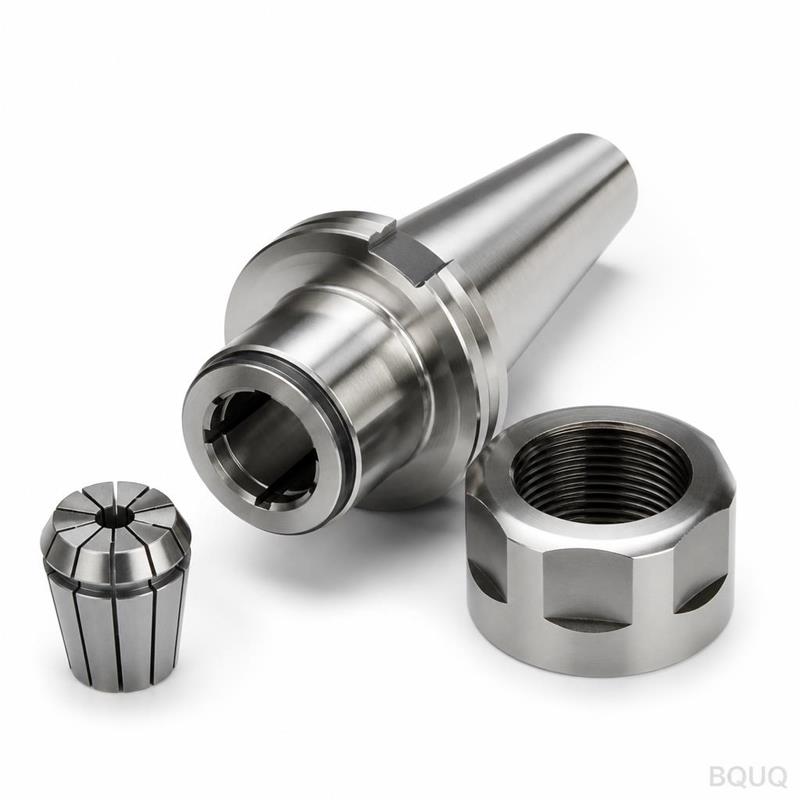
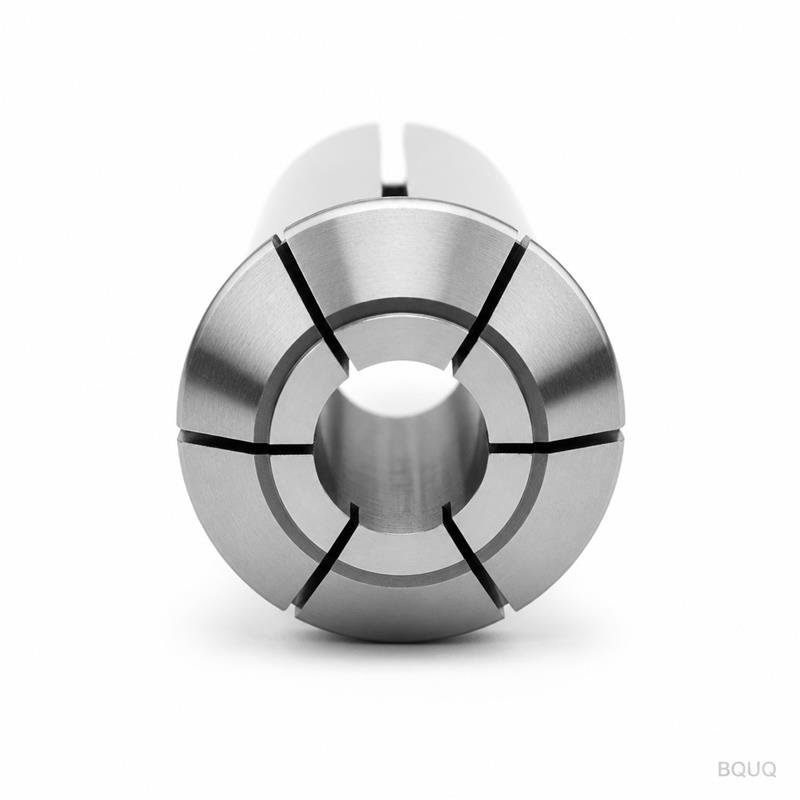
The ER collet system has expanded from the diminutive ER8 to the robust ER50 primarily to accommodate the growing range of spindle sizes, tool shank diameters, and high-torque mach
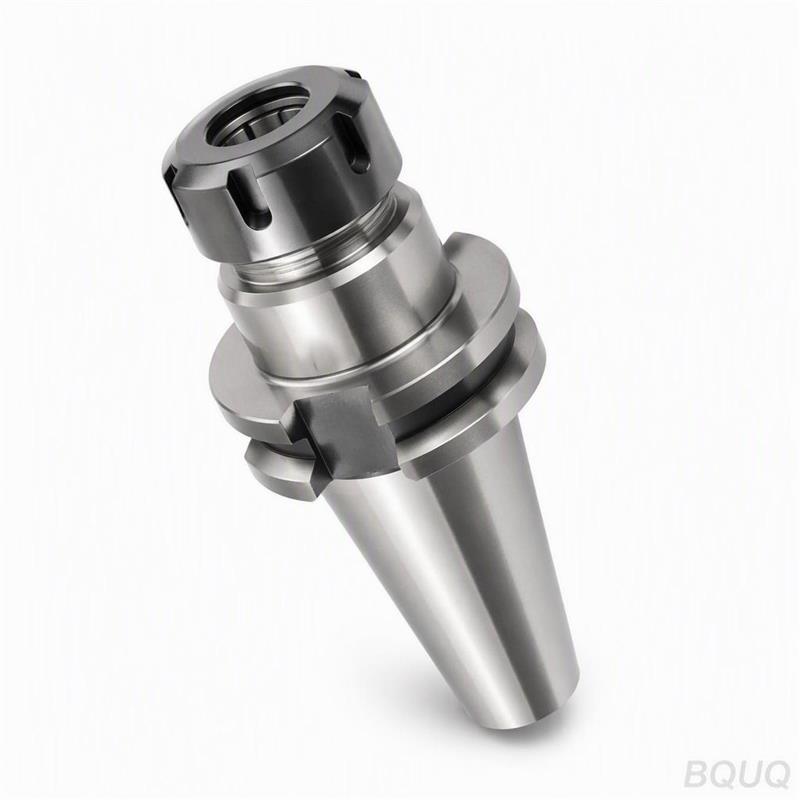
How Is the ER Collet Range Expanding From ER8 to ER50 for CNC Demand?
The ER collet system has expanded from the diminutive ER8 to the robust ER50 primarily to accommodate the growing range of spindle sizes, tool shank diameters, and high-torque machining demands in modern CNC equipment. This expansion is a direct response to the industry's need for greater clamping force, improved runout accuracy, and the ability to handle larger cutting tools without sacrificing precision. As CNC machines become more powerful and versatile, the standardized ER system has scaled accordingly, offering manufacturers a reliable and interchangeable toolholding solution from micro-machining to heavy-duty roughing.
What Are the Exact Dimensional Limits of the ER8 to ER50 Range?
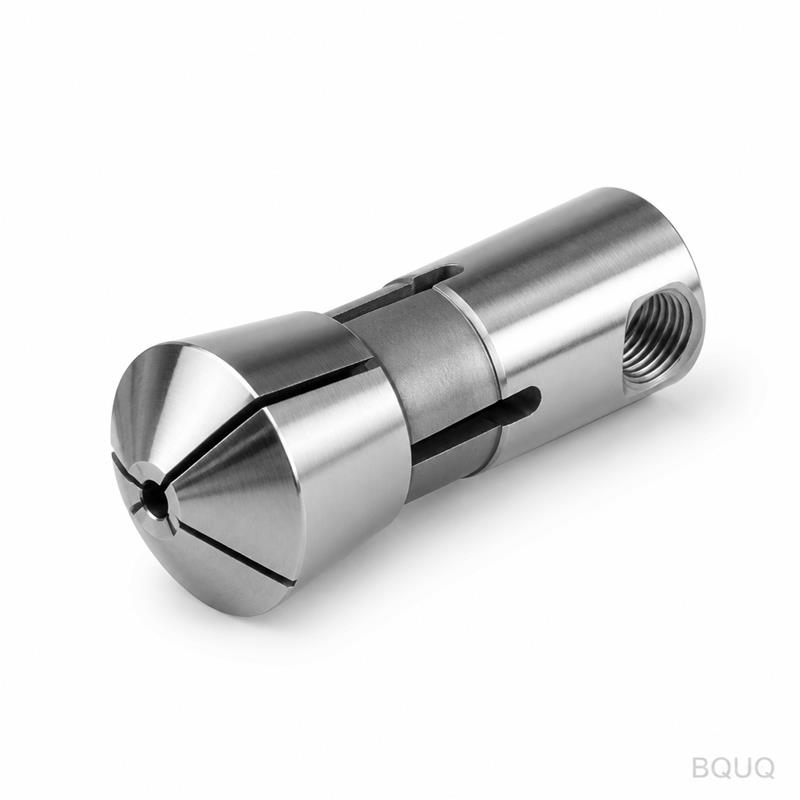
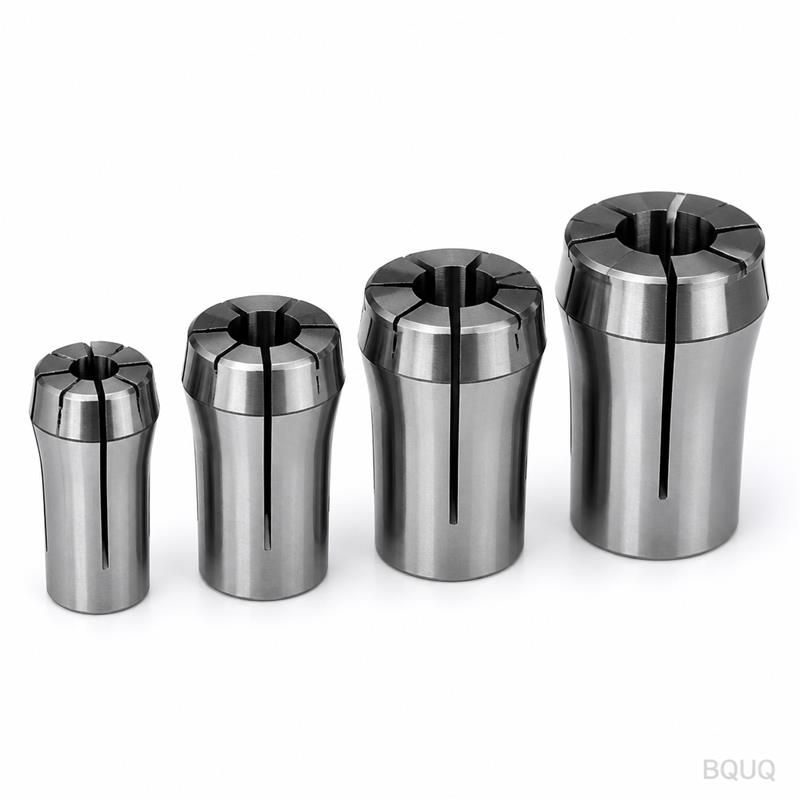
The ER collet system is defined by its gripping range and physical dimensions, which scale proportionally across the series. The smallest, ER8, is designed for micro-machining and accepts tool shank diameters from 1.0 mm to 5.0 mm, with a total collet length of 13.5 mm and an outer diameter of 8.0 mm. At the opposite end, ER50 handles the heaviest workloads, accommodating shank diameters from 20.0 mm to 34.0 mm, with a collet length of 60.0 mm and an outer diameter of 50.0 mm. The intermediate sizes—ER11, ER16, ER20, ER25, ER32, and ER40—fill the gap, each designed to match specific spindle taper sizes and power ratings.
How Does Clamping Force and Torque Capacity Change Across the ER Series?
Clamping force and torque capacity increase significantly as the collet size grows, which is critical for selecting the correct holder for a given operation. An ER8 collet can generate approximately 2.0 Nm of clamping torque, suitable for light-duty drilling and engraving with spindle speeds up to 30,000 RPM. In contrast, an ER32 collet delivers around 120 Nm of clamping torque, while the ER50 can exceed 300 Nm, making it suitable for heavy milling and high-feed roughing operations. The larger collets also feature thicker walls and wider slots, which distribute clamping pressure more evenly over the tool shank, reducing the risk of tool pullout during aggressive cutting.
Which CNC Applications Require Each Specific ER Collet Size?
The application dictates the collet size, and the selection is based on spindle power, tool diameter, and material being machined. ER8 and ER11 collets are predominantly used in precision micro-machining, PCB drilling, and dental or medical device manufacturing where tool diameters are below 7 mm. ER16 and ER20 are the industry standard for general-purpose milling and drilling in small to medium CNC mills, handling tools up to 13 mm. ER25 and ER32 are the workhorses of the industry, used in vertical machining centers (VMCs) for tools ranging from 3 mm to 20 mm, offering a balance between rigidity and versatility. ER40 and ER50 are reserved for heavy-duty machining centers and lathes, typically for tools above 20 mm, where maximum rigidity and vibration damping are paramount.
How Has the Demand for High-Speed Machining Influenced the ER Collet Design?
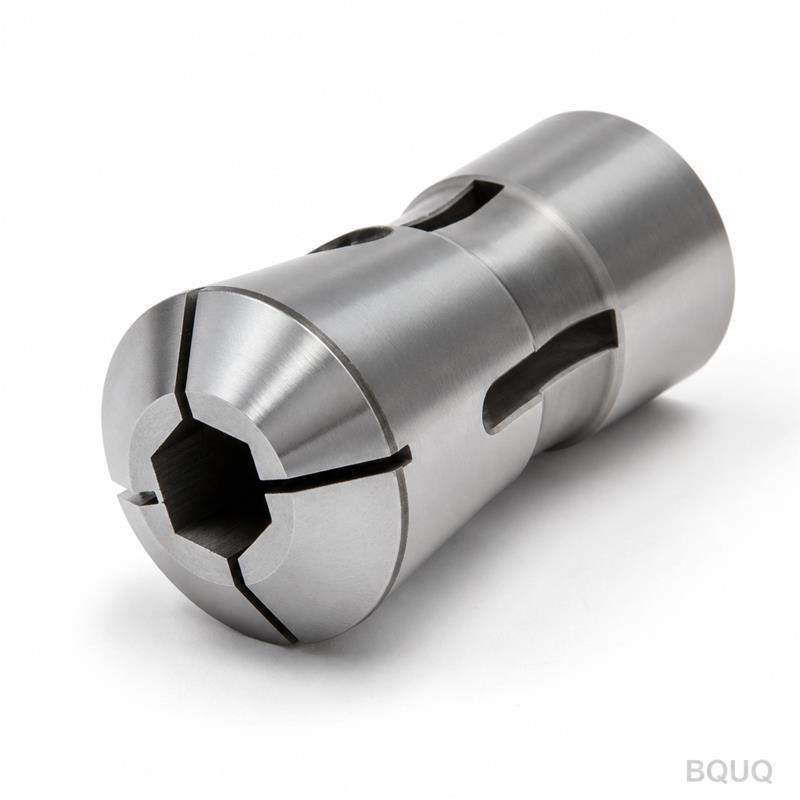
The push toward high-speed machining (HSM) has forced manufacturers to improve the balance and runout accuracy of ER collets, particularly in the smaller sizes. Standard ER collets typically have a runout of 0.015 mm to 0.025 mm, but for HSM applications above 15,000 RPM, precision-ground collets with runout below 0.005 mm are now available. This has led to the development of "ultra-precision" versions of ER16 and ER25 collets that feature improved slot geometry and tighter manufacturing tolerances. Additionally, the material grade has shifted from standard spring steel to high-alloy steels like 65Mn or 60Si2MnA, which offer better fatigue resistance and maintain clamping force at elevated temperatures up to 200 degrees Celsius.
Why Is Runout Accuracy More Critical in the Smaller ER Collets Like ER8 and ER11?
Runout accuracy is disproportionately critical in smaller collets because tool deflection becomes a larger percentage of the tool diameter, directly impacting surface finish and tool life. For example, a 0.01 mm runout on an ER8 collet holding a 3 mm end mill represents a 0.33% deviation, which can cause chatter and premature tool wear. In contrast, the same runout on an ER32 collet holding a 20 mm tool is only a 0.05% deviation, which is often acceptable for roughing operations. Consequently, manufacturers now offer ER8 and ER11 collets with a guaranteed runout of 0.005 mm or less, specifically for applications requiring mirror finishes and micron-level tolerances.
What Is the Price Difference Between ER8 and ER50 Collets and Tool Holders?
The cost of ER collets and their corresponding tool holders scales with size, material quality, and precision grade. A standard ER8 collet is priced at approximately USD 3 to USD 6, while a matching ER8 tool holder costs between USD 35 and USD 60. Moving to the larger end, an ER50 collet ranges from USD 25 to USD 45, with the tool holder priced from USD 150 to USD 300. Precision-ground versions with enhanced runout control can cost 40% to 60% more than their standard counterparts. The following table outlines the typical specifications and price ranges for the full ER series, reflecting current market data for standard grade (runout 0.015 mm) components:
| ER Size | Shank Diameter Range (mm) | Collet OD (mm) | Max Clamping Torque (Nm) | Typical Holder Price (USD) | Typical Collet Price (USD) |
| ER8 | 1.0 - 5.0 | 8.0 | 2.0 | 35 - 60 | 3 - 6 |
| ER11 | 1.0 - 7.0 | 11.0 | 6.0 | 40 - 70 | 4 - 8 |
| ER16 | 1.0 - 10.0 | 16.0 | 15.0 | 45 - 80 | 5 - 10 |
| ER20 | 2.0 - 13.0 | 20.0 | 30.0 | 55 - 90 | 6 - 12 |
| ER25 | 2.0 - 16.0 | 25.0 | 55.0 | 65 - 110 | 8 - 15 |
| ER32 | 2.0 - 20.0 | 32.0 | 120.0 | 80 - 140 | 10 - 20 |
| ER40 | 3.0 - 26.0 | 40.0 | 200.0 | 100 - 180 | 15 - 30 |
| ER50 | 20.0 - 34.0 | 50.0 | 320.0 | 150 - 300 | 25 - 45 |
How Does the ER Collet System Compare to Other Toolholding Systems Like Shrink Fit or Hydraulic?
The ER collet system offers a unique combination of versatility and cost-effectiveness that remains competitive against shrink fit and hydraulic chucks, though each has specific advantages. ER collets provide a clamping range of 1 mm per size, meaning one collet can hold multiple tool diameters, whereas shrink fit and hydraulic systems are limited to a single diameter. However, shrink fit chucks offer superior runout (0.003 mm) and higher rigidity for high-speed applications, while hydraulic chucks provide excellent vibration damping. For most general machining operations, ER collets offer the best balance of flexibility, accuracy, and price, which is why they remain the default choice for over 70% of CNC machining centers worldwide.
Which Materials Are Best Suited for Manufacturing ER Collets?
The material choice for ER collets directly affects their lifespan, clamping consistency, and resistance to wear. High-carbon spring steel, such as 65Mn, is the most common material due to its excellent elasticity and fatigue resistance, allowing the collet to open and close repeatedly without losing its shape. For corrosive environments or extended tool life, stainless steel variants like 304 or 420 are used, though they offer slightly less clamping force. The most advanced ER collets use powder metallurgy steel, which provides superior wear resistance and maintains precise dimensions even after thousands of clamping cycles, making them ideal for automated production lines where consistency is paramount.
FAQ
Can an ER32 Collet Be Used in an ER40 Tool Holder?
No, an ER32 collet cannot be used in an ER40 tool holder because the collet's outer diameter and taper angle are specifically matched to the nut and holder of the same size. Each ER series has a distinct outer diameter (e.g., ER32 OD is 32 mm, ER40 OD is 40 mm) that must align perfectly with the corresponding tool holder cavity. Forcing a smaller collet into a larger holder will result in improper clamping and catastrophic tool failure.
What Is the Maximum Recommended Spindle Speed for ER Collets?
The maximum recommended spindle speed depends on the collet size and its balance grade. Standard ER collets are typically rated for speeds up to 20,000 RPM, while precision-balanced versions can operate safely at 30,000 RPM. For speeds above 30,000 RPM, it is advisable to use shrink fit or hydraulic toolholders, as the centrifugal forces can cause standard ER collets to lose clamping grip.
How Often Should ER Collets Be Replaced to Maintain Accuracy?
ER collets should be inspected for wear after every 500 to 800 clamping cycles, with replacement recommended if runout exceeds 0.02 mm or if visible cracks or corrosion appear. In high-volume production environments, many shops replace ER collets every 6 to 12 months as part of preventive maintenance. Regular cleaning of the collet and holder taper is essential to extend their service life.
Does the ER Collet Range Include a Metric or Imperial Version?
Yes, ER collets are available in both metric and imperial versions to accommodate global manufacturing standards. Metric collets cover shank diameters in whole millimeters (e.g., 4 mm, 6 mm, 10 mm), while imperial collets are sized in fractions of an inch (e.g., 1/8 inch, 1/4 inch). The clamping range of 1 mm or 0.04 inches remains consistent across both systems.
What Is the Typical Lead Time for Custom ER Collet Orders?
Standard ER collets are typically available from stock with a lead time of 2 to 5 business days. Custom orders, such as collets with special bore diameters, extended lengths, or high-precision runout specifications, generally require 3 to 4 weeks for manufacturing and delivery. At BQUQ, we maintain a large inventory of standard ER collets from ER8 to ER50 to meet urgent production deadlines.
Are ER Collets Suitable for Use with Coolant?
Yes, ER collets and tool holders are compatible with both flood and through-tool coolant systems, provided the components have appropriate coolant channels. Many ER tool holders feature internal coolant holes that deliver fluid directly to the cutting edge through the collet. This capability is essential for deep-hole drilling and high-heat machining applications.
How Does Temperature Affect ER Collet Performance?
Temperature significantly impacts ER collet clamping force, as spring steel loses elasticity when heated above 200 degrees Celsius. In dry machining or high-friction operations, this can lead to tool slippage and reduced accuracy. For high-temperature applications, it is recommended to use coated collets or those made from heat-resistant alloys to maintain consistent performance.
Conclusion
The expansion of the ER collet range from ER8 to ER50 reflects the CNC industry's demand for scalable, precise, and cost-effective toolholding solutions across all machining scales. By understanding the dimensional limits, torque capacities, and application suitability of each size, engineers can optimize their tooling strategies to improve productivity and part quality. Whether you are micro-machining with an ER8 or performing heavy roughing with an ER50, selecting the correct collet is fundamental to achieving tight tolerances and maximizing tool life. At BQUQ, we manufacture and supply high-precision ER collets and tool holders with over 20 years of experience, ensuring your CNC operations run at peak efficiency. For a competitive quote and engineering support, contact our team today for a response within 12 hours at sc@bquq.com or via WhatsApp at +86 13713157787. Visit our website at www.bquq.com to explore our full range of CNC tooling solutions.