Quick-change chucks reduce tooling changeover time by up to 90% compared to conventional threaded or flange-mounted chucks, directly enabling the flexible automation required for h
Why Are Quick-Change Chucks the Future of Flexible Automation?
Quick-change chucks reduce tooling changeover time by up to 90% compared to conventional threaded or flange-mounted chucks, directly enabling the flexible automation required for high-mix, low-volume production. By allowing an operator or robot to swap an entire chuck-and-workpiece assembly in under 10 seconds with repeatable positioning accuracy of 0.005 mm, these systems eliminate the bottleneck of manual setup. For factories like BQUQ, where CNC machining, metal stamping, and heat sink fabrication run alongside each other, quick-change chucks are not an accessory but the central enabler of unattended machining and just-in-time manufacturing.
What Exactly Is a Quick-Change Chuck and How Does It Differ from a Standard Chuck?
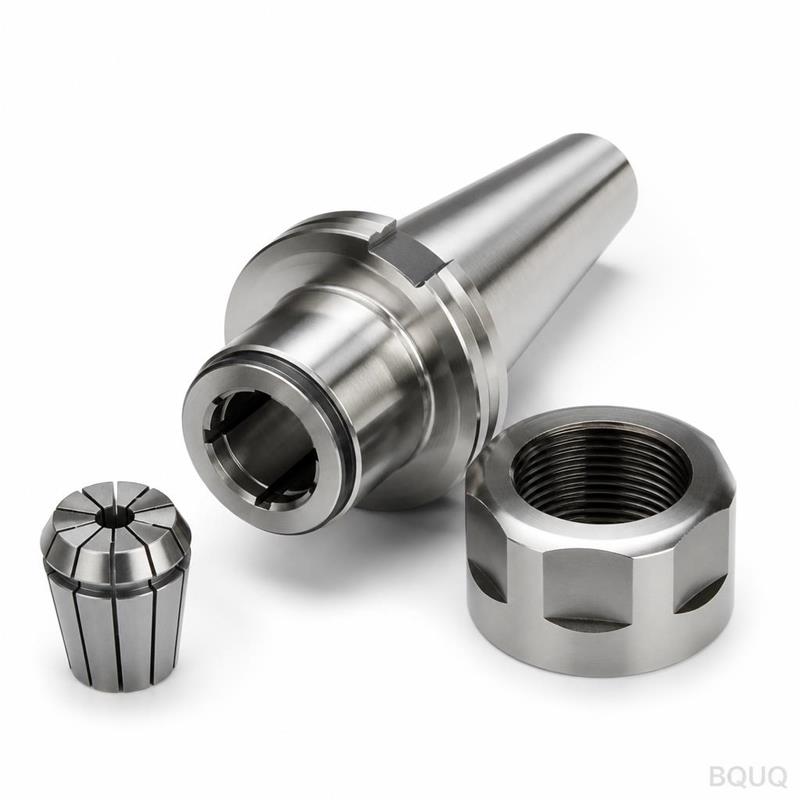
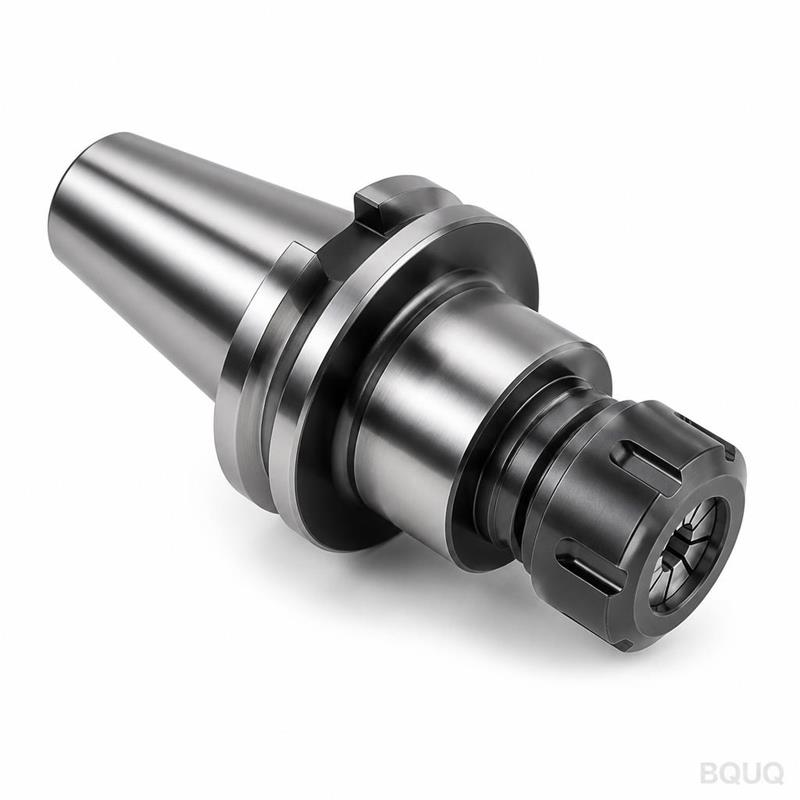
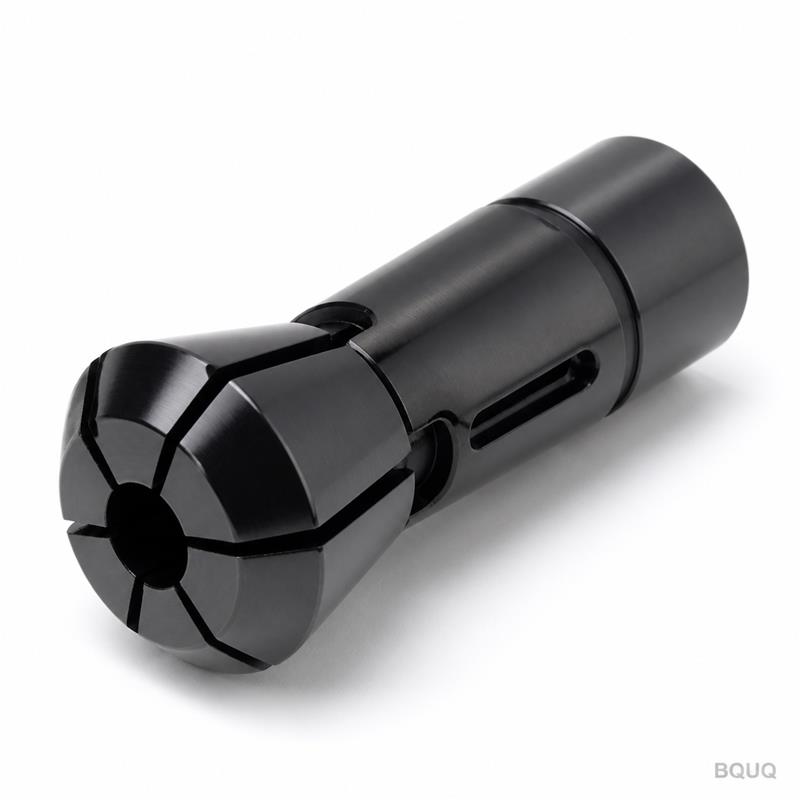
A quick-change chuck is a workholding system with a precision-matched interface—typically a polygonal taper, a short taper with face contact, or a ball-lock mechanism—that allows the entire chuck body, jaws, and workpiece subplate to be removed and replaced without disturbing the spindle or the machine's coordinate system. Unlike a standard three-jaw chuck that requires individual jaw adjustment, indicating, and torque wrenching (often 5 to 15 minutes per change), a quick-change chuck uses a drawbar or a manual bayonet lock to secure the new assembly in one motion. The critical difference is the datum: the interface is machined to a concentricity of 0.003 mm and a face squareness of 0.005 mm, meaning the new chuck is automatically centered and aligned to the spindle axis. For a CNC lathe or a milling machine, this converts hours of setup time into seconds of part swap time, which is the foundation of flexible automation.
How Much Time and Cost Can Quick-Change Chucks Save in a Typical Production Shift?
In a real production scenario at BQUQ, we run a 24-hour shift with an average of 12 job changes per day on a single CNC lathe. With standard chucks, each changeout requires 12 minutes of manual labor, totaling 144 minutes per day of non-productive time. With a quick-change system, each changeout takes 1.5 minutes, totaling 18 minutes per day. This 126-minute daily saving translates to 2.1 additional machine hours per day, or roughly 630 hours per year per machine. At a conservative machine-hour rate of USD 80, that is USD 50,400 in recovered capacity per machine per year. The initial investment for a precision quick-change chuck system (chuck body plus three subplates) is approximately USD 4,500 to USD 8,500 depending on size and accuracy class. The payback period is therefore under 10 weeks, even before counting reduced scrap from eliminated setup errors and reduced operator fatigue.
Why Is Repeatability the Most Critical Specification for Flexible Automation?
Repeatability, not accuracy, determines whether a quick-change chuck can be trusted for unattended operation. Accuracy is how close a single measurement is to the true value; repeatability is how close successive measurements are to each other after multiple changeovers. For flexible automation, a chuck must return to the exact same axial and radial position every single time, because the machine's tool offsets and touch probe programs assume a fixed workpiece datum. A high-quality quick-change chuck from a German or Japanese manufacturer will specify a radial repeatability of 0.005 mm TIR (Total Indicated Reading) and an axial repeatability of 0.010 mm. This level of precision allows a robotic cell to load a blank, close the chuck, and begin cutting immediately without re-probing. If repeatability drifts to 0.02 mm, you must add a probing cycle (30 seconds per part) which erodes the entire efficiency gain. Therefore, when selecting a chuck, demand the certified repeatability test report, not just the brochure value.
Which Quick-Change Chuck Interface Is Best for Which Application?
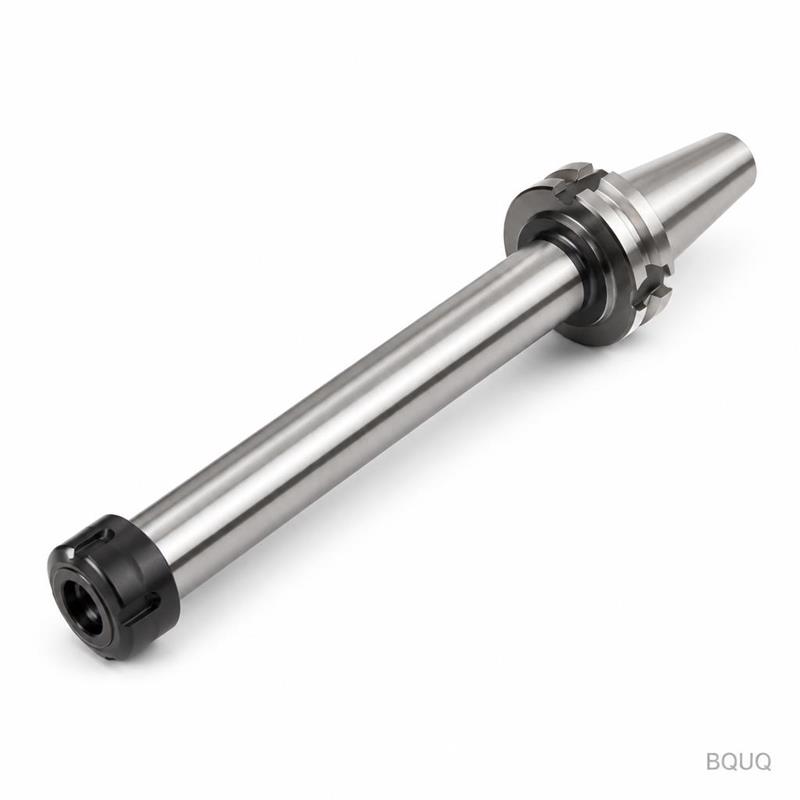
There are three dominant interface standards, and the choice depends on the dominant force and torque in your application. First, the polygonal taper (e.g., the MAPPS or Forkardt systems) uses a non-round taper that self-centers and provides high torque transmission; it is best for heavy turning operations with cutting forces above 5 kN. Second, the short taper with face contact (HSK-style for workholding, e.g., the Schunk TENDO or ROTA-S) provides the highest rigidity and is ideal for high-speed machining (above 8,000 RPM) where centrifugal force can cause jaw lift-off. Third, the ball-lock or detent system (e.g., the Jergens or VDI style) is lower in initial cost and is sufficient for light milling, drilling, or second-operation work with cutting forces below 2 kN. For BQUQ's heat sink production, where we machine thin finned aluminum parts at 12,000 RPM with light cuts, the HSK-style short taper is preferred. For our steel stamping die repair work, the polygonal taper is mandatory because we subject the chuck to interrupted cuts with heavy shock loads.
How Do Quick-Change Chucks Integrate with Robotic Loading and Unloading Cells?
The true value of quick-change chucks emerges when they are paired with a 6-axis robot. The robot does not need to load a loose part into a fixed chuck; instead, it picks up a complete chuck-and-part subplate from a storage magazine and inserts it into the machine spindle. The machine's automatic drawbar pulls the interface tight, and a proximity sensor confirms full engagement. This architecture reduces robot cycle time because the robot only performs a single pick-and-place motion, not a complex part orientation and jaw clamping sequence. At BQUQ, we have implemented a cell with one robot serving three CNC lathes, each fitted with a quick-change chuck. The robot cycles every 4 minutes: it removes the finished subplate (with a finished part) and inserts a new subplate (with a raw blank). The total changeover time per machine is 12 seconds, and the three machines are never idle waiting for the robot. The result is a 35% increase in spindle utilization, moving from 62% to 84% on average, without adding any additional machines.
What Are the Maintenance and Wear Characteristics of Quick-Change Chucks?
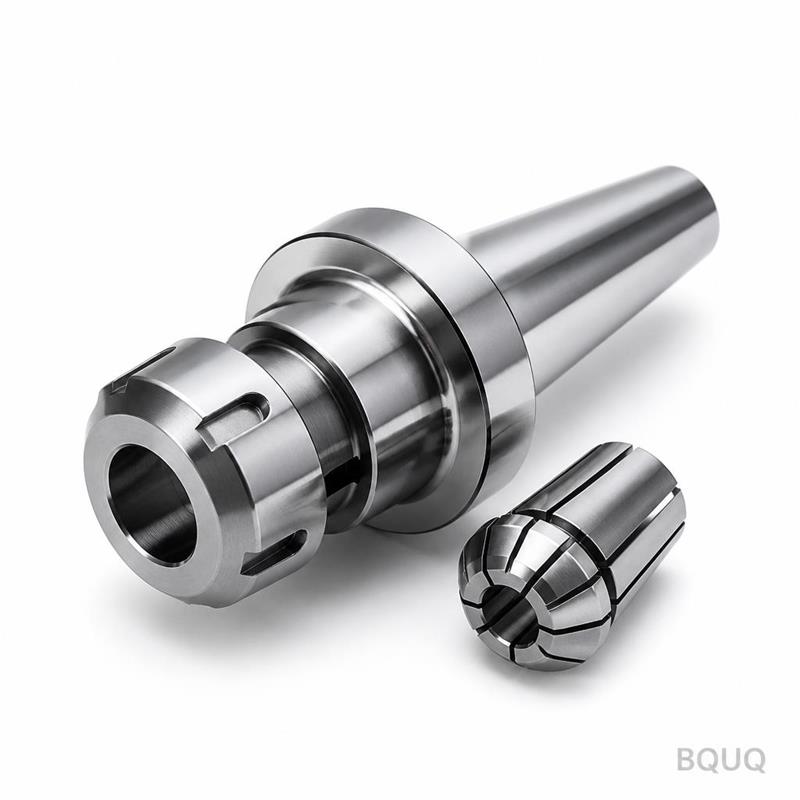
The primary wear component is the taper or ball-lock interface, which experiences micro-fretting from repeated seating and unseating. A premium chuck will withstand 200,000 to 500,000 changeover cycles before the repeatability degrades beyond 0.010 mm. Lubrication is critical: use a molybdenum disulfide paste specifically for the interface, applied every 500 cycles, and always clean the interface with a lint-free cloth and compressed air before seating. The chuck body's internal clamping mechanism (the drawbar or collet) should be inspected every 2,000 hours for jaw wear; standard hardened steel jaws will hold tolerance for approximately 10,000 parts. The hidden cost is contamination: aluminum chips from heat sink machining are abrasive and can lodge in the taper, causing a 0.02 mm positioning error. Therefore, always use an air blast or brush station before the robot presents the subplate to the spindle. With proper maintenance, the chuck body itself will outlast the machine tool, but the subplates (which carry the parts) will need re-facing every 15,000 cycles to maintain the critical face squareness.
What Are the Hidden Costs and Pitfalls When Implementing Quick-Change Chuck Systems?
The major pitfall is underestimating the cost of subplates. While the chuck body is a one-time purchase, you need multiple subplates to make the system useful; each subplate is a precision component with the matching interface, and it costs between USD 800 and USD 1,500 each. For a job shop with 30 active part numbers, you may need 60 subplates (two per part for alternating loading), representing an investment of USD 60,000 to USD 90,000. A second pitfall is the need for a manual or automated cleaning station; without it, chip contamination negates the repeatability advantage. Third, you must budget for a custom storage magazine if using robotics; a simple rack for 10 subplates costs USD 3,000, while an automated carousel costs USD 18,000. Finally, there is the engineering time to design each subplate's jaw configuration and to prove out the first article. Despite these costs, the return on investment is still positive in high-mix environments, provided you have more than 6 job changes per day per machine. The table below summarizes the typical cost breakdown for a mid-sized implementation.
| Cost Component | Typical Price (USD) | Quantity Needed | Total Cost (USD) | Notes |
| Precision quick-change chuck body | 4,500 to 7,500 | 1 per machine | 4,500 to 7,500 | Includes drawbar and actuator |
| Subplate with interface | 800 to 1,500 | 2 per part number | 24,000 to 45,000 | For 15 part numbers |
| Jaw sets (hardened steel) | 150 to 300 | 2 per subplate | 4,500 to 9,000 | Soft jaws cost less but wear faster |
| Robotic gripper for subplates | 3,000 to 6,000 | 1 per cell | 3,000 to 6,000 | Requires custom fingers |
| Cleaning station (air blast) | 1,500 to 3,500 | 1 per cell | 1,500 to 3,500 | Automatic brush recommended |
| Storage magazine (rack) | 3,000 to 18,000 | 1 per cell | 3,000 to 18,000 | Automated version for high volume |
| Engineering and installation | 2,000 to 5,000 | 1 time | 2,000 to 5,000 | Includes probing routines |
| Total initial investment | 42,500 to 94,000 | For a 3-machine robot cell |
FAQ
How Long Does a Quick-Change Chuck Interface Last Before Needing Replacement?
A high-quality interface will survive 200,000 to 500,000 cycles before repeatability degrades beyond 0.010 mm. At a rate of 20 changes per day, this represents 27 to 68 years of service, so the interface is effectively a lifetime component. However, the subplate's locating face wears faster and should be re-ground every 15,000 cycles to maintain squareness.
Can Quick-Change Chucks Be Used on Existing CNC Machines Without Retrofit?
Yes, most quick-change systems are designed to replace a standard chuck directly on the same spindle nose or flange. You will need to verify the drawbar pull force, as some systems require 15 to 20 kN of pull to seat correctly. If your machine has a hydraulic drawbar, it will usually provide sufficient force with an adapter.
What Is the Maximum Workpiece Weight a Quick-Change Chuck Can Handle?
For a 200 mm chuck, the maximum safe workpiece weight is approximately 50 kg at 8,000 RPM, but this reduces to 20 kg at 12,000 RPM due to centrifugal force. The limiting factor is not the chuck's grip but the holding force of the subplate's interface under dynamic loads. Always consult the manufacturer's speed-force diagram for your exact model.
How Does a Quick-Change Chuck Compare to a Standard Chuck in Terms of Rigidity?
A modern quick-change chuck with a polygonal taper or HSK-style face contact is actually stiffer than a standard three-jaw chuck because the interface has a large contact area and is pulled tight with a high drawbar force. Static rigidity increases by 20 to 30% compared to a conventional chuck of the same size. This improved stiffness reduces vibration and can improve surface finish by up to 1.6 Ra.
Are Quick-Change Chucks Worth It for a Small Job Shop with Only 2 CNC Machines?
Yes, but only if you have more than 6 job changes per day. With 6 changes at 12 minutes each, you are losing 72 minutes daily; a quick-change system reduces this to 9 minutes, recovering 63 minutes per day. At USD 80 per hour, that is USD 84 per day or roughly USD 21,000 per year, which pays for the system in under 3 months.
What Safety Features Do Quick-Change Chucks Need for Unattended Operation?
An automatic drawbar with a proximity sensor that confirms full seating is mandatory. Additionally, a mechanical lock (not just spring force) is required to prevent the chuck from releasing during a power failure. Finally, the machine's PLC must be programmed to abort the machining cycle if the sensor does not confirm seating within 0.5 seconds of the drawbar actuation.
Conclusion
Quick-change chucks are not a niche accessory but the linchpin of modern flexible automation, delivering 90% faster changeovers, 0.005 mm repeatability, and a sub-10-week payback period in high-mix environments. The engineering decision depends on your dominant cutting forces, your daily changeover frequency, and your willingness to invest in subplates and cleaning infrastructure. At BQUQ, we have proven that a three-machine robotic cell with quick-change chucks raises spindle utilization from 62% to 84%, directly increasing throughput without adding floor space. If you are evaluating workholding for a flexible manufacturing cell, request a trial unit and measure your actual changeover time over one full week of production; the data will make the decision obvious.
For a detailed assessment of your specific workholding needs, BQUQ offers free engineering consultations. We can provide a quote within 12 hours of receiving your part drawings. Contact us at sc@bquq.com or via WhatsApp at +86 13713157787, or visit our website at www.bquq.com.