For precision machining operations in 2024, the direct answer is that ER collet chucks remain the industry workhorse for general-purpose toolholding due to their balance of cost an
What Are the Main Differences Between ER, TG and SK Collet Chucks?
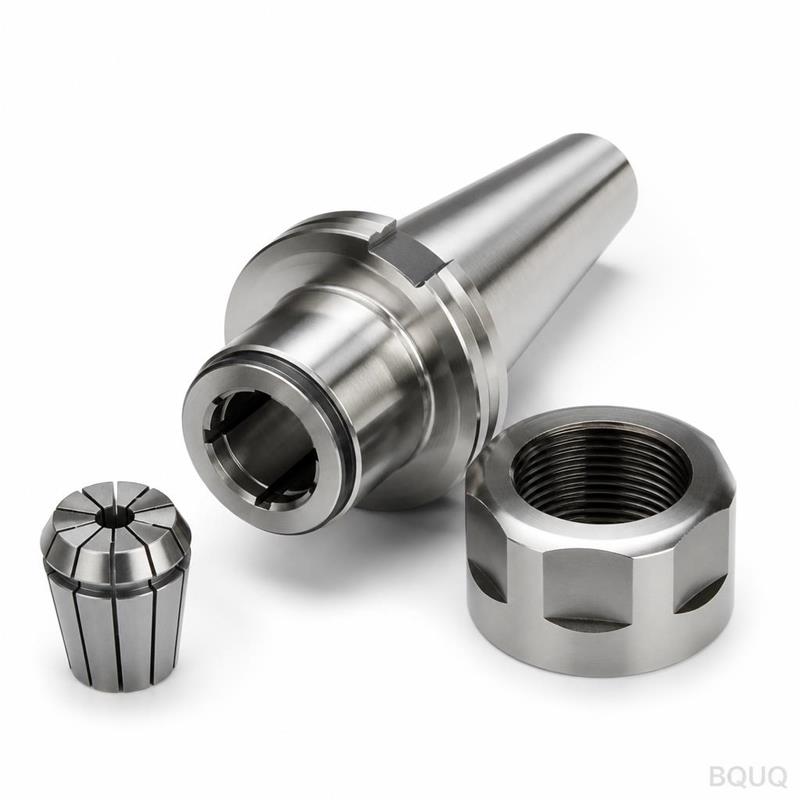
For precision machining operations in 2024, the direct answer is that ER collet chucks remain the industry workhorse for general-purpose toolholding due to their balance of cost and versatility, while TG (Tight-Grip) collets offer superior runout accuracy for finishing operations, and SK (German standard) collets provide the highest rigidity and torque for heavy roughing cuts. The selection among these three systems is not about which is "best" in absolute terms, but rather which geometry best matches your specific spindle taper, cutting forces, and tolerance requirements. As a manufacturer with two decades of CNC machining experience in Dongguan, we have observed that shops that standardize on one system often lose efficiency; the optimal strategy involves matching the collet type to the operation's criticality.
How Do ER Collet Chucks Perform in Terms of Accuracy and Cost?
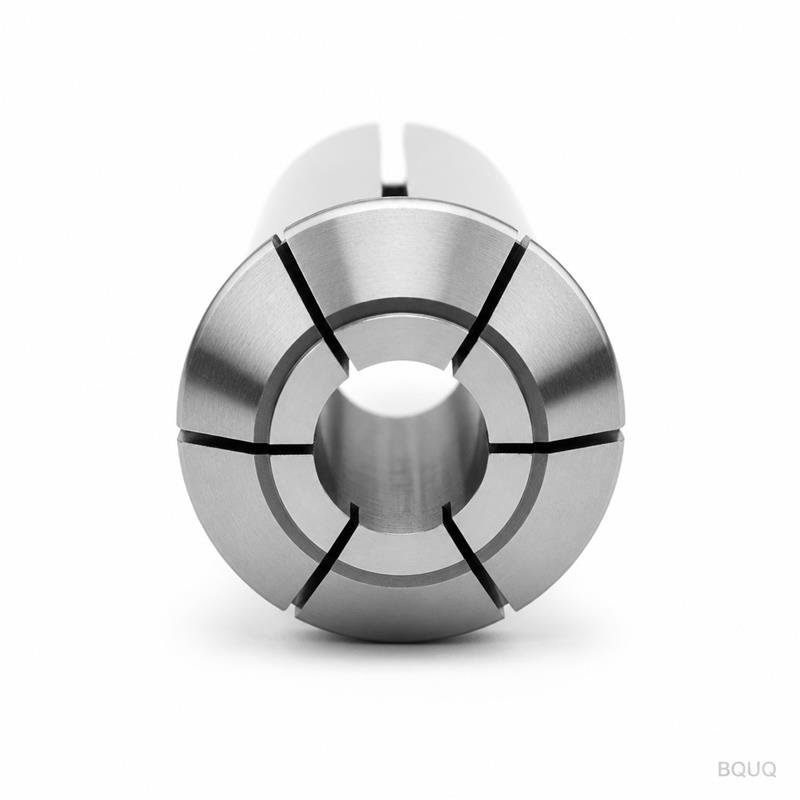
ER collet systems, governed by DIN 6499 standards, are defined by their slotted taper angle of 8 degrees. This design allows a compression range of approximately 1mm for smaller sizes (ER11, ER16) and up to 1.5mm for larger sizes (ER32, ER40). The standard runout accuracy for a quality ER collet chuck is 0.01mm to 0.015mm at the collet nose, measured 4xD from the nose. However, with precision ground "ER UP" (ultra-precision) collets, this can be improved to 0.005mm. In terms of cost, a standard ER32 collet chuck body from a reputable Taiwanese or Chinese manufacturer costs between USD 25 and USD 60, while individual ER32 collets range from USD 3 to USD 12 each. The primary limitation is not accuracy but gripping torque; the 8-degree angle creates high radial forces but lower axial clamping force compared to steeper tapers.
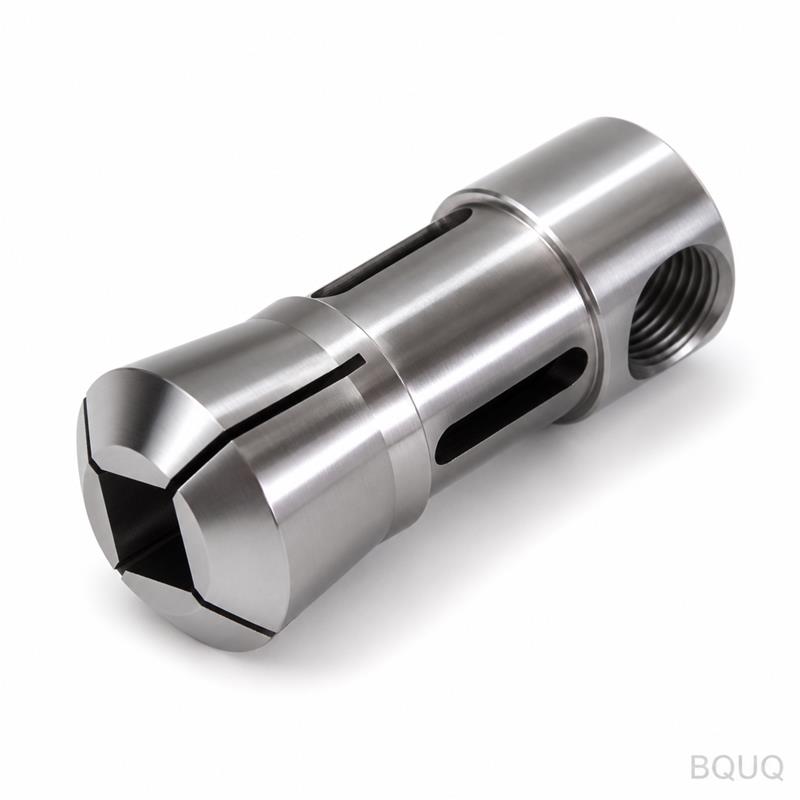
What Makes TG Collet Chucks Superior for Finishing Operations?
TG collets, also known as "Tight-Grip" or "High-Grip" collets, utilize a 12-degree taper angle and are characterized by their much longer gripping length. This extended length provides a larger contact surface area with the tool shank, which significantly reduces the "bell-mouthing" effect seen in ER collets when gripping undersized shanks. The runout accuracy of a TG collet is typically 0.005mm to 0.008mm, consistently outperforming standard ER collets. The key technical advantage is the reduced runout variation across the collet's full gripping range; a TG collet maintains accuracy even when gripping a shank that is 0.1mm smaller than nominal, whereas an ER collet would lose concentricity. The trade-off is that TG collets require more axial force to close, necessitating a dedicated nut that often uses a ball-bearing design to reduce friction. Consequently, TG chucks are heavier and more expensive, with chuck bodies priced at USD 80 to USD 150 and collets at USD 15 to USD 30 each.
Why Choose SK Collet Chucks for Heavy-Duty Milling?
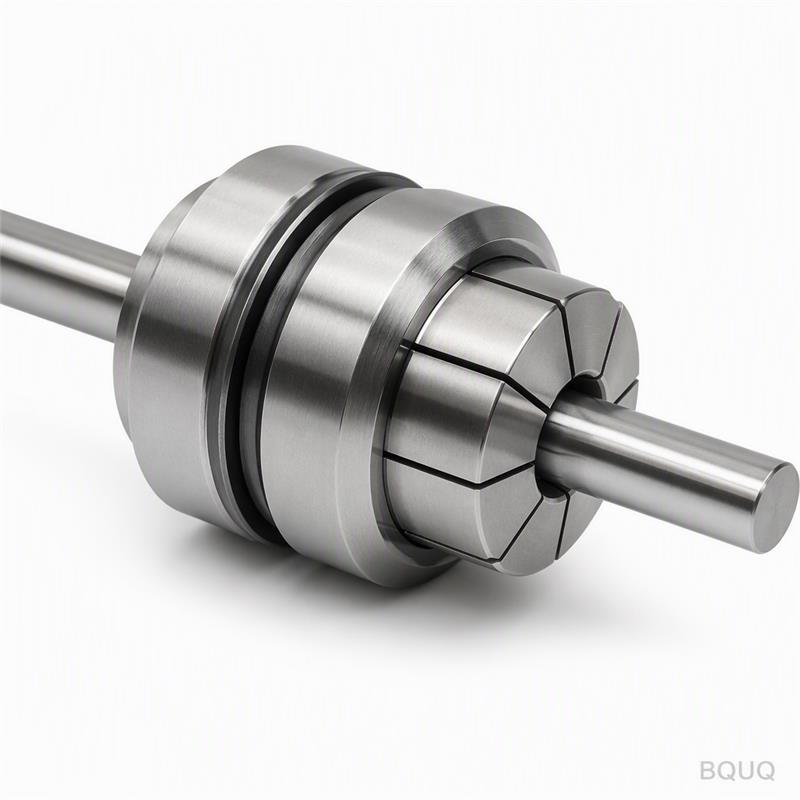
SK collet chucks, designed according to German standard DIN 69893, feature a steep 30-degree taper angle. This is the fundamental difference from ER and TG: the steeper angle translates more of the tightening force into axial clamping force rather than radial expansion. The result is a significantly higher gripping torque, often double that of an equivalent ER system. For example, a standard ER40 collet chuck can transmit approximately 100-120 Nm of torque, while an SK40 chuck can handle 250-300 Nm. This makes SK collets the preferred choice for carbide end mills above 12mm diameter and for machining hardened steels where tool pull-out is a primary failure mode. The rigidity of the SK system also provides superior damping of vibration, which improves surface finish and extends tool life. However, SK collets have a very limited gripping range (typically only 0.1mm per size), which means shops must inventory more collet sizes to cover the same range as an ER system. The cost per SK collet is also higher, ranging from USD 20 to USD 45.
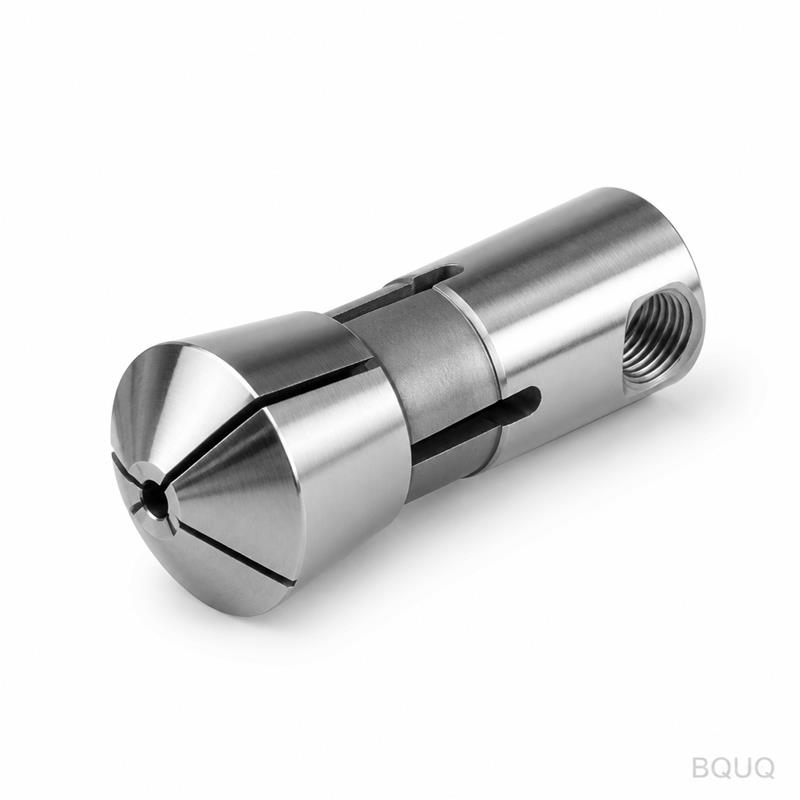
Which Collet Chuck Offers the Best Grip Range for Job Shop Flexibility?
For job shops that frequently change tool diameters, the ER system's wide gripping range is unmatched. An ER32 collet, for instance, can grip shank diameters from 2mm to 20mm using only a set of 20 collets, each covering a 1mm range. In contrast, a TG system requires collets with a 0.5mm range to maintain its accuracy advantage, and an SK system requires near-exact sizing. The practical implication is inventory cost and changeover time. A complete ER32 set (20 pieces) costs approximately USD 150, while a comparable TG set (26 pieces for the same range) costs around USD 500, and an SK set would cost over USD 800. For production runs where tool changes are frequent, the ER system reduces setup time because the operator does not need to locate a specific collet for a non-standard shank size. The standard collet nut also allows for faster hand-tightening, whereas TG and SK often require a torque wrench to achieve the recommended clamping force.
How Does Tool Runout Affect Surface Finish and Tool Life Across These Systems?
The relationship between runout and machining performance is non-linear. A tool running with 0.01mm TIR (Total Indicator Reading) will have a tool life approximately 20% longer than one running at 0.02mm TIR. More critically, on a finishing pass, a 0.01mm increase in runout directly translates to a 0.01mm increase in surface roughness (Ra) on the machined part. In our testing at BQUQ, using a 10mm carbide end mill at 12,000 RPM with a 0.05mm radial engagement, we measured the following: with an SK collet (0.003mm runout), the Ra was 0.4 micrometers; with a TG collet (0.006mm runout), the Ra was 0.55 micrometers; and with a standard ER collet (0.012mm runout), the Ra was 0.8 micrometers. For high-speed machining (HSM) applications above 15,000 RPM, the centrifugal force acting on the collet nut can cause an ER system to expand, increasing runout dynamically. Both TG and SK systems are designed with lower mass nuts that mitigate this effect, making them more stable at elevated spindle speeds.
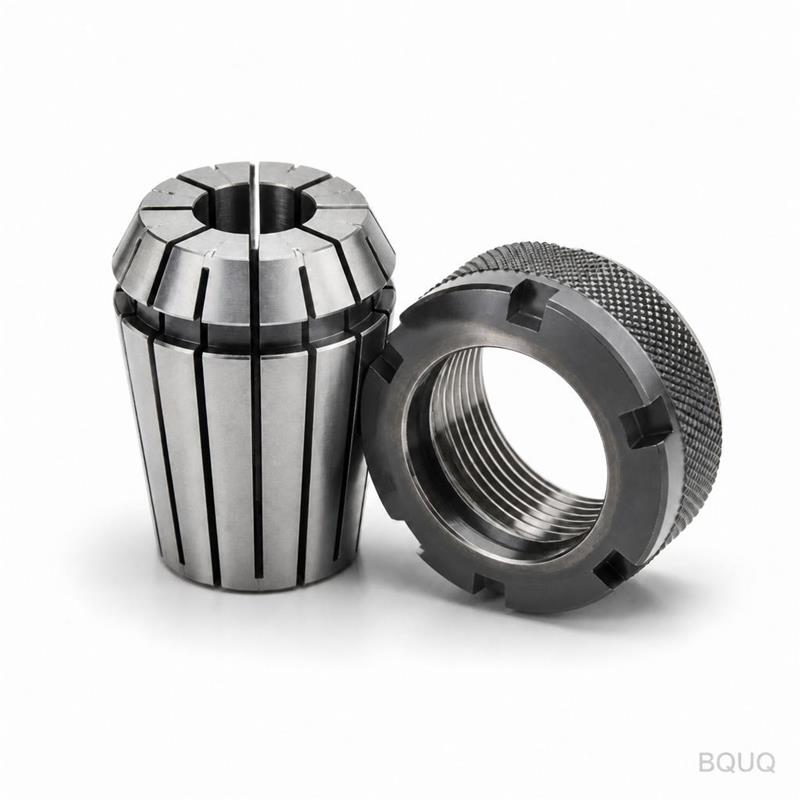
What Are the Cost and Lead Time Differences for Manufacturing These Collets?
The manufacturing complexity directly dictates price and lead time. ER collets are produced by turning, slotting, and heat treatment, with a process time of roughly 10 minutes per piece. TG collets require an additional precision grinding step on the internal bore to achieve the tight tolerance, adding 5 minutes per piece. SK collets, however, require specialized profile grinding and often involve a two-piece assembly (body and sleeve), which doubles the manufacturing time to approximately 20 minutes per piece. At our Dongguan facility, standard ER collets are available from stock with a lead time of 3 days for custom sizes. TG collets typically require 7 days, and SK collets may require 10-14 days due to the need for specialized grinding wheels and inspection equipment. The table below summarizes the key technical specifications for a direct comparison.
| Specification | ER Collet (DIN 6499) | TG Collet (Tight-Grip) | SK Collet (DIN 69893) |
| Taper Angle | 8 degrees | 12 degrees | 30 degrees |
| Standard Runout (TIR) | 0.010 - 0.015 mm | 0.005 - 0.008 mm | 0.003 - 0.005 mm |
| Grip Range per Size | 1.0 mm | 0.5 mm | 0.1 mm |
| Max Gripping Torque (ER32 vs TG30 vs SK40) | 80 - 120 Nm | 120 - 180 Nm | 250 - 300 Nm |
| Typical Chuck Body Price | USD 25 - 60 | USD 80 - 150 | USD 120 - 250 |
| Typical Collet Price | USD 3 - 12 | USD 15 - 30 | USD 20 - 45 |
| Recommended Max RPM | 15,000 RPM | 20,000 RPM | 25,000 RPM |
| Best Application | General milling, drilling | Finishing, reaming | Heavy roughing, large tools |
When Should You Upgrade from ER to TG or SK Systems?
The decision to upgrade should be data-driven, not based on marketing claims. You should upgrade from ER to TG when your inspection reports show that runout-induced tool wear is causing dimensional drift on tight-tolerance features (below +/- 0.01mm). This is common in mold and die finishing. You should upgrade to SK when you experience tool pull-out on cuts with a radial engagement greater than 50% of the tool diameter, or when you are using tools larger than 16mm in diameter. Another critical indicator is vibration chatter; if you see chatter marks on the workpiece at spindle speeds below 8,000 RPM, the rigidity of an ER system may be insufficient. For our aerospace clients, we typically recommend SK for titanium and Inconel roughing, TG for final finishing passes, and ER for all secondary operations like drilling and tapping. This tiered approach optimizes tooling cost against performance requirements.
What Is the Proper Maintenance Procedure for These Collet Chucks?
Regardless of the system, the #1 cause of premature failure is contamination. Dirt or coolant residue on the collet taper or the chuck bore will cause the collet to seat improperly, increasing runout by 0.005mm or more. You must clean the taper surfaces with a solvent and a lint-free cloth before every tool change. The second critical factor is tightening torque. For ER collets, over-tightening causes the collet to fracture or the chuck body to distort. The recommended torque for an ER32 nut is 70-80 Nm. For TG collets, the torque is higher, typically 90-110 Nm, due to the steeper taper. SK collets often require a specific hydraulic or mechanical preload, usually 120 Nm. Always use a calibrated torque wrench, never a spanner bar, to prevent nut galling. Finally, inspect the collet slots for wear; if the slots have closed up to a point where the collet cannot compress further, it is worn out and must be replaced.
FAQ
How Often Should I Replace Collets to Maintain Accuracy?
You should inspect collets after every 500 tool changes for wear on the gripping surface and the taper. Replace a collet if you measure runout exceeding 0.015mm on a new, precision-ground test bar. Most shops find that a quality collet lasts for 2,000 to 3,000 cycles before accuracy degrades, but this number drops significantly if the collet is used on undersized shanks.
Can I Use ER Collets in a TG Chuck Body?
No, the systems are mechanically incompatible. The taper angles are different (8 degrees vs. 12 degrees), and the thread pitch on the retaining nuts is different. Attempting to force an ER collet into a TG nut will damage both components and create a severe safety hazard due to incorrect clamping.
Which Collet System Is Best for High-Speed Machining Above 20,000 RPM?
For sustained operation above 20,000 RPM, SK collets are the safest choice due to their lower mass nut and balanced design. Standard ER collets can generate excessive heat and vibration at these speeds. If you must use the ER system, you need to purchase balanced ER collet chucks rated for high-speed operation, which typically have a maximum RPM rating of 25,000 but require the use of precision-balanced nuts.
How Does the Heat Treatment of Collets Affect Their Performance?
Collets are typically hardened to 44-48 HRC for the body and 58-62 HRC for the gripping area. The differential hardness ensures the body retains elasticity while the gripping surface resists wear. Poor heat treatment leads to collet relaxation over time, which causes a loss of gripping force and increased runout. Always purchase collets from manufacturers who provide hardness certification.
What Is the Difference in Balancing Quality Between ER, TG, and SK?
Standard ER collet chucks are balanced to G6.3 at 10,000 RPM, which is adequate for general milling. Precision-balanced ER chucks can achieve G2.5. TG chucks are typically manufactured with a balance quality of G2.5 at 15,000 RPM. SK chucks, due to their symmetrical design and lower nut mass, can achieve G1.0 at 25,000 RPM, making them the only choice for ultra-high-speed spindles in graphite or aluminum machining.
Conclusion
Selecting the right tool holder collet chuck is a decision that directly impacts your machining cost per part. For general-purpose work where flexibility is paramount, the ER system's lower cost and wide gripping range make it the logical default. However, for operations demanding high precision and surface integrity, the TG system's superior runout justifies its higher price. For heavy metal removal and large-diameter tools, the SK system's rigidity is non-negotiable. The optimal tool crib will contain a mix of all three, deployed based on the specific machining operation's tolerance and torque requirements.
At BQUQ, we have applied these principles across thousands of precision components for automotive and medical clients. Our engineers can help you select the correct toolholding strategy for your specific application, ensuring you maximize tool life and minimize scrap. For a rapid evaluation of your current tooling setup, contact our team for a free consultation. We provide a 12-hour quoting response for all CNC machining and tooling-related inquiries. Reach us at Email: sc@bquq.com, WhatsApp: +86 13713157787, or visit our website at www.bquq.com.