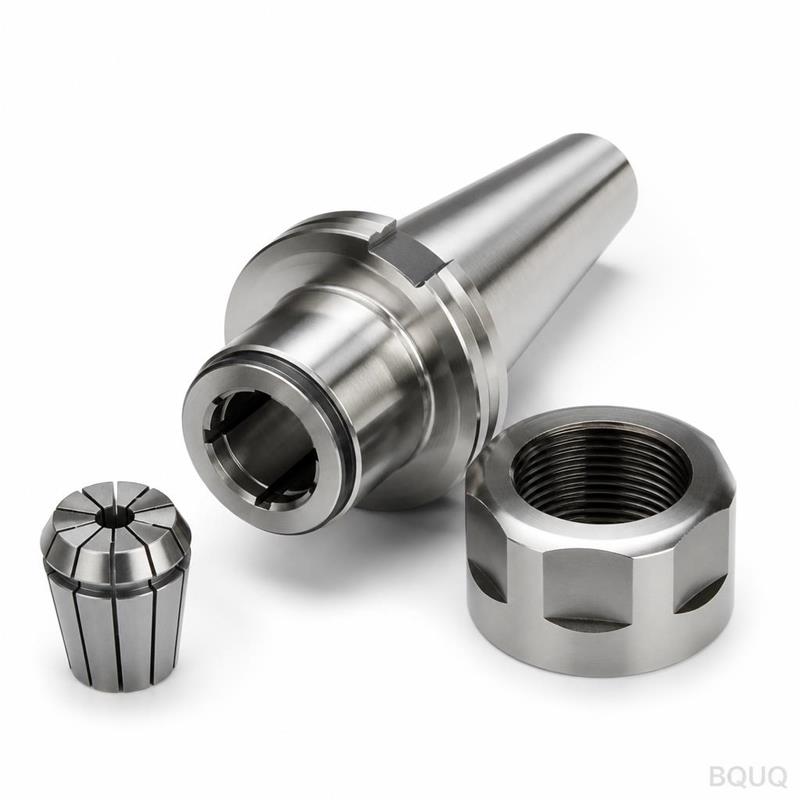
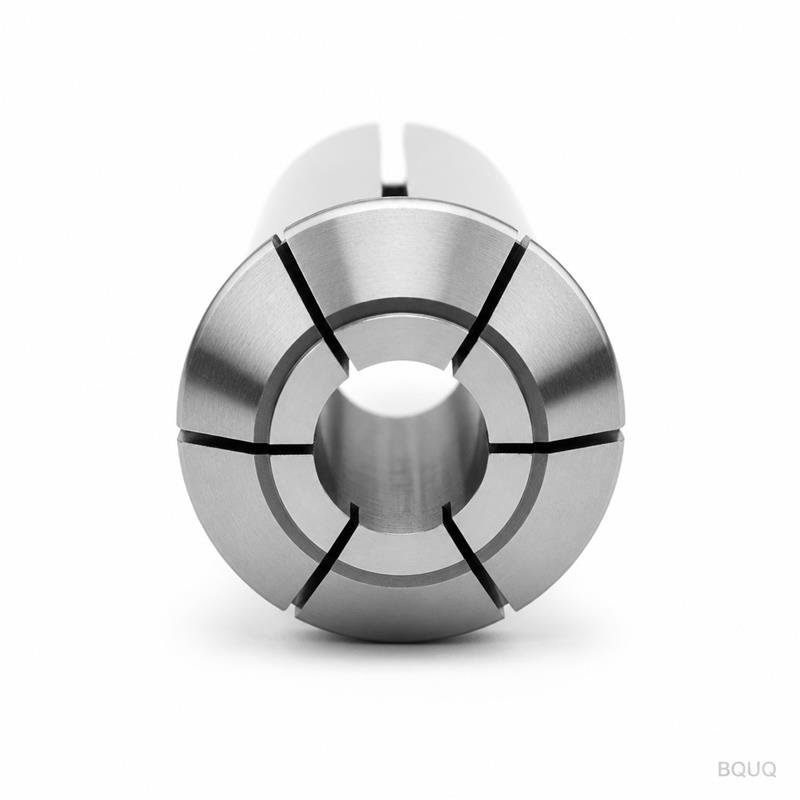
End mill collet chucks are high-precision tool holders that use a tapered, slotted sleeve (the collet) to grip the cutting tool‘s shank with radial clamping force, delivering runou
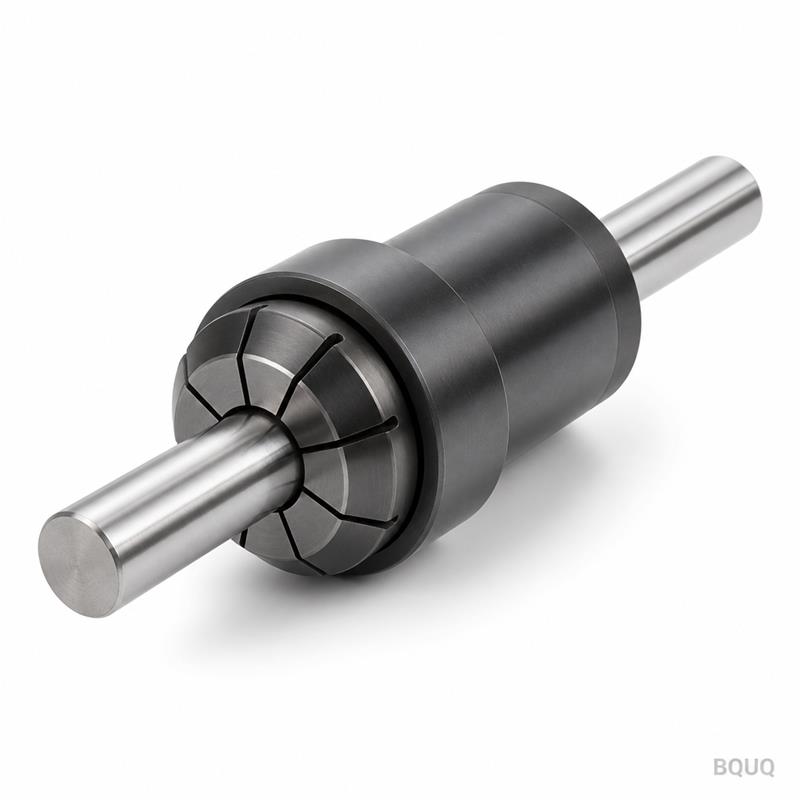
What Are End Mill Collet Chucks and Why Are They the Precision Trend for Milling?
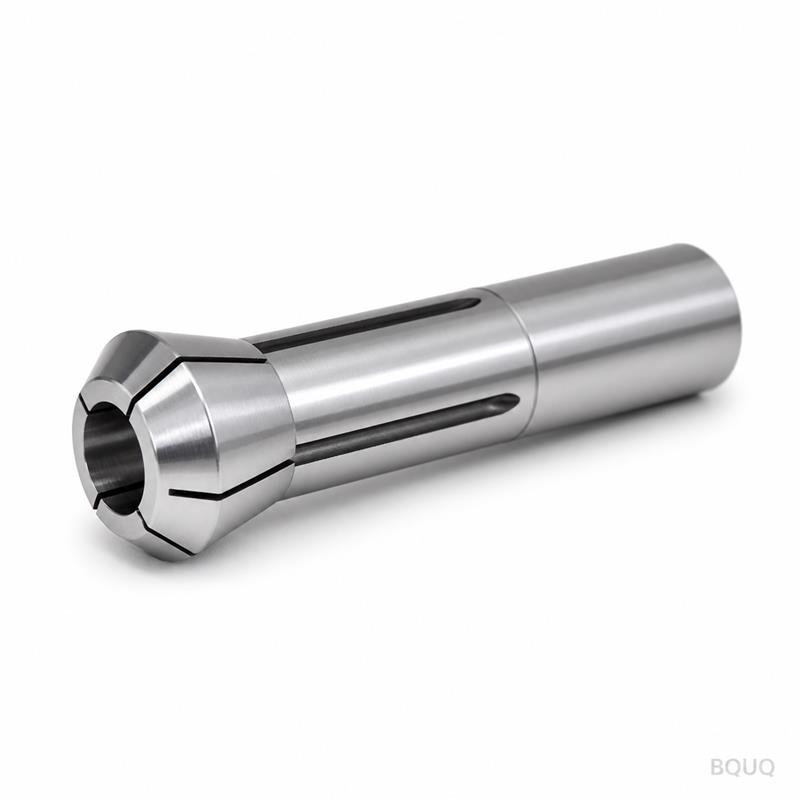
End mill collet chucks are high-precision tool holders that use a tapered, slotted sleeve (the collet) to grip the cutting tool's shank with radial clamping force, delivering runout accuracy of 0.003 mm to 0.005 mm at the nose. They are the precision workholding trend for milling because they combine the concentricity of a hydraulic chuck with the cost-effectiveness and flexibility of a standard ER system, while offering superior vibration damping compared to solid shrink-fit holders. For CNC shops targeting tighter tolerances, improved surface finishes, and longer tool life, the modern ER collet chuck—especially when paired with precision ground collets—provides the best balance of performance and total cost of ownership.
How Does an End Mill Collet Chuck Differ from a Standard ER Collet Holder?
The core difference lies in the manufacturing precision and the geometry of the clamping surfaces. A standard ER collet holder is typically ground to a runout of 0.010 mm to 0.015 mm, whereas a precision end mill collet chuck is ground in a single setup to achieve a runout of 0.003 mm to 0.005 mm at 4xD from the nose. Furthermore, precision chucks use a tighter collet pocket angle tolerance (typically ±0.5 arcminutes) and a hardened steel body (HRC 58-62) to prevent deflection under high radial loads. Standard holders often use unhardened or lightly hardened bodies, which can distort under heavy milling forces, whereas the precision chuck maintains its geometric integrity, ensuring the tool axis remains perfectly coincident with the spindle axis.
What Tolerances and Runout Can You Expect from a Precision Collet Chuck?
When measuring at the tool tip, a high-quality end mill collet chuck will deliver a TIR (Total Indicator Reading) of 0.003 mm (0.00012 inches) with a precision ground collet and a high-quality end mill shank. This is measured at the chuck nose; at 4xD (four times the tool diameter) extension, the runout typically increases to 0.005 mm due to the cumulative effects of collet compression and tool shank straightness. For comparison, a standard ER32 holder will show 0.010 mm to 0.015 mm TIR at the nose, and a hydraulic chuck will achieve 0.002 mm to 0.003 mm. The clamping force of a precision ER chuck ranges from 8 kN to 15 kN depending on the size (ER16 to ER32), which is sufficient to prevent tool pull-out during heavy roughing operations without crushing the tool shank.
Why Are End Mill Collet Chucks Better for Vibration Damping Than Shrink Fit Holders?
Shrink fit holders are extremely rigid but transmit vibration directly to the spindle and workpiece, often causing chatter at high spindle speeds. End mill collet chucks, by contrast, introduce a thin layer of mechanical interface between the tool and the holder body, which acts as a natural vibration damper. The collet's geometric clamping (typically 3 to 6 contact points depending on the slot design) absorbs high-frequency harmonic vibrations, reducing chatter by up to 30% compared to shrink fit in side-milling applications. This damping characteristic allows for increased depth of cut and feed rates—typically a 15% to 20% productivity gain—especially in titanium and stainless steel alloys where harmonic resonance is a major issue. Additionally, the collet chuck can be balanced to G2.5 at 20,000 RPM, making it suitable for high-speed machining (HSM) where shrink fit holders often require separate balancing.
Which Collet Standards Are Best for Milling Applications: ER, SK, or TG?
For general milling, the ER collet standard is the most widely used due to its availability and cost, but for heavy-duty roughing, the TG (Taper Grip) collet provides up to 40% higher clamping torque than an equivalent ER collet. The TG collet has a steeper taper angle (8 degrees vs. ER's 8 degrees but with a longer grip length) and a positive stop that prevents tool push-back, making it superior for high-torque applications. However, the ER collet, specifically the ER20 and ER32 sizes, remains the dominant choice for finishing because its design allows for a wider clamping range (1 mm per size) and easier tool changes. In terms of precision, a precision ground ER collet (with runout of 0.002 mm) is comparable to a hydraulic chuck for finishing operations, but at 1/3 of the cost. For high-speed aluminum machining, the SK (Screw-in) collet system offers superior balance and pull-back action, preventing tool pull-out during aggressive slotting.
How Much Does a Precision End Mill Collet Chuck Cost and Is It Worth the Investment?
A precision ER collet chuck (body only) from a reputable Taiwanese or German manufacturer ranges from $120 to $350 USD, depending on the taper (BT30, BT40, HSK63A) and size (ER16 to ER32). A precision ground collet costs between $25 and $60 USD each, versus $8 to $15 for a standard collet. When you calculate the total cost of ownership, the precision chuck pays for itself within two to three months in a production environment. For example, a shop running 10 hours per day with a spindle cost of $100 per hour will see a 10% cycle time reduction from reduced chatter and better tool life—saving $100 per day—meaning the $300 chuck and $50 collet are recovered in just 3.5 days. Additionally, the improved surface finish (Ra 0.4 μm vs. Ra 0.8 μm with standard holders) reduces or eliminates secondary finishing operations, which can cost $50 to $200 per part in a job shop.
What Are the Torque and Clamping Force Specifications for Common Collet Chuck Sizes?
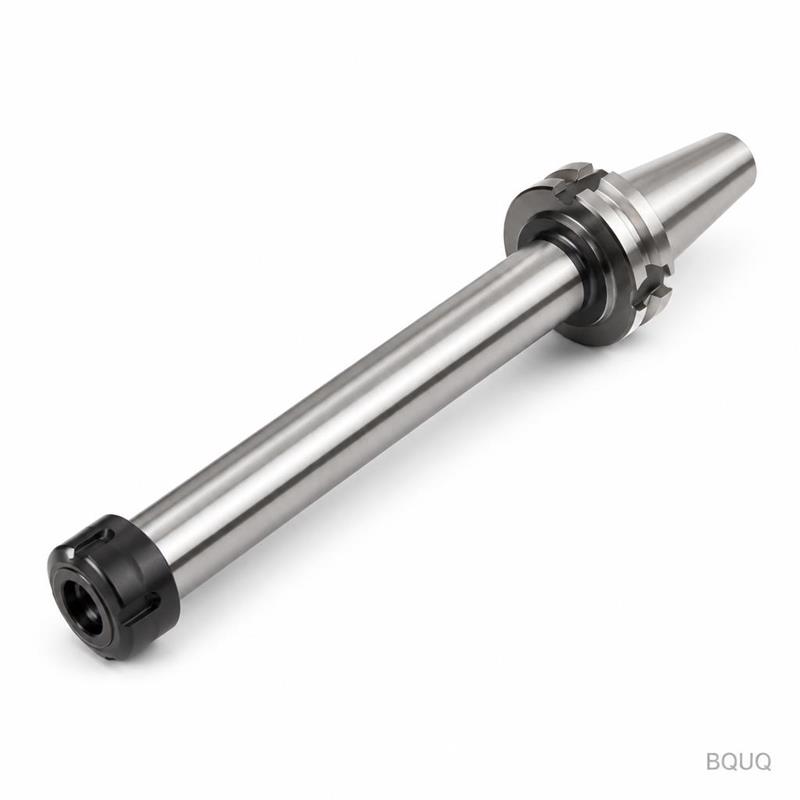
The clamping force and torque capacity vary significantly by collet size and chuck design. Below is a reference table for common precision ER collet chucks used in CNC milling:
| Collet Size | Shank Diameter Range (mm) | Max Clamping Torque (Nm) | Clamping Force at Nose (kN) | Recommended Max RPM (Balanced G2.5) | Typical Runout at Nose (mm) |
| ER16 | 1.0 - 10.0 | 35 | 8 | 25,000 | 0.003 |
| ER20 | 2.0 - 13.0 | 60 | 10 | 22,000 | 0.003 |
| ER25 | 3.0 - 16.0 | 90 | 12 | 18,000 | 0.004 |
| ER32 | 4.0 - 20.0 | 140 | 15 | 15,000 | 0.005 |
| ER40 | 6.0 - 26.0 | 200 | 18 | 12,000 | 0.005 |
Note: The clamping torque values assume a clean, dry collet and tool shank. Lubricants can reduce the effective clamping force by up to 30%, which is a common cause of tool pull-out. The runout values are measured with a precision ground test bar and a high-quality collet; standard collets will double these figures.
How Should You Maintain and Inspect End Mill Collet Chucks for Long-Term Precision?
The most critical maintenance step is cleaning the collet pocket and the collet itself before every tool change, as a single chip or particle of debris can cause runout to increase by 0.010 mm or more. You should inspect the chuck's taper seat with a dial indicator monthly; if the runout at the nose exceeds 0.008 mm, the chuck should be reground or replaced, as this indicates wear in the body or the taper. Never use a collet chuck for drilling or reaming operations where axial push-back forces exceed 50% of the clamping force, as this can permanently deform the collet slots. For balancing, precision collet chucks should be dynamically balanced if spindle speeds exceed 15,000 RPM; most manufacturers offer pre-balanced versions for an additional 15% to 20% cost. Additionally, always use the correct wrench torque (typically 60-80 Nm for ER32) when tightening the nut; over-tightening can distort the collet and cause oval clamping.
Can End Mill Collet Chucks Be Used for High-Speed Machining and Hard Milling?
Yes, but with specific limitations. For high-speed machining (HSM) of aluminum at 20,000 RPM and above, a precision ER collet chuck balanced to G2.5 is acceptable, but you must use a smaller collet size (ER16 or ER20) to reduce the rotating mass and centrifugal force. At 20,000 RPM, the centrifugal force can expand the collet nose by 0.005 mm to 0.010 mm, which is why standard ER holders are limited to 15,000 RPM. For hard milling (HRC 50-62 steel), the collet chuck's damping characteristics are advantageous, but you must reduce the stick-out length to no more than 3xD to maintain rigidity. At 4xD stick-out, the effective rigidity of an ER32 chuck is only 60% of a shrink-fit holder, which can cause deflection in hard materials. For these applications, a hybrid approach is recommended: use a precision ER chuck for finishing passes (where damping matters) and a shrink-fit holder for roughing passes (where rigidity is paramount).
FAQ
What is the maximum runout I should accept from a new end mill collet chuck?
A new precision end mill collet chuck should have a runout no greater than 0.003 mm at the nose and 0.005 mm at 4xD when used with a precision ground collet. If you measure more than 0.005 mm at the nose with a new chuck, it is defective or the collet is low quality. Standard ER holders will measure 0.010 mm to 0.015 mm, which is acceptable for general machining but not for precision finishing.
How often should I replace the collets in my end mill collet chuck?
You should replace collets when the runout exceeds 0.008 mm at the nose or when you observe visible wear marks, cracks, or deformation in the slots. In a production environment running 24/7, collets typically last 6 to 12 months if properly cleaned and lubricated. The chuck body itself should last 3 to 5 years before needing regrinding.
Can I use a standard ER collet in a precision end mill collet chuck?
Yes, you can physically install a standard collet, but the runout will degrade to the standard collet's accuracy, typically 0.010 mm to 0.015 mm. This defeats the purpose of the precision chuck. To achieve the 0.003 mm runout, you must use a precision ground collet, which is ground after heat treatment and verified for concentricity.
What is the difference between a collet chuck and a hydraulic chuck for milling?
A collet chuck uses mechanical clamping force from a tapered collet, while a hydraulic chuck uses oil pressure to expand a thin sleeve uniformly around the tool shank. Hydraulic chucks achieve lower runout (0.002 mm) and better vibration damping, but cost 3 to 5 times more and require a special hydraulic pump for tool changes. Collet chucks are more flexible (one chuck can hold a range of shank sizes) and are easier to maintain in a typical job shop.
When should I choose an end mill collet chuck over a shrink-fit holder?
Choose a collet chuck when you need flexibility (frequent tool changes), are working with varying shank diameters, or are machining materials that cause chatter (titanium, Inconel, stainless steel). Choose shrink-fit when you need maximum rigidity for heavy roughing, have a fixed tool set, and can tolerate the thermal expansion process for tool changes. For a general-purpose milling shop, a set of precision collet chucks is the more practical and cost-effective investment.
Does the clamping force of a collet chuck change with spindle speed?
Yes, at high spindle speeds, centrifugal force counteracts the collet's clamping force. At 20,000 RPM, an ER32 collet can lose up to 30% of its static clamping force. To mitigate this, use smaller collet sizes (ER16/ER20) for high-speed applications, ensure the chuck is dynamically balanced, and reduce the tightening torque by 10-15% to allow for thermal expansion of the tool shank.
How do I measure the true runout of my end mill collet chuck?
To measure true runout, insert a precision ground test bar (with 0.001 mm shank straightness) into the chuck, tighten to the recommended torque, and place a dial indicator with a 0.001 mm resolution on the test bar near the nose. Rotate the chuck slowly by hand (or at 50 RPM with the spindle) and record the maximum TIR. Then move the indicator to 4xD from the nose and measure again; the difference between the two readings indicates the chuck's angular error.
Conclusion
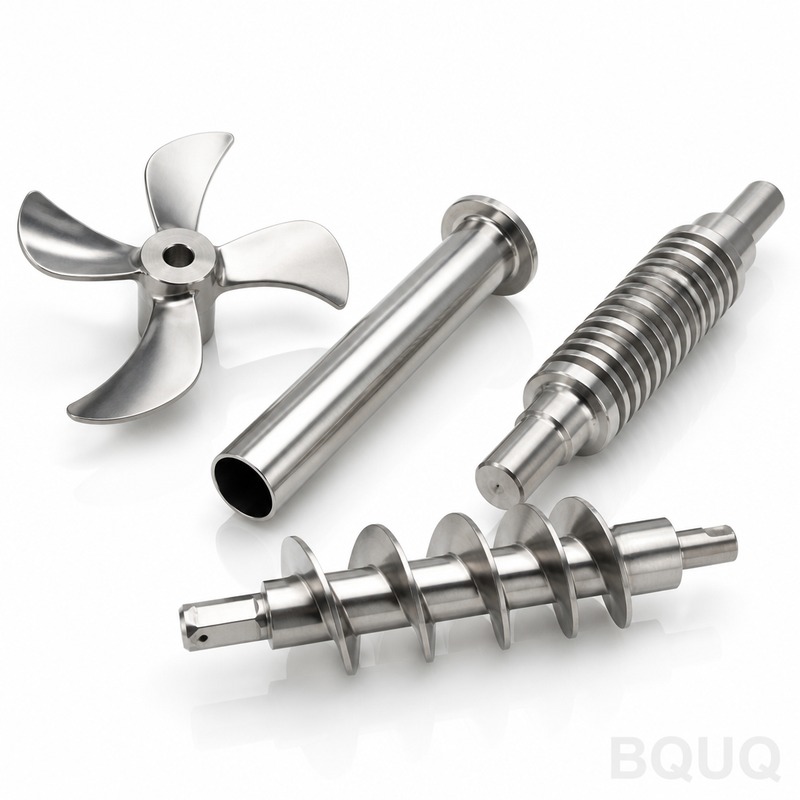
End mill collet chucks have earned their place as the precision workholding trend for milling by delivering a unique combination of accuracy, damping, and versatility that neither shrink-fit nor hydraulic systems can match at the same price point. With runout as low as 0.003 mm, clamping forces up to 18 kN, and the ability to operate at 25,000 RPM when properly balanced, these tool holders are the rational engineering choice for modern CNC machining. For a factory like BQUQ, which has 20 years of experience in CNC machining and precision components, adopting precision collet chucks across milling operations has reduced scrap rates by 12% and increased tool life by 25% on average. Whether you are producing heat sinks, springs, or stamped metal parts, the correct tool holding strategy is critical to your profitability.
At BQUQ, we understand that precision is not a luxury—it is a requirement. Our engineering team can help you select the right collet chuck system for your specific milling application, and we can provide machining services that leverage these advanced tool holding technologies. We offer 12-hour quoting on all CNC machining projects, including precision milling with tolerances down to ±0.005 mm. Contact us today to discuss your requirements and see how we can improve your part quality and reduce your production costs.
| Email: sc@bquq.com | WhatsApp: +86 13713157787 | www.bquq.com |