The most underrated parts of ER systems are the collet nut and the spanner because they directly control clamping force, runout accuracy, and tool life, yet they account for less t
Why Are Collet Nuts and Spanners the Most Underrated Parts of ER Systems?
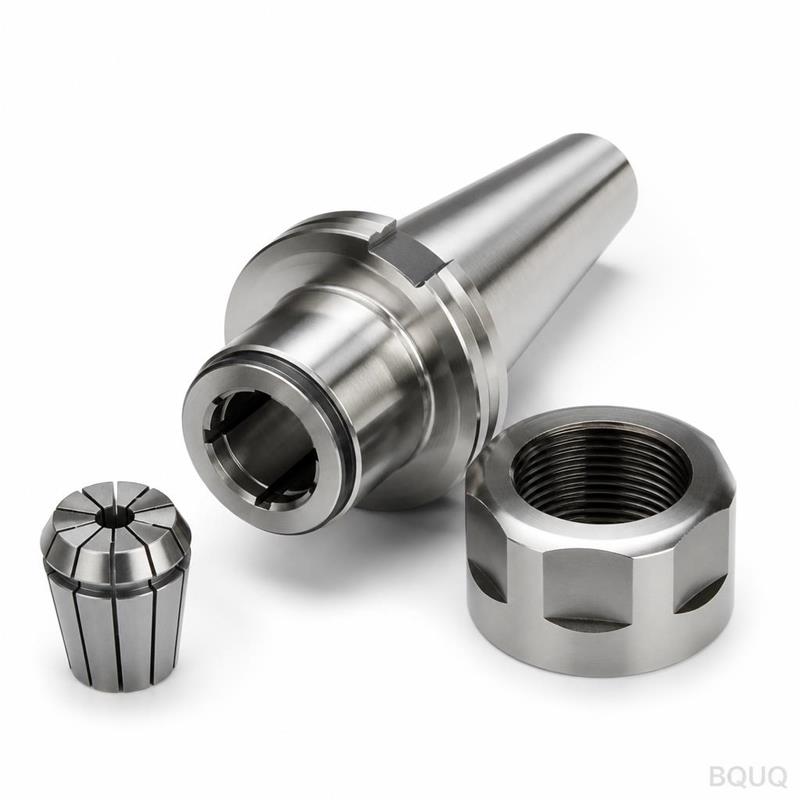
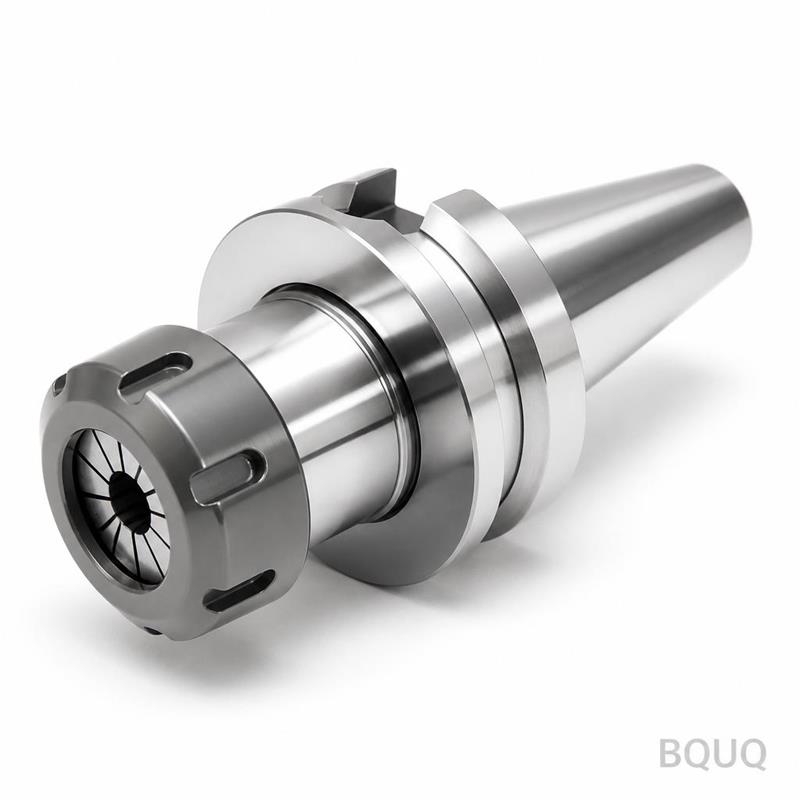
The most underrated parts of ER systems are the collet nut and the spanner because they directly control clamping force, runout accuracy, and tool life, yet they account for less than 5% of a typical toolholder budget. A worn or improperly tightened collet nut can reduce concentricity from 0.005 mm to 0.03 mm, while a standard ER spanner can only transmit 60-80 Nm of torque, which is often insufficient for high-speed machining. In precision manufacturing, these components determine whether a 20,000 RPM spindle produces a mirror finish or a scrapped part.
What Are the Functional Specifications of ER Collet Nuts and Spanners?
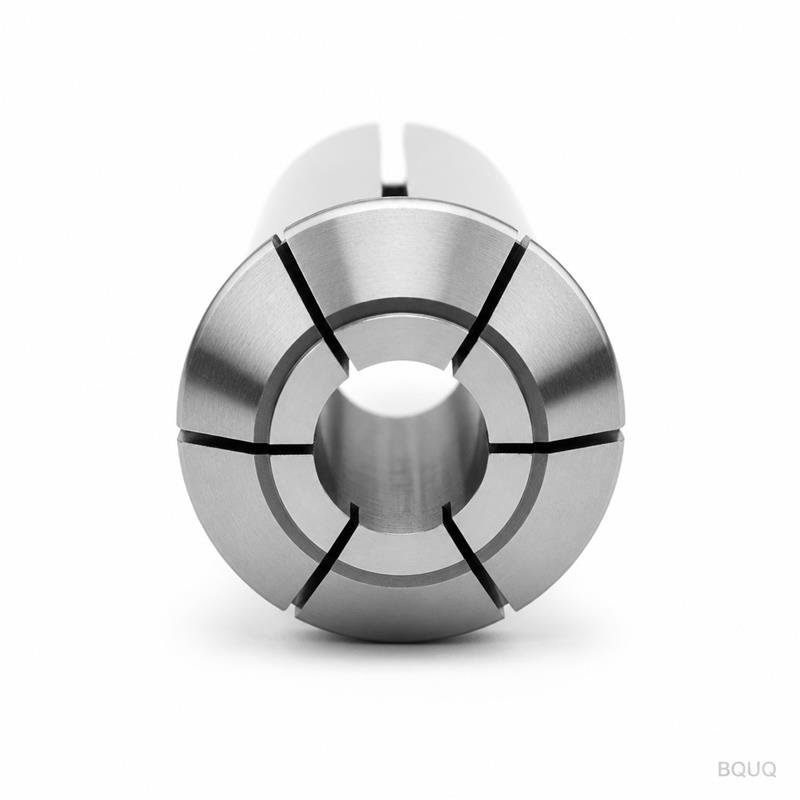
ER collet nuts are precision-ground components that compress the collet radially when tightened, typically at a 30-degree taper angle. The standard nut thread pitch for ER11 to ER40 systems is 0.75 mm to 1.5 mm, with a hardness rating of HRC 58-62 for case-hardened steel nuts. Spanners for ER systems are designed with specific jaw thicknesses and opening widths; for example, an ER32 spanner has a 41 mm opening with a 6 mm jaw thickness, while an ER40 spanner uses a 50 mm opening. The torque transmission capability of a standard forged spanner is 60 Nm, but a hardened and ground spanner can transmit up to 120 Nm without deformation. For high-precision applications, hydraulic or torque-limiting spanners are available, which provide repeatable clamping within +/- 2% of the set torque value.
How Does Nut Design Affect Runout and Tool Life?
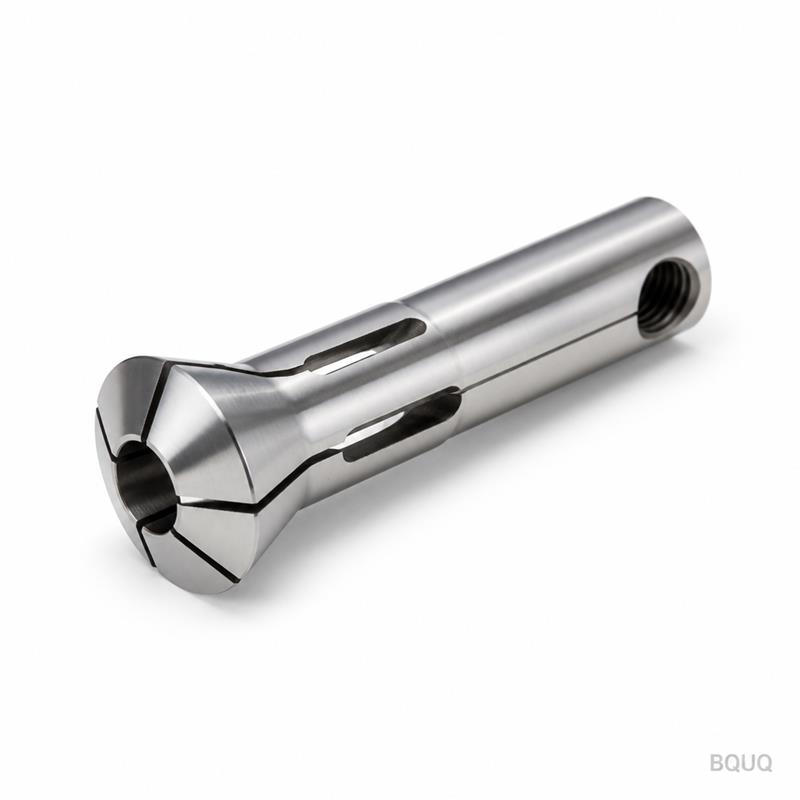
The design of the collet nut, specifically the bearing surface and thread geometry, directly impacts the runout of the assembled toolholder. A standard slotted nut creates a non-uniform radial force distribution, which can induce 0.008 mm to 0.015 mm of runout at the tool tip. In contrast, a ball-bearing or roller-bearing nut, which uses a rotating collar to separate the thread from the collet face, can maintain runout below 0.005 mm consistently. This difference is critical because a 0.01 mm increase in runout reduces tool life by approximately 20% and increases surface roughness from Ra 0.4 to Ra 0.8. For machining centers operating at 15,000 RPM or higher, even minor runout causes harmonic vibration, leading to premature flank wear and chipping. The use of a precision-ground, hardened nut with a polished bearing face reduces friction by 30%, allowing for more accurate torque readings during tightening.
Why Do Spanners Fail Prematurely in Production Environments?
Spanners fail prematurely because they are often used with cheater bars, which multiply torque beyond the design limit, or because their jaw faces wear down after repeated engagement with hardened nuts. A standard chrome-vanadium spanner has a yield strength of 900 MPa, but when a 1-meter extension pipe is used, the applied torque can exceed 300 Nm, causing the jaws to spread and slip. This slippage rounds off the nut's hexagonal corners, making future gripping impossible and increasing the risk of toolholder damage. In a high-volume CNC shop, a spanner used 50 times per day will experience jaw wear of 0.1 mm per month, leading to a loose fit on the nut. The solution is to use a spanner with a hardened jaw insert (HRC 60) and a non-slip serrated surface, which maintains grip integrity for up to 20,000 cycles. Additionally, marking the spanner with a torque scale and using a calibrated torque wrench with a spanner adapter eliminates over-tightening, which is the leading cause of collet bore distortion.
Which ER Nut Type Is Best for High-Speed Machining?
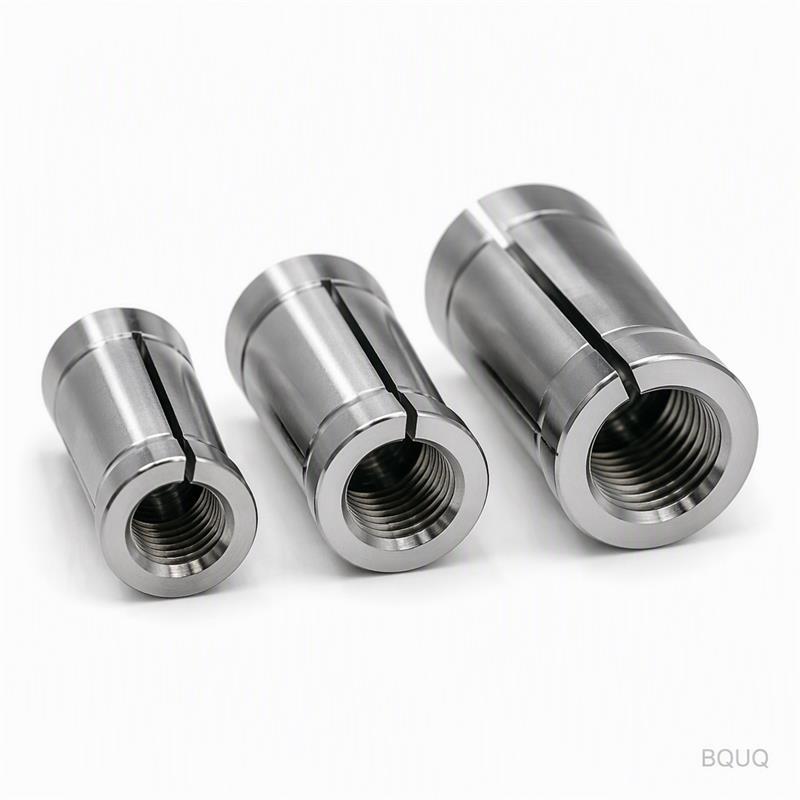
For high-speed machining above 20,000 RPM, the best ER nut type is the ball-bearing or roller-bearing nut, also known as a "non-contact" or "anti-friction" nut. This design eliminates the friction between the nut and the collet, allowing the collet to self-center with less effort and maintaining a static balance grade of G2.5 at 30,000 RPM. Standard slotted nuts have a balance grade of G6.3, which generates significant centrifugal force at high speeds, causing vibration and poor surface finish. Data from toolholder manufacturers indicates that a ball-bearing nut reduces the required clamping torque by 25% compared to a standard nut—for ER32, the torque drops from 90 Nm to 68 Nm—while improving axial pull-back accuracy by 15%. For heavy roughing operations, a standard solid nut is still recommended because it provides higher radial stiffness, but for finishing and high-speed applications, the bearing nut is superior. It is also essential to match the nut's extraction slots with the collet's slots; a mismatch of even 0.5 mm will cause uneven clamping and elevate runout to 0.02 mm.
How Much Torque Should Be Applied to an ER Collet Nut?
The optimal torque for an ER collet nut depends on the collet size and the shank diameter of the tool, but general industry standards provide specific values. For ER11, the recommended torque is 15-20 Nm; for ER16, it is 35-45 Nm; for ER25, it is 70-80 Nm; for ER32, it is 90-110 Nm; and for ER40, it is 130-150 Nm. Applying torque below these ranges results in tool slippage and vibration, while exceeding them by more than 20% causes the collet to yield, permanently losing its elastic memory. A practical rule is to use a torque wrench with a spanner adapter, which adds an extension length that alters the effective lever arm; for example, a 200 mm spanner adapter requires a force of 50 kg to achieve 100 Nm. Temperature also affects torque readings: at 40 degrees Celsius, a steel nut expands by 0.01 mm per 100 mm, reducing clamping force by approximately 5%. Therefore, for high-speed spindles that run hot, it is advisable to re-tighten the nut after the first 10 minutes of operation to compensate for thermal expansion.
| ER Size | Nut Thread Pitch (mm) | Recommended Torque (Nm) | Max Runout with New Nut (mm) | Spanner Opening Width (mm) |
| ER11 | 0.75 | 15-20 | 0.005 | 14 |
| ER16 | 1.0 | 35-45 | 0.005 | 22 |
| ER25 | 1.5 | 70-80 | 0.008 | 32 |
| ER32 | 1.5 | 90-110 | 0.008 | 41 |
| ER40 | 1.5 | 130-150 | 0.010 | 50 |
How Often Should Collet Nuts and Spanners Be Replaced?
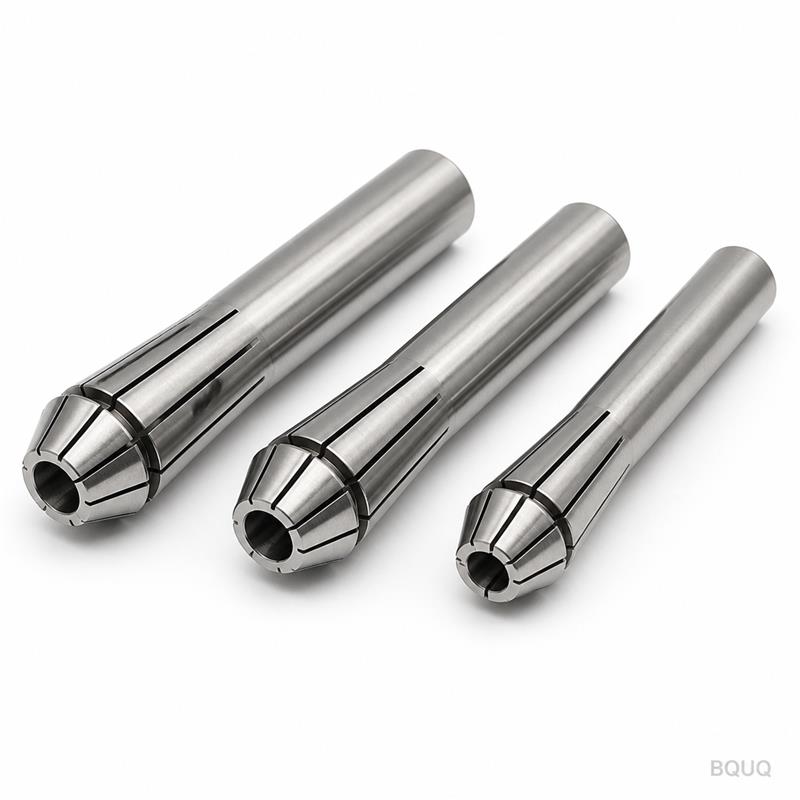
Collet nuts should be replaced after 10,000 to 15,000 clamping cycles, or immediately if the bearing face shows visible scoring or if the thread pitch becomes worn. A worn nut increases the required torque by up to 30% to achieve the same clamping force, which negatively affects spindle bearings. Spanners should be replaced when the jaw opening widens by more than 0.15 mm, which typically occurs after 20,000 uses, or when the serrations become smooth. In a production environment running three shifts, this translates to a nut replacement every 6 to 8 months and a spanner replacement every 12 to 18 months. Preventive replacement is cheaper than repairing a spindle or scrapping a workpiece; the cost of a new ER32 nut is approximately USD 25-40, while a spindle rebuild costs USD 3,000-5,000. Regular inspection should include checking the nut's radial runout on a precision test bar; if the runout exceeds 0.015 mm, the nut and collet should be replaced as a set.
Why Is Proper Spanner Handling Critical for Toolholder Accuracy?
Proper spanner handling is critical because the angle of force application and the cleanliness of the mating surfaces determine the final clamping accuracy. When a spanner is applied off-axis by more than 5 degrees, it creates a side load on the nut, which shifts the collet off-center and increases runout by 0.01 mm. Additionally, debris or coolant residue on the nut's taper or the collet's outer surface acts as a lubricant, causing the nut to appear tight while the actual clamping force is 20% lower than intended. This phenomenon, known as "false torque," leads to tool pull-out during heavy cuts. The correct procedure is to clean the taper with a lint-free cloth, apply a light machine oil to the threads only (not the taper), and tighten the nut with a calibrated torque wrench in two steps: first to 50% of the target torque, then to 100%. Using a spanner with an extended handle of 300 mm or more is discouraged because it encourages over-torquing; instead, use a standard length spanner with a torque wrench.
What Is the Cost Difference Between Standard and Precision-Grade Nuts?
The cost difference between standard and precision-grade collet nuts is significant but justifiable for high-tolerance applications. A standard ER32 nut made from hardened steel with a black oxide finish costs USD 15-25, while a precision-grade nut with a ground bearing face, balanced to G2.5, and made from bearing steel costs USD 60-90. The precision-grade nut typically offers runout improvement from 0.010 mm to 0.003 mm, which can be the difference between a scrap rate of 5% and 0.5% in a high-volume operation. For a CNC shop running 1,000 parts per month with a part value of USD 50, reducing scrap by 4.5% saves USD 2,250 per month, justifying the higher nut cost within one week. Precision spanners, which feature ground jaws and a hardened insert, cost USD 40-70 compared to USD 10-15 for standard spanners, but they last three times longer and prevent nut damage.
How Do Temperature and Coolant Affect Nut and Spanner Performance?
Temperature and coolant significantly affect performance because they alter the friction coefficient and the material properties of the nut and spanner. At operating temperatures above 60 degrees Celsius, the coefficient of friction between the nut and collet increases from 0.10 to 0.15, meaning that a torque setting of 100 Nm will produce 20% less clamping force than at 20 degrees Celsius. Coolant, particularly water-based emulsions, can cause micro-pitting on the nut's bearing face if the nut is not made of stainless steel or coated with a corrosion-resistant layer. This pitting increases the torque required to rotate the nut by 15% and introduces uneven force distribution. For spanners, exposure to coolant can cause rust on the jaws, which reduces grip and increases the risk of slipping. It is recommended to use nuts with a TiN or DLC coating, which withstands temperatures up to 400 degrees Celsius and resists coolant corrosion, and to store spanners in a dry tool cabinet with a light oil film. In high-temperature cutting environments, re-torquing the nut after a 30-minute warm-up period is a standard practice to maintain consistent clamping force.
FAQ
What is the main difference between a standard and a ball-bearing ER nut?
The main difference is the presence of a bearing mechanism that separates the rotating nut body from the collet face. A standard nut has direct metal-to-metal contact, which creates friction and can introduce runout, while a ball-bearing nut allows the collet to self-center with lower torque and better accuracy.
Can I use any spanner with any ER collet nut?
No, you must match the spanner opening and jaw thickness to the specific ER nut size. Using an incorrect spanner will damage the nut's hex corners and cause slippage, leading to unsafe operation and inconsistent clamping force.
How do I know when my collet nut is worn out?
Your collet nut is worn out when you notice increased runout on a test bar, when the required torque to achieve a secure grip rises by more than 20%, or when you see visible scoring, galling, or wear on the bearing face. Another sign is if the nut becomes difficult to remove even after releasing the locking mechanism.
Is it necessary to use a torque wrench with ER spanners?
Yes, it is highly recommended because hand-tightening without a torque wrench is inconsistent and usually results in under-tightening (tool slip) or over-tightening (collet damage). A torque wrench ensures repeatable clamping force, extending tool and collet life.
What is the typical lead time for custom or precision-grade ER nuts and spanners?
For standard sizes, precision-grade ER nuts and spanners typically have a lead time of 5-10 business days. Custom designs, such as special coatings or extended lengths, can take 3-4 weeks depending on the material and quantity.
How does the collet nut affect the balance of the toolholder assembly?
The collet nut contributes to the overall balance of the assembly; a standard nut has a balance grade of G6.3, which is acceptable up to 15,000 RPM. For higher speeds, a balanced nut with a G2.5 grade is necessary to avoid vibration and premature spindle wear.
Can I repair a damaged ER spanner or should I replace it?
You should replace a damaged ER spanner rather than repair it, as grinding or welding the jaws compromises the steel's hardness and safety. A damaged spanner can slip and cause injury or damage to the toolholder, so replacement is the only safe option.
At BQUQ, we understand that the hidden details determine machining success. As a precision manufacturing facility in Dongguan, China, with over 20 years of experience in CNC machining, metal stamping, springs, and heat sinks, we apply the same rigorous standards to our own tooling systems. For your production needs, we offer fast and accurate quoting within 12 hours. Contact us at Email: sc@bquq.com, WhatsApp: +86 13713157787, or visit www.bquq.com to discuss how we can improve your manufacturing quality.