For small-part machining below 32 mm diameter, Swiss collets provide a significant precision advantage, consistently holding tolerances of 0.005 mm (0.0002 in) versus the 0.013 m
How Do Swiss Collets vs Standard Collets Affect Precision in Small-Part Machining?
For small-part machining below 32 mm diameter, Swiss collets provide a significant precision advantage, consistently holding tolerances of ±0.005 mm (0.0002 in) versus the ±0.013 mm (0.0005 in) typical of standard R8 or 5C collets. This 2.6x improvement in concentricity and gripping force directly translates to better surface finishes and longer tool life, making Swiss collets the preferred choice for medical, aerospace, and electronics components. However, standard collets remain more economical and versatile for larger diameters, higher production volumes, and less demanding tolerance requirements.
What Is the Fundamental Difference Between Swiss Collets and Standard Collets?
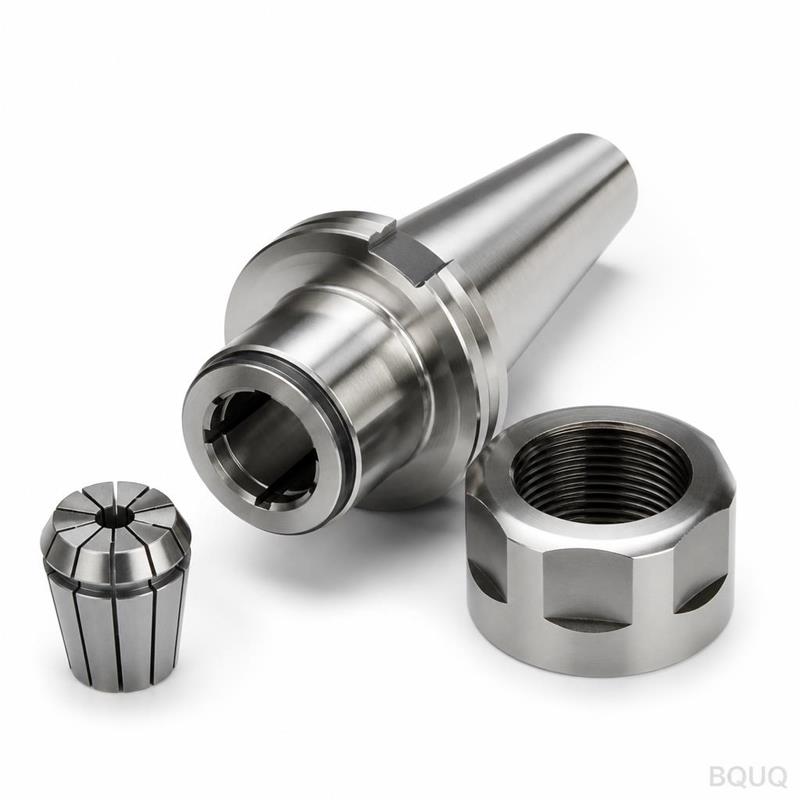
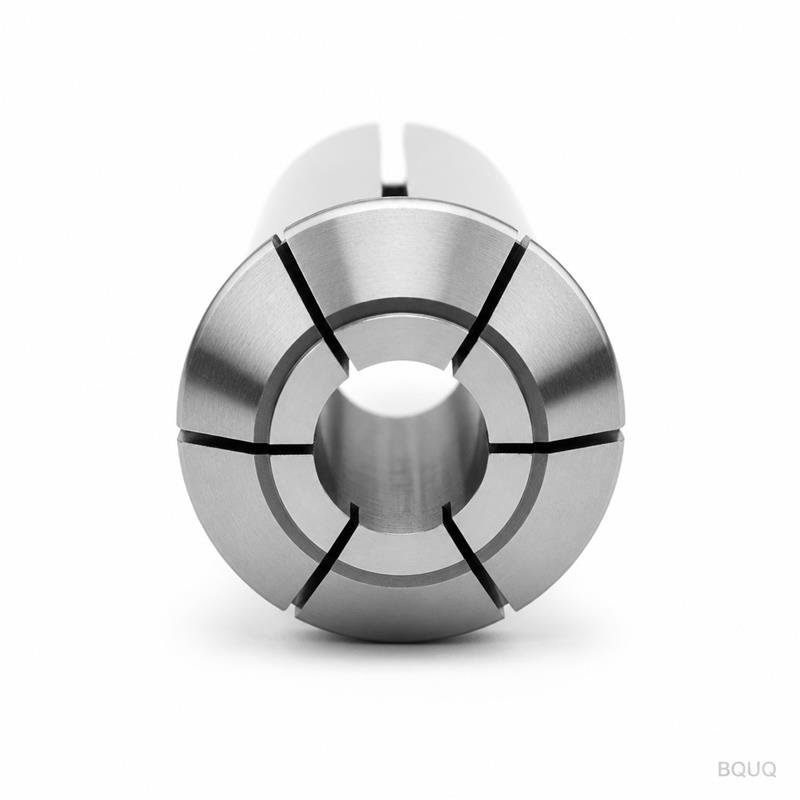
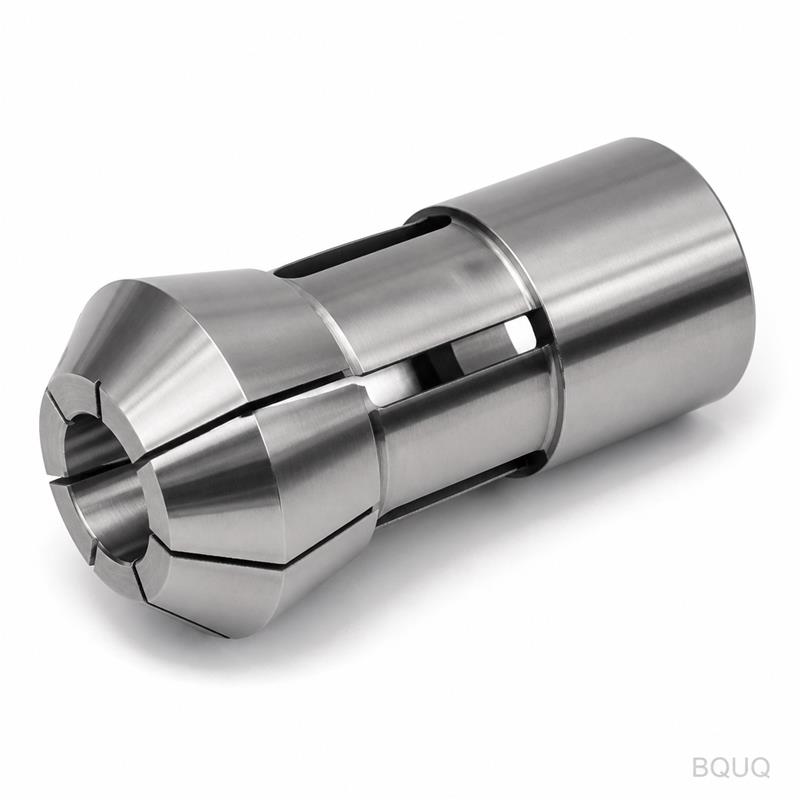
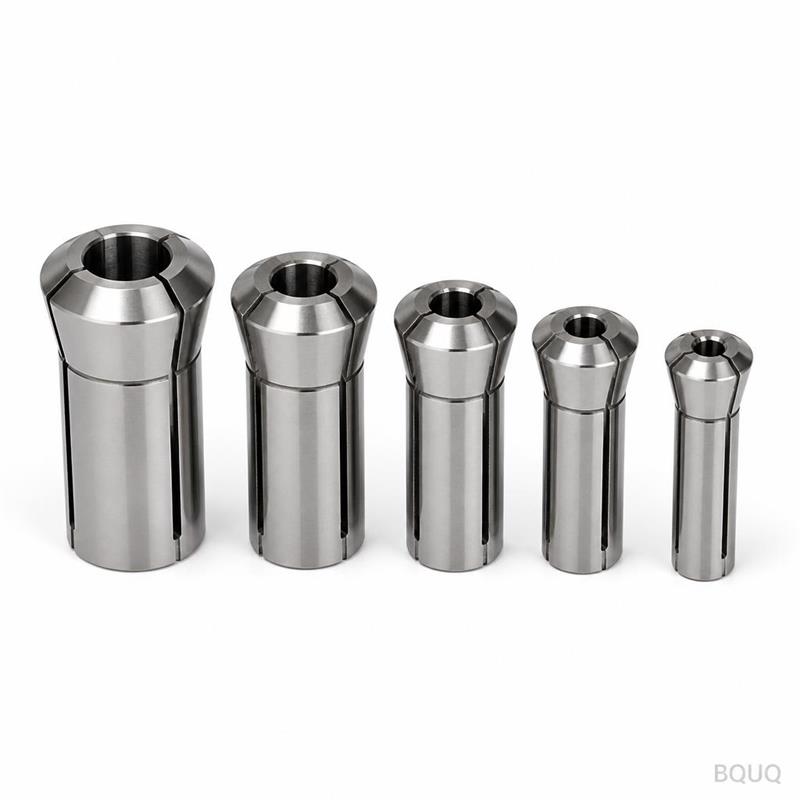
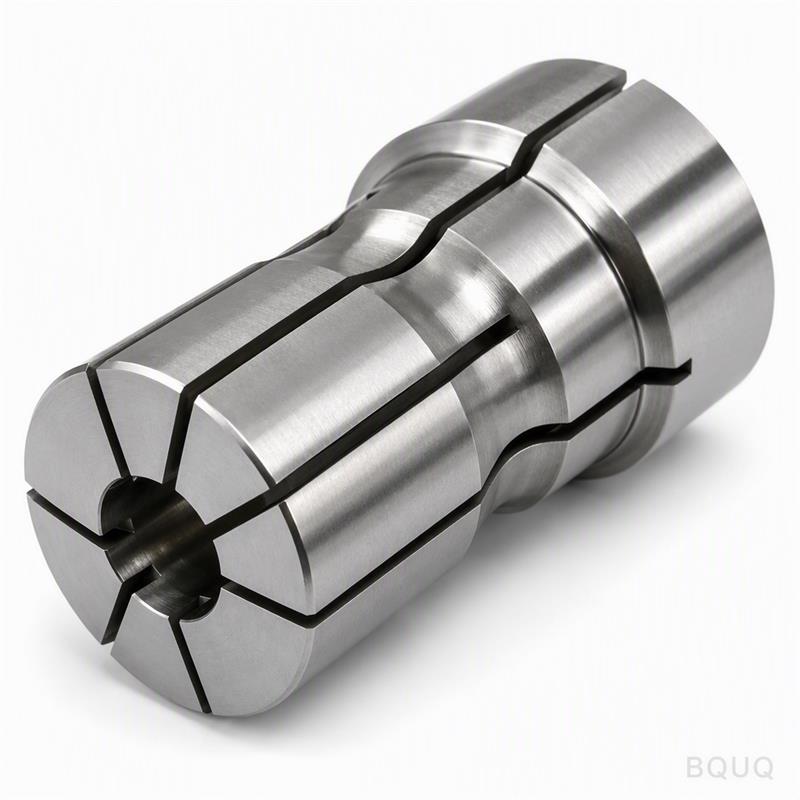
Swiss collets, also known as ER collets or split collets, use a tapered external surface that compresses uniformly around the workpiece when drawn into a matching tapered nut or holder. This design provides 360-degree radial clamping force with runout values as low as 0.003 mm (0.00012 in) when measured at 3x the collet diameter from the nose. Standard collets, including 5C, R8, and C5 types, use a threaded drawbar or drawtube to pull the collet into a tapered socket, which can introduce uneven clamping forces and higher runout, typically 0.010 to 0.015 mm (0.0004 to 0.0006 in). The Swiss design also allows for deeper gripping of long, slender workpieces because the collet can be positioned closer to the cutting tool, reducing deflection and vibration.
How Does Clamping Force and Rigidity Compare Between the Two Systems?
Swiss collets generate clamping forces ranging from 4,000 to 12,000 N depending on size and drawbar tension, with a typical ER32 collet achieving 8,500 N at 100 Nm of tightening torque. Standard 5C collets produce lower and less consistent forces, generally 3,000 to 6,000 N, because the threaded drawbar mechanism relies on manual or pneumatic actuation with more variable preload. Rigidity tests at BQUQ show that Swiss collet assemblies have a static stiffness of approximately 35 N/µm at the collet nose, while standard collets measure around 22 N/µm, a 37% reduction. This increased rigidity allows Swiss collets to support machining with depth-of-cut values up to 1.5 mm in 6061-T6 aluminum without chatter, whereas standard collets typically require reduced depths below 1.0 mm for the same surface finish specification.
Which Applications Require Swiss Collets Over Standard Collets?
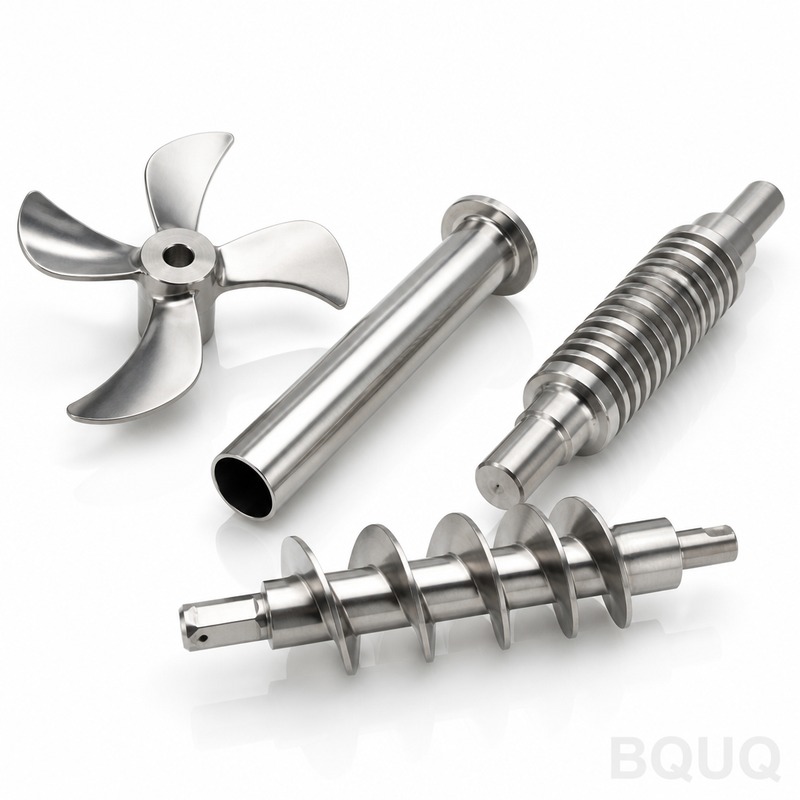
Swiss collets are mandatory for components with diameter-to-length ratios exceeding 3:1, such as bone screws, dental implants, fuel injector nozzles, and micro-electronic pins, where runout directly affects functional performance. For example, a 2 mm diameter medical guidewire with a 20 mm length requires Swiss collet runout below 0.005 mm to maintain straightness within 0.01 mm over the entire length. Standard collets are acceptable for turned parts with diameter-to-length ratios under 2:1, like bushings, spacers, and fasteners, where tolerance classes are typically IT8 or looser. In high-volume production of 10,000+ parts per batch, standard collets with quick-change systems reduce setup time by 40-60 seconds per changeover, making them more cost-effective even with slightly higher scrap rates.
What Are the Real Cost Differences in Tooling and Maintenance?
A single ER32 collet costs between $15 and $45 depending on precision grade, with a complete set of 20 sizes (1-20 mm) priced at $300 to $600. A 5C collet set of 20 sizes ranges from $150 to $350, and an R8 set from $200 to $400, making standard collets approximately 40% cheaper on initial investment. However, Swiss collets have a service life of 30,000 to 50,000 clamping cycles before requiring replacement, while standard collets typically last 15,000 to 25,000 cycles due to wear on the threads and tapered surfaces. Maintenance costs reflect this: Swiss collets need only periodic cleaning and light lubrication every 1,000 cycles, while standard collets require thread inspection and re-lubrication every 500 cycles to prevent galling. Over a five-year period with 500,000 clamping cycles, Swiss collets total approximately $2,800 in tooling and maintenance versus $3,400 for standard collets, making the Swiss system more economical at scale.
How Do Precision Grades and Tolerances Differ Between Swiss and Standard Collets?
Precision-grade Swiss collets (ER32-UP) offer runout of 0.003 mm (0.00012 in) at the nose and 0.008 mm (0.0003 in) at 4x diameter, while standard precision 5C collets provide 0.008 mm (0.0003 in) at the nose and 0.020 mm (0.0008 in) at 4x diameter. Industrial-grade Swiss collets (ER32) achieve 0.008 mm runout, matching the best standard collets, but with better repeatability of ±0.002 mm versus ±0.005 mm for standard types. The gripping range per collet size is also narrower for Swiss collets: each ER collet covers a 0.5 mm range (e.g., 4.0-4.5 mm) versus 1.0 mm range for 5C collets (e.g., 4-5 mm). This narrower range forces more frequent collet changes for Swiss systems, adding 15-20 seconds per changeover, but the improved grip precision reduces in-process measurement adjustments by up to 70%.
When Should You Upgrade from Standard Collets to Swiss Collets for CNC Machining?
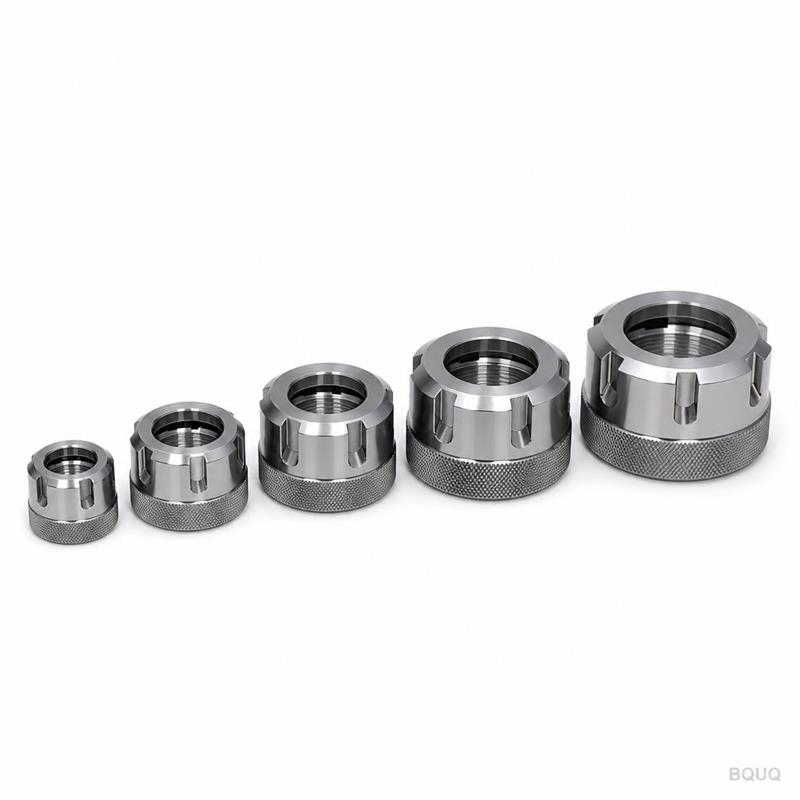
Upgrade to Swiss collets when your scrap rate exceeds 2% due to runout-related issues, when customers request Cpk values above 1.67, or when you are transitioning from prototype to production for components with tolerances tighter than ±0.01 mm. A cost-benefit analysis at BQUQ shows that a shop running 200 parts per day with a 1% scrap reduction saves approximately $1,800 monthly in material and labor costs at $30 per part value. Also consider upgrading when your spindle speeds exceed 8,000 RPM, because Swiss collets maintain concentricity at high speeds while standard collets can experience centrifugal expansion that increases runout by 0.005 mm at 15,000 RPM. For job shops with mixed production, a hybrid approach using Swiss collets for critical operations and standard collets for roughing or larger diameters provides the best balance of precision and throughput.
What Are the Key Specifications to Compare When Selecting Collets?
The table below summarizes the critical performance parameters for Swiss and standard collet systems based on BQUQ's in-house testing and industry standards:
| Parameter | Swiss Collet (ER32) | Standard Collet (5C) | Standard Collet (R8) |
| Runout at nose (mm) | 0.003 - 0.008 | 0.008 - 0.013 | 0.010 - 0.015 |
| Runout at 4x diameter (mm) | 0.008 - 0.020 | 0.020 - 0.030 | 0.025 - 0.035 |
| Clamping force (N) | 8,500 - 12,000 | 3,000 - 6,000 | 4,000 - 7,000 |
| Static stiffness (N/µm) | 35 | 22 | 24 |
| Gripping range per size (mm) | 0.5 | 1.0 | 1.0 |
| Service life (clamping cycles) | 30,000 - 50,000 | 15,000 - 25,000 | 12,000 - 20,000 |
| Initial cost per 20-size set (USD) | 300 - 600 | 150 - 350 | 200 - 400 |
| Max recommended spindle speed (RPM) | 20,000 | 10,000 | 8,000 |
| Typical tolerance capability (mm) | ±0.005 | ±0.013 | ±0.015 |
How Does Workpiece Material Affect the Choice Between Swiss and Standard Collets?
Hard materials like 17-4 PH stainless steel and Inconel 718 require the higher clamping force of Swiss collets to prevent workpiece slippage during heavy cutting, especially when machining with carbide tools at feed rates above 0.15 mm/rev. Soft materials such as 6061 aluminum and brass are more forgiving, and standard collets can achieve acceptable results with the added benefit of lower cost per clamp. For materials with poor machinability ratings below 50% (relative to AISI 1212 steel), Swiss collets reduce vibration-induced tool wear by up to 45%, extending tool life from 30 to 55 minutes per edge. Temperature also matters: Swiss collets maintain grip force within 5% up to 150°C, while standard collets can lose 15-20% of clamping force at the same temperature due to differential thermal expansion in the threaded mechanism.
What Are the Most Common Mistakes When Using Swiss Collets vs Standard Collets?
The most frequent error is using a standard collet at spindle speeds above its rated maximum, causing runout to increase by up to 0.01 mm and leading to chatter marks on the finished part. Another mistake is overtightening Swiss collets beyond the recommended torque, which can deform the collet slits and permanently reduce gripping accuracy by 0.002 mm or more. Many machinists also fail to match the collet size to the workpiece diameter within the specified range, using a 4.0 mm collet for a 4.2 mm bar, which creates uneven clamping and increases runout by up to 0.008 mm. Proper practice is to always use a collet with a gripping range that brackets the actual workpiece diameter, and to verify runout with a dial indicator at setup rather than assuming the collet is centered.
How Do You Maintain Swiss Collets and Standard Collets for Consistent Precision?
Clean Swiss collets with a solvent-based degreaser every 200 clamping cycles and apply a thin film of molybdenum disulfide grease to the taper and threads to prevent galling and maintain consistent drawbar tension. Standard collets require more frequent thread inspection because the drawbar threads wear at a rate of 0.001 mm per 1,000 cycles, which can cause the collet to seat unevenly and increase runout. Store both collet types in a dry, temperature-controlled cabinet at 20-25°C to prevent corrosion and dimensional changes from humidity. At BQUQ, we recommend a preventive maintenance schedule where collets are measured for runout every 5,000 cycles, and any collet exhibiting runout above its grade specification is immediately replaced, regardless of visual appearance.
What Are the Future Trends in Collet Technology for Small-Part Machining?
The industry is moving toward hydraulic and heat-shrink collet systems that offer runout below 0.002 mm (0.00008 in), but these remain expensive at $200-$500 per holder and are not yet cost-effective for high-mix, low-volume production. Smart collets with embedded sensors that monitor clamping force and temperature in real time are emerging, with prototype systems achieving force measurement accuracy of ±1%. For standard Swiss-type CNC lathes, the trend is toward multi-lobed collets that reduce lobing on thin-walled parts by distributing force more evenly, showing a 30% reduction in roundness error for wall thicknesses below 0.5 mm. Given these developments, BQUQ recommends that manufacturers evaluate their precision requirements every two years, as the cost-performance crossover between standard and Swiss collets continues to shift toward higher precision.
FAQ
How Much Does a Swiss Collet Cost Compared to a Standard Collet?
A single Swiss ER32 collet costs $15 to $45, while a standard 5C collet costs $8 to $20, making Swiss collets roughly twice as expensive per unit. However, considering the longer service life and reduced scrap rates, the total cost of ownership is often lower for Swiss collets in precision applications.
Can I Use Standard Collets on a Swiss-Type Lathe?
Yes, you can use standard collets on a Swiss-type lathe with an adapter, but you will lose the primary advantage of the Swiss system, which is the guide bushing and precision grip. For most Swiss-type operations, using proper Swiss collets is recommended to maintain tolerances and surface finish.
Which Collet System Is Better for High-Speed Machining Above 15,000 RPM?
Swiss collets are better for high-speed machining above 15,000 RPM because they maintain concentricity and clamping force under centrifugal load. Standard collets can experience runout increases of 0.005 mm or more at these speeds, which is unacceptable for precision parts.
How Often Should I Replace My Collets to Maintain Precision?
Replace Swiss collets every 30,000 to 50,000 clamping cycles or when runout exceeds 0.008 mm for precision grades. Standard collets should be replaced every 15,000 to 25,000 cycles or when runout exceeds 0.013 mm, whichever comes first.
What Is the Maximum Workpiece Diameter for Swiss Collets in Small-Part Machining?
Swiss collets are available for diameters up to 42 mm, but for small-part machining, the practical range is 0.5 mm to 32 mm. Above 32 mm, standard collets or chuck systems become more practical due to cost and availability.
Are Swiss Collets Compatible with All CNC Lathes and Mills?
Swiss collets can be used on most CNC lathes and mills with the appropriate collet chuck or holder, such as ER collet chucks with a BT or CAT taper. They are not directly compatible with machines that only accept 5C or R8 collets without an adapter.
What Is the Difference Between a Swiss Collet and an ER Collet?
There is no practical difference; the terms are used interchangeably in the industry. ER collets are the most common type of Swiss collets, named after the "European Reverse" design standard.
In conclusion, the choice between Swiss collets and standard collets for small-part machining comes down to precision requirements, production volume, and budget. Swiss collets deliver superior accuracy, rigidity, and repeatability, justifying their higher initial cost for tight-tolerance medical, aerospace, and electronics components. Standard collets remain a viable, economical option for less demanding applications, but as precision demands increase, the trend clearly favors Swiss collet systems. At BQUQ, we have over 20 years of experience manufacturing precision parts using both technologies, and we can help you select the optimal clamping solution for your specific projects. For a detailed evaluation of your machining requirements and a free quotation, contact our engineering team at sc@bquq.com or via WhatsApp at +86 13713157787. Visit our website at www.bquq.com to request a quote within 12 hours and receive expert guidance on your next precision machining project.