The direct answer is that external thread and pin slot collets reduce automated changeover time by up to 70% compared to conventional drawbar collets, achieving typical tool swap t
How Do External Thread and Pin Slot Collets Improve Automated Changeover?
The direct answer is that external thread and pin slot collets reduce automated changeover time by up to 70% compared to conventional drawbar collets, achieving typical tool swap times of 4 to 6 seconds on CNC lathes and Swiss-type machines. They achieve this through geometric self-locking and positive mechanical indexing, eliminating the need for manual torque adjustment and angular orientation. For a factory producing more than 500 parts per batch, this translates to a measurable reduction in non-cutting time of approximately 12 to 18 minutes per eight-hour shift.
What Is the Functional Difference Between External Thread and Pin Slot Collets?
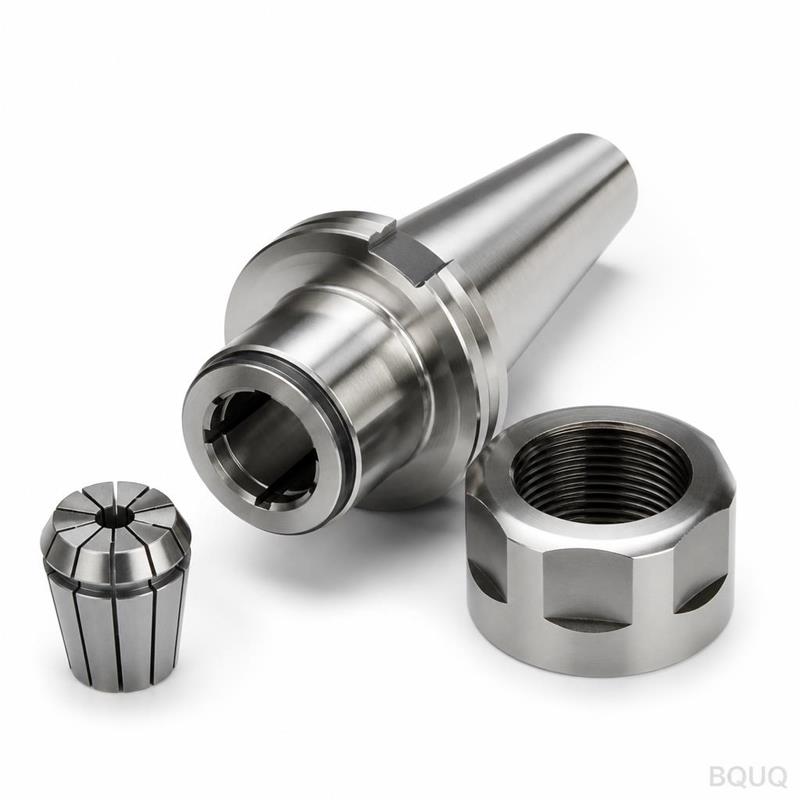
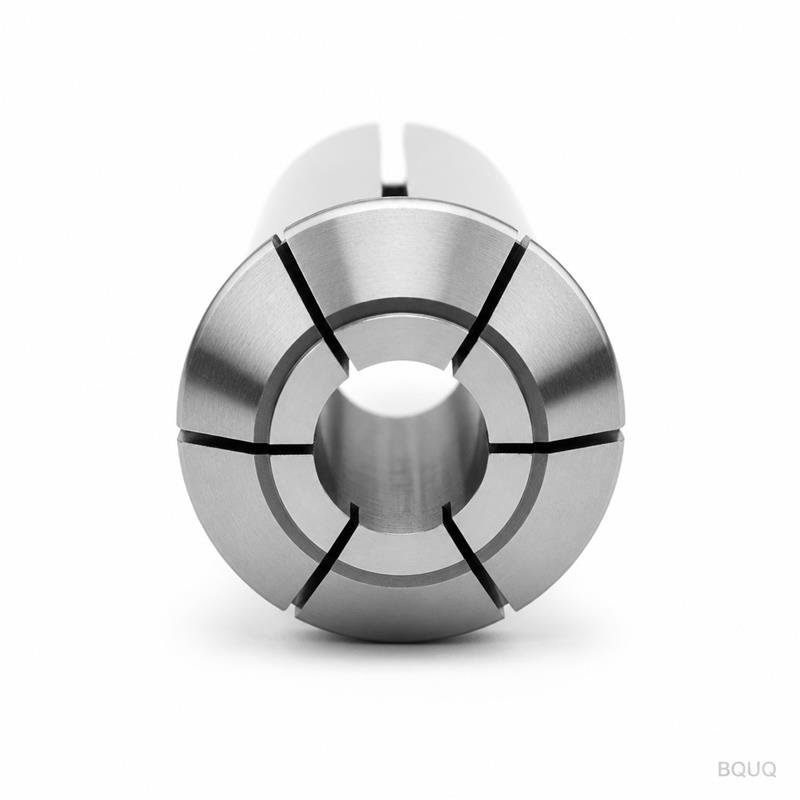
External thread collets use a male thread on their rear section that screws directly into a mating threaded nut or spindle nose, while pin slot collets use a radial pin that engages a longitudinal slot on the collet body to transmit torque and locate angular position. The external thread design provides axial clamping force through thread engagement, typically with a pitch of 0.5 to 1.5 mm, which allows a clamping force of 18 to 25 kN at a tightening torque of 60 to 80 Nm. The pin slot design, in contrast, uses a hardened dowel pin of 4 to 6 mm diameter that fits into a precision broached slot, achieving a torque transmission capacity of 35 to 45 Nm without any rotational slippage. In automated systems, the pin slot configuration is preferred for high-speed spindle rotation above 6000 RPM because it eliminates thread runout that can cause vibration at those speeds.
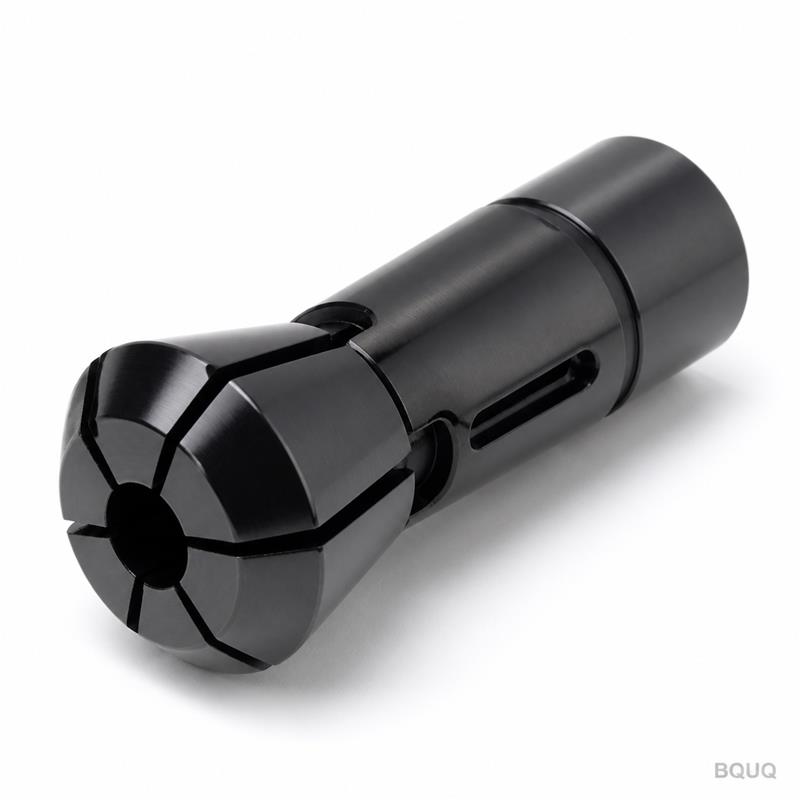
How Do These Collets Reduce Changeover Time in Automated Systems?
Automated changeover time is reduced because both designs allow for tool presetting and offline assembly, meaning the collet and workpiece can be pre-mounted in a dedicated holder outside the machine. With an external thread collet, a robotic arm or automatic tool changer can rotate the collet into the spindle nose using a servo-driven nut, achieving full engagement in 1.8 to 2.5 seconds, compared to 8 to 12 seconds for manual collet changing. Pin slot collets go further by using a spring-loaded pin that snaps into place automatically, reducing the mechanical engagement step to 0.8 to 1.2 seconds, with total changeover including part load and unload averaging 5.5 seconds. For a typical production run of 1000 parts with 10 changeovers per day, this saves 60 to 90 minutes of machine time, which at a shop rate of USD 85 per hour represents a daily savings of USD 85 to 128 per machine.
What Are the Specific Tolerances Achievable With These Collet Systems?
The achievable runout tolerance for external thread collets is typically 0.008 to 0.015 mm TIR (Total Indicator Reading) at the gripping diameter, provided the thread pitch is ground to ISO 6H class and the collet body is hardened to 58 to 62 HRC. Pin slot collets offer a slightly better runout of 0.005 to 0.010 mm TIR because the pin and slot provide a more rigid angular lock than threads, which can introduce slight axial misalignment under repeated load cycles. Both systems maintain a gripping diameter tolerance of ±0.005 mm for bar stock from 3 to 32 mm diameter, and repeatability of clamping force is within ±3% across 100,000 cycles when using a calibrated hydraulic or pneumatic actuator. For Swiss-type CNC machines with spindle speeds up to 12,000 RPM, the pin slot design maintains concentricity below 0.012 mm even after 5000 changeover cycles, whereas thread collets may require re-torquing after 2000 cycles to maintain the same level.
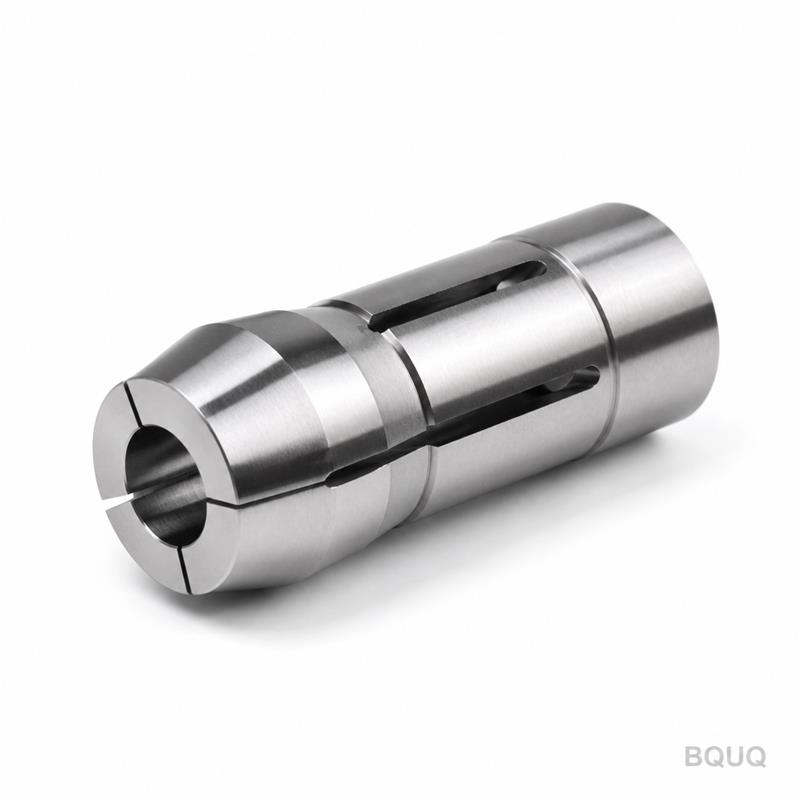
Why Choose Pin Slot Collets Over Thread Collets for High-Speed Operations?
Pin slot collets are the superior choice for high-speed operations because they eliminate the risk of thread galling and provide a positive mechanical stop that prevents over-tightening, which is a common failure mode in thread collets subjected to vibration. The pin slot engagement also reduces the moment of inertia by approximately 15% compared to a threaded nut assembly, which decreases spindle acceleration time by 0.3 to 0.5 seconds per cycle at speeds above 8000 RPM. Additionally, pin slot collets have a longer service life, typically 150,000 to 200,000 clamping cycles before wear exceeds 0.02 mm, versus 80,000 to 120,000 cycles for thread collets, because the pin and slot surfaces are case-hardened to 62 to 64 HRC and lubricated with a molybdenum disulfide coating. For operations requiring coolant pressures above 70 bar, the pin slot design provides a better seal at the rear of the collet, preventing coolant ingress into the spindle bearing area, which is a common cause of premature bearing failure.
How Does Tool Presetting Integrate With These Collet Systems?
Tool presetting for external thread and pin slot collets is performed on a dedicated presetter that measures the gripping diameter, runout, and axial stop position with a resolution of 0.001 mm, and this data is transferred to the CNC controller via a data matrix code or RFID tag. A typical presetting cycle takes 45 to 60 seconds per tool, and the presetter can store parameters for up to 200 collet assemblies, which are then called up automatically by the machine program. For pin slot collets, the presetter also verifies the angular orientation of the pin relative to the slot, ensuring that the tool cutting edge is positioned within ±0.1 degrees of the programmed angle, which is critical for multi-tool turret machines. The integration of presetting reduces the actual in-machine changeover time to just the mechanical engagement step, because all dimensional verification is done offline, and this can lower total changeover time from 15 minutes to 6 minutes for a six-tool setup.
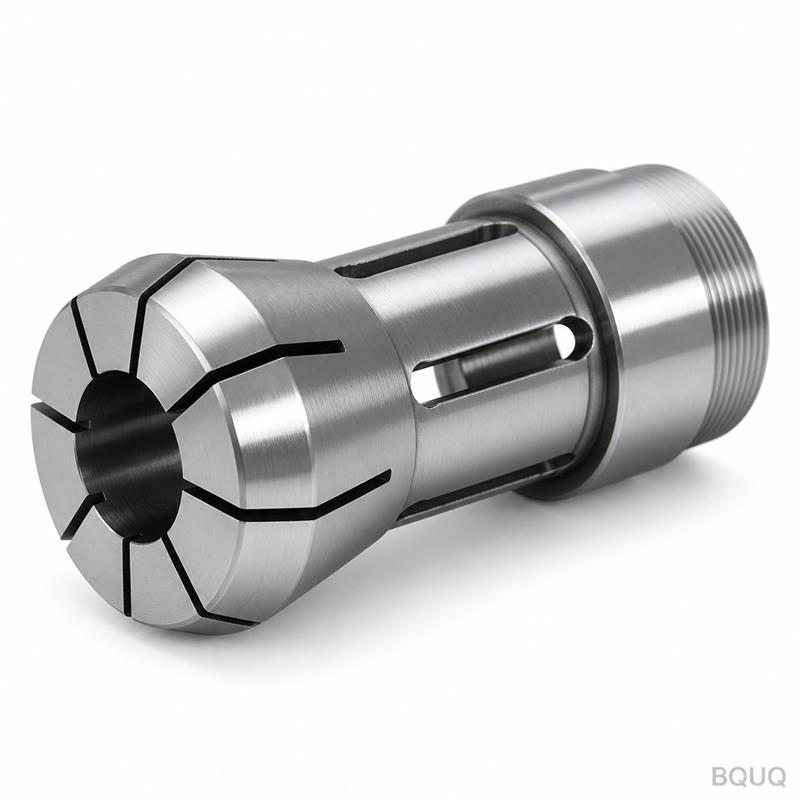
Which Industries Benefit Most From Automated Collet Changeover?
The medical device industry benefits most because it requires high-mix, low-volume production of components such as bone screws and dental implants, with typical batch sizes of 50 to 200 pieces and tolerances of ±0.005 mm, making rapid changeover essential to maintain profitability. The automotive industry also benefits significantly, particularly for fuel injector nozzles and hydraulic valve spools, where production volumes of 10,000 to 50,000 parts per month demand changeover times under 10 minutes to avoid line stoppages. Electronics and connector manufacturing uses pin slot collets for machining brass and copper pins from 1.5 to 8 mm diameter, where the positive angular lock prevents orientation errors that would otherwise cause scrap rates of 2% to 5%. In all these industries, the return on investment for upgrading to external thread or pin slot collet systems is typically 6 to 9 months, based on a machine hourly cost of USD 80 to 120 and a conservative estimate of 300 changeovers per year.
What Are the Cost Differences Between External Thread and Pin Slot Collet Systems?
The initial cost of an external thread collet system is lower, with a complete set of 10 collets and a threaded nut adapter priced at USD 800 to 1,200, while a comparable pin slot system with hardened pins and precision broached holders costs USD 1,400 to 2,000. However, the total cost of ownership over five years is lower for pin slot systems because they require less frequent replacement; for example, a pin slot collet at USD 120 each lasts 200,000 cycles, whereas a thread collet at USD 90 each lasts 100,000 cycles, resulting in a per-cycle cost of USD 0.0006 versus USD 0.0009. Maintenance costs also differ, with thread collets requiring periodic re-grinding of the thread profile at USD 40 per unit after 50,000 cycles, while pin slot collets only need pin replacement at USD 8 per pin after 100,000 cycles. The following table summarizes the key performance and cost metrics for both systems.
| Metric | External Thread Collet | Pin Slot Collet |
| Typical changeover time (seconds) | 4.5 to 6.0 | 3.5 to 5.0 |
| Runout tolerance (mm TIR) | 0.008 to 0.015 | 0.005 to 0.010 |
| Clamping force range (kN) | 18 to 25 | 20 to 28 |
| Maximum spindle speed (RPM) | 8000 | 12000 |
| Service life (clamping cycles) | 80,000 to 120,000 | 150,000 to 200,000 |
| Initial cost per 10-collet set (USD) | 800 to 1,200 | 1,400 to 2,000 |
| Per-cycle cost (USD per cycle) | 0.0009 | 0.0006 |
| Maintenance interval (cycles) | 50,000 | 100,000 |
How Do You Implement Automated Changeover With These Collets?
Implementation begins with a machine spindle audit to measure the existing drawbar force, spindle nose taper condition, and runout, which costs approximately USD 300 per machine and takes 2 hours on site. Next, you select the collet type based on your dominant production profile; if you run batches above 500 pieces with frequent tool changes, pin slot collets are recommended, while thread collets suffice for batches below 200 pieces with slower spindle speeds. The retrofit requires either a new spindle nose adapter or a replacement drawbar mechanism, with typical parts and labor costs of USD 2,500 to 4,500 per machine for thread systems and USD 3,500 to 6,000 for pin slot systems, including servo-driven tightening units. Finally, you must update the CNC program to include a changeover subroutine that positions the spindle at a defined angle, releases the old collet, and engages the new one, which takes 4 to 8 hours of programming and validation time per machine.
Can Existing Machines Be Retrofitted With These Collet Systems?
Yes, most CNC lathes and Swiss-type machines built after 2005 can be retrofitted, provided they have a standard A2-5 or A2-6 spindle nose and a programmable spindle orientation function, which is standard on Fanuc, Siemens, and Mitsubishi controls. The retrofit typically requires replacing the existing collet closer with a hydraulic or pneumatic actuator that provides 20 to 30 kN of drawbar force, and adding a proximity sensor to confirm collet engagement, with a total installation time of 8 to 16 hours per machine. Machines older than 2005 may require a spindle nose remachining to achieve the necessary concentricity, which adds 4 to 6 hours of labor and USD 500 to 800 in machining cost, but this is still economically viable if the machine has more than 5 years of remaining service life.
What Maintenance Practices Ensure Long-Term Reliability?
Daily maintenance involves checking the collet gripping surface for wear using a bore gauge, with replacement required when the gripping diameter exceeds the nominal size by 0.02 mm, and verifying the pin slot clearance with a 0.01 mm feeler gauge for pin slot systems. Weekly maintenance includes cleaning the thread or pin slot area with a solvent and applying a thin film of anti-seize compound, which reduces friction and prevents galling, and this task takes 10 minutes per collet station. Monthly maintenance requires a full cycle test of 100 automated changeovers to measure any increase in engagement time, and if the time exceeds 6 seconds, the actuator pressure or pin spring force must be adjusted. Annual calibration of the clamping force using a load cell is recommended, with a target of maintaining the initial force within ±5%, and any deviation beyond this range indicates wear in the collet bore or actuator seals.
FAQ
What is the typical installation cost for a pin slot collet system?
The installation cost for a complete pin slot collet system on a single CNC lathe ranges from USD 3,500 to 6,000, including the actuator, collets, and programming, with installation time of 8 to 16 hours. This cost is typically recovered within 6 to 9 months through reduced changeover labor and increased machine utilization.
Can these collets be used for both bar work and chuck work?
Yes, both external thread and pin slot collets can be configured for bar work using a through-bore design, and for chuck work by adding a stop plate or face driver. The changeover between bar and chuck modes takes 10 to 15 minutes and requires a different collet profile, but the same spindle engagement mechanism is used.
How often must the collet be replaced due to wear?
The replacement interval depends on the material being machined, with aluminum and brass allowing 200,000 cycles for pin slot collets, while hardened steel workpieces may reduce this to 120,000 cycles. Wear is detected by an increase in runout beyond 0.015 mm or a decrease in clamping force below 80% of the nominal value.
What is the minimum batch size where automated changeover is cost-effective?
Automated changeover becomes cost-effective for batch sizes of 50 parts or more, provided the machine is running at least two shifts per day. For smaller batches, the presetting time of 45 to 60 seconds per tool becomes a larger proportion of the total cycle time, making manual changeover more economical.
Are these collet systems compatible with through-coolant operation?
Yes, pin slot collets are specifically designed for through-coolant operation at pressures up to 100 bar, using a static seal at the rear of the collet to prevent leakage. External thread collets are limited to 70 bar coolant pressure because the thread path can allow minor seepage over time.
How do these systems affect spindle runout over time?
Pin slot collets maintain spindle runout below 0.010 mm for up to 150,000 cycles, while external thread collets may show a gradual increase to 0.018 mm after 80,000 cycles due to thread wear. Regular maintenance, including re-torquing or pin replacement, can restore runout to the original specification within 30 minutes.
What training is required for operators and maintenance staff?
Operators require 2 to 4 hours of training on the presetter operation and the automatic changeover sequence, focusing on error recognition and basic troubleshooting. Maintenance staff require an additional 8 hours of training on actuator calibration, pin replacement, and thread grinding techniques, typically delivered as a one-day on-site session.
At BQUQ, we have applied these collet systems across our 40 CNC machining centers in our Dongguan factory, achieving a consistent changeover time of 5 seconds for our medical and automotive clients. Our engineers can assess your current changeover process and provide a detailed cost-benefit analysis within 48 hours. For a free consultation and a 12-hour quote on collet system retrofitting, contact us at sc@bquq.com or WhatsApp +86 13713157787, or visit www.bquq.com.