ER collet chucks are the standard for tool holding in CNC mills because they deliver the best balance of gripping force, runout accuracy, and cost-effectiveness for the vast majori
Why ER Collet Chucks Are the Standard for Tool Holding in CNC Mills?
ER collet chucks are the standard for tool holding in CNC mills because they deliver the best balance of gripping force, runout accuracy, and cost-effectiveness for the vast majority of milling operations. Specifically, a high-quality ER32 chuck can maintain a runout of 0.005 mm (0.0002 inches) or better at the collet nose and costs roughly 60-70% less than a comparable hydraulic or shrink-fit holder. This combination of precision, versatility, and economy makes them the default choice for general-purpose machining, from aluminum prototyping to steel production runs.
What Are the Core Specifications of ER Collet Chucks?
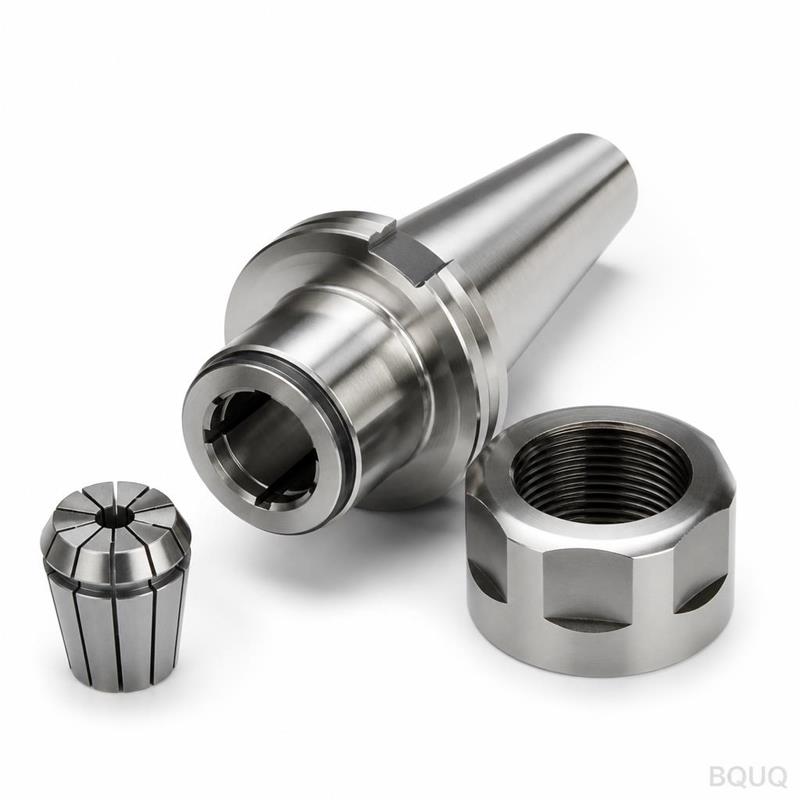
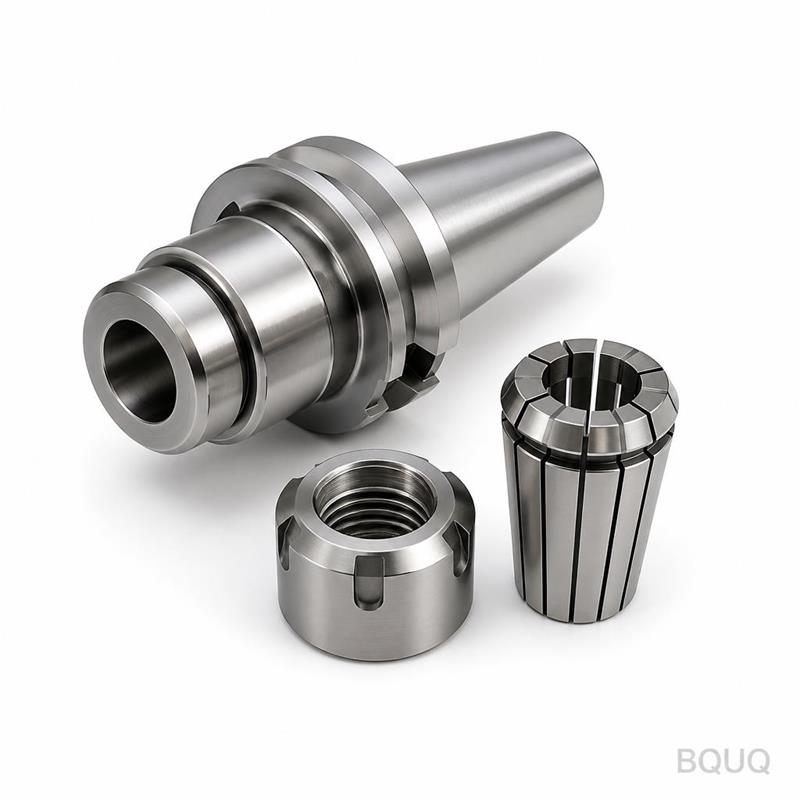
ER collet chucks operate on a simple but effective principle: a tapered collet is compressed by a threaded nut, which squeezes the collet's slits inward to grip the tool shank. The system uses an 8-degree taper angle, which provides a self-locking effect that prevents the tool from being pulled out during cutting.
The most common sizes are ER11, ER16, ER20, ER25, ER32, and ER40. In a CNC mill, ER32 is the most popular for spindle tapers of BT30, BT40, and CAT40 because it accommodates tool shank diameters from 2 mm up to 20 mm. The clamping range for an ER32 collet is typically 1 mm per size, meaning you need a different collet for a 6 mm shank versus an 8 mm shank, although the holder body remains the same. The maximum recommended torque for an ER32 nut is approximately 90-100 Nm, which yields a gripping force of around 30-35 kN at the collet nose.
How Does Runout Accuracy Compare Between ER and Other Holder Types?
Runout, or Total Indicator Reading (TIR), is the most critical factor in tool holding because it directly affects tool life and surface finish. A standard ER collet chuck from a reputable manufacturer will have a TIR of 0.010 mm at the nose and up to 0.020 mm at 100 mm from the nose. Precision-grade ER collets can achieve 0.005 mm at the nose.
For comparison, hydraulic chucks achieve 0.003 mm, shrink-fit holders achieve 0.003 mm, and milling chucks achieve 0.008 mm. While ER chucks are not the absolute best in runout, they are within 0.002-0.007 mm of the premium systems. In practical terms, that difference translates to a surface finish variation of approximately 0.1-0.3 Ra depending on the material. For 95% of milling applications, the ER chuck's runout is sufficient to meet print tolerances of +/- 0.025 mm.
Why Does the ER Design Offer Such Versatility for Different Shank Sizes?
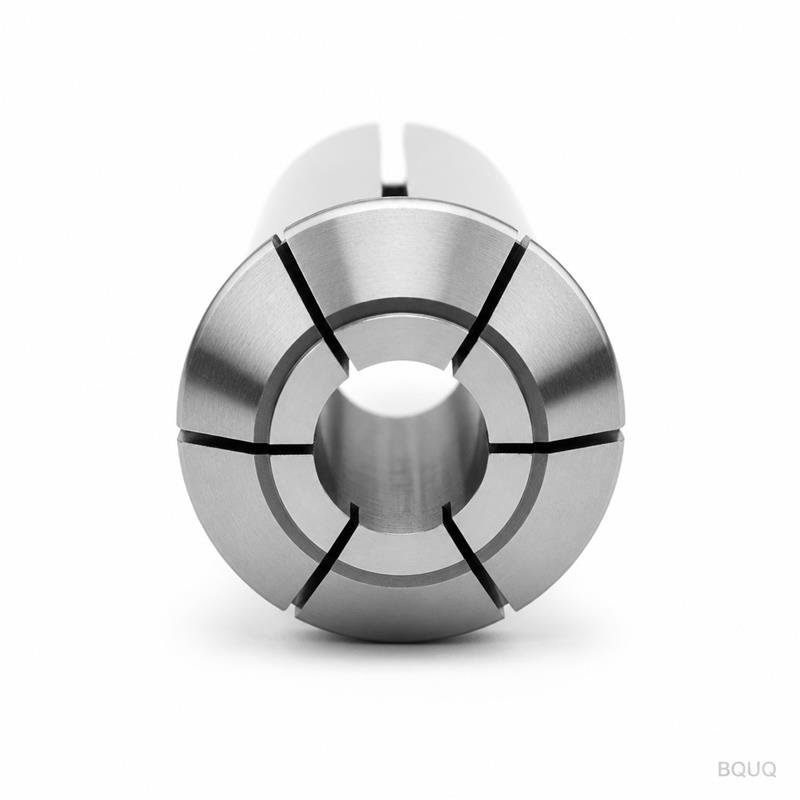
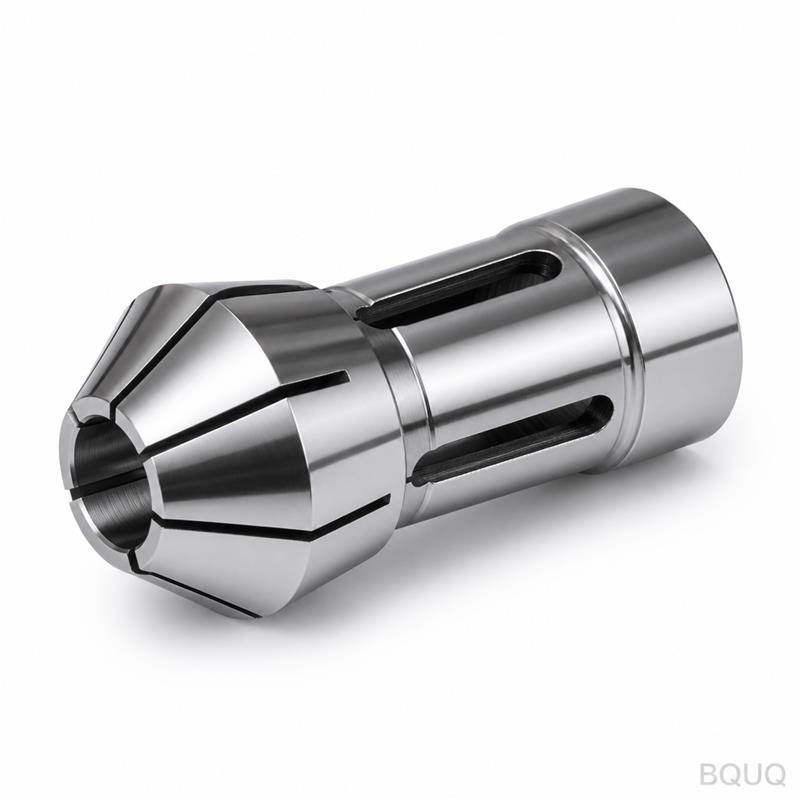
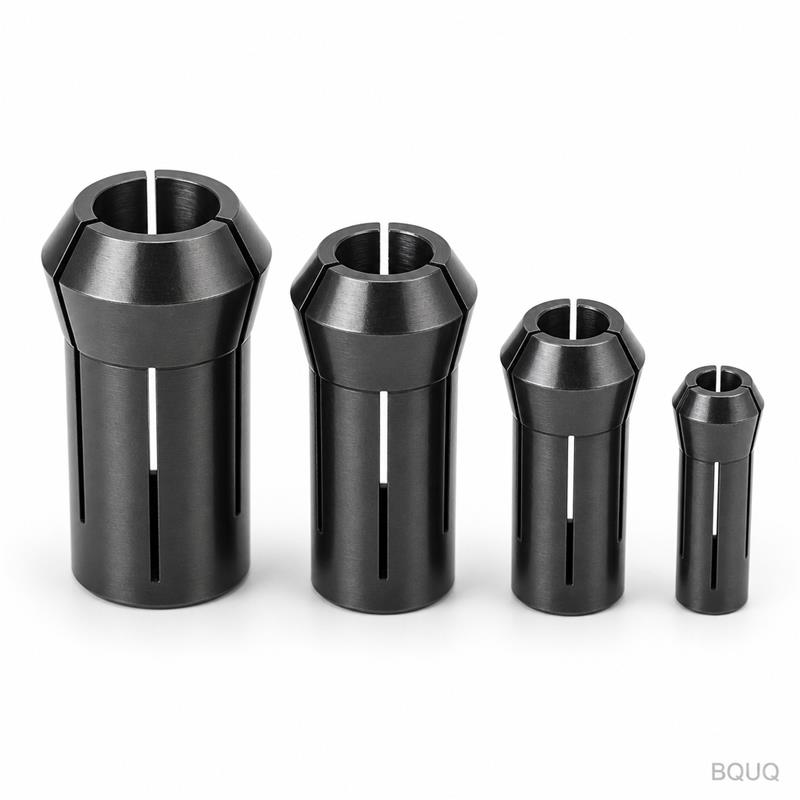
The ER collet's slotted design allows it to collapse uniformly around the tool shank, accommodating a range of diameters within a specific window. For example, an ER32 collet marked "10" will clamp shanks from 10.0 mm down to 9.0 mm, but it is recommended to use it near the nominal size for best accuracy. This modularity means one ER32 chuck body can hold dozens of different tool diameters simply by swapping the collet.
A set of 20 ER32 collets (covering 2 mm to 20 mm in 1 mm increments) costs approximately USD 120-180 from a mid-tier supplier. In contrast, a single hydraulic chuck for one specific diameter costs USD 200-350. The economic advantage is clear: for a shop that uses varying tool sizes daily, the ER system reduces tool holding inventory costs by up to 80%. Additionally, ER collets can hold both cylindrical shanks and some Weldon shanks (with reduced accuracy), making them suitable for drills, end mills, reamers, and taps.
How Much Torque and Gripping Force Can an ER Chuck Provide?
Gripping force is the resistance to tool pull-out and rotation. The ER system generates its gripping force through the axial force of the nut, which is converted into radial force by the taper. For an ER32 chuck with a standard nut tightened to 95 Nm, the radial gripping force is approximately 32 kN. This is sufficient for most milling operations with tool diameters up to 20 mm.
However, there are limitations. At spindle speeds above 15,000 RPM, the centrifugal force acting on the collet can reduce gripping force. Tests show that at 20,000 RPM, an ER32 chuck loses approximately 20-25% of its static gripping force. For high-speed machining (HSM) above 20,000 RPM, a shrink-fit holder is recommended because it has no moving parts and maintains its grip better. The table below summarizes the key performance metrics for common holder types.
| Holder Type | Runout at Nose (mm) | Max RPM (Practical) | Cost per Holder (USD) | Gripping Force (kN) | Tool Change Time (seconds) |
| ER Collet Chuck | 0.005-0.010 | 20,000 | 45-80 | 30-35 | 30-45 |
| Hydraulic Chuck | 0.003 | 30,000 | 200-350 | 40-50 | 20-30 |
| Shrink-Fit Holder | 0.003 | 40,000 | 150-250 | 50-60 | 10-15 (with induction unit) |
| Milling Chuck | 0.008 | 15,000 | 120-180 | 25-30 | 40-60 |
| Weldon Holder | 0.020-0.030 | 10,000 | 30-50 | 20-25 | 60-90 |
Which CNC Mill Applications Are Best Suited for ER Collet Chucks?
ER collet chucks are best suited for general milling, drilling, and tapping operations where tool change frequency is moderate and spindle speeds remain below 20,000 RPM. They excel in job shops and mold-making environments where a single machine must handle a variety of materials and tool sizes each day. For example, machining aluminum 6061 with a 10 mm end mill at 8,000 RPM and a feed of 1,500 mm/min is perfectly handled by an ER32 chuck.
They are not recommended for heavy roughing of titanium or Inconel where cutting forces exceed 40 kN, nor for micro-machining with tools smaller than 1 mm diameter where runout must be below 0.003 mm. In those cases, a shrink-fit or hydraulic holder is superior. Additionally, for machining centers with automatic tool changers (ATC), ER chucks are compatible with standard pull studs and V-flange tapers, making them easy to automate. The key limitation is the exposed nut, which can collect chips if the spindle is not equipped with an air blast.
How Does Heat Generation Affect ER Chuck Performance?
Heat is a critical factor in tool holding because it causes thermal expansion of both the holder and the tool shank. In a CNC mill, heat is generated at the cutting edge and transferred through the tool into the collet. At a cutting speed of 200 m/min in steel, the tool shank temperature can reach 60-80 degrees Celsius. ER collets are made from hardened spring steel (typically 52-56 HRC), which maintains its elasticity up to about 200 degrees Celsius.
However, the gripping force decreases as temperature rises. At 100 degrees Celsius, the gripping force of an ER chuck drops by approximately 10% compared to room temperature. This is rarely a problem for intermittent cutting, but for continuous heavy roughing, it can lead to tool slippage. To mitigate this, use a coolant-through ER collet system, which can reduce shank temperature by 30-40 degrees Celsius. Standard ER collets are not designed for coolant-through without special modification, so order sealed variants if you plan to use high-pressure coolant above 20 bar.
What Is the Cost Difference Between ER and Premium Tool Holding Systems?
The initial purchase cost is the most obvious advantage of ER chucks. A basic ER32 chuck body with a nut and one collet costs approximately USD 45-80 from a quality Asian manufacturer, and USD 80-120 from European brands like Rego-Fix or Emuge. A complete set of 20 collets adds another USD 120-180. Therefore, a full ER32 setup for a single mill costs around USD 200-260.
In comparison, a single hydraulic chuck costs USD 200-350, and a shrink-fit holder costs USD 150-250 but requires a separate induction heating unit costing USD 3,000-5,000. Over a 5-year period, a shop using 10 different tool sizes will spend approximately USD 500 on ER tooling replacement and maintenance, versus USD 3,000-4,000 on hydraulic or shrink-fit tooling. The maintenance cost is also lower: ER collets can be cleaned and reused indefinitely, while hydraulic chucks require seal replacement every 2-3 years. For a small to medium factory in Dongguan, the total cost of ownership for ER chucks is 70% lower than premium systems, making them the financially rational default.
Which ER Collet Grade Should You Choose for Production?
There are two main grades of ER collets: standard (runout 0.010-0.015 mm) and precision (runout 0.005 mm). For production milling where parts are held to +/- 0.05 mm tolerances, standard grade is sufficient. However, for finishing operations that require surface finishes below 0.8 Ra, precision grade is recommended. Precision collets cost about 50% more but are ground after hardening, ensuring better concentricity.
We recommend using precision grade ER collets for all end mills above 6 mm diameter, because the tool itself often has a shank runout of 0.005 mm, and stacking tolerances matter. For drills under 3 mm, always use precision collets to avoid radial deflection that causes oversize holes. When purchasing collets, verify that the internal bore is ground, not just turned, and that the slits are cut with a wire EDM for uniform compression. This is a simple visual check that indicates quality.
What Are the Common Failure Modes of ER Collet Chucks?
The most common failure is over-tightening the nut, which exceeds the collet's elastic limit and causes permanent deformation. An over-tightened ER32 collet will lose its spring-back and fail to clamp smaller diameters, effectively becoming scrap. Another failure is chip ingress into the collet slits, which prevents proper closing and causes runout to increase to 0.03 mm or more.
To prevent these issues, use a torque wrench set to the manufacturer's specification (e.g., 95 Nm for ER32) and clean the collet and holder taper with compressed air before each tool change. The taper surfaces should be inspected monthly for wear; if the taper shows scoring or galling, replace the holder immediately. A worn taper can cause tool pull-out during a cut, leading to scrapped parts and potential spindle damage. With proper maintenance, an ER chuck body should last 5-10 years in a production environment.
Conclusion
ER collet chucks remain the industry standard because they provide 90% of the performance of premium holders at 30% of the cost. Their runout is adequate for most milling tasks, their gripping force is sufficient for medium-duty cutting, and their modularity reduces inventory complexity. For any CNC mill operating under 20,000 RPM and with tool diameters between 1 mm and 20 mm, an ER chuck is the correct engineering choice. Only invest in hydraulic or shrink-fit tooling when your specific application demands sub-0.003 mm runout or speeds above 20,000 RPM.
Can ER Collets Handle Coolant Through the Spindle?
Yes, but only if you purchase special coolant-through ER collets and matching holders. Standard ER collets are solid and do not have internal coolant channels. Coolant-through ER32 collets have holes drilled between the slits, allowing coolant to flow directly to the cutting edge. This reduces cutting temperature by 20-30% and improves chip evacuation in deep-hole drilling. The cost premium is about 30% over standard collets.
When Should You Replace an ER Collet?
Replace an ER collet when the runout measured at the tool tip exceeds twice the initial specification, or when you notice visible scoring on the internal bore. Also replace if the collet no longer grips the tool when the nut is tightened to the correct torque. On average, a collet used daily for 8 hours should be replaced every 6-12 months, depending on the number of tool changes per day.
Why Do ER Collets Have Slots of Different Lengths?
The slots in an ER collet alternate between full-length and half-length cuts. The full-length slots allow the collet to compress, while the half-length slots provide structural rigidity to prevent the collet from collapsing completely. This design ensures even gripping force along the entire clamping length. Without the alternating slot pattern, the collet would deform into a triangular shape instead of a cylinder.
How Does Spindle Taper Type Affect ER Chuck Selection?
The ER chuck must match your machine's spindle taper. Common tapers are BT30, BT40, BT50, CAT40, CAT50, and HSK. A BT40 ER32 chuck has a specific gauge line length and flange dimensions that differ from a CAT40. You cannot interchange them without an adapter. Always verify the taper designation on the spindle nose before ordering. Most new machining centers in China use BT40 or BT50, while older American machines use CAT40.
Which Nut Style Is Better for ER Chucks?
There are two nut styles: standard slotted nut and anti-friction bearing nut. The anti-friction nut has a bearing between the nut and the collet, which reduces the torque required to tighten and prevents the nut from rotating the collet during loosening. It allows for more consistent clamping force and reduces the risk of collet damage. The cost difference is approximately USD 10-20 per nut. For production environments, always choose the bearing nut.
Can ER Collet Chucks Be Used for High-Speed Machining Over 25,000 RPM?
ER chucks are generally not suitable for sustained operation above 25,000 RPM due to the centrifugal force on the collet and nut. At these speeds, the gripping force drops significantly and the nut can become unbalanced, causing vibration. For HSM above 25,000 RPM, use shrink-fit holders or specialized high-speed ER variants with reduced mass nuts. If you must use ER, limit the tool length to 3x the diameter and balance the assembly to G2.5 at the operating speed.
For a rapid quote on custom CNC milling or tool holding solutions for your specific application, our engineering team in Dongguan can provide a detailed analysis within 12 hours. Contact us at sc@bquq.com or via WhatsApp at +86 13713157787. Visit our website at www.bquq.com for more technical resources and to submit your CAD files for immediate review. We have 20 years of experience in CNC machining, metal stamping, springs, and heat sinks, and we are ready to assist with your next project.