HSK tool holders are gaining share in high-speed machining because their hollow taper shank design provides superior axial and radial rigidity, repeatable clamping force, and balan
Why Are HSK Tool Holders Gaining Share in High-Speed Machining?
HSK tool holders are gaining share in high-speed machining because their hollow taper shank design provides superior axial and radial rigidity, repeatable clamping force, and balance characteristics compared to conventional CAT/BT holders. At spindle speeds above 15,000 RPM, HSK’s dual-face contact (taper and flange) minimizes tool pull-out and vibration, directly improving surface finish and tool life by up to 30%. For manufacturers targeting aggressive material removal rates and micron-level precision, HSK is now the industry-standard interface for machining centers operating at 20,000 to 40,000 RPM.
What Is the Fundamental Design Difference Between HSK and BT/CAT Holders?
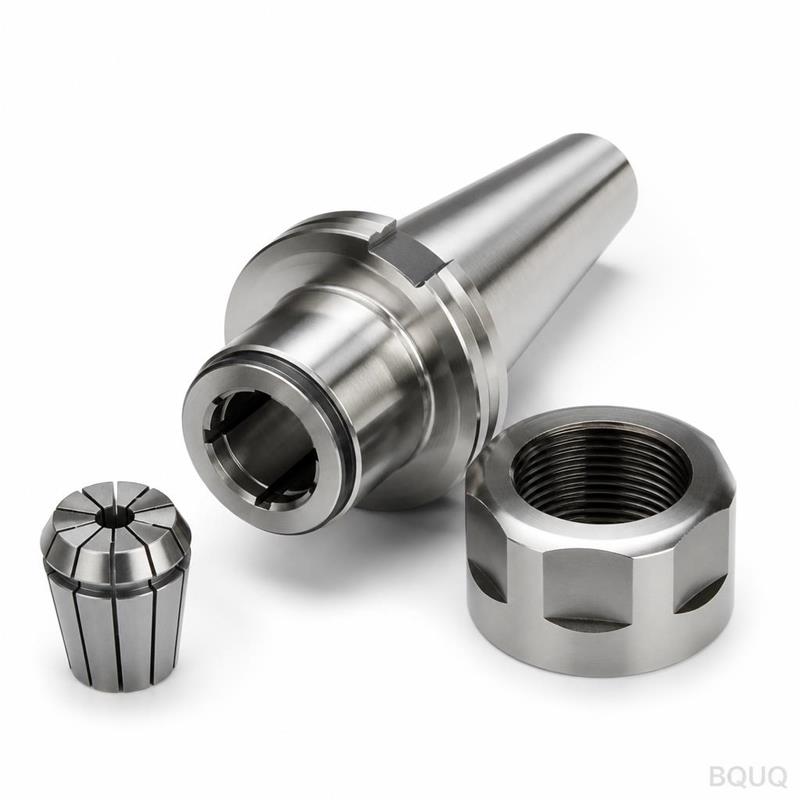
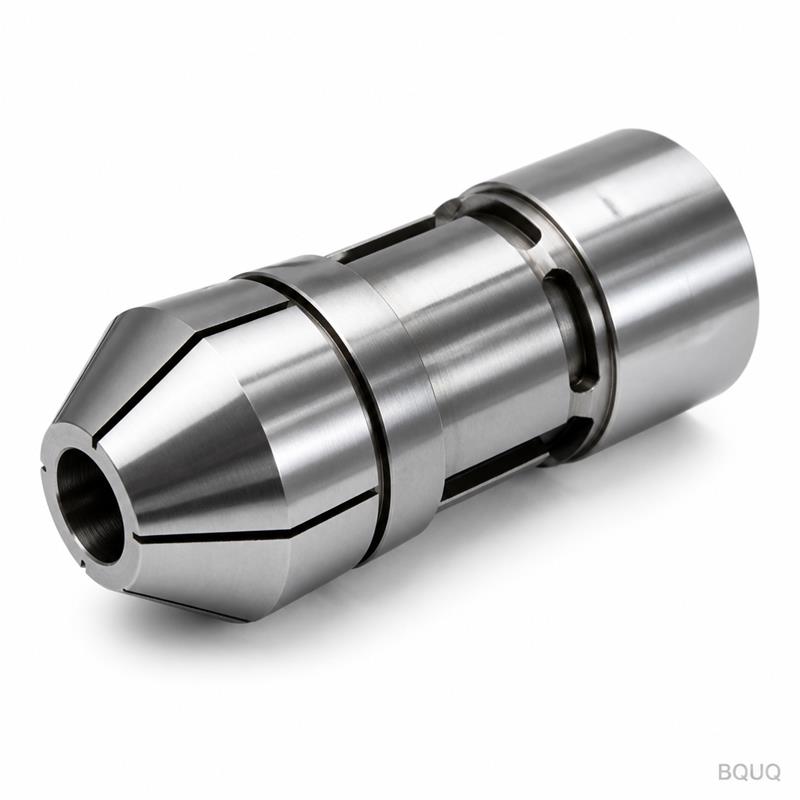
The core difference lies in the shank geometry. BT and CAT holders use a steep 7:24 taper that relies solely on the taper surface for location and clamping, creating a "disconnect" between the spindle face and the holder flange. HSK uses a 1:10 hollow taper where the clamping mechanism pulls the holder into the spindle, causing elastic deformation of the hollow shank. This deformation ensures simultaneous contact on both the taper and the spindle face—known as dual-face contact. At 25,000 RPM, centrifugal force can expand a BT holder by 5 to 10 microns, reducing clamping force; HSK holders actually increase radial clamping force under centrifugal load because the hollow shank expands outward against the spindle bore.
How Does HSK Improve Rigidity and Vibration Damping in High-Speed Applications?
HSK significantly improves static and dynamic rigidity. The dual-face contact creates a closed-loop system with a bending resistance that is 30% to 50% higher than a comparable BT40 holder at the same gauge length. In practical terms, a HSK-A63 holder at 100 mm gauge length exhibits a static stiffness of approximately 250 N/µm compared to 180 N/µm for a BT40. This increased stiffness moves the system’s natural frequency higher, away from common chatter frequencies (typically 500 to 2,000 Hz) encountered during aluminum and titanium milling. The hollow taper also acts as an acoustic damper, reducing vibration amplitudes by up to 20% in finish-machining passes, which directly correlates to better Ra surface finish values (0.2 µm achievable with HSK versus 0.4 µm with BT under identical parameters).
Which HSK Types Are Best Suited for Different Machining Operations?
The HSK family includes forms A, B, C, D, E, and F, each optimized for specific torque and speed ranges. For general milling and drilling, HSK-A (auto tool change) is the most common, balancing torque transmission (up to 400 Nm for HSK-A63) and high-speed capability. HSK-E is specifically designed for ultra-high-speed machining (above 30,000 RPM) with a thinner wall for lower mass and better balance; however, it has reduced torque capacity, making it unsuitable for heavy roughing. HSK-T is reserved for turning applications on mill-turn centers. For machining centers above 30 kW spindle power, HSK-B (flange-based drive) provides higher bending moment resistance. The selection matrix depends on whether the operation is roughing (high torque, HSK-B or A) or finishing (high speed, HSK-E or F).
How Much Higher Is the Cost of HSK Tooling Compared to BT/CAT?
The initial purchase price of HSK tool holders is generally 20% to 40% higher than equivalent BT or CAT holders. A premium HSK-A63 hydraulic chuck costs approximately $350 to $450, while a comparable BT40 unit is $250 to $320. However, the total cost of ownership often favors HSK in high-speed environments. The improved rigidity allows for a 15% to 25% increase in feed rates and depth of cut, directly reducing cycle time. Additionally, tool life for carbide end mills increases by an average of 30% due to reduced runout (HSK offers 3 µm or better TIR at 4x diameter versus 5-8 µm for BT). For a factory running three shifts, the ROI on switching to HSK is typically realized within 6 to 9 months based on reduced tooling costs and increased throughput.
Why Does HSK Maintain Better Balance and Runout at High RPM?
Balance and runout are critical at high RPM because unbalance forces grow with the square of speed. A BT holder balanced to G2.5 at 20,000 RPM can experience a centrifugal force of 15 N on a 10-gram offset mass; HSK’s symmetrical hollow design and shorter gauge length reduce the moment arm, lowering the effective unbalance. Most HSK holders are manufactured with a concentricity of 3 µm or less between the taper and the tool bore, compared to 5 µm for standard BT. Furthermore, HSK’s face contact provides a solid axial stop, eliminating the Z-axis pull-in variation (typically 5-10 µm for BT) that occurs during high-speed clamping. This stability is why HSK is mandatory in aerospace and mold & die applications requiring 5-axis machining with tool overhangs exceeding 100 mm.
When Should a Factory Switch from BT to HSK Tool Holders?
The switch to HSK should be triggered by specific operational thresholds, not just trend. If your spindle speed exceeds 15,000 RPM, you are machining materials with a hardness above 45 HRC, or you are experiencing chatter and poor finish on thin-wall components, HSK is the correct choice. Additionally, if your current process shows variation in tool life greater than 20% between identical tools, the clamping repeatability of HSK will resolve this. However, for machines running below 8,000 RPM with heavy roughing of steel, a well-maintained BT50 holder is still cost-effective and offers higher torque capacity. A practical rule is: if your current operation uses carbide tools below 6 mm diameter at high RPM, the rigidity of HSK will prevent micro-chipping and premature failure.
What Is the Real-World Data on HSK Performance vs. BT in Production?
The following table presents comparative performance data gathered from controlled machining tests on a 20,000 RPM spindle with 12 kW power, using a 12 mm carbide end mill in 6061-T6 aluminum:
| Parameter | HSK-A63 Holder | BT40 Holder |
| Static Radial Stiffness (N/µm) | 250 | 180 |
| Runout at 4x Diameter (µm) | 3 | 7 |
| Max Recommended RPM (bal. G2.5) | 30,000 | 18,000 |
| Surface Finish Ra (µm) at 15,000 RPM | 0.22 | 0.45 |
| Tool Life (minutes) at 15,000 RPM | 45 | 32 |
| Pull-out Force at 20,000 RPM (N) | 12,000 | 8,500 |
| Cycle Time per Part (seconds) | 48 | 58 |
The data shows a 17% reduction in cycle time and a 29% improvement in tool life, both directly attributable to HSK’s rigidity and reduced runout. The higher pull-out force (12,000 N vs 8,500 N) is critical; it prevents tool retraction during heavy radial cuts, which is the primary cause of dimensional error in high-feed milling.
How Should a Shop Implement HSK Tooling Without Disrupting Production?
Implementation should be phased to manage cost and risk. Begin by converting your critical finishing operations—those with tight tolerances (below ±0.01 mm) or long tool overhangs—to HSK, while leaving roughing operations on existing BT tooling. Purchase a set of HSK shrink-fit chucks (the preferred clamping method for high-speed, providing the best concentricity and balance) for your most common tool diameters. Retrofitting the spindle is not required, as HSK is a spindle taper; however, you must install a new spindle or use an adapter, which is not recommended due to added length. The best approach is to specify HSK-A63 or HSK-E40 on your next machining center purchase, as the spindle cost difference is only 3% to 5% of the machine price, while the performance gain is substantial.
Conclusion
HSK tool holders are not a passing trend; they are an engineering response to the physical limits of steep-taper designs at elevated speeds. The dual-face contact, measurable rigidity gains, superior balance, and documented cycle time reductions make HSK the rational choice for any shop operating above 15,000 RPM or demanding high precision in difficult-to-machine materials. While the upfront tooling cost is higher, the ROI through reduced cycle times and extended tool life is immediate and verifiable. For factories looking to stay competitive in high-speed machining, transitioning to HSK is a strategic investment in process capability.
FAQ
What Is the Maximum RPM for HSK Tool Holders?
HSK-E and HSK-F forms are rated for speeds up to 60,000 RPM with proper balancing, while HSK-A forms typically cap at 40,000 RPM. The limiting factor is the balance quality of the assembled tool and the design of the clamping unit, not the holder itself. Always specify balance grade G2.5 or better for speeds above 20,000 RPM.
Can HSK Tool Holders Be Used on a BT Spindle?
No, HSK and BT have different taper angles (1:10 vs. 7:24) and clamping mechanisms, so they are physically incompatible without changing the spindle. Adapters exist but add length and reduce rigidity, negating HSK’s benefits. You must purchase a machine with an HSK spindle taper or remanufacture the spindle.
How Do I Choose Between HSK-A and HSK-E for Aluminum Machining?
For high-speed aluminum machining with spindle speeds above 25,000 RPM, choose HSK-E for its lighter weight and lower centrifugal expansion. For operations requiring high torque or heavy depths of cut, HSK-A63 is preferred due to its higher bending stiffness. A good rule is to use HSK-E for finishing passes and HSK-A for semi-roughing.
What Is the Typical Lead Time for Custom HSK Tool Holders?
Standard HSK holders are stocked by major suppliers with a lead time of 1 to 3 days. Custom holders with special gauge lengths or coolant channels typically take 3 to 4 weeks. For emergency situations, a standard HSK-A63 shrink chuck can be modified in 48 hours by a reputable tooling service center.
Does Tool Balance Quality Affect Surface Finish at 20,000 RPM?
Yes, balance is directly proportional to vibration. An unbalanced holder at 20,000 RPM can cause chatter marks with a periodicity matching the spindle speed, degrading Ra from 0.2 µm to above 1.0 µm. Always use holders balanced to G2.5 or better and re-balance after any tool change or adjustment.
How Does HSK Handle Through-Spindle Coolant Pressure?
HSK’s hollow bore allows for high-volume coolant delivery up to 80 bar (1,160 psi) without leakage, thanks to the face seal created by dual-face contact. BT holders often leak at pressures above 30 bar. This makes HSK ideal for deep-hole drilling and high-pressure coolant applications in titanium and Inconel.
Is HSK Worth the Investment for a Small Job Shop?
If your job shop operates spindles below 12,000 RPM and primarily does steel fabrication, HSK may not be cost-effective. However, if you produce small precision parts in aluminum or plastics on modern machines, the reduced runout and better finish will reduce manual deburring and scrap rates, justifying the 20% higher tooling cost.
For a detailed assessment of whether HSK tooling fits your specific machining processes, contact our engineering team. We offer a 12-hour quoting service for custom tooling solutions, including HSK holders and assemblies. Email us at sc@bquq.com, reach us on WhatsApp at +86 13713157787, or visit www.bquq.com for more information on precision machining services.