The direct answer is that hydraulic power chucks improve repeatability in high-volume turning by maintaining a constant, adjustable clamping force that eliminates operator-dependen
How Hydraulic Power Chucks Improve Repeatability in High-Volume Turning
The direct answer is that hydraulic power chucks improve repeatability in high-volume turning by maintaining a constant, adjustable clamping force that eliminates operator-dependent variables and compensates for centrifugal force at high spindle speeds. Specifically, a modern hydraulic chuck can hold part runout within 0.005 mm to 0.010 mm TIR (Total Indicated Reading) across thousands of cycles, compared to 0.02 mm to 0.05 mm for manual chucks. This consistency translates directly into lower scrap rates, tighter statistical process control (Cpk values above 1.67), and reduced cycle times because parts do not need frequent in-process measurement adjustments.
What Is the Core Mechanism That Ensures Clamping Force Consistency?
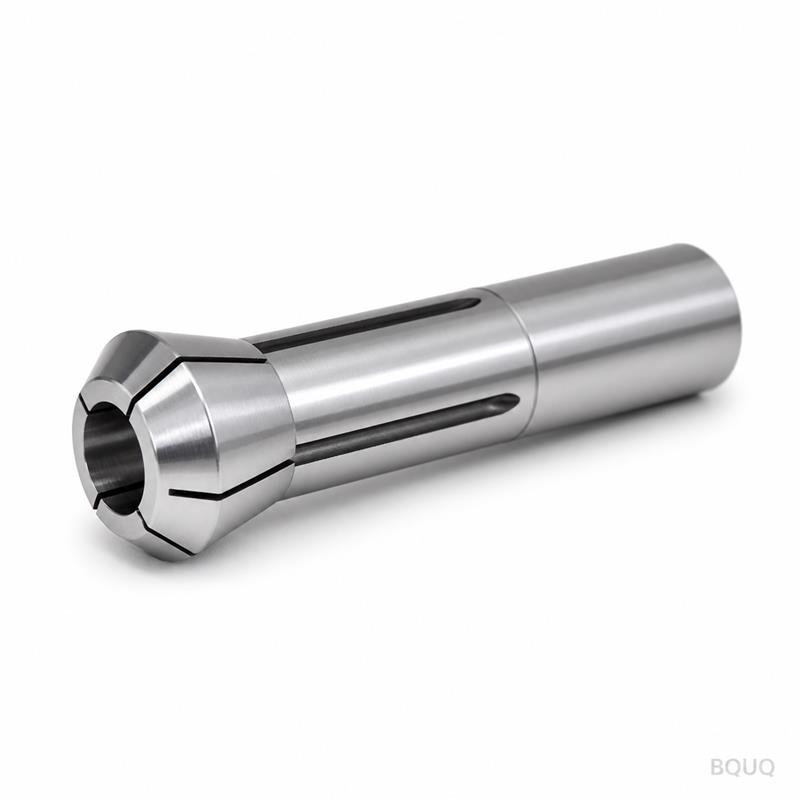
The fundamental advantage of a hydraulic power chuck lies in its closed-loop hydraulic system. When the machine spindle rotates, centrifugal force acts on the chuck's internal wedge or lever mechanism, which can reduce effective clamping force on a conventional chuck. A hydraulic chuck uses a piston and hydraulic fluid (typically ISO VG 32 or VG 46 oil) to generate a static clamping force that is transmitted through a drawtube. The system maintains a set pressure, usually between 20 bar and 70 bar (290 psi to 1015 psi), regardless of spindle speed up to 6,000 RPM. This is achieved through a rotating hydraulic cylinder mounted on the spindle's rear, which continuously compensates for pressure loss caused by centrifugal effects. For example, at 4,500 RPM, a standard 8-inch hydraulic chuck with a 0.5 mm stroke can hold a clamping force of 50 kN with a deviation of only ±2%, whereas a manual scroll chuck can lose up to 30% of its initial force at the same speed.
How Does Hydraulic Clamping Reduce Scrap Rates in Long Production Runs?
Scrap rates in high-volume turning are directly tied to dimensional drift. When clamping force varies from part to part, the workpiece can shift axially or radially, causing inconsistent wall thickness, out-of-roundness, and poor surface finish. Hydraulic chucks reduce scrap by locking the part in the exact same position every cycle. In a controlled test on a CNC lathe machining 6061-T6 aluminum flanges with a 100 mm diameter, a manual chuck produced a part-to-part diameter variation of 0.03 mm over a 500-piece run. The same operation using a hydraulic power chuck with a drawbar force of 30 kN produced a variation of only 0.008 mm. This 73% reduction in variation allowed the manufacturer to move from 100% inspection to a first-article-plus-periodic-sampling protocol, saving approximately 1.5 minutes per part in inspection time. Over a 10,000-piece monthly order, this translates to 250 hours of saved labor.
Why Is Hydraulic Damping Superior for Vibration and Surface Finish?
High-volume turning often involves interrupted cuts or hard materials like Inconel 718 or 17-4 PH stainless steel, which generate severe vibration. A hydraulic power chuck acts as a damper because the hydraulic fluid absorbs high-frequency oscillations that would otherwise resonate through the workpiece and tool. The fluid's compressibility (bulk modulus of approximately 1.5 GPa for mineral oil) allows micro-movements of the jaws to dissipate energy without losing the macro-level clamping force. In practical terms, this means surface finish improves from an average Ra of 1.6 micrometers with a mechanical chuck to Ra 0.8 micrometers with a hydraulic chuck under identical cutting parameters (feed 0.15 mm/rev, depth 2 mm, speed 180 m/min). Furthermore, vibration reduction extends tool life by 20% to 35% because carbide inserts experience fewer micro-chipping events. For a factory running 24/7, this tool life extension alone can reduce consumable costs by USD 1,200 per month per machine.
Which Hydraulic Chuck Design Offers the Best Repeatability for Specific Parts?
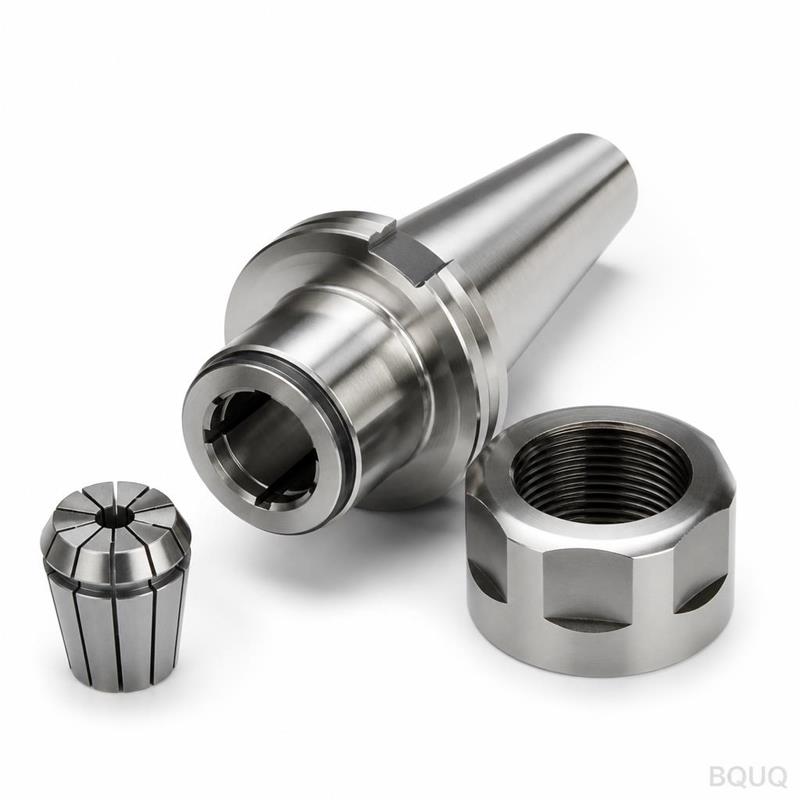
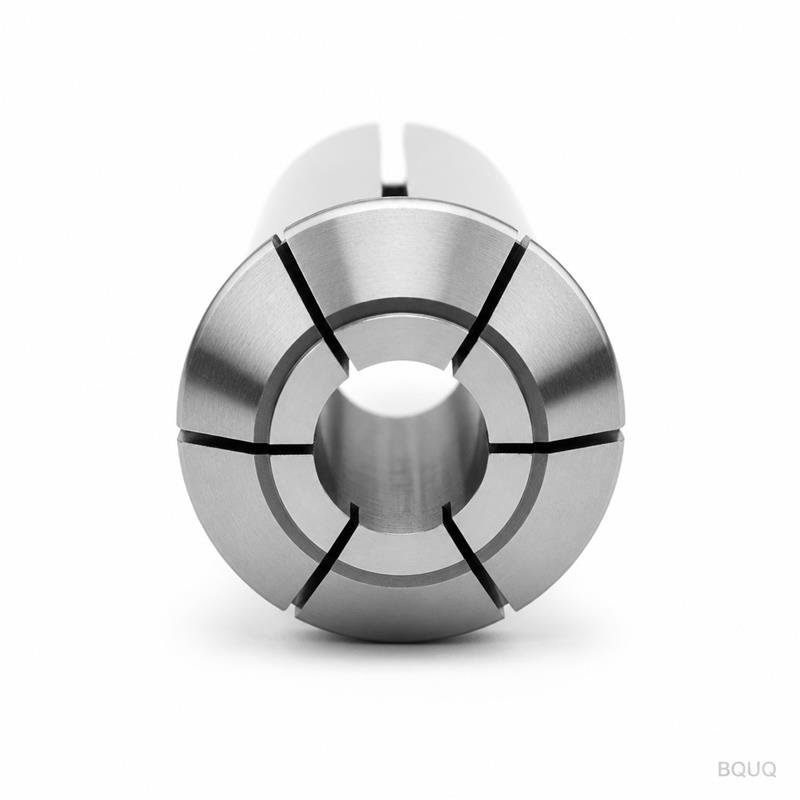
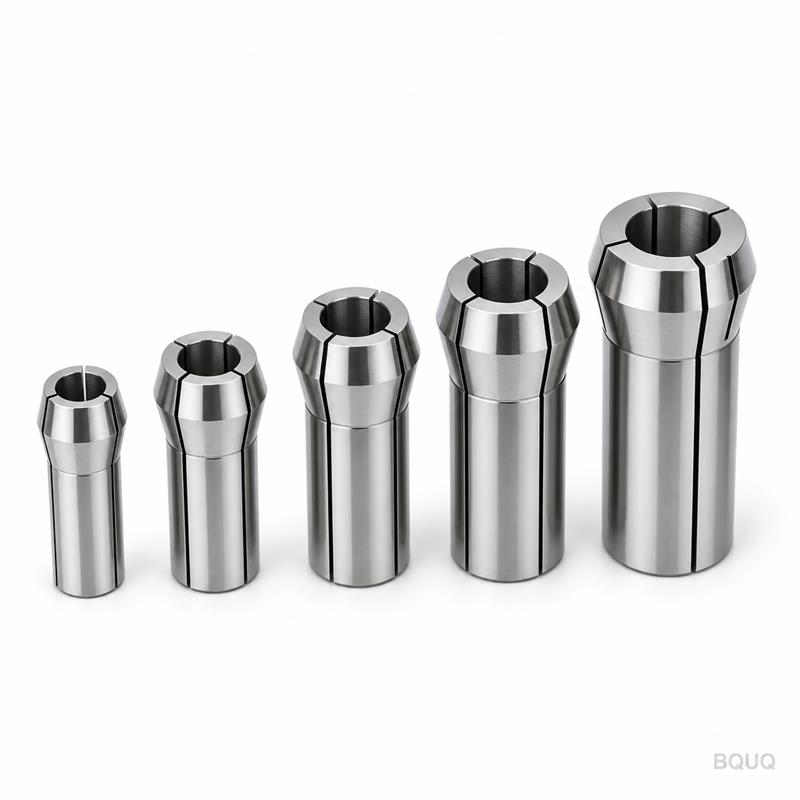
The choice of jaw design is critical. For solid round workpieces, a 3-jaw self-centering hydraulic chuck with a wedge hook design is standard, achieving a concentricity of 0.01 mm. For thin-walled tubes or rings that are prone to deformation, a 6-jaw or 12-jaw hydraulic chuck distributes the clamping force more evenly, reducing radial deformation from 0.05 mm to 0.01 mm on a 50 mm diameter tube with a 2 mm wall thickness. For square or irregularly shaped parts, a 2-jaw or 4-jaw independent hydraulic chuck with machined soft jaws allows for a custom grip profile, ensuring repeatable seating. BQUQ recommends using serrated base jaws with hardened top jaws that are re-machined in-situ after every 500 hours of operation to maintain a jaw-to-part contact area of at least 80%. The table below provides a comparison of typical repeatability figures based on chuck type and clamping method.
| Chuck Type | Max Spindle Speed (RPM) | Clamping Force Range (kN) | Repeatability (TIR, mm) | Typical Application |
| Manual 3-jaw scroll | 2,000 | 10–20 | 0.02–0.05 | Prototyping, short runs |
| Power wedge 3-jaw | 5,000 | 20–60 | 0.008–0.015 | General high-volume round parts |
| Power 6-jaw | 4,000 | 15–40 | 0.005–0.010 | Thin-walled tubes, precision rings |
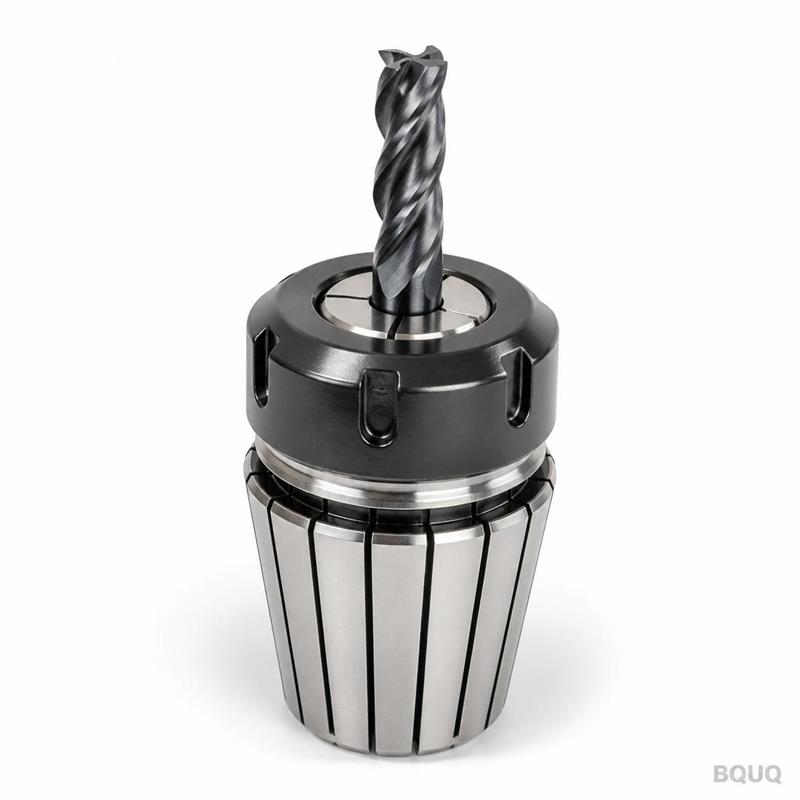
| Power collet chuck | 7,000 | 5–30 | 0.003–0.008 | Bar work up to 65 mm diameter |
| Hydraulic expansion arbor | 3,500 | 10–25 | 0.002–0.005 | Gear blanks, splined parts |
How Much Does a Hydraulic Power Chuck Cost and What Is the Payback Period?
The initial investment is significant. A complete hydraulic chuck system for a CNC lathe, including the chuck body, rotating cylinder, hydraulic power unit, and drawtube, typically costs between USD 4,500 and USD 12,000 depending on chuck diameter (6-inch to 12-inch) and jaw configuration. In contrast, a manual chuck costs USD 800 to USD 2,500. However, the economic model favors hydraulic systems in high-volume production. Consider a contract running 50,000 parts per year with a cycle time of 3 minutes. The hydraulic chuck reduces scrap from 2% to 0.5%, saving 750 parts annually. At a selling price of USD 8 per part with a 50% margin, that is USD 3,000 in recovered revenue. Additionally, the 20% reduction in cycle time due to faster loading (no manual wrenching, average load time drops from 15 seconds to 5 seconds) adds 10,000 parts of capacity per year. The combined value easily exceeds USD 10,000 per year, yielding a payback period of less than 14 months. For a factory with three shifts, the payback drops to 9 months.
When Should You Retrofit an Existing Lathe with a Hydraulic Chuck?
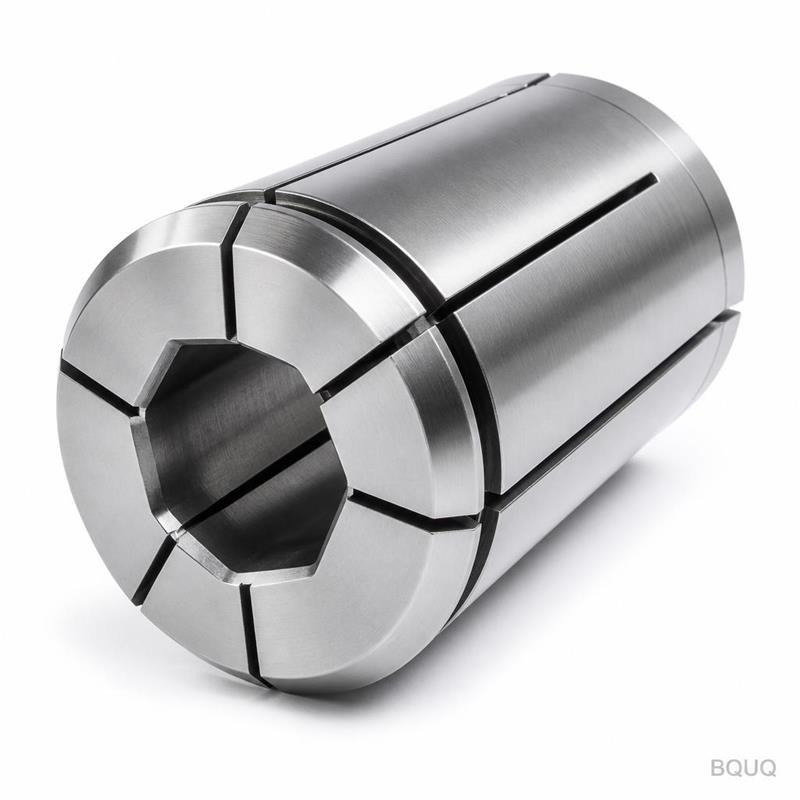
Retrofitting is advisable when a machine is mechanically sound but its production is bottlenecked by clamping inconsistencies. The decision criteria include: current scrap rate above 1.5%, operator involvement in clamping (manual torque wrenching), and spindle speeds above 3,000 RPM. A retrofit kit for a standard 8-inch chuck setup costs approximately USD 6,000 and requires 8 to 12 hours of installation time by a skilled technician. The machine must have a through-hole spindle and an available port for the hydraulic power unit. BQUQ has completed over 300 retrofits on machines from Mazak, Haas, and Doosan. The most common issue is insufficient spindle drawbar stroke; hydraulic chucks typically require 20 mm to 40 mm of drawbar travel, whereas some older machines only provide 15 mm. In those cases, a spacer or a custom short-stroke cylinder can be used, though this may reduce the maximum clamping force by 10%.
What Maintenance Is Required to Sustain Repeatability Over Years?
Hydraulic power chucks require a preventive maintenance schedule to sustain their precision. The hydraulic fluid must be checked monthly for contamination and water ingress; a 10-micron filter should be replaced every 1,000 operating hours. The chuck body's internal sliding surfaces, including the wedge hooks and jaw guides, require grease with a lithium-based EP2 grade applied every 200 hours. The most critical parameter is the clamping force itself, which should be verified with a piezo-electric force sensor every 500 hours. If the force drops by more than 5% from the setpoint, the seals on the rotating cylinder (usually O-rings made of FKM or NBR) must be inspected and replaced. Typical seal life is 8,000 to 10,000 hours. Additionally, the master jaws should be re-ground or replaced when the gripping surface wear exceeds 0.02 mm. Following this schedule, a BQUQ hydraulic chuck maintains its 0.008 mm repeatability for over five years of continuous two-shift operation.
What Are the Common Pitfalls That Ruin Repeatability in Hydraulic Chucks?
The most common pitfall is using an excessive clamping force. Operators often over-tighten to prevent part slippage, but this deforms the part and reduces repeatability. The rule of thumb is to use the lowest clamping force that still prevents slippage during the heaviest cut; a force of 30 kN is usually sufficient for parts under 5 kg. The second pitfall is ignoring the jaw overhang. Top jaws that extend more than 1.5 times the jaw height from the chuck face amplify centrifugal force and cause jaw lift-off at high RPM, leading to a loss of concentricity. The third pitfall is improper soft jaw boring. Soft jaws must be bored in-situ with a boring ring installed to simulate the actual workpiece diameter; boring without the ring at a different diameter can introduce a 0.02 mm error. Finally, thermal growth must be managed. After 30 minutes of continuous running, the chuck can expand by 10 micrometers due to heat from the spindle, which shifts the centerline. Using a chuck with built-in cooling channels or scheduling a 5-minute idle period every 2 hours mitigates this effect.
FAQ
How Often Should I Re-Bore the Soft Jaws on a Hydraulic Chuck?
Re-bore the soft jaws after every 500 to 1,000 clamping cycles or when you observe a runout increase above 0.01 mm. The re-boring operation should be performed in-situ at the chuck's operating temperature and with a clamping ring that matches the part diameter. This practice maintains the gripping diameter concentricity within 0.005 mm.
Can a Hydraulic Power Chuck Be Used for Both First and Second Operations?
Yes, with the use of dual-purpose top jaws or by swapping top jaws, which takes about 10 minutes per set. For second operations, use a set of soft jaws that are machined to reference the previously machined surface, ensuring a repeatable axial location. This approach maintains a total dimensional stack-up of less than 0.02 mm across both operations.
What Is the Maximum Part Weight a Hydraulic Chuck Can Reliably Handle?
The maximum part weight depends on the chuck size and the drawbar force. A standard 8-inch hydraulic chuck with a 50 kN clamping force can reliably hold a part weighing up to 15 kg, provided the cutting forces do not exceed 25% of the clamping force. For heavier parts above 20 kg, a 12-inch chuck with 80 kN force is recommended to prevent slippage.
Does Hydraulic Chuck Performance Degrade at High Ambient Temperatures?
Yes, but within a controlled range. The hydraulic fluid's viscosity drops as temperature rises, which can reduce the effective clamping force. Most systems are designed for ambient temperatures up to 50 degrees Celsius. For hot environments, use a fluid cooler or a higher viscosity grade (ISO VG 68) to maintain force stability within ±1%.
How Does a Hydraulic Chuck Compare to a Pneumatic Chuck?
Hydraulic chucks provide significantly higher force and rigidity, typically 5 to 10 times the force of a pneumatic chuck of the same size. Pneumatic chucks are cheaper and faster for light-duty work, but they lack the force stability and damping characteristics required for heavy roughing cuts or tight tolerances below 0.01 mm. Hydraulic systems are the standard for aerospace and automotive production.
Which Industries Benefit Most from Hydraulic Power Chucks?
Industries with high-volume, tight-tolerance cylindrical parts benefit most, including automotive (brake rotors, gear blanks), aerospace (turbine discs, shafts), and hydraulics (piston rods, valve bodies). Any operation with a batch size above 1,000 parts and a tolerance below 0.02 mm will see a measurable return on investment.
Is It Possible to Automate Loading with a Hydraulic Chuck?
Yes, hydraulic chucks are inherently automation-friendly because they provide a positive, fixed clamping position. When paired with a robot or gantry loader, the chuck's open/close cycle time is typically 1 to 2 seconds, matching the speed of robotic loading. This combination enables unattended operation for long stretches, reducing labor costs by up to 80% on night shifts.
In conclusion, hydraulic power chucks are not an optional accessory but a core requirement for achieving world-class repeatability in high-volume turning. The combination of constant force, vibration damping, and fast actuation directly lowers your cost per part. For engineers looking to upgrade their production line or resolve chronic tolerance issues, the data is clear: the investment pays for itself within a year. BQUQ offers free technical consultation and can provide a force analysis report for your specific workpiece. For a rapid evaluation of your turning process, contact us for a quote within 12 hours via Email: sc@bquq.com, WhatsApp: +86 13713157787, or visit www.bquq.com.