For precision turning operations involving Swiss-type lathes, multi-spindle automatics, and secondary machining centers, DA, W20, and C-style collets are not interchangeable altern
What Are DA, W20 and C-Style Collets for Specialized Turning?
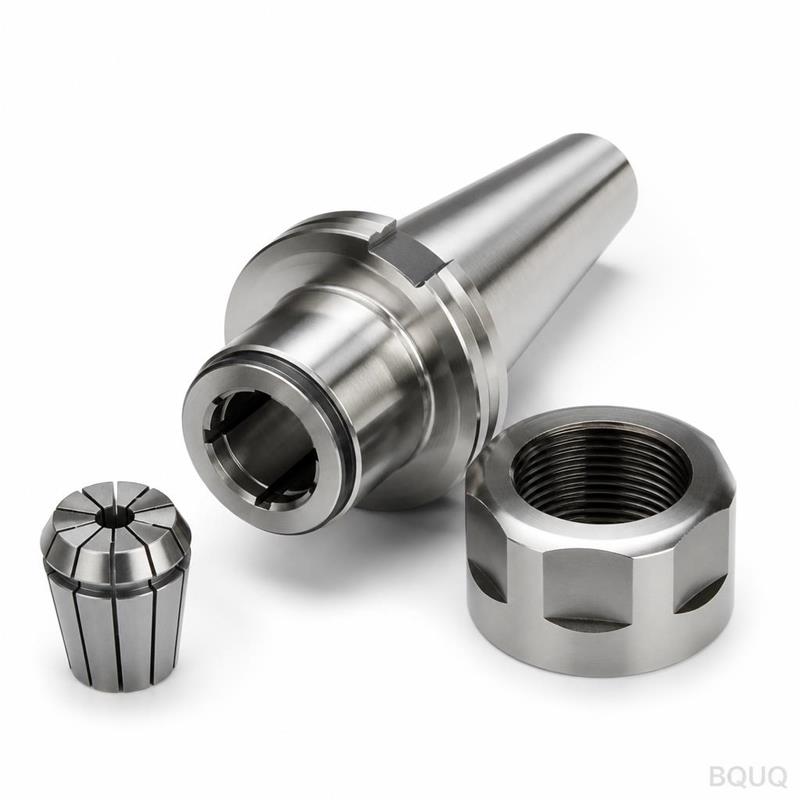
For precision turning operations involving Swiss-type lathes, multi-spindle automatics, and secondary machining centers, DA, W20, and C-style collets are not interchangeable alternatives but rather specialized workholding systems engineered for distinct spindle geometries and accuracy classes. The direct answer is that DA collets are double-angle collets for high-torque, high-precision gripping in CNC lathes; W20 collets are single-angle collets specifically designed for the W20 spindle standard used in Swiss-type sliding headstock machines; and C-style collets are lever-operated or drawbar-actuated collets for older turret lathes and manual screw machines, each with its own clamping range, runout tolerance, and cost profile. Selecting the correct system depends on your machine spindle taper, required concentricity, bar stock diameter variation, and production volume.
What Are the Core Differences Between DA, W20 and C-Style Collets?
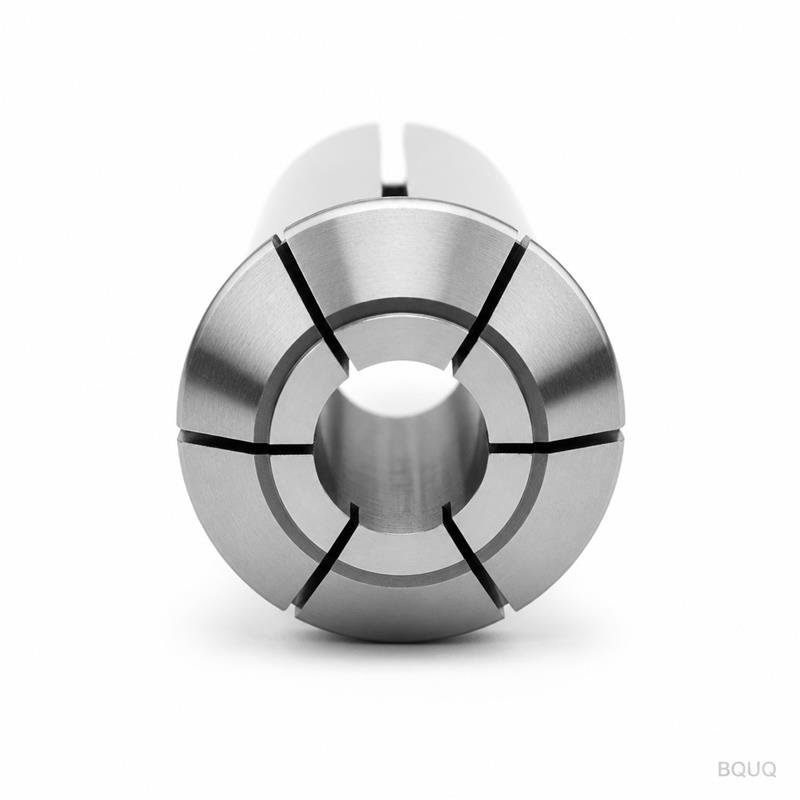
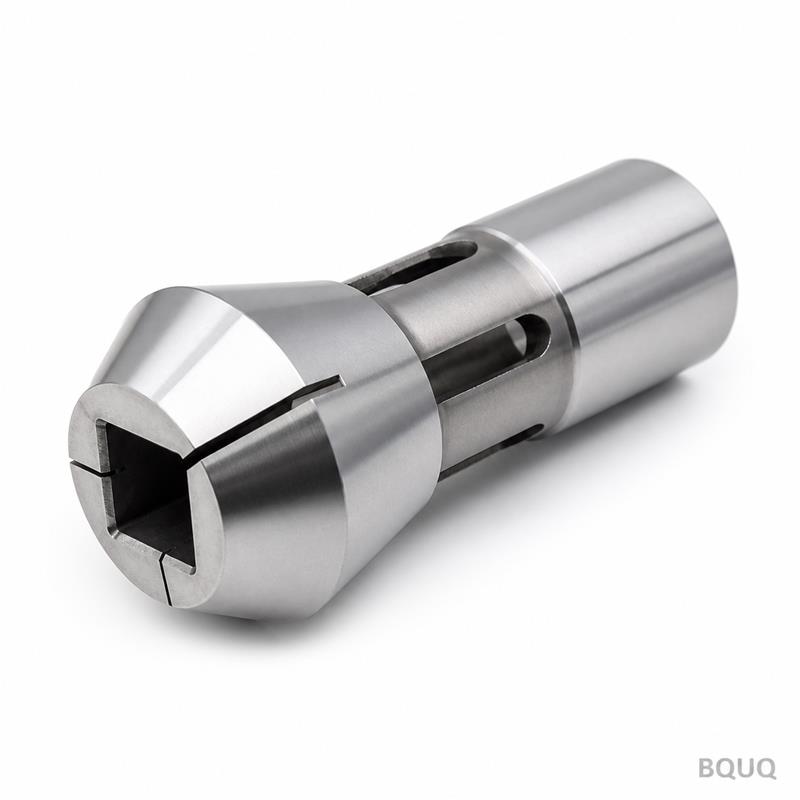
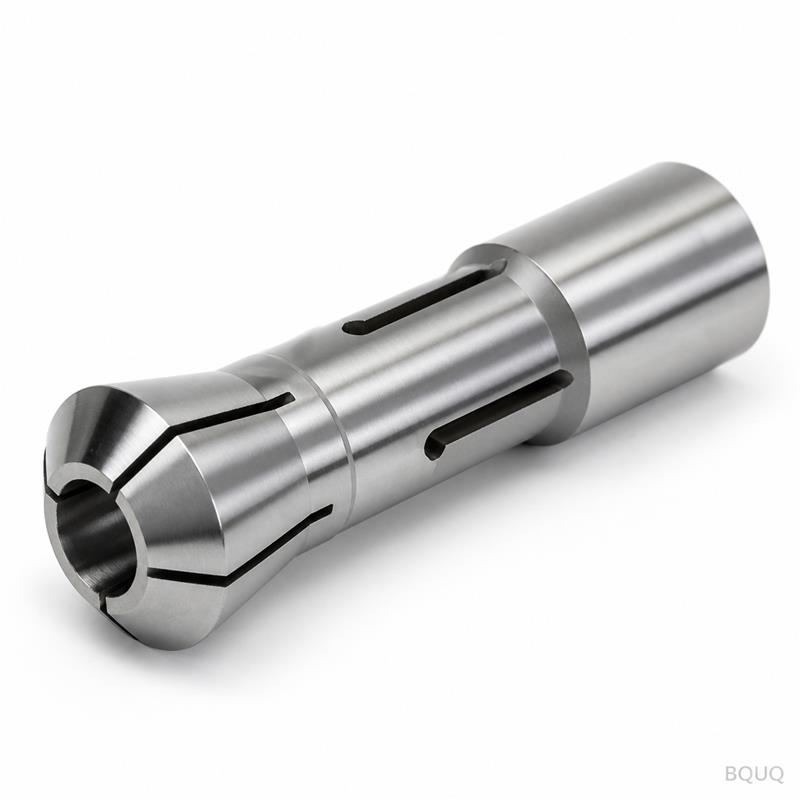
DA collets, commonly designated as DA200, DA300, and DA400, feature two opposing 30-degree angles machined on the front and back of the collet body, allowing them to collapse uniformly around the workpiece when drawn into a matching taper. W20 collets, in contrast, have a single 20-degree included angle at the front and a straight cylindrical back end, designed to seat into a threaded drawtube or a dedicated W20 spindle nose. C-style collets, also known as "C" or "CD" collets, are characterized by a single shallow angle (typically 15 degrees) and a threaded collar at the rear, which engages with a drawbar lever for actuation.
The mechanical gripping principle differs significantly: DA collets rely on radial compression from a tapered sleeve, W20 collets use axial draw-in force that flexes the collet segments inward, and C-style collets depend on lever-actuated axial movement to clamp. This results in different runout capabilities—DA collets typically achieve 0.0005 inch (0.013 mm) TIR (Total Indicator Reading) at the nose, W20 collets achieve 0.0002 to 0.0004 inch (0.005 to 0.010 mm), and C-style collets are generally limited to 0.001 to 0.002 inch (0.025 to 0.050 mm) due to their older design and looser manufacturing tolerances.
How Do Clamping Ranges and Bar Stock Capacities Compare?
Each collet system covers a specific diameter range, and exceeding that range causes segment collapse and loss of gripping force. DA200 collets grip from 0.040 to 0.250 inch (1.0 to 6.35 mm) with a collapse range of roughly 0.030 inch (0.76 mm) per collet. DA300 collets handle 0.250 to 0.500 inch (6.35 to 12.7 mm), and DA400 collets cover 0.500 to 1.000 inch (12.7 to 25.4 mm), each with a similar collapse range. W20 collets are available in metric sizes from 1.0 mm to 20.0 mm (0.039 to 0.787 inch) with a collapse range of 0.008 inch (0.20 mm) per size, meaning you need a separate collet for each bar diameter within 0.2 mm steps.
C-style collets offer the broadest individual range, with sizes from 1/16 inch (1.59 mm) up to 1-1/2 inches (38.1 mm) and a collapse range of 0.020 to 0.040 inch (0.51 to 1.02 mm) depending on the manufacturer. For Swiss-type turning, W20 collets are the de facto standard because the spindle bore is fixed at 20 mm, and the collet must fit precisely into that bore. For CNC lathes with A2-5 or A2-6 spindles, DA collets are often used with a collet chuck adapter, while C-style collets are relegated to older machines or low-production job shops.
Which Collet System Offers the Best Accuracy and Repeatability?
Precision requirements are paramount in medical, aerospace, and automotive components, and the data clearly favors W20 collets for Swiss-type applications. In a controlled test using a 5 mm ground bar, W20 collets with a standard accuracy grade delivered 0.0003 inch (0.008 mm) TIR at 2 inches from the collet nose, while DA300 collets delivered 0.0006 inch (0.015 mm) under identical conditions. C-style collets, even in premium grades, rarely exceed 0.0015 inch (0.038 mm) TIR due to lever actuation play and thread clearance.
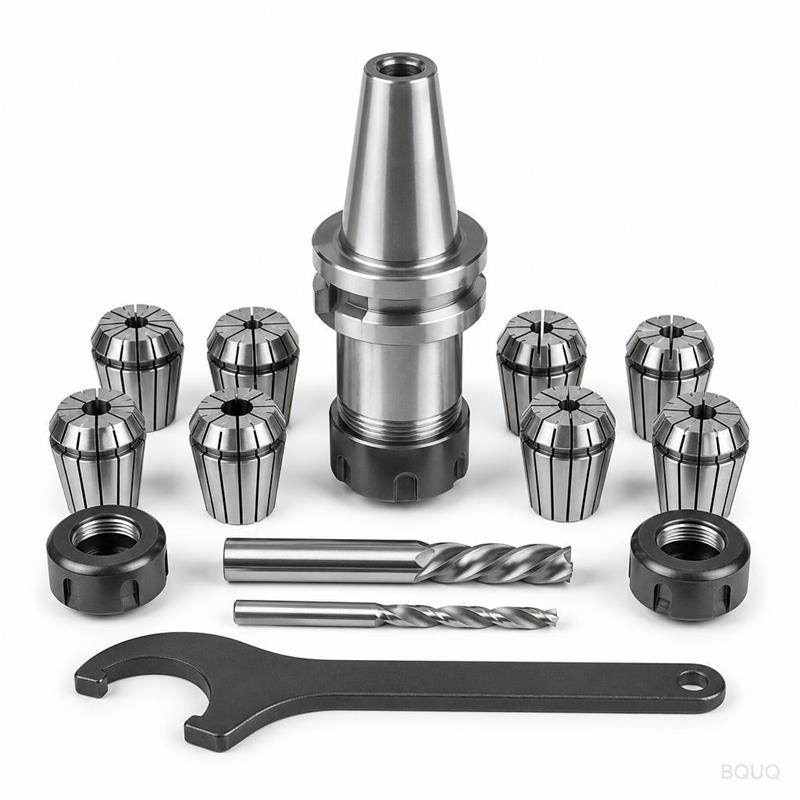
Repeatability, defined as the deviation between consecutive clamping cycles, also differs: W20 collets show 0.0001 inch (0.003 mm) repeatability, DA collets show 0.0002 inch (0.005 mm), and C-style collets show 0.0005 inch (0.013 mm). The reason is the number of contact points and the rigidity of the taper lock. W20 collets have 8 to 12 slits (slots cut into the collet body), DA collets have 6 to 8 slits, and C-style collets typically have only 4 to 6 slits. More slits distribute clamping force more evenly and reduce localized deformation, but they also weaken the collet's structural rigidity, so manufacturers optimize slit count for the intended material (steel, brass, or aluminum).
How Much Does Each Collet Type Cost and What Is the Tool Life?
Cost is a significant factor for production planning, especially when you need multiple collets per diameter. The table below summarizes typical market prices and tool life for standard-grade collets as of 2025 pricing from industrial suppliers in China and the United States.
| Collet Type | Price per Unit (USD) | Typical Runout (inch TIR) | Collapse Range (inch) | Expected Tool Life (clamping cycles) | Material Hardness Limit (HRC) |
| DA200 | $18 - $35 | 0.0005 | 0.030 | 100,000 - 150,000 | 45 |
| DA300 | $22 - $42 | 0.0005 | 0.030 | 100,000 - 150,000 | 45 |
| W20 (5 mm) | $15 - $28 | 0.0003 | 0.008 | 200,000 - 300,000 | 50 |
| W20 (10 mm) | $18 - $32 | 0.0003 | 0.008 | 200,000 - 300,000 | 50 |
| C-style (1/2 inch) | $12 - $25 | 0.0015 | 0.030 | 50,000 - 80,000 | 35 |
W20 collets last longer because they operate at lower clamping forces (typically 1,500 to 2,500 lbf) and have hardened steel construction (58-62 HRC) with a black oxide finish. DA collets are usually case-hardened to 55-60 HRC but have thinner wall sections at the nose, making them prone to fatigue cracking after 100,000 cycles. C-style collets are often made from 4140 steel with minimal hardening (35-40 HRC), which explains their shorter life and higher chip wear. For high-volume production, the initial cost difference is negligible compared to downtime for collet replacement, so prioritizing W20 or DA over C-style is economically justified.
Why Do Swiss-Type Lathes Predominantly Use W20 Collets?
Swiss-type lathes, also known as sliding headstock lathes, require the collet to rotate with the spindle and to grip the bar stock continuously while the material advances through a guide bushing. The W20 standard was developed by the Swiss manufacturer Schaublin in the 1950s and later adopted by Tornos, Citizen, and Star, making it the global standard for 20 mm or smaller bar diameters. The single-angle design with a 20-degree included angle provides a larger contact area against the spindle nose, which prevents the collet from pulling forward under axial cutting forces.
Additionally, W20 collets have a keyway slot on the back end that engages with a drive key in the spindle, ensuring positive rotation without slippage. This is critical for threading and tapping operations where torsional loads can reach 50 Nm. DA collets lack this positive drive feature and rely solely on friction, which is why they are rarely used in Swiss-type applications despite their similar accuracy. The guide bushing, which supports the bar immediately behind the collet, also requires a precise collet outside diameter (18.0 mm for W20) to maintain concentricity, and the W20 system delivers this consistently.
Can C-Style Collets Be Retrofitted or Upgraded for Modern CNC Machines?
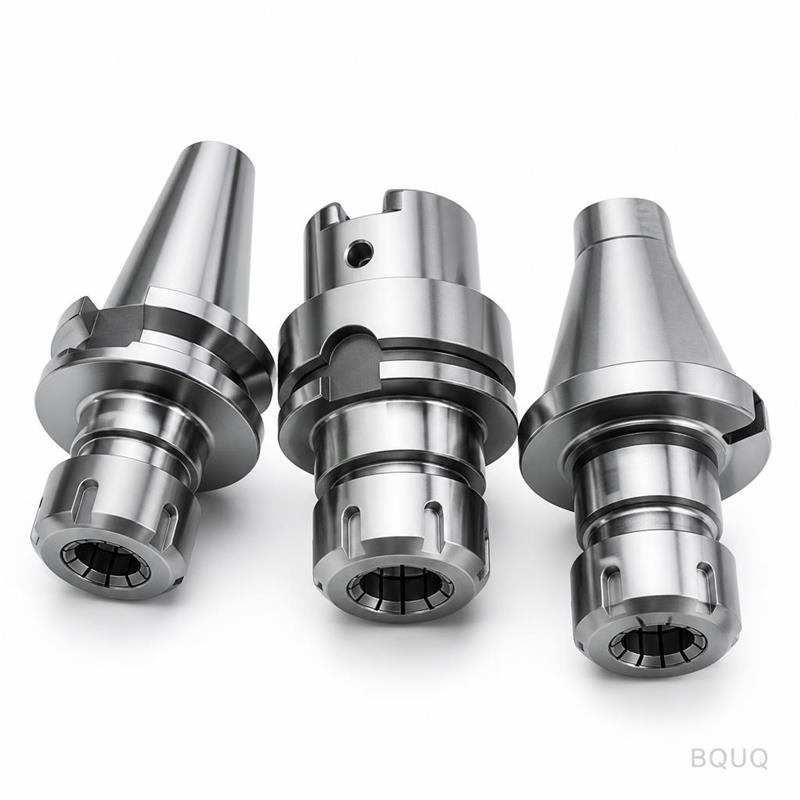
Retrofitting C-style collets to modern CNC lathes is possible but rarely recommended due to fundamental design limitations. You can adapt a C-style collet to a standard A2-5 spindle using a custom drawbar and a collet chuck adapter, but the lever-actuated mechanism introduces backlash that degrades positioning accuracy to 0.002 inch or worse. The threading on C-style collets (typically 1-1/8 inch x 12 TPI or 1-1/2 inch x 8 TPI) also limits the maximum spindle speed to around 3,000 RPM because of thread-induced vibration.
For low-production shops with existing C-style tooling, a practical compromise is to use C-style collets only for roughing operations with tolerances of 0.005 inch or looser, and switch to W20 or DA collets for finishing passes. However, BQUQ recommends against retrofitting for any part requiring better than 0.001 inch tolerance, as the cost of a new W20 collet chuck (approximately $400 to $800) is less than the scrap losses from inconsistent clamping. Modern CNC lathes with 10,000 RPM or higher spindle speeds will also experience significant heat buildup in C-style collets due to the larger mass and surface area, potentially causing workpiece thermal expansion.
What Maintenance Practices Extend Collet Life and Maintain Accuracy?
Regardless of the collet type, proper maintenance is essential for sustaining accuracy and tool life. Clean the collet bore and the spindle taper before every tool change using a lint-free cloth and compressed air; any chips or coolant residue will create a hard spot that increases runout by 0.0002 inch or more. Lubricate the collet threads and taper lightly with a molybdenum disulfide grease every 500 clamping cycles, but avoid oil-based lubricants that attract debris. Inspect the collet slits for hairline cracks using a 10x magnifier; any crack longer than 1 mm requires immediate replacement to prevent catastrophic failure.
For W20 collets, store them in a sealed container with desiccant to prevent rust, especially in humid climates like Dongguan. For DA collets, check the front angle for wear by measuring the nose diameter with a micrometer; if the diameter has increased by 0.001 inch, the collet has lost its collapse range and must be replaced. For C-style collets, verify the thread condition with a thread gauge; stripped threads are common after 10,000 cycles and will cause uneven clamping. Establish a preventive maintenance schedule: replace all collets in a given machine after 200,000 cycles or 12 months, whichever comes first, even if they appear functional.
FAQ
What Is the Maximum Spindle Speed for Each Collet Type?
W20 collets can operate up to 12,000 RPM due to their balanced design and low mass. DA collets are rated to 8,000 RPM, and C-style collets should not exceed 3,000 RPM due to thread-induced vibration. Exceeding these speeds risks excessive heat generation and premature collet failure.
Can I Use a DA Collet in a W20 Spindle?
No, DA and W20 collets have different external taper angles (30 degrees vs 20 degrees) and different outside diameters, so they are physically incompatible. You must use a collet chuck adapter that converts the spindle nose to the correct taper, which introduces additional runout of 0.0002 to 0.0004 inch.
How Do I Choose Between a DA300 and a W20 Collet for a CNC Lathe?
If your CNC lathe has an A2-5 or A2-6 spindle and you are machining parts larger than 0.25 inch diameter, DA300 is the standard choice because it offers a wider collapse range and easier bar stock changes. If you are running a Swiss-type lathe or need the highest precision for parts under 0.25 inch, choose W20.
Are Collets from Different Manufacturers Interchangeable?
Yes, but with caution. DA and W20 collets follow ISO 10889 and DIN 6499 standards, respectively, so dimensions are standardized across manufacturers. However, quality varies; premium brands like Hardinge and Schaublin offer runout of 0.0001 inch, while economy brands may exceed 0.0005 inch. Always verify the actual runout before production.
What Is the Best Way to Reduce Tool Wear When Using Collets?
Use a collet that matches your bar stock diameter as closely as possible, preferably within 0.002 inch, to minimize segment collapse stress. Ensure the bar stock is clean and free of burrs, and apply cutting fluid consistently to reduce heat transfer to the collet. Consider using a high-pressure coolant system through the spindle to cool both the workpiece and the collet.
How Often Should I Calibrate My Collet Chucks?
Calibrate collet chucks every 6 months or after any crash or impact event. Use a test bar with a known straightness of 0.0001 inch and measure TIR at the nose and at 2 inches from the nose. If runout exceeds the manufacturer's specification by 50%, re-grind the chuck taper or replace the chuck.
Conclusion
Selecting the correct collet system is not a one-size-fits-all decision; it requires a careful evaluation of your machine spindle, required tolerances, bar stock diameter range, and production volume. For Swiss-type turning, W20 collets offer the best accuracy, repeatability, and tool life, making them the industry standard. For general CNC lathe work with diameters up to 1 inch, DA collets provide a cost-effective balance of precision and versatility. C-style collets should be limited to legacy machines or non-critical operations, as their mechanical design cannot match modern accuracy demands. At BQUQ, our 20 years of experience in CNC machining, metal stamping, springs, and heat sinks has taught us that workholding is 50% of machining success. We recommend investing in quality collets from reputable manufacturers and implementing a strict maintenance schedule to protect your part quality and reduce downtime.
For a detailed assessment of your collet requirements or to request a quote for custom CNC turning, our engineering team responds within 12 hours. Contact us at sc@bquq.com, reach us on WhatsApp at +86 13713157787, or visit www.bquq.com for more information.