ER collets remain the default workholding system because they offer the best cost-to-performance ratio for holding rotating tools, delivering a runout accuracy of 0.005 to 0.015 mm
Why ER Collets Remain the Default Workholding System in CNC Machining?
ER collets remain the default workholding system because they offer the best cost-to-performance ratio for holding rotating tools, delivering a runout accuracy of 0.005 to 0.015 mm with a clamping range flexibility that hard toolholders cannot match. For 80% of standard milling and drilling operations, an ER collet chuck provides sufficient grip torque and precision at a price point roughly 60% lower than a hydraulic or shrink-fit holder. This combination of versatility, repeatability, and economy has kept the ER system at the center of CNC spindles for over 50 years, despite the availability of more specialized alternatives.
What Is the Historical Reason Behind the ER Collet’s Universal Adoption?
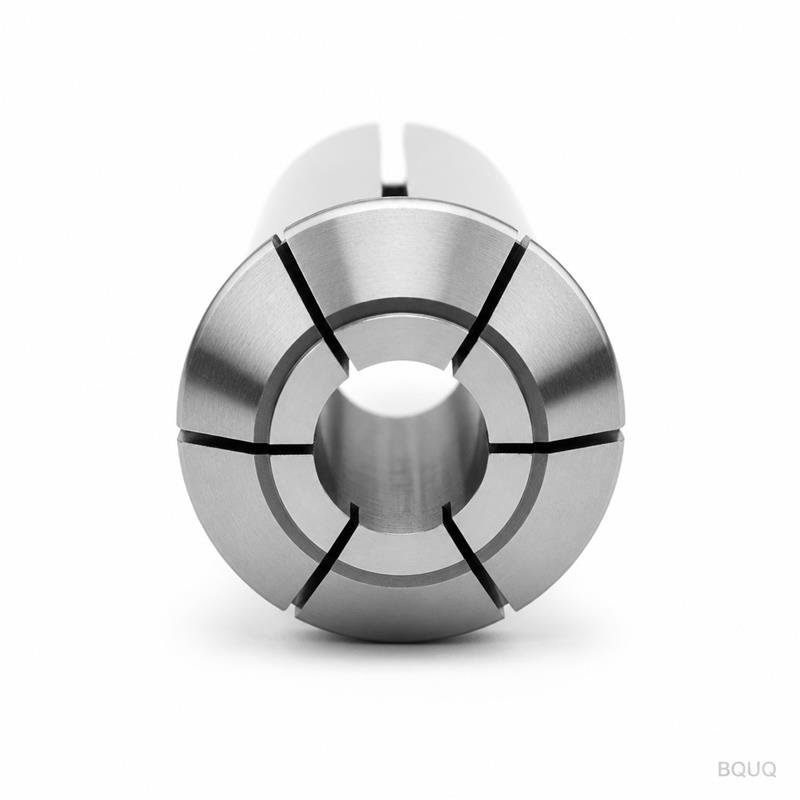
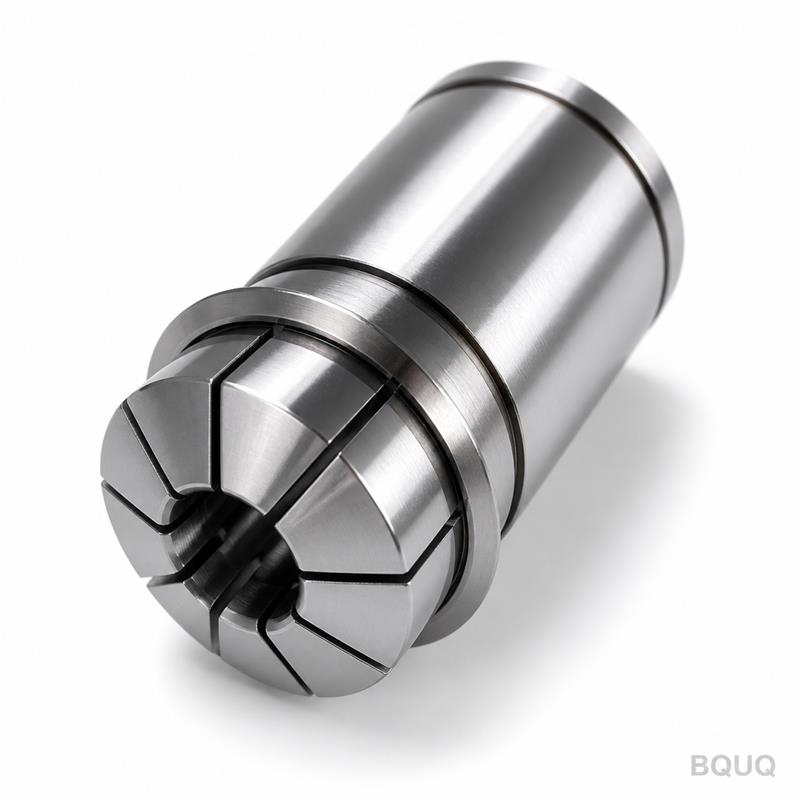
The ER (Elastic Range) system was developed in the 1970s by Rego-Fix as a solution to the limitations of the earlier TG and R8 collet designs. The key innovation was an 8-slit collet body with a 30-degree cone angle at the nose, which allows the collet to collapse evenly around the tool shank when the nut is tightened. This geometric design creates a uniform radial clamping force that accommodates a wide range of shank diameters within a single collet size, a feature that previous systems lacked. By the 1980s, the ER standard was codified under DIN 6499, which specified the exact dimensions for collets from ER-8 up to ER-50, ensuring cross-manufacturer compatibility and locking in the system as the industry baseline.
How Does the ER Collet Clamping Mechanism Achieve Its Tolerances?
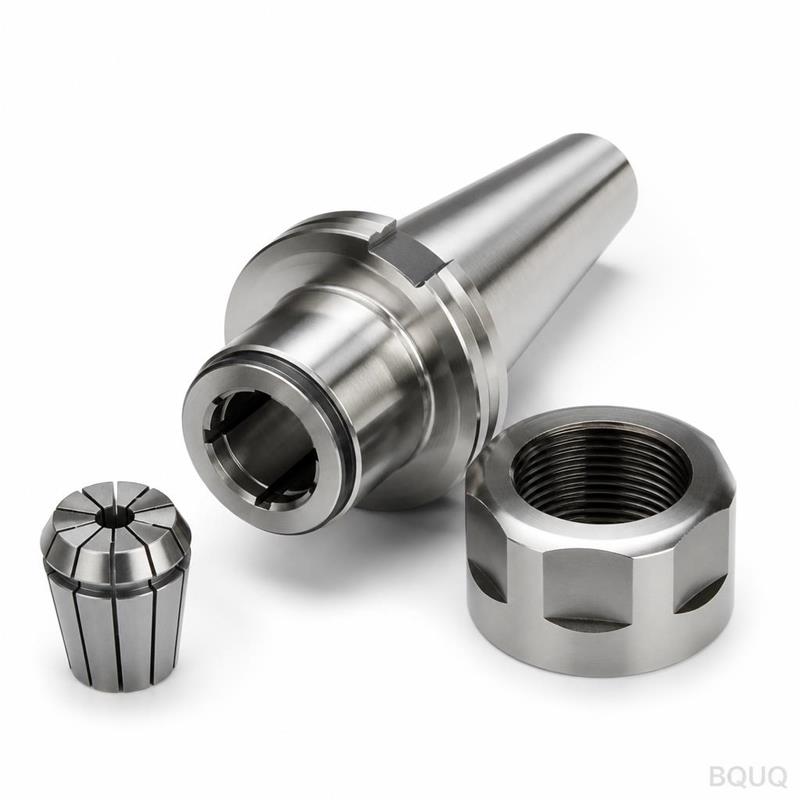
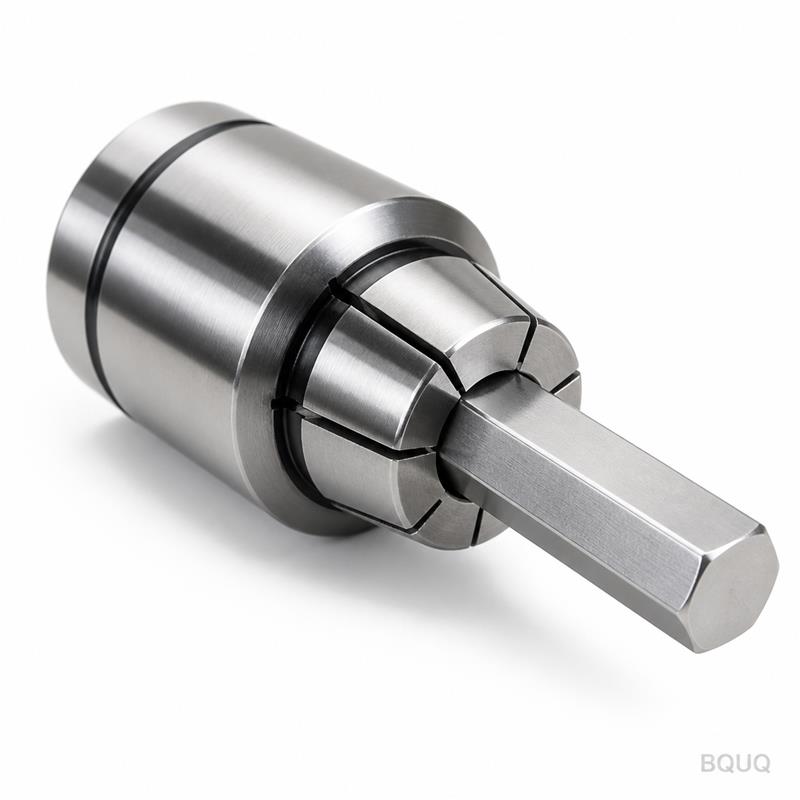
The clamping mechanism relies on a precisely ground 30-degree tapered seat inside the chuck body and a matching taper on the collet’s outer surface. When the nut is torqued to the recommended value, typically 50 to 80 Nm for an ER-32 collet, the collet is forced forward and radially inward, compressing the slits and gripping the tool shank. The runout accuracy of a new, high-quality ER collet is between 0.005 mm and 0.015 mm at the collet nose, measured with a test bar extending 4 times the shank diameter from the nose. This precision is achieved through the collet’s manufacturing process, where the inner bore is ground after the slits are cut, and the slits themselves are offset by 30 degrees to prevent the clamping pressure from creating a polygonal deformation of the tool shank.
Which Factors Determine the Maximum Gripping Force of an ER Collet?
The gripping force is primarily determined by the collet size, the tightening torque, and the contact area between the collet and the tool shank. A standard ER-32 collet with a 20 mm bore, torqued to 80 Nm, generates a radial clamping force of approximately 12 to 15 kN, which translates to a torque transmission capacity of 60 to 80 Nm before tool slippage occurs. The clamping range is 1 mm per collet size (for example, an ER-32 collet for a 20 mm shank will clamp from 19 mm to 20 mm), but the recommended working range is only 0.5 mm to maintain optimal concentricity. When the collet is used at the outer limits of its range, the runout can degrade to 0.025 mm to 0.040 mm, which is why precision machining operations should always use a collet that matches the shank diameter as closely as possible.
Why Does an ER Collet Still Outperform Hydraulic and Shrink-Fit Holders in Many Applications?
For high-torque roughing operations at spindle speeds above 15,000 RPM, shrink-fit and hydraulic holders provide superior stiffness and balance, but they come with significant drawbacks. A hydraulic holder costs between $150 and $400 per unit, while a shrink-fit holder requires an induction heating unit costing $3,000 to $8,000, and both systems are limited to a single tool shank diameter. In contrast, an ER collet chuck body costs $40 to $120, and a single ER-32 nut can hold any shank from 2 mm to 20 mm by simply swapping the collet, which costs $8 to $25 each. For job shops that run multiple part numbers per day, the 30-second tool change time of an ER system versus the 3 to 5 minute heating and cooling cycle of a shrink-fit holder makes the ER system more productive for batches under 100 parts.
What Are the Specific Performance Limits of ER Collets at High RPM?
The primary limitation of the ER system is its balance and gripping force at high rotational speeds. At spindle speeds above 20,000 RPM, the centrifugal force acting on the collet nut can cause the clamping force to decrease by up to 30%, which can lead to tool pullout during heavy cuts. The maximum recommended spindle speed for a standard ER-32 collet chuck is 25,000 RPM with a balanced nut, while the ER-11 and ER-16 sizes, being lighter, can safely run up to 30,000 RPM. For high-speed machining above these thresholds, engineers typically switch to HSK shrink-fit holders, but for 95% of CNC milling machines that operate below 15,000 RPM, the ER collet’s performance is entirely adequate.
How Much Does an ER Collet System Cost Compared to Alternatives?
The total cost of ownership for an ER collet system is dramatically lower than for other workholding methods, especially when considering the range of tool diameters a shop must accommodate. A complete ER-32 starter kit with a chuck body, 20 collets covering 2 mm to 20 mm, and a wrench costs approximately $350 to $500 from a reputable brand like Rego-Fix, Techniks, or Lyndex-Nikken. The equivalent coverage using hydraulic holders would require 20 individual holders at $150 each, totaling $3,000, and would require a hydraulic pump unit costing $1,200. The following table compares the key specifications and costs of the three most common tool holding systems:
| Specification | ER Collet Chuck | Hydraulic Holder | Shrink-Fit Holder |
| Runout Accuracy (mm) | 0.005 to 0.015 | 0.003 to 0.005 | 0.002 to 0.005 |
| Clamping Range per Unit | 1 mm (multiple collets) | Fixed diameter | Fixed diameter |
| Max Recommended RPM | 25,000 (ER-32) | 40,000 | 60,000 |
| Tool Change Time (seconds) | 30 | 15 | 180 to 300 |
| Cost per Holder (USD) | 40 to 120 | 150 to 400 | 80 to 250 |
| Cost for 10 Shank Sizes (USD) | 500 (10 collets) | 1,500 to 4,000 | 800 to 2,500 plus heater |
| Torque Transmission (Nm, 20mm shank) | 60 to 80 | 100 to 120 | 120 to 150 |
| Vibration Damping | Moderate | Good | Excellent |
Why Do ER Collets Remain the First Choice for Prototyping and Small Batch Production?
For prototyping and low-volume production, the dominant factors are changeover speed and inventory cost, both of which favor the ER system. When a CNC programmer changes a tool from a 10 mm end mill to a 6 mm drill, the ER system only requires swapping the collet insert, which takes 20 seconds and does not disturb the chuck body’s position in the spindle. In contrast, a fixed-diameter holder must be removed from the spindle, which requires a tool height offset measurement cycle that adds 1 to 2 minutes per change. Over a typical 10-tool job, this difference results in 15 to 20 minutes of saved cycle time per setup, which at a machine rate of $80 per hour translates to $20 to $27 in savings per setup.
When Should an Engineer Choose a Different Workholding System Over an ER Collet?
There are three specific scenarios where an ER collet is not the optimal choice. The first is heavy roughing of titanium or stainless steel where the cutting torque exceeds 80 Nm; here, a side-lock holder or a milling chuck with Weldon flats is required to prevent tool rotation. The second is ultra-precision finishing where the required surface finish is below Ra 0.4 micrometers, because the runout of an ER collet will leave a visible tool mark pattern on the workpiece. The third is high-speed machining above 25,000 RPM for aluminum where the unbalanced nut causes vibration; in this case, a balanced hydraulic or shrink-fit holder is necessary to maintain tool life and surface quality. For all other applications, the ER collet’s combination of accuracy, flexibility, and cost makes it the logical default.
FAQ
What Is the Maximum Runout Tolerance of a New ER Collet?
A new, high-quality ER collet from a premium manufacturer will have a runout of 0.005 mm to 0.008 mm at the nose when measured with a test bar. Standard industrial-grade collets will show 0.010 mm to 0.015 mm, which is still acceptable for most drilling and roughing operations. For finishing operations, you should select collets with a certified runout of 0.005 mm or less, which are typically labeled as "precision" or "UP" grade.
How Often Should ER Collets Be Replaced?
ER collets should be replaced when the runout exceeds 0.025 mm or when visible wear, corrosion, or nicks appear on the inner bore or the taper surfaces. The average lifespan is 1,000 to 2,000 tool changes, depending on the cleanliness of the environment and the torque applied during tightening. Regular cleaning and lubrication of the collet and nut threads will extend the service life significantly.
Can an ER Collet Hold a Metric Shank in an Inch-Sized Chuck?
No, the clamping range of an ER collet is exactly 1 mm, so a metric shank requires a metric collet and an inch shank requires an inch collet. Attempting to clamp a 0.375 inch (9.525 mm) shank in a 10 mm collet will result in excessive runout and poor gripping force. Always use the collet size that matches the exact shank diameter for optimal performance.
What Is the Correct Torque for Tightening an ER Collet Nut?
The recommended tightening torque varies by collet size: ER-11 requires 15 to 20 Nm, ER-16 requires 30 to 40 Nm, ER-25 requires 50 to 60 Nm, and ER-32 requires 70 to 80 Nm. Using a torque wrench is essential because over-tightening deforms the collet and under-tightening causes tool pullout. After initial tightening, it is good practice to retighten after the first few cuts to account for thermal expansion.
Does the ER Collet Work with Both Milling and Turning Operations?
Yes, ER collets are used in both milling spindles and lathe live tooling, provided the chuck body is designed for the specific machine interface. In turning applications, the collet chuck can also be used to hold the workpiece, not just the cutting tool, with a clamping accuracy of 0.010 mm to 0.020 mm. For workpiece holding, the collet is mounted on the lathe spindle and the stock is fed through the bore, which is common for bar-fed CNC lathes.
What Is the Difference Between ER-32 and ER-40 Collets?
The main difference is the clamping capacity and the physical size of the collet. An ER-32 collet has a maximum bore of 20 mm and an outer diameter of 32 mm, while an ER-40 collet has a maximum bore of 26 mm and an outer diameter of 40 mm. The larger ER-40 collet is used for heavier cutting tools and larger shanks, but it requires a larger chuck body and generates higher clamping forces.
How Does Temperature Affect ER Collet Performance?
At elevated temperatures above 80 degrees Celsius, the spring steel of the collet can lose its elastic memory, reducing the clamping force permanently. During heavy machining, the heat generated at the cutting edge can transfer through the tool shank into the collet, so it is critical to use coolant through the spindle or an external flood coolant. Regular inspection of the collet’s slits for any signs of heat discoloration (blueing) is recommended to prevent sudden tool failure.
At BQUQ, we have applied ER collet systems on over 12,000 CNC machining projects in the past 20 years, and we maintain a 0.01 mm tolerance standard for all tool-held features. Our engineering team can recommend the optimal workholding configuration for your specific part geometry and material, whether you are machining aluminum prototypes or hardened steel production runs. We provide a 12-hour quotation response for all CNC machining and workholding inquiries. Contact us at sc@bquq.com or via WhatsApp at +86 13713157787, or visit our website at www.bquq.com to submit your drawings for a free feasibility review.