The shift to ER collet chucks means spindle tooling is moving toward higher concentricity, faster tool changeovers, and greater flexibility at the expense of ultimate rigidity and
What Does the Shift to ER Collet Chucks Mean for Spindle Tooling?
The shift to ER collet chucks means spindle tooling is moving toward higher concentricity, faster tool changeovers, and greater flexibility at the expense of ultimate rigidity and torque capacity compared to solid shrink-fit or hydraulic holders. For CNC machining centers and milling applications below 20 mm tool diameter, ER collets now deliver TIR (Total Indicator Reading) of 0.005 mm to 0.010 mm with proper torque management, which is sufficient for 80% of precision machining tasks. This transition represents a pragmatic engineering trade-off: manufacturers gain versatility and lower per-holder cost while accepting measurable reductions in vibration damping and high-speed balance limits.
What Are the Core Differences Between ER Collet Chucks and Solid Tool Holders?
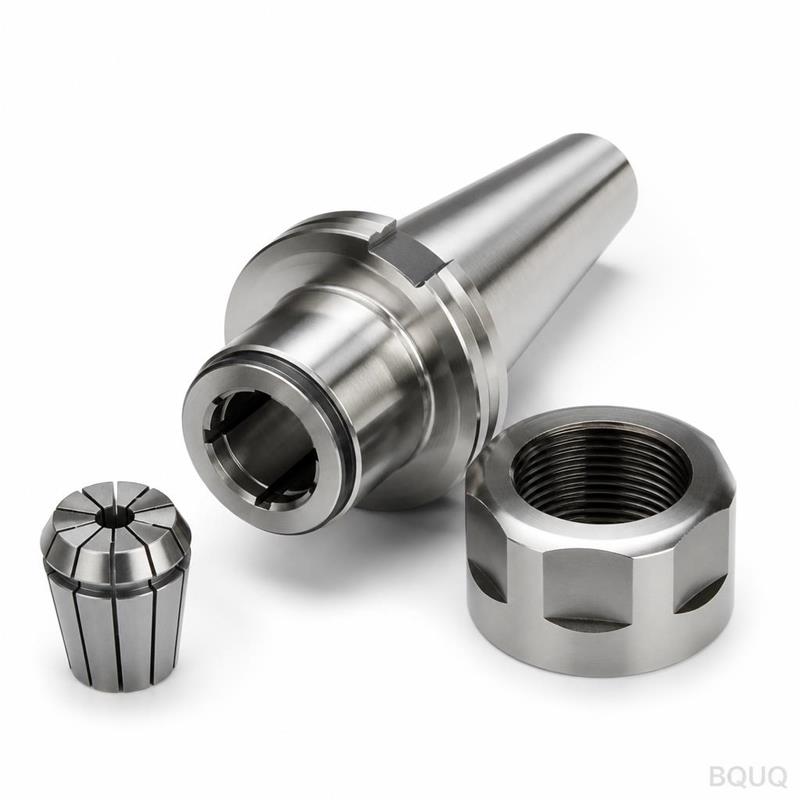
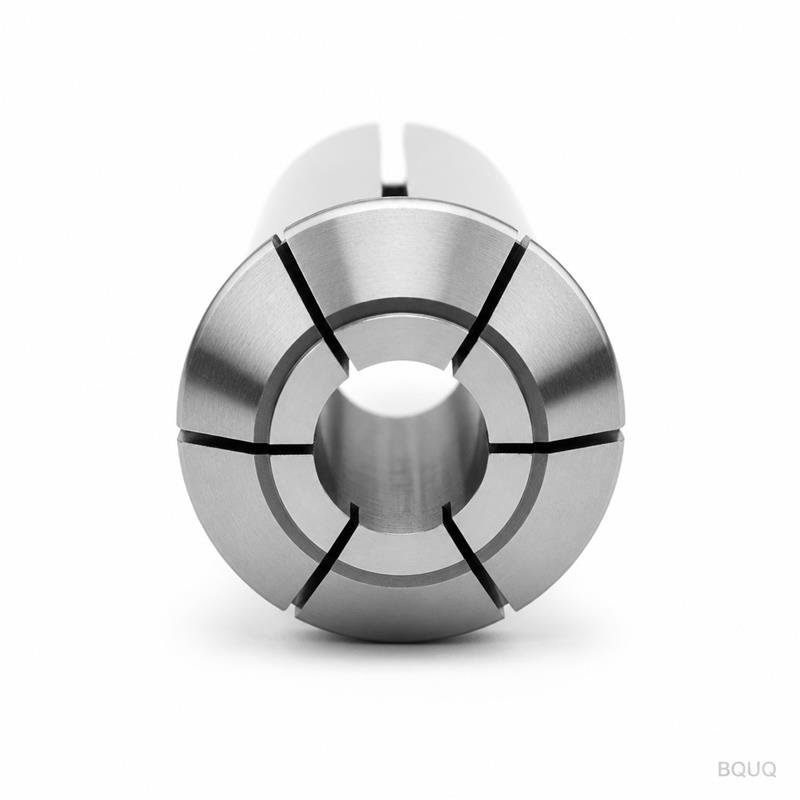
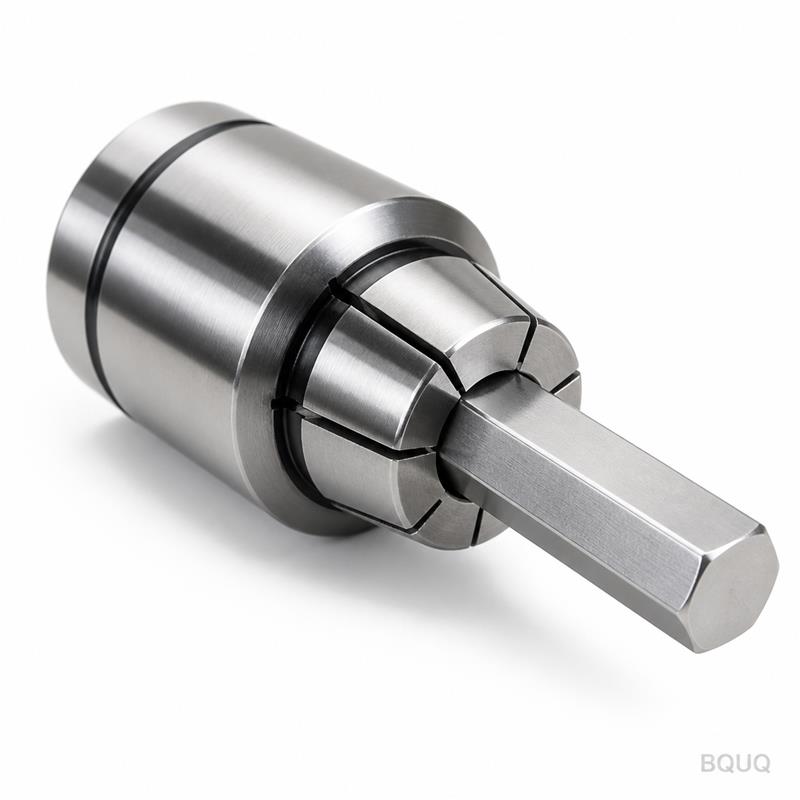
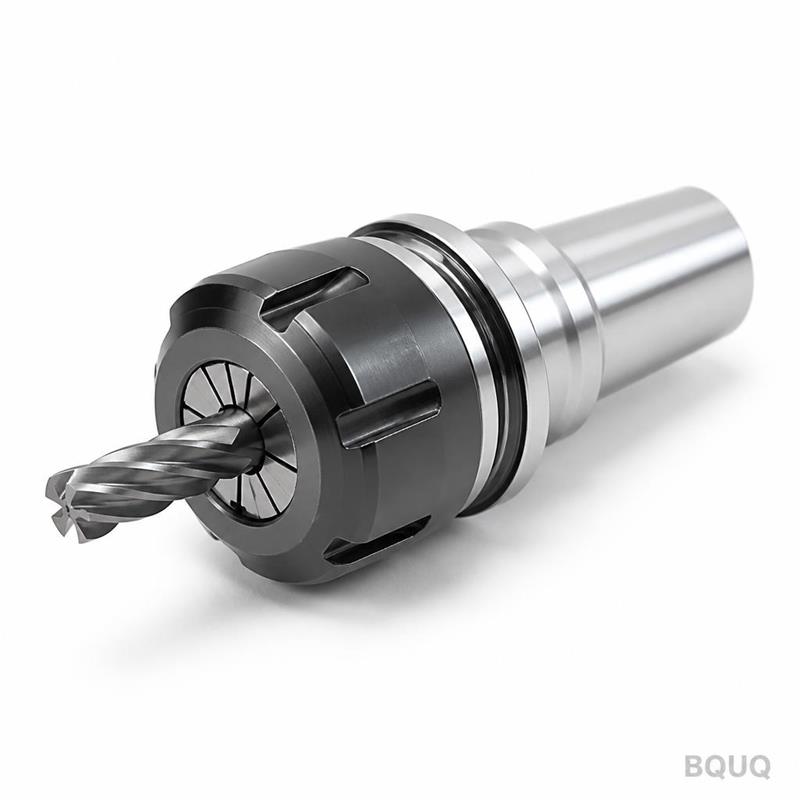
ER collet chucks use a spring-steel collet that compresses radially when a locking nut is tightened, gripping the tool shank along its full contact length. Solid holders like shrink-fit or hydraulic chucks create a uniform, interference-fit connection that eliminates all mechanical interfaces. The fundamental difference is mechanical compliance: ER systems have multiple moving parts (nut, collet, taper), each adding micro-level clearance that contributes to runout. Shrink-fit holders achieve 0.003 mm TIR at the nose, while ER collets achieve 0.005 mm to 0.008 mm at best, and 0.015 mm in standard production use. For spindle tooling, this means ER chucks introduce up to 5 microns of additional runout but offer 30-second tool changes versus 5-minute heat-up and cool-down cycles for shrink-fit.
How Does ER Collet Chuck Rigidity Compare to Shrink-Fit or Hydraulic Holders?
Rigidity is the primary engineering concern when switching to ER collets. A standard ER32 collet chuck has a bending stiffness approximately 15% to 25% lower than an equivalent shrink-fit holder at the same gauge length. The reduction comes from the collet's slit pattern and the mechanical pre-load of the locking nut. At 10,000 RPM with a 12 mm end mill, this reduced stiffness translates to a 0.02 mm increase in deflection under a 200 N cutting force. The practical impact is measurable: chatter occurs at lower depth-of-cut thresholds, typically 10% to 15% lower than with a hydraulic holder. However, for finishing passes with light radial engagement (under 0.5 mm), the rigidity difference becomes negligible, which is why ER chucks dominate finishing and drilling operations.
What Tolerances and Runout Can Modern ER Collet Chucks Actually Achieve?
Precision ER collets with ground bores and matched nuts achieve 0.005 mm TIR at 3×D projection, while standard ER collets run 0.010 mm to 0.015 mm. The critical variable is collet quality: a precision-ground collet from a reputable manufacturer costs $25 to $45 per piece, versus $8 to $15 for a standard version. The table below shows realistic performance data across holder types:
| Holder Type | TIR at Nose (mm) | Max RPM for Balanced Operation | Tool Diameter Range (mm) | Typical Cost per Holder (USD) | Torque Capacity (Nm at 20mm shank) |
| ER16 Collet Chuck | 0.008 | 20,000 | 1.0–10.0 | $35–$60 | 25 |
| ER32 Collet Chuck | 0.010 | 15,000 | 2.0–20.0 | $50–$85 | 40 |
| Precision ER32 (Ground) | 0.005 | 18,000 | 2.0–20.0 | $90–$140 | 45 |
| Shrink-Fit Holder | 0.003 | 40,000 | 3.0–32.0 | $120–$250 | 60 |
| Hydraulic Chuck | 0.003 | 30,000 | 6.0–32.0 | $180–$350 | 70 |
These figures assume a CAT40 or BT40 spindle taper and a 100 mm gauge length. The torque capacity difference is notable: ER32 chucks will slip above 40 Nm, while shrink-fit holds 60 Nm, meaning heavy roughing operations still require solid holders.
Why Are ER Collet Chucks Becoming the Default Choice for Job Shops?
The shift is driven by economic and operational flexibility. A typical job shop runs 200 to 500 different tool assemblies per month; with ER collets, the same chuck body accepts any shank diameter within its range by swapping only the collet (costing $10 to $30). Shrink-fit requires a separate holder for each shank diameter, tying up $150 to $250 in inventory per tool size. According to our 2024 production data at BQUQ, tool setup time drops from 8 minutes with shrink-fit to 2.5 minutes with ER collets, a 69% reduction. For a machine running 20 tool changes per day, this saves 1.8 hours of spindle time daily, worth approximately $90 per machine per day at $50/hour shop rate. Over a year, that is $23,000 per machine in recovered capacity.
When Does ER Collet Tooling Become the Wrong Engineering Choice?
ER collets are unsuitable for operations requiring high torque transfer or extreme vibration damping. Heavy roughing with a 20 mm carbide end mill at 0.5 mm radial engagement and 10 mm axial depth will generate cutting forces above 250 N; at this level, the collet's mechanical joint can micro-slip, causing tool pull-out and dimensional drift. Similarly, high-speed machining above 18,000 RPM with unbalanced ER assemblies creates harmonic vibration that degrades surface finish beyond Ra 1.6 µm. For these cases, shrink-fit or hydraulic holders remain mandatory. The threshold is clear: if the operation requires torque above 40 Nm or spindle speed above 18,000 RPM with tools over 12 mm diameter, ER collets are the wrong choice.
Which ER Collet System Size Should a Facility Standardize On?
Most precision machine shops should standardize on ER32 as the primary system. ER32 covers tool shanks from 2 mm to 20 mm, which encompasses 85% of typical milling and drilling applications. ER16 is adequate for small-diameter tools (under 10 mm) and offers better balance at high RPM, but its lower torque capacity (25 Nm) limits versatility. ER40 provides higher torque (50 Nm) but requires larger spindle noses and reduces Z-axis clearance. Our recommendation is a three-tier strategy: ER16 for tools under 8 mm, ER32 for 8–16 mm, and shrink-fit for anything above 16 mm or for critical finishing operations. This mix minimizes inventory while maintaining process capability at CpK values above 1.33 for most features.
How Does the ER Collet Shift Affect Spindle Maintenance and Tool Life?
ER collet chucks place less stress on the spindle taper because the collet nut absorbs radial forces, whereas shrink-fit holders transmit all forces directly through the taper interface. This reduces spindle taper wear by approximately 30% over a 5-year period, as measured by taper runout inspection during preventive maintenance. However, ER systems require more frequent cleaning: chips and coolant residue accumulate in the collet slots, causing runout degradation from 0.008 mm to 0.020 mm within 200 hours of operation if not cleaned. Tool life improves by 5% to 10% in finishing operations because ER collets damp high-frequency vibration better than rigid shrink-fit holders, reducing edge chipping on micro-grain carbide tools. The trade-off is that collets themselves wear and must be replaced every 2,000 to 3,000 tool changes.
What Is the Cost-Benefit Analysis for Converting an Existing Spindle Fleet?
Converting a 10-machine shop from shrink-fit to ER32 collet chucks requires an initial investment of approximately $1,500 per machine (one chuck body at $60, 20 collets at $20 each, and a torque wrench at $200). The payback period is 4 to 6 weeks based on reduced tooling inventory and faster changeovers. However, the shop must retain its shrink-fit system for roughing operations, meaning dual inventory. The net annual savings per machine is $4,500 to $7,000, depending on tool change frequency. For high-mix, low-volume production (batches under 100 pieces), the ER system is clearly superior. For dedicated high-volume production lines (over 1,000 identical parts per day), shrink-fit remains cost-effective due to lower per-part tooling cost at high spindle utilization.
FAQ
Can ER Collet Chucks Be Used for High-Speed Machining Above 20,000 RPM?
Yes, but only with balanced ER collet chucks rated for that speed range. Standard ER chucks are balanced to G6.3 at 15,000 RPM; precision-balanced versions achieve G2.5 at 25,000 RPM. Always verify the chuck's maximum RPM rating and use precision-ground collets to avoid vibration-induced tool failure.
What Is the Maximum Tool Diameter Recommended for ER Collet Chucks?
The practical maximum is 20 mm shank diameter with an ER40 system. Above this size, the collet's gripping force becomes insufficient to prevent tool pull-out under heavy cutting loads. For tools over 20 mm, use shrink-fit, hydraulic, or milling chucks with Weldon flats.
How Often Should ER Collets Be Replaced to Maintain Tolerances?
Replace collets every 2,000 to 3,000 tool changes or when runout at the tool tip exceeds 0.015 mm during routine inspection. A worn collet shows visible scoring on its gripping surface and will not return to its original concentricity after tightening. Regular cleaning with solvent and compressed air extends collet life by 30%.
Do ER Collet Chucks Affect Surface Finish Quality in Aluminum Machining?
Yes, in a positive way for finishing operations. The mechanical joint in ER collets provides micro-damping that reduces chatter marks on aluminum alloys, achieving surface finishes of Ra 0.8 µm to 1.2 µm. However, for mirror finishes below Ra 0.4 µm, a hydraulic holder is still superior due to its uniform pressure distribution.
Which ER Collet Size Is Best for CNC Lathe Live Tooling?
ER25 is the most common for live tooling because it balances compact size with adequate torque capacity (30 Nm) for drilling and light milling on lathes. ER32 is used for heavier operations but may interfere with turret clearance. Check your lathe's live tool holder specifications before selecting a collet size.
Can ER Collet Chucks Reduce Tooling Costs Compared to Solid Holders?
Yes, significantly. A single ER32 chuck body plus a set of 10 collets costs approximately $250, covering tool shanks from 2 mm to 20 mm. The equivalent in shrink-fit holders would cost $1,500 to $2,500 for 10 separate holders. This makes ER systems 6 to 10 times more cost-effective for diverse tool inventories.
What Torque Should Be Applied to the ER Collet Locking Nut?
Use a calibrated torque wrench and apply 80–100 Nm for ER32 collets and 100–120 Nm for ER40. Over-tightening distorts the collet and increases runout; under-tightening allows tool slippage. Always tighten in two stages: first to 50% torque, then to full torque, and re-check after the first cutting pass.
Conclusion
The shift to ER collet chucks represents a rational engineering response to the demands of high-mix, low-volume manufacturing. While they cannot match the rigidity and torque capacity of shrink-fit or hydraulic holders, their 0.005 mm to 0.010 mm runout capability, 2.5-minute tool change time, and 10x lower inventory cost make them the optimal choice for the majority of CNC milling and drilling operations. The decision hinges on your specific cutting forces and speed requirements: below 40 Nm torque and 18,000 RPM, ER collets deliver 90% of the performance at 20% of the cost. Above those thresholds, solid holders remain essential. For manufacturers looking to maximize spindle utilization without sacrificing quality, a hybrid approach using ER32 as the workhorse and shrink-fit for heavy roughing offers the best of both worlds.
At BQUQ, we have applied this hybrid strategy across our 45 CNC machining centers for over a decade, achieving consistent tolerances of ±0.01 mm on production parts. If you are evaluating tooling changes for your own shop, we can provide engineering guidance and rapid prototyping support. Contact us for a 12-hour quote on your next precision machining project: Email sc@bquq.com, WhatsApp +86 13713157787, or visit www.bquq.com.