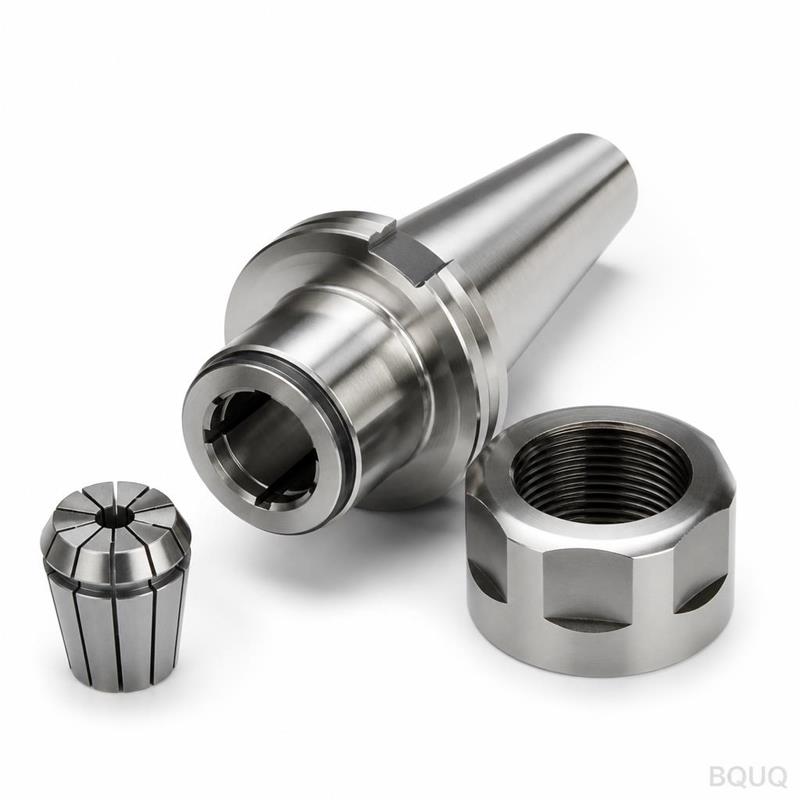
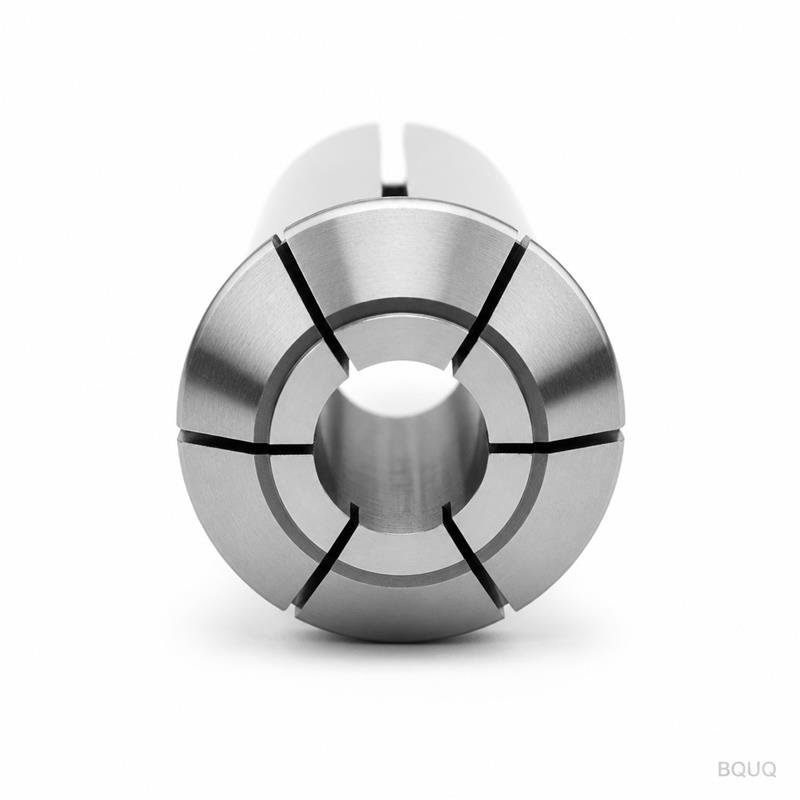
The CNC workholding market is segmented by collet size according to the tool shank diameter and required clamping torque: ER16 handles tools up to 10 mm, ER20 handles up to 13 mm,
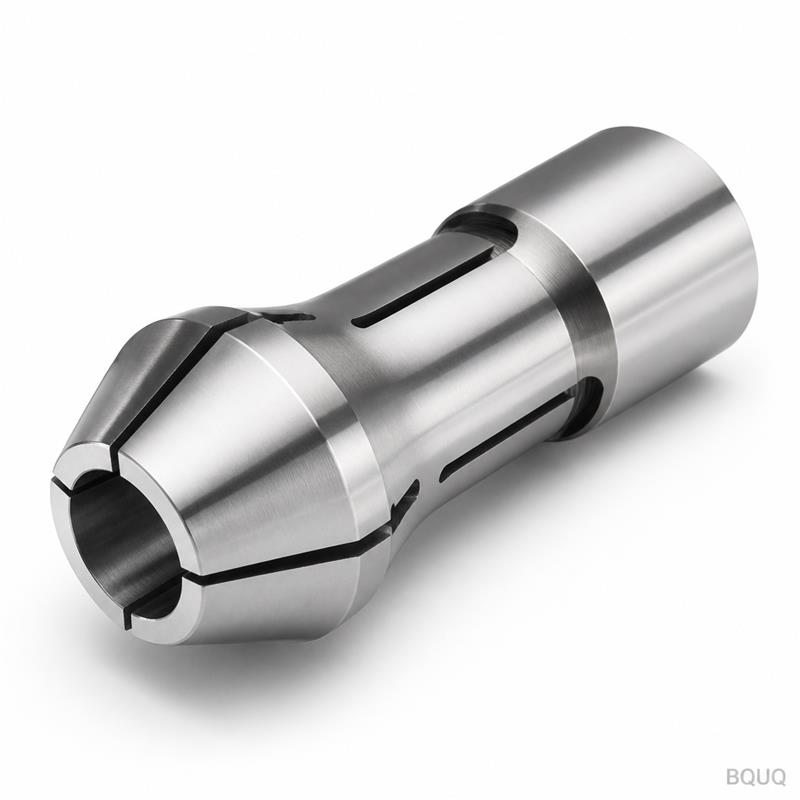
How Do ER16, ER20 and ER32 Collets Split the CNC Workholding Market?
The CNC workholding market is segmented by collet size according to the tool shank diameter and required clamping torque: ER16 handles tools up to 10 mm, ER20 handles up to 13 mm, and ER32 handles up to 20 mm. ER32 dominates heavy roughing and large-diameter operations, while ER16 and ER20 split the precision finishing and small-part machining sectors. The choice between them is dictated by spindle taper, toolholder rigidity, and the balance between runout accuracy and gripping force.
What Are the Exact Dimensional Limits of ER16, ER20 and ER32 Collets?
ER collets use a standardized metric system where the number indicates the nominal bore diameter in millimeters. ER16 collets clamp tool shanks from 1.0 mm to 10.0 mm, with a standard clamping range of 1.0 mm per collet size (e.g., a 4 mm collet grips 3.0 to 4.0 mm). ER20 collets cover 1.0 mm to 13.0 mm, while ER32 collets span 2.0 mm to 20.0 mm. The gripping length differs significantly: ER16 has a 7.5 mm clamping length, ER20 has 9.5 mm, and ER32 has 13.5 mm. This dimensional spread directly influences the maximum tool torque transmission: ER16 is rated for approximately 30 Nm, ER20 for 50 Nm, and ER32 for 110 Nm at full clamping.
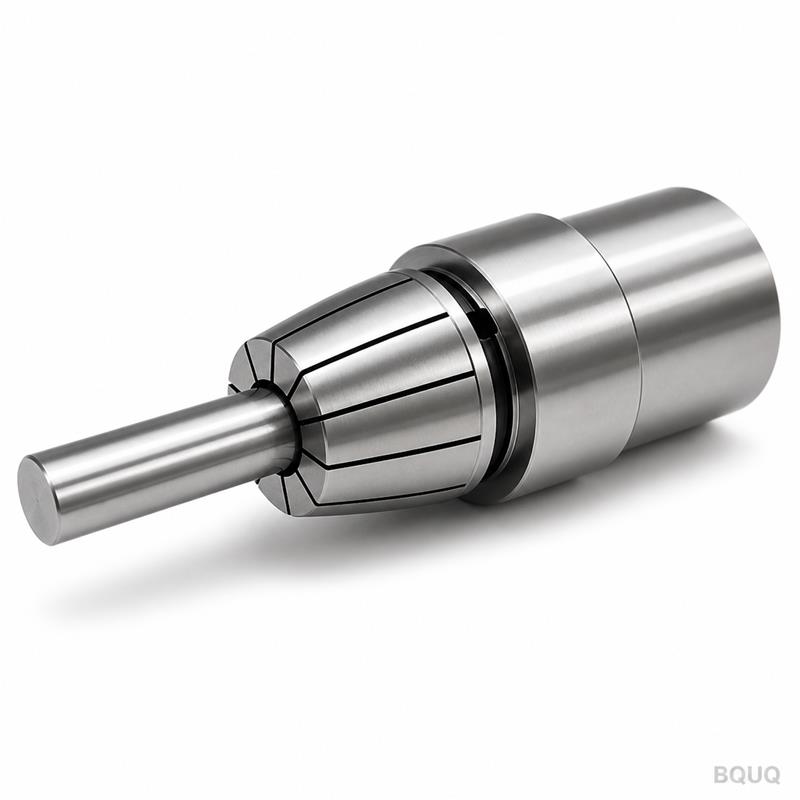
How Do Runout Tolerances Compare Across ER16, ER20 and ER32?
Precision runout at the collet nose is the primary differentiator in the market. Standard ER16 collets achieve a runout of 0.015 mm at 4xD projection, while ER20 reaches 0.018 mm and ER32 reaches 0.020 mm. High-precision versions, often marked with a red stripe, improve these figures to 0.005 mm, 0.008 mm, and 0.010 mm respectively. However, the system runout (collet plus holder plus spindle) is what matters in production: ER16 holders typically deliver 0.010 mm TIR at the nose, ER20 delivers 0.012 mm, and ER32 delivers 0.015 mm. For micro-machining with tools below 3 mm diameter, ER16 is the only viable option because ER32's larger mass and clamping force can induce tool deflection.
Which Collet Size Offers the Best Cost-to-Performance Ratio for Production Runs?
For a typical CNC milling operation in a job shop, the cost per collet is inversely proportional to production volume. A single ER16 collet costs USD 8 to USD 15, ER20 costs USD 10 to USD 18, and ER32 costs USD 12 to USD 22, depending on precision grade and brand. However, the toolholder body costs more: an ER16 holder averages USD 45, an ER20 holder averages USD 55, and an ER32 holder averages USD 75. The performance ratio favors ER20 for general machining because it covers the most common tool shank sizes (6 mm, 8 mm, 10 mm) with one holder, reducing inventory. ER32 becomes cost-effective only when machining with tools above 16 mm diameter, where its higher torque capacity prevents slippage and tool pull-out.
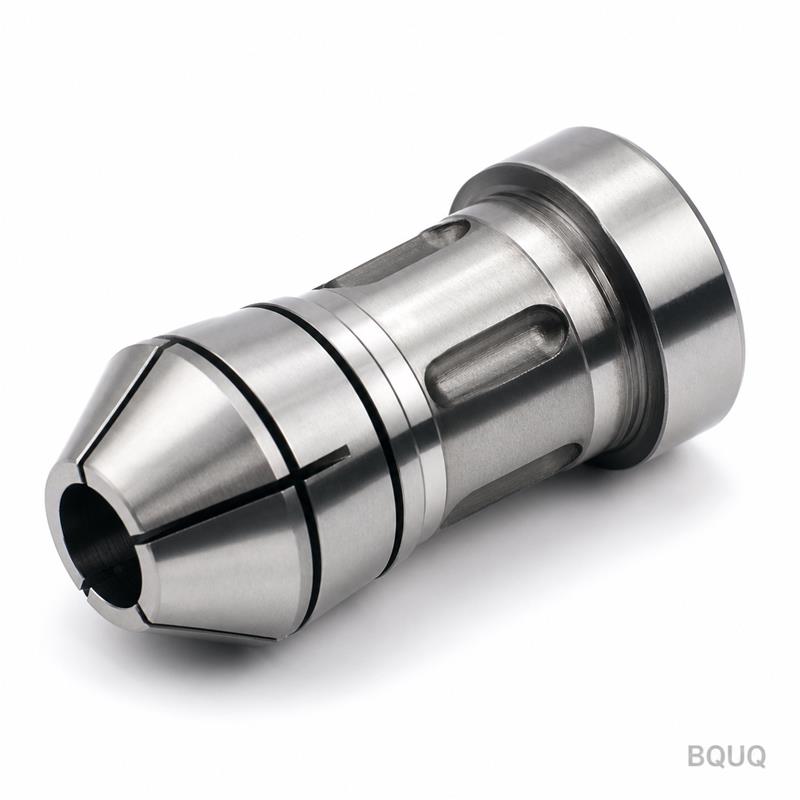
Why Does the ER32 Collet Dominate Heavy Roughing Applications?
ER32's market dominance in heavy roughing stems from its 13.5 mm gripping length, which distributes clamping force over a larger contact area, reducing localized stress on the tool shank. The maximum recommended tightening torque for an ER32 nut is 90 Nm to 120 Nm, compared to 50 Nm for ER20 and 35 Nm for ER16. This higher preload creates a friction fit that resists axial pull-out forces up to 4500 N, essential for high-speed machining of steel and titanium. Additionally, ER32 collets have a thicker wall (2.2 mm minimum) that resists radial deformation under heavy chip loads, maintaining dimensional accuracy at depths of cut exceeding 2.5 mm. In practice, ER32 holders are standard on BT40 and CAT40 spindles, where the spindle taper provides the rigidity to match the collet's grip.
What Are the Torque and Speed Limits for Each Collet Type?
The maximum recommended spindle speed for balanced ER16 holders is 30,000 RPM, for ER20 it is 25,000 RPM, and for ER32 it is 15,000 RPM. These limits are set by the centrifugal force acting on the collet segments; at higher speeds, the collet expands and loses grip. The nut design also matters: standard nuts limit ER32 to 8,000 RPM, while precision-balanced nuts extend this to 15,000 RPM. For high-speed machining of aluminum, ER16 with a balanced holder is preferred because it maintains clamping integrity at 25,000 RPM while delivering low runout. Below are the critical operating parameters for each collet type.
| Parameter | ER16 | ER20 | ER32 |
| Clamping range (mm) | 1.0 to 10.0 | 1.0 to 13.0 | 2.0 to 20.0 |
| Gripping length (mm) | 7.5 | 9.5 | 13.5 |
| Standard runout (mm) | 0.015 | 0.018 | 0.020 |
| Precision runout (mm) | 0.005 | 0.008 | 0.010 |
| Max tightening torque (Nm) | 35 | 50 | 120 |
| Max spindle speed (RPM) | 30,000 | 25,000 | 15,000 |
| Max axial pull-out force (N) | 1500 | 2500 | 4500 |
| Collet price (USD) | 8 to 15 | 10 to 18 | 12 to 22 |
| Holder price (USD) | 45 | 55 | 75 |
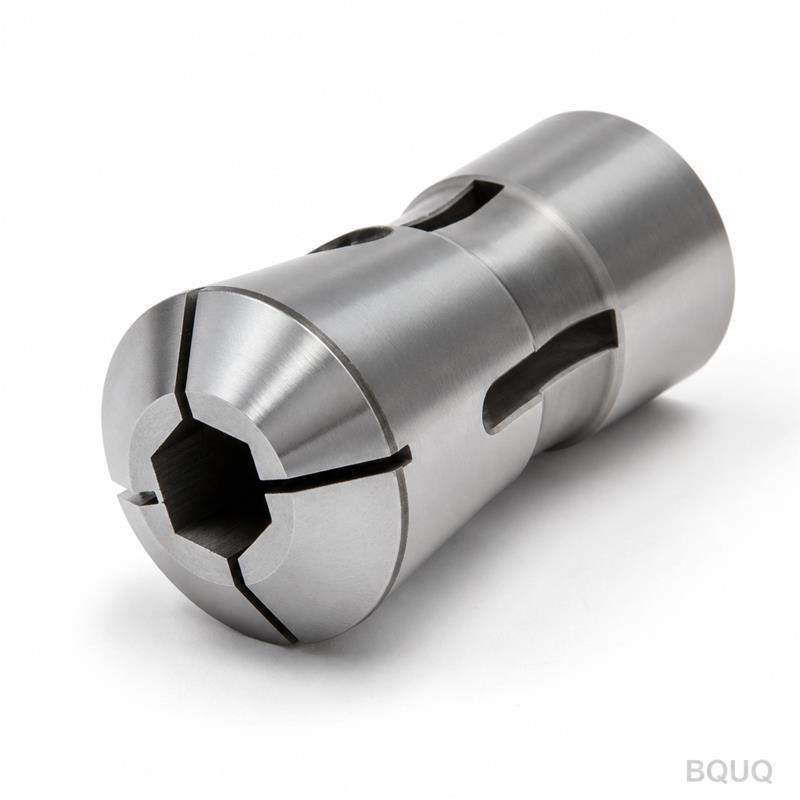
How Should a Machine Shop Select Between ER16, ER20 and ER32 for a New Project?
Selection begins with the spindle taper and tool shank diameter, not the collet brand. For a BT30 spindle, ER16 is the maximum practical size because the spindle bore is only 30 mm; ER20 and ER32 holders will not fit without reducing spindle rigidity. For BT40 and BT50 spindles, ER32 is the default for tools above 12 mm, while ER20 is used for medium-duty work. The decision matrix also depends on the material: machining hardened steel (HRC 45+) requires ER32 for its higher gripping force, while machining aluminum or plastics can use ER16 to achieve better surface finish. A practical rule is to use ER16 for tools up to 6 mm diameter, ER20 for 6 to 12 mm, and ER32 for 12 to 20 mm. This rule minimizes tool deflection and maximizes tool life.
What Are the Common Failure Modes of Each Collet Type and How Can They Be Prevented?
The most common failure mode is collet wear at the nose, causing runout to increase beyond 0.03 mm, which leads to poor surface finish and tool breakage. ER16 collets fail prematurely when over-tightened with a wrench exceeding 40 Nm, deforming the slots. ER20 collets often fail due to contamination; chips entering the collet taper cause uneven clamping and radial runout. ER32 collets fail from fatigue cracking at the slot roots after approximately 10,000 clamping cycles under maximum torque. To prevent these failures, always clean the collet taper and tool shank with compressed air before insertion, and use a torque wrench calibrated to the specific collet type. Replace any collet that shows visible scoring or has been dropped, as the internal geometry is easily damaged.
Which Collet System Offers the Best Upgrade Path for Existing CNC Machines?
For shops with older CNC machines that have BT40 spindles, upgrading from ER20 to ER32 offers the most immediate benefit in machining capability. An ER32 holder can increase metal removal rates by up to 40% compared to ER20 when using the same tool diameter, because the higher gripping force allows deeper cuts without chatter. However, the upgrade requires checking the spindle's maximum torque and speed ratings; if the spindle is limited to 8,000 RPM, ER32 is safe, but a high-speed spindle above 15,000 RPM should stick with ER20. The cost of upgrading a toolholder set is USD 300 to USD 600, which is typically recovered in reduced cycle time within one batch of 500 parts. For new machine purchases, specifying ER32 as standard reduces future tooling costs and simplifies inventory.
FAQ Section
How Do I Know If a Collet Is ER16, ER20 or ER32 by Looking at It?
Measure the outside diameter at the largest point, excluding the nut: ER16 measures 28 mm, ER20 measures 34 mm, and ER32 measures 50 mm. The number is also stamped on the collet body, usually on the front face or the side. If the stamp is worn, measuring the bore diameter with calipers is the definitive method.
Can I Use an ER16 Collet in an ER32 Holder with a Reducer?
No, this is not recommended because the collet seat geometry differs; an ER16 collet has a 8-degree taper angle with a 28 mm outer diameter, while ER32 has the same taper but a 50 mm outer diameter. Reducer sleeves exist for some systems, but they add runout and reduce rigidity. Instead, purchase a dedicated ER16 holder for small tools.
What Is the Maximum Depth of Cut Possible with ER20 Collets in Aluminum?
With a 10 mm carbide end mill in 6061-T6 aluminum, ER20 can handle a depth of cut of 1.5 mm at 12,000 RPM with a feed of 0.05 mm per tooth. Exceeding this depth risks pulling the tool out of the collet. For deeper cuts, switch to ER32 or use a shrink-fit holder.
Are ER32 Collets Suitable for Drilling Operations or Only Milling?
ER32 collets are excellent for drilling, especially for drill diameters between 10 mm and 20 mm, because the high clamping force prevents drill slippage during peck drilling. The main limitation is the runout of 0.020 mm, which is acceptable for standard holes but not for reaming operations requiring 0.005 mm accuracy. Use a precision ER32 collet for reaming.
When Should I Replace a Collet Rather Than Continue Using It?
Replace a collet when you measure runout at the tool tip exceeding 0.03 mm, or when you see visible cracks, rust, or deformation at the slots. Also replace after any incident where the tool was pulled out during machining, as this likely stretched the collet. The cost of a replacement collet is far lower than the cost of scrapped parts.
Which Collet Type Is Best for Swiss-Type CNC Lathes?
For Swiss-type lathes with 20 mm bar capacity, ER16 and ER20 are the industry standard for guide bushings and sub-spindle workholding. ER32 is rarely used because the machine's spindle bore is too small. Choose ER16 for tools under 6 mm diameter and ER20 for tools up to 12 mm, matching the machine's tool turret stations.
Does BQUQ Offer Custom Collet Sizing for Non-Standard Tool Shanks?
Yes, BQUQ can machine custom bore diameters in ER20 and ER32 collets for tool shanks with odd sizes like 9.525 mm or 15.875 mm. The minimum order is 10 pieces, and the lead time is 5 working days. Custom collets are ground to a runout of 0.008 mm and are heat-treated to 58-60 HRC.
Conclusion
The ER16, ER20 and ER32 collets divide the CNC workholding market by tool diameter, torque capacity, and spindle speed requirements, with no single size serving all applications. ER16 is the precision choice for micro-tools, ER20 is the versatile middle ground, and ER32 is the heavy-duty workhorse. For any machining project, match the collet to the spindle taper and the largest tool shank you plan to use, and prioritize runout over cost for finishing operations.
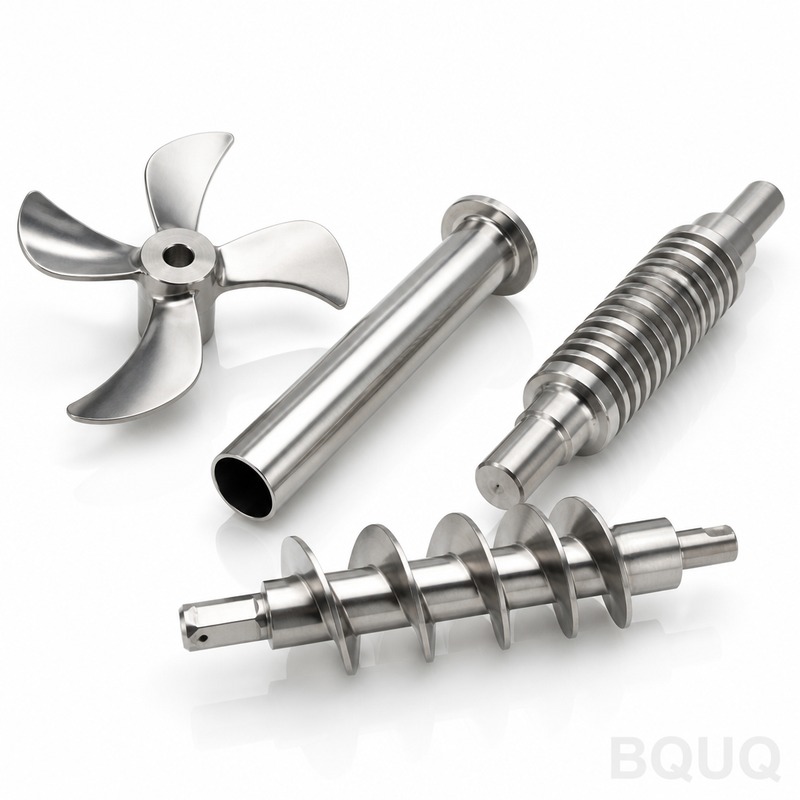
At BQUQ, we machine workholding components and custom parts daily, and we apply these exact selection rules to every job. Our engineers can review your tooling list and recommend the optimal collet system for your CNC machines. We provide a 12-hour quoting service for custom CNC machining and workholding components. Contact us at sc@bquq.com or WhatsApp +86 13713157787, or visit www.bquq.com to discuss your requirements.