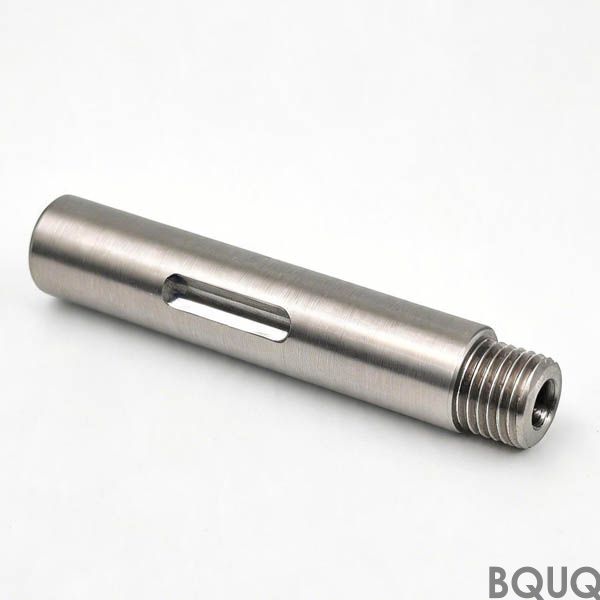
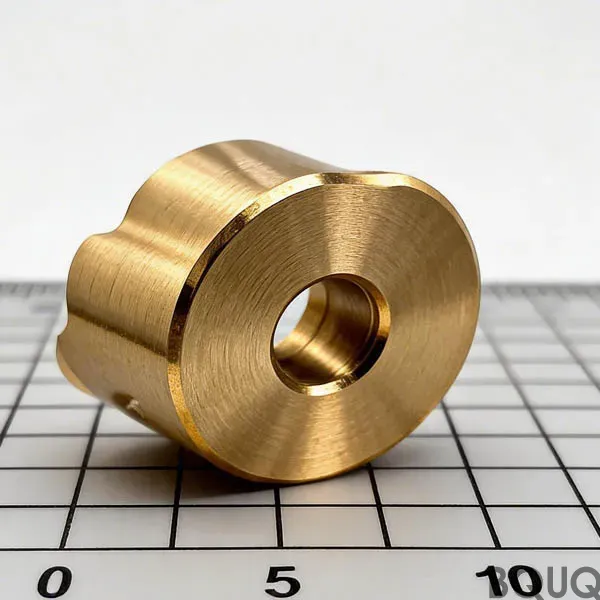
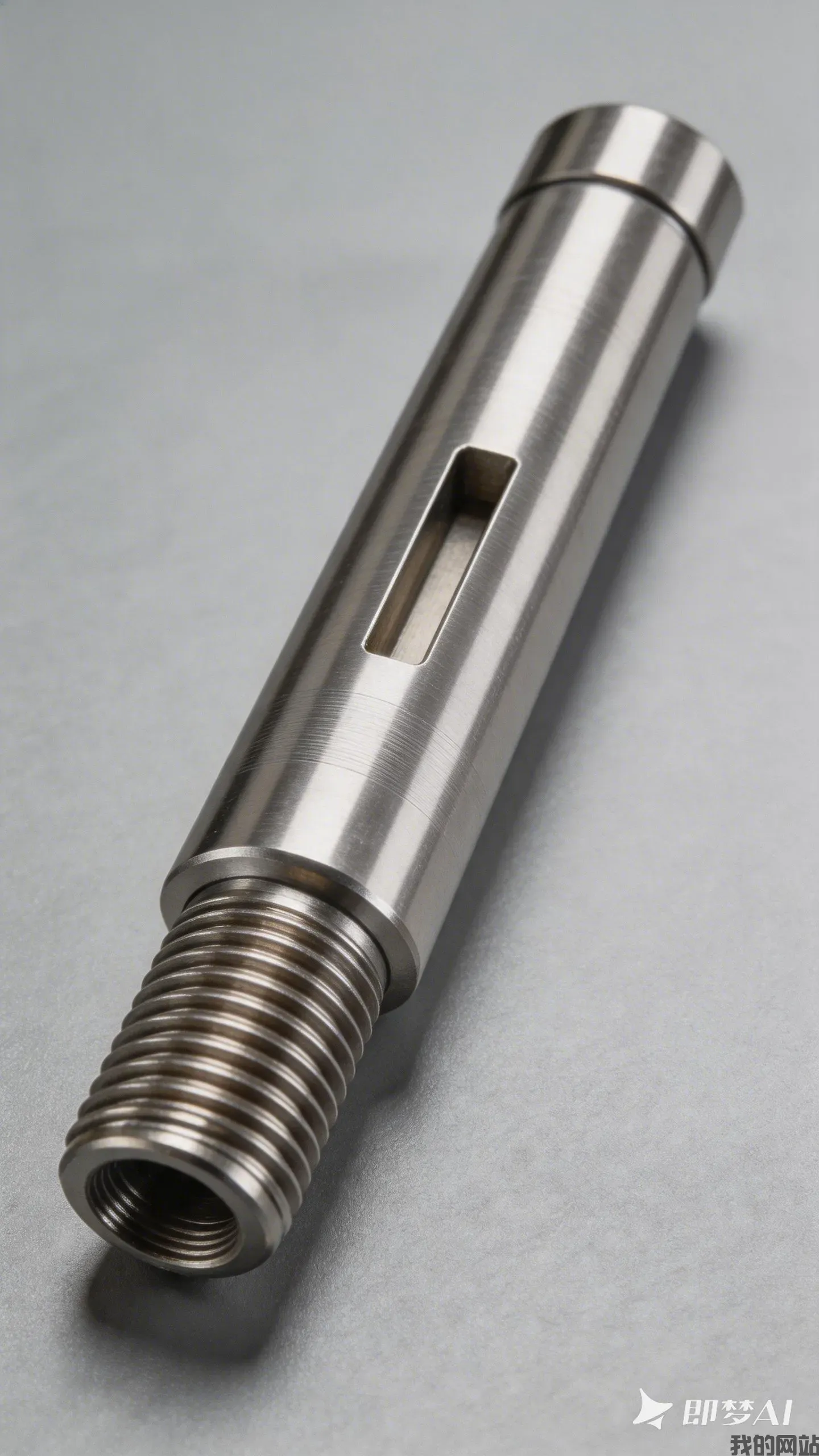
For manufacturers in Dongguan and across the globe, the gap between a validated prototype and a full-scale production run is the most critical risk point in the product lifecycle.
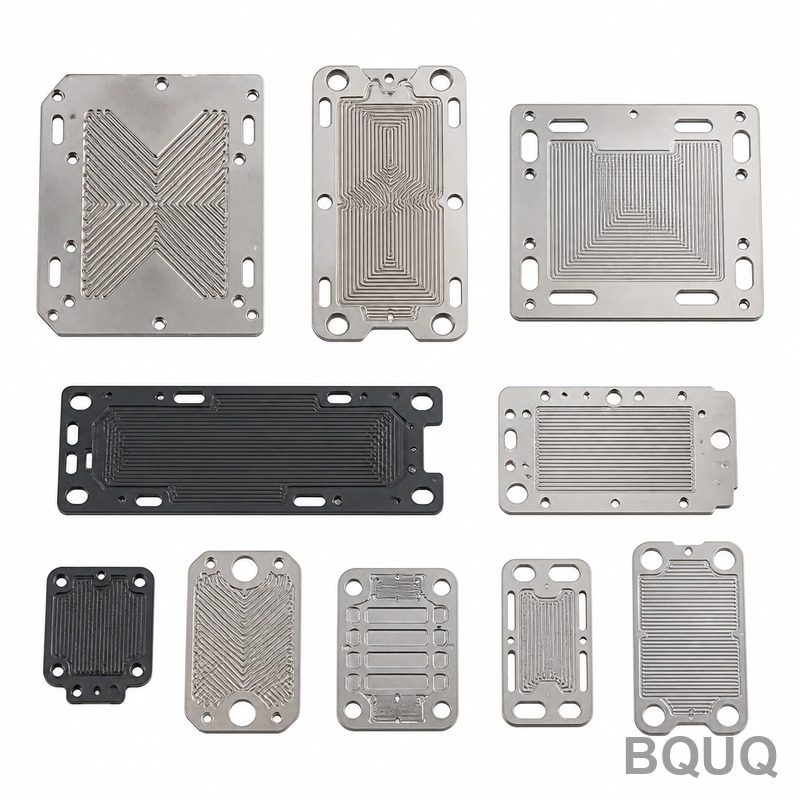
How Do CNC Machining Bridge Services Speed Up Prototype to Production?
For manufacturers in Dongguan and across the globe, the gap between a validated prototype and a full-scale production run is the most critical risk point in the product lifecycle. CNC machining bridge services directly answer this challenge by utilizing production-grade materials and processes to manufacture pilot runs of 10 to 1,000 parts, delivering them in 5 to 15 business days while maintaining tolerances of +/- 0.005 mm. This approach eliminates the need for expensive hard tooling before design finalization, allowing you to validate market demand and assembly processes with parts that are identical in form, fit, and function to your final production units.
What Exactly Is a CNC Machining Bridge Service?
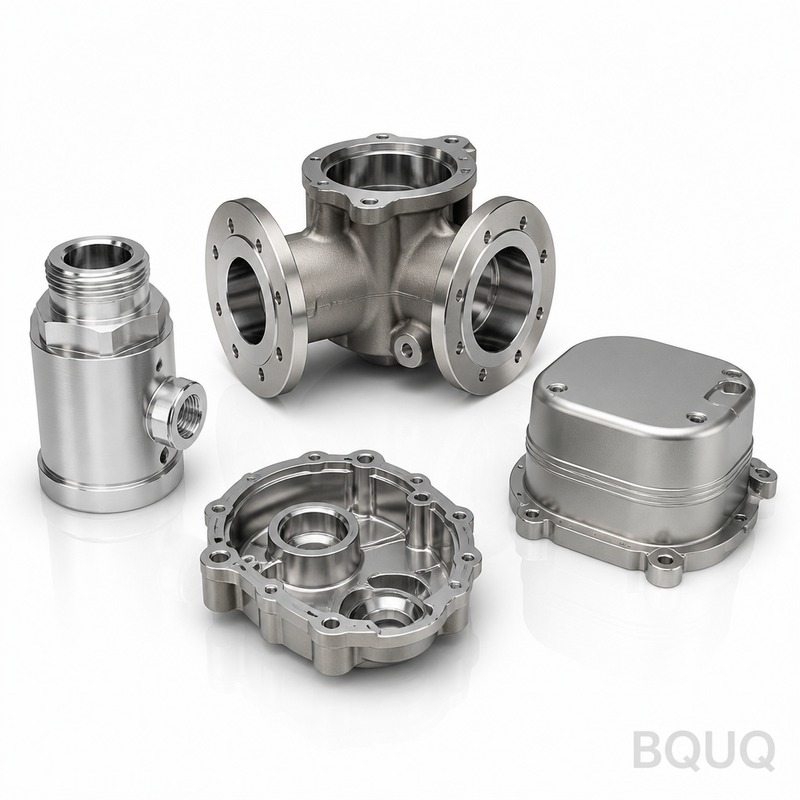
A CNC machining bridge service is a manufacturing strategy that uses production-capable CNC milling, turning, and wire EDM equipment to produce low-to-mid volume parts without committing to permanent tooling. Unlike rapid prototyping which focuses on speed with softer materials like ABS or resin, bridge machining utilizes the actual production metals and plastics, such as 6061-T6 aluminum, 304 stainless steel, and PEEK. The service bridges the time gap by utilizing fully automated 5-axis and 3-axis machining centers that run 24/7, allowing your team to conduct beta testing, regulatory certifications, and early sales while the permanent injection mold or stamping die is being fabricated.
How Does Bridge Machining Compare to Rapid Prototyping and Injection Molding?
The primary difference lies in material properties and volume economics. Rapid prototyping (often 3D printing) produces parts with anisotropic strength, suitable for fit checks but not for field trials. Injection molding yields the lowest per-unit cost but requires a $5,000 to $50,000 tooling investment and a 6 to 10 week lead time. Bridge CNC machining sits in the middle: it offers the material integrity of molding with the flexibility of machining. For a typical aluminum enclosure, a bridge run of 500 units costs approximately $12 to $18 per part, whereas injection molding would cost $0.50 per part but with a $15,000 mold amortization, making the break-even point at roughly 1,000 units. If you need less than 1,000 parts, bridge machining is the financially superior choice.
What Tolerances and Surface Finishes Can You Achieve with Bridge Services?
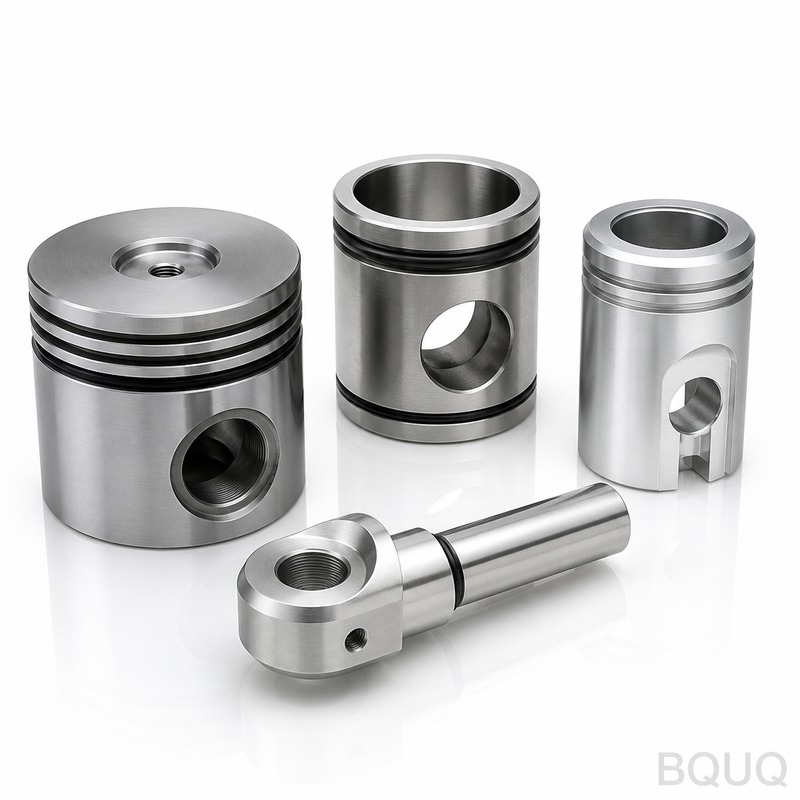
Bridge CNC machining does not sacrifice precision. At BQUQ, we maintain ISO 2768-fine standards for all bridge runs, achieving standard linear tolerances of +/- 0.05 mm and precision bore tolerances of +/- 0.005 mm when requested. Surface finish is equally critical for production validation; we offer as-machined finishes of Ra 1.6 micrometers, with optional bead blasting to Ra 0.8 micrometers or anodizing for aluminum parts. For functional testing, this means your bridge parts will exhibit the exact thermal conductivity and wear resistance of final parts, which is impossible with polymer-based rapid prototypes.
How Much Does a Bridge Machining Program Cost and What Is the Lead Time?
The cost structure for bridge services is based on machine hours, material blanks, and setup complexity. Typical setup fees range from $150 for a simple 3-axis job to $1,200 for a complex 5-axis part requiring custom fixturing. Material costs for aluminum 6061 are approximately $3.50 per kilogram, while stainless steel 316 is $12.00 per kilogram. The table below outlines standard pricing and lead times for common bridge volumes:
| Service Parameter | 10-50 Units | 100-300 Units | 500-1,000 Units |
| Unit Price (Aluminum 6061) | $45 - $80 | $25 - $40 | $12 - $18 |
| Unit Price (Stainless Steel 304) | $90 - $150 | $55 - $85 | $30 - $45 |
| Standard Lead Time (Business Days) | 5 - 7 | 7 - 10 | 10 - 15 |
| Typical Setup Fee | $150 - $400 | $400 - $800 | $800 - $1,200 |
| In-Process Inspection Reports | Full Dimensional | Statistical Sampling | First Article Only |
The engineering reasoning for this pricing is that higher volumes allow for the amortization of CNC programs and fixture setup across more parts, while also enabling the use of multi-pallet systems that reduce idle spindle time.
Why Does Bridge Machining Reduce Overall Project Risk?
The highest cost in manufacturing is not the part itself but the cost of a late redesign. If you go directly from a 3D-printed prototype to a hard-tooled injection mold, a single design flaw discovered during assembly testing will require a mold modification costing $2,000 to $8,000 and adding 3 weeks to your schedule. Bridge machining allows you to place real parts in the hands of your assembly technicians, thermal engineers, and end customers. For example, a heat sink bridge run allows you to measure actual thermal resistance (C/W) under load, verifying that the fin geometry dissipates heat effectively before you commit to a casting die. This validation step typically reduces the probability of a production stop by 40%.
Which Industries Benefit Most from CNC Bridge Production?
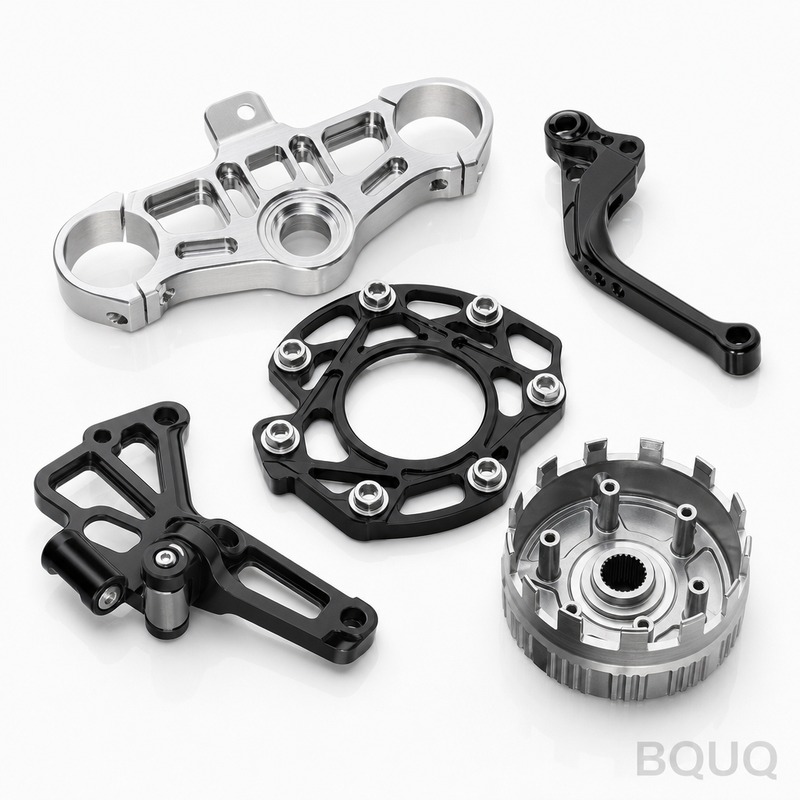
Industries with stringent regulatory requirements and complex assemblies see the greatest return. Medical device manufacturers use bridge machining to produce surgical instruments from implant-grade titanium (Grade 5) to complete FDA validation batches without the cost of clean-room injection molding. The automotive sector utilizes bridge runs for sensor housings and brackets to validate crash safety simulations. In the electronics industry, bridge-machined aluminum enclosures are used for EMI shielding tests, verifying that the material thickness and surface treatment meet FCC requirements. Furthermore, robotics companies use bridge services to produce gearboxes and structural components to test wear characteristics under continuous operation, which is vital since CNC-machined steel exhibits different fatigue limits than cast equivalents.
How Do You Select the Right CNC Partner for Bridge Services?
Selecting a partner requires evaluating three engineering competencies: material sourcing, process documentation, and secondary operations. Your partner must have an in-house inventory of aerospace-grade aluminum and stainless steel to prevent supply chain delays. They must provide a full dimensional inspection report (FAI) using a CMM with a resolution of 0.001 mm, not just a simple caliper check. Finally, they must handle secondary operations like anodizing, passivation, and heli-coil insertion in-house or with vetted local vendors to keep lead times under 15 days. A partner who outsources finishing loses control over the schedule and quality, often doubling the quoted lead time.
What Is the Most Cost-Effective Strategy for Transitioning to High Volume?
The most effective strategy is a "soft launch" approach. Start with a bridge run of 200 to 300 units to fulfill initial customer orders and generate cash flow. Simultaneously, place the order for your hard tooling (injection mold or stamping die). By the time the tool is ready (typically 8 weeks), you have sold your bridge inventory and validated the design. The bridge parts should be designed with machining in mind, avoiding deep ribs that are difficult to cut and specifying standard radii to utilize standard tooling. This strategy ensures that when you switch to the high-volume process, you have zero engineering change orders pending, allowing for a seamless transition to a cost-per-unit of $2.00 or lower.
FAQ
What Is the Difference Between a Bridge Tool and a Production Tool?
A bridge tool is a temporary mold or die often made from aluminum or P20 steel, designed to last for 500 to 10,000 cycles. A production tool is typically hardened steel (S136 or H13) rated for 500,000 to 1,000,000 cycles. Bridge CNC machining bypasses the need for a bridge tool entirely by cutting parts directly from solid material.
Can Bridge Machining Handle Complex Geometries Like Internal Channels?
Yes, modern 5-axis CNC machining centers can machine complex internal cooling channels and undercuts that are impossible for standard 3-axis mills. However, the cost increases significantly, approximately 30% to 50% more, due to the need for specialized tooling and longer cycle times.
How Quickly Can I Get a Quote for a Bridge Machining Project?
At BQUQ, we provide a comprehensive quotation within 12 hours of receiving your 3D model (STEP or IGES format) and technical drawing. We analyze the part for wall thickness, tool access, and material yield to provide an accurate price and lead time that we guarantee in writing.
What Is the Minimum Wall Thickness for Production-Equivalent CNC Parts?
For aluminum alloys, the minimum wall thickness for a stable, production-equivalent machined part is 0.8 mm, though 1.5 mm is recommended for structural integrity. For stainless steel, the minimum is 0.6 mm. These values ensure that the material does not vibrate or deflect during the machining process, which would compromise tolerance.
Do Bridge Parts Require Different Heat Treatment Than Production Parts?
No, the heat treatment specifications should remain identical to the production specification to ensure mechanical properties match. For example, if the production part is T6 tempered aluminum, your bridge parts must also be T6 tempered, not the softer T4 condition, to ensure accurate yield strength during testing.
Is CNC Bridge Machining Environmentally Friendly Compared to Casting?
Yes, CNC machining is generally more efficient for low volumes because it produces less scrap than casting processes which require sprues and risers. While machining generates chips, these are 100% recyclable. For a 1,000-unit run, the carbon footprint is significantly lower than casting due to the avoidance of furnace energy and mold production.
Which File Format Should I Send for a Bridge Machining Review?
You should send both a B-Rep solid model (STEP or IGES) and a PDF drawing. The solid model is used for CAM programming, while the drawing is used to verify critical dimensions and tolerance stack-ups. This dual submission ensures the machinist understands the functional requirements, not just the geometry.
Bridge services are no longer an optional luxury but a mandatory step for any serious engineering team looking to de-risk their product launch. By engaging a partner with 20 years of manufacturing experience, you ensure that your prototype-to-production path is paved with accurate data and functional parts. To accelerate your project, send your CAD files for a no-obligation review. We provide 12-hour quoting and expert DFM feedback to get your product to market faster. Contact us at sc@bquq.com or via WhatsApp at +86 13713157787. Visit our website at www.bquq.com to learn more about our machining and stamping capabilities.