CNC fixturing from BQUQ: how workholding sets machined tolerances, fixture types, repeatability numbers and design rules from an ISO9001 Dongguan shop.
CNC Fixturing: How Workholding Sets Your Tolerance
Short answer: workholding, not spindle accuracy, is usually the ceiling on your part tolerance. A good machined vise repeatably locates a part within roughly ±0.02–0.05 mm; re-cut soft jaws and precision fixtures push that to ±0.01 mm; poor clamping can distort a thin part by more than its entire tolerance before a single cut. Design the fixture around the drawing datums, clamp without over-clamping, and your tolerance story starts at the fixture — not at the toolpath.
Fixturing decides where the part sits relative to the machine axes, how much it deflects under cut forces, and whether it comes out of the vise in the same place batch after batch. Buyers comparing CNC quotes rarely see fixtures on the price sheet, yet fixture strategy quietly explains much of the gap between shops that hold ±0.01 mm reliably and shops that only claim it.
Fixturing Is Where Tolerance Is Actually Made
A CNC machine can position its spindle to microns, but a machine holds nothing by itself. The part's features end up exactly where the fixture puts the material, and every link in that chain — machine axis accuracy, spindle runout, tool deflection, fixture location, clamp distortion, thermal growth — adds error. That is why the same drawing quoted at ±0.02 mm and ±0.005 mm can carry very different prices: the tighter callout changes the workholding plan, not just the inspection plan.
The first rule of fixture design is datum alignment. The surfaces the fixture locates should be the same surfaces the drawing uses as datums. If the print defines a hole pattern from datum A (a face) and datum B (an edge), the fixture should seat the part on that face and push it against that edge. A fixture that locates from a different, convenient surface adds an error link between the locating feature and the datum feature — and that link shows up as tolerance stackup on every feature measured from the datum.
The Second Rule: Clamp Without Distorting
Over-clamping is the quiet killer of precision parts. A thin wall, a delicate bracket or a large flat plate can be bowed by clamp force alone; the part machines beautifully while clamped and springs into a reject the moment the vise opens. The machinist's old line is accurate: you cannot clamp a tolerance into a part, but you can certainly clamp it out. Rules of thumb: put clamps over solid support rather than over unsupported spans, use the minimum force that holds the part against cutting loads, and for thin parts consider support from below — parallels, soft jaws that kiss the full profile, or vacuum.
| Workholding method | Typical locating repeatability | Best for | Main risk |
|---|---|---|---|
| Standard machined vise with hard jaws | ±0.02–0.05 mm | Simple blocks and brackets in small batches | Jaw wear and chip buildup under the part |
| Re-cut soft jaws, machined to part profile | ±0.01–0.02 mm | Prismatic parts, thin or fragile profiles, second operations | Jaws only fit one part shape |
| Precision vise with ground jaws | ±0.01–0.02 mm | Repetitive runs of simple shapes | Cost per station |
| Tombstone or modular pallet (4th/5th axis) | ±0.01–0.03 mm | Multi-sided machining, medium batches | Higher setup complexity |
| Vacuum table | ±0.02–0.05 mm | Thin sheets, large flat parts under ~5 mm | No lateral force resistance; needs clean sealed surface |
| Zero-point / pallet coupling system | 0.005–0.015 mm class | Family-of-parts runs, fast changeover | Fixture investment, justified by quantity |
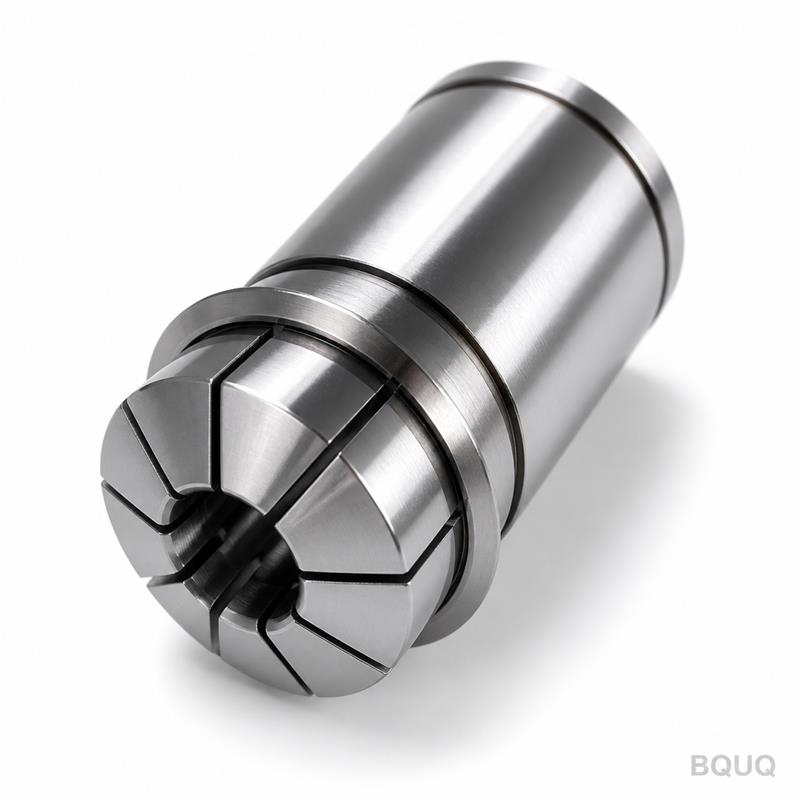
| Precision collet or chuck (turned parts) | 0.005–0.02 mm runout class | Round parts, second operations on turned blanks | Stock diameter variation |
Numbers are indicative and depend on condition and operator skill — but the ordering is stable. The message for buyers: when a drawing holds ±0.01 mm, ask what the fixture plan is, not just what machine will run it. A shop that answers with soft jaws, a datum-based fixture or a pallet system understands the problem; a shop that answers with "our machine is accurate" may be about to learn otherwise on your parts.
How Fixture Strategy Changes Across Operations
First operations are where fixture freedom is highest and precision is hardest to guarantee. The blank is usually raw stock — sawn, laser-cut or cast — with no machined surface to trust. Good practice machines reference surfaces first: face the primary datum, square an edge, then use those machined surfaces to locate the second operation. Buyers can help by specifying stock condition and leaving machining allowance on critical datums, and by accepting that first-operation tolerances on raw stock are looser than second-operation tolerances on machined datum surfaces.
Second operations are where the fixture plan pays off. If the first op machined a datum face and two locating edges, the second-op fixture can seat the part on exactly those features and hold the relationship between both sides of the part. When a drawing calls concentricity or position across two setups, the fixture repeatability between setups becomes the tolerance bottleneck. Re-cut soft jaws are the workhorse answer: jaws are machined in place on the machine, so the gripping surface is true to the spindle within microns, and every part in the batch seats identically.
Multi-sided work changes the math again. Tombstones on a 4th or 5th axis let a shop machine three, four or five faces in one setup, which removes whole families of re-clamping error and cuts cycle time. The tradeoff is fixture cost and programming complexity, which is why tombstones earn their keep at medium batch sizes where the part count spreads the setup. For one-off prototypes, a careful vise setup with a machined reference block is often the honest answer — and the price reflects it.
Feature relationships across setups depend on the fixture class the shop commits to:
| Setup relationship | Typical positional result between setups | Fixture cost class |
|---|---|---|
| Features machined in one clamping | No re-location error; tightest result | Lowest |
| Second op from machined datums, re-cut soft jaws | ±0.01–0.03 mm | Low to moderate |
| Second op from machined datums, precision vise | ±0.02–0.05 mm | Low |
| Relocation with hard jaws and stop blocks | ±0.05–0.10 mm | Lowest, riskiest |
| Pallet or zero-point changeover system | ±0.01–0.03 mm | Higher, justified by batch size |
Read it as an expectation contract: the fixture class in the quote is the tolerance you should expect to receive.
Designing the Part to Be Fixturable
Fixturing problems are cheapest to solve on the drawing, not in the shop. A few design habits make parts dramatically easier to hold to tolerance: provide a solid datum face large enough for a vise or fixture to bear on; avoid clamping directly on fragile features; add machining lugs where a part has no convenient clamping surface, removed after machining; keep thin walls and unsupported spans out of the way of clamping force; and, where possible, design so critical features on opposite sides can be machined in a single setup or related to the same datum surface.
Tolerance callouts should respect how the part will be held. A position tolerance of ±0.01 mm between two features machined in different setups is a fixture-reliability gamble; the same tolerance between features in one setup is routine. Shifting datum references so critical relationships are machined in one clamping, or loosening cross-setup tolerances that nothing in the application truly needs, is the highest-value DFM change most drawings are missing. Our design for manufacturability guide walks through more of these tradeoffs, and the tolerance guide shows what each callout really costs.
What to Ask a Supplier About Fixturing
When comparing quotes or auditing a shop, four questions expose the real workholding story. First, how will the part be located, and does the fixture reference the drawing datums? Second, how much clamping distortion did they assume for thin sections — and can they show the support plan? Third, what is the expected repeatability of the fixture from part to part and batch to batch? Fourth, for two-sided parts, how are the two setups related — soft jaws machined in place, pallet system, or a hope and a prayer? A shop that answers these concretely is pricing your part from experience; one that cannot answer them is pricing from optimism. The difference between accuracy and repeatability matters here, and a supplier that understands it will design fixtures that keep your critical features on the repeatable side of that line.
For prototype and small-batch work, fixture cost should stay proportional to the job. A one-off part may deserve only a vise and a machined reference block; a 500-piece run of a precision bracket justifies a dedicated soft-jaw or pallet fixture. At BQUQ we hold ±0.005 mm on suitable features and we choose the workholding plan per job, then quote accordingly — send the drawing to sc@bquq.com or WhatsApp +86 13713157787 and the fixture strategy comes back inside the 12-hour quotation.
Frequently Asked Questions
Q: How much does a CNC fixture cost?
A: It depends entirely on complexity. Soft jaws machined in place are a few tens of dollars in material and setup time; a dedicated aluminum fixture for a complex part typically runs from roughly $150 to $800 at Chinese shop rates, and a precision pallet system is a larger investment justified only by batch size. For one-off parts a standard vise with a machined reference block is usually the economical answer.
Q: What tolerance can a standard CNC vise actually hold?
A: A well-maintained machined vise with parallels and a consistent clamping routine typically locates parts repeatably within ±0.02 to ±0.05 mm. That is fine for general tolerances but not enough for ±0.01 mm features, which is why precision work moves to re-cut soft jaws, precision vises or dedicated fixtures.
Q: Why do my thin parts come out of tolerance when the machine is accurate?
A: Because clamping distortion, not spindle accuracy, is usually the culprit. Thin parts bow under clamp force, machine flat while held, then spring out of shape when released. The fix is support: full-profile soft jaws, parallels under the load path, minimal clamp force, or vacuum workholding for very thin material.
Q: Should the fixture use the same surfaces as the drawing datums?
A: Yes. The fixture should locate the part on the same features the drawing establishes as datums, so the machined features relate directly to the datum without an extra error link. Locating from a convenient but non-datum surface adds a stackup term that consumes your tolerance before the part is even cut.
Q: Can you machine features on two sides and still hold tight position between them?
A: Yes, if the second operation is located from machined datum features and the fixture repeats well. Re-cut soft jaws or a pallet system hold the two-setup relationship typically within ±0.01 to ±0.03 mm. If your real requirement is tighter than that, the part may need to be machined in a single multi-sided setup or the tolerance question discussed before quoting.
Related Resources
- CNC accuracy vs repeatability — why a "0.005 mm machine" does not guarantee a 0.005 mm part.
- CNC milling parts — prismatic parts machined with datum-based workholding plans.
- About BQUQ — an ISO9001 factory in Dongguan running CNC, stamping, spring and heat sink lines.
- Contact us — send your drawing for a 12-working-hour quote with the fixture strategy included.
Authored by the BQUQ Engineering Team. BQUQ is an ISO9001-certified source factory in Dongguan, China, running CNC machining, metal stamping, custom springs, heat sink and collet lines under one roof. Send drawings to sc@bquq.com or WhatsApp +86 13713157787 for a quote within 12 working hours. www.bquq.com