MOQ is the batch size that covers fixed costs like tooling, setup and inspection. Why they exist, and how to reduce them. BQUQ: ISO9001 Dongguan factory.
MOQ Explained: Why Minimum Order Quantities Exist for Custom Parts
A minimum order quantity (MOQ) is the smallest quantity a factory will quote for a part, and for custom parts it exists because the fixed costs are identical whether you order one piece or ten thousand. Tooling, programming, setup, first-article inspection, material minimums and finishing batches do not shrink with your order; someone has to cover them. Once you can see the cost stack behind an MOQ you can negotiate it or pick a process whose natural MOQ fits your stage.
What an MOQ Is — and What It Is Not
An MOQ is expressed in pieces for most parts, but it can also appear as a minimum order value (a $500 basket minimum is common for mixed small orders) or a material minimum (an extrusion run needs a minimum pull weight). The MOQ applies per part number and often per specification: a different finish, color or material grade forces a separate setup or batch.
An MOQ is not the same as an economic order quantity: EOQ is your own inventory math, while MOQ is the supplier's production math — the volume below which an order cannot run profitably. Nor is an MOQ a setup fee, although the two are substitutes: a factory may quote "1,000 pieces minimum" or "50 pieces plus a $400 setup charge." Same economics, different packaging. When a supplier's MOQ sits far above your need you have three honest options: negotiate the structure, change process, or pay a small-batch premium. Never treat the number as a mystery — it is a cost formula you can identify component by component.
The Fixed-Cost Stack Behind Every MOQ
Every custom part order carries costs that do not scale with quantity. Add them up and the MOQ is simply the point where fixed cost per piece falls below what the market will pay for the part.
| Fixed-cost component | When it hits | How it pushes the MOQ up |
|---|---|---|
| Tooling (die or mold) | One-time, amortized per part | A progressive die at US$1,500–25,000 needs many parts to amortize |
| Programming and machine setup | Every order | 1–8 hours of setup is the same for 1 piece or 1,000 |
| First-article inspection | Every part number | Full dimensional check before the batch is released |
| Material purchasing | Every order | Mills sell in lot minimums; cut-to-length adds waste |
| Heat treatment | Every batch | Furnace loads have minimum charge weights |
| Plating, anodizing, passivation | Every batch | Tank loads; every color change means a line flush |
The takeaway: the higher the fixed cost, the higher the natural MOQ. Processes with expensive tooling and batch operations — stamping dies, plating tanks, extrusion presses, heat-treat furnaces — carry bigger MOQs than processes whose fixed cost is only setup time. That single distinction explains most of the MOQ differences you will meet.
Typical MOQs by Process
MOQ norms differ sharply between manufacturing processes because their fixed-cost stacks differ. The ranges below are typical industry values, not quotes — always ask the specific factory for the number on your part.
| Process | Typical MOQ | What sets it |
|---|---|---|
| CNC machining | None; 1 piece accepted | No tooling; small orders pay a setup premium |
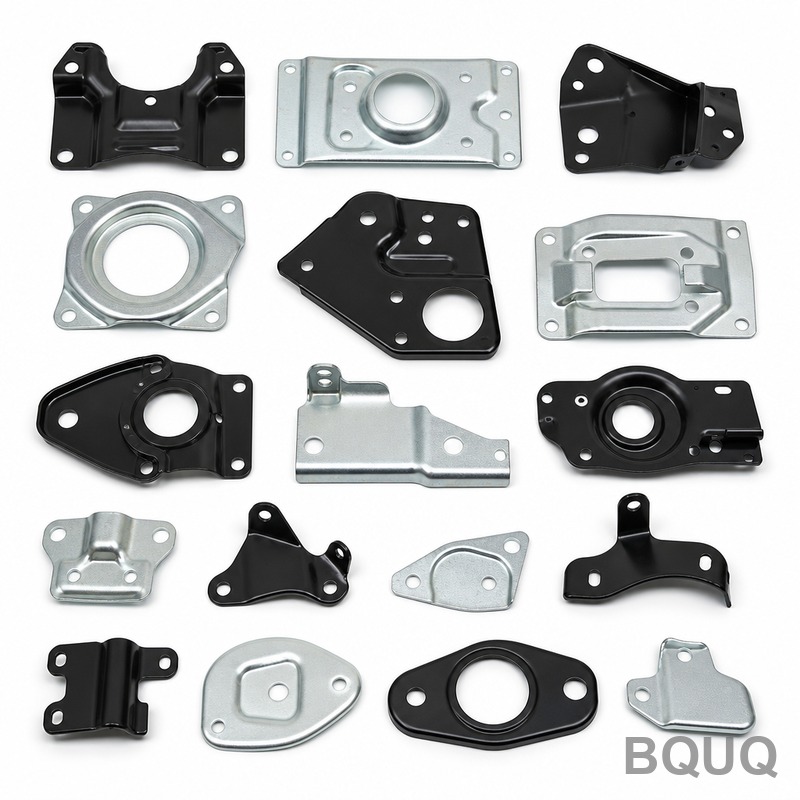
| Metal stamping (progressive die) | 1,000–100,000+ parts | Die cost amortization dominates |
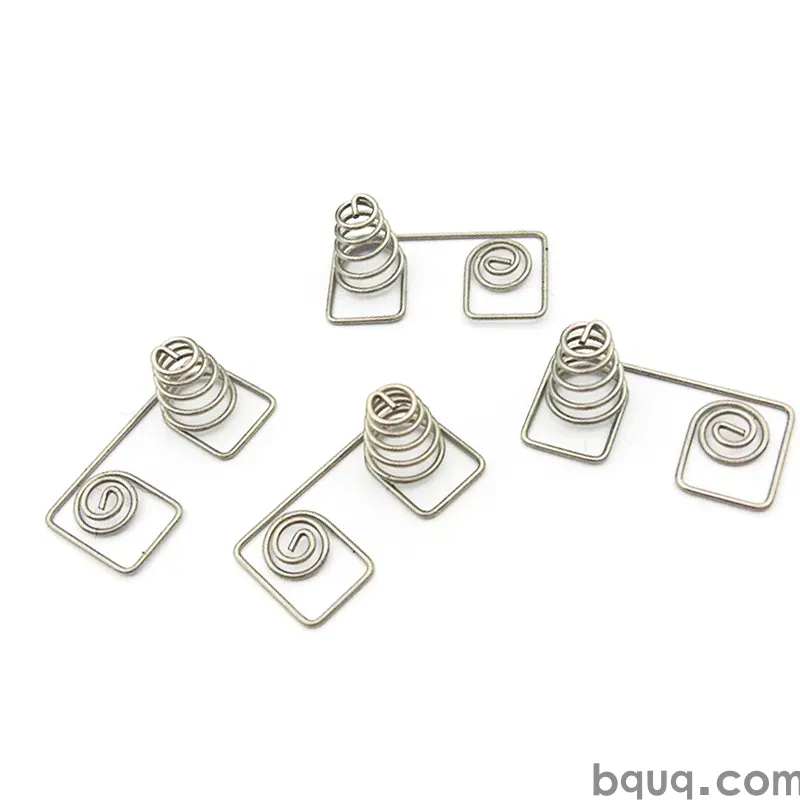
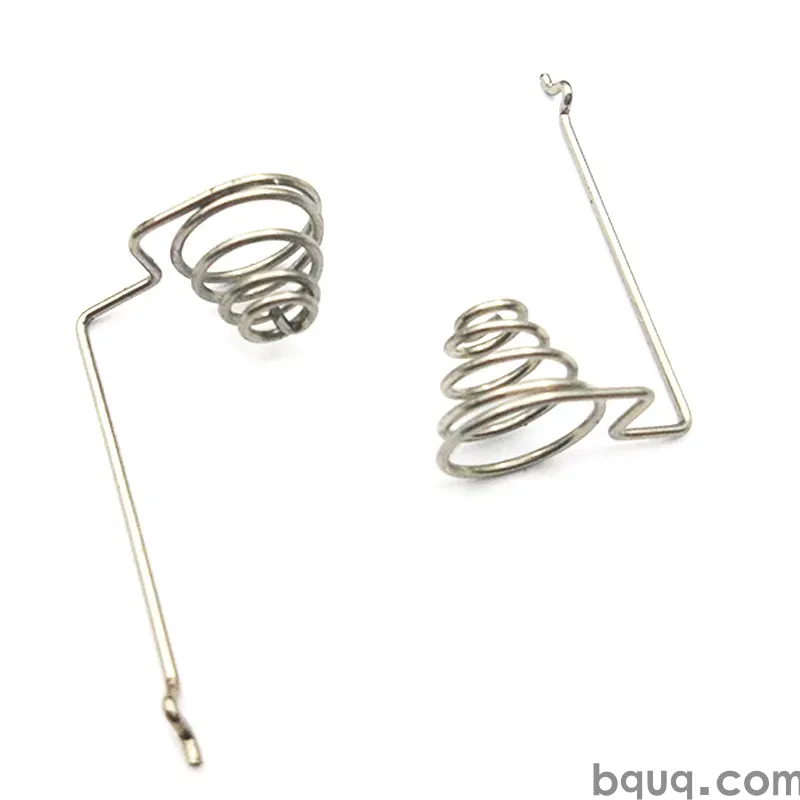
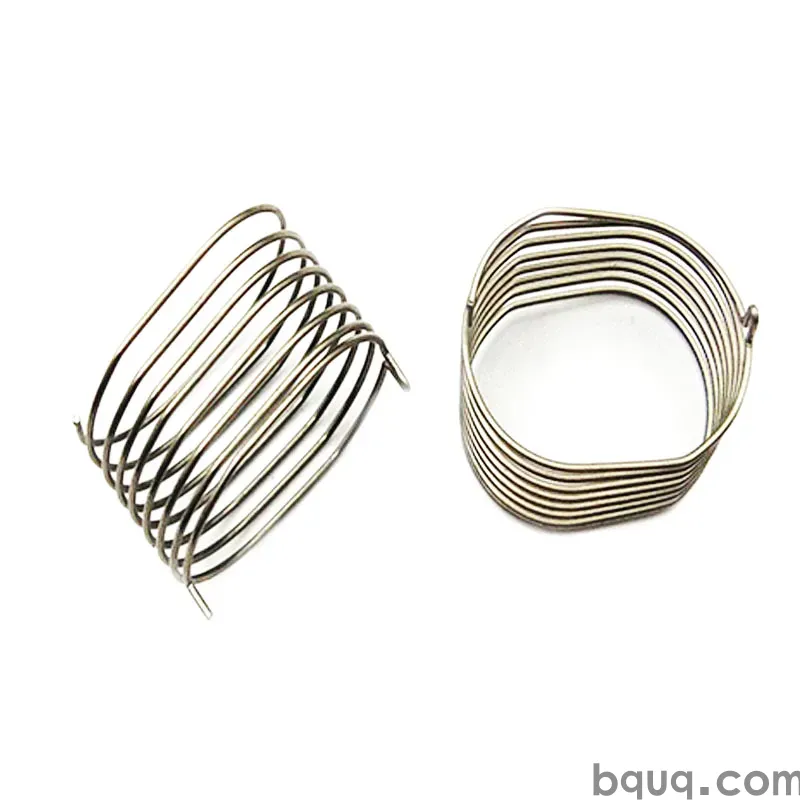
| Custom wire springs | Hundreds to 100,000+ | Coiling setup plus wire lot minimums |
| Extruded heat sinks | ~200–500 kg per profile run | Extrusion press and die economics |
| Injection molding | 1,000–10,000 parts | Mold cost plus cycle time |
| Die casting | 500–5,000 parts | Mold cost plus machine time |
The takeaway is that "no MOQ" is a structural feature of CNC rather than a marketing trick: no tooling means the only fixed cost is setup time, which a factory absorbs or bills as a setup charge. That is why engineers prototype in CNC and migrate to stamping or molding only when volume justifies the tooling. Our CNC turning parts line runs one-piece orders routinely, and the same floor that stamps and plates will tell you straight when volume has outgrown machining.
The Quantity Ladder: Run the Numbers
MOQs stop being mysterious the moment you build a quantity ladder. Take a machined bracket with no tooling: a fixed order cost of $250 for programming and setup, plus $4.50 per piece. Unit price falls like this:
| Quantity | Setup per piece | Variable per piece | Unit price | Order total |
|---|---|---|---|---|
| 1 | $250.00 | $4.50 | $254.50 | $255 |
| 10 | $25.00 | $4.50 | $29.50 | $295 |
| 50 | $5.00 | $4.50 | $9.50 | $475 |
| 100 | $2.50 | $4.50 | $7.00 | $700 |
| 500 | $0.50 | $4.50 | $5.00 | $2,500 |
| 1,000 | $0.25 | $4.50 | $4.75 | $4,750 |
| 5,000 | $0.05 | $4.50 | $4.55 | $22,750 |
The takeaway: past roughly 500 pieces the curve goes flat because variable cost now dominates. No volume is refused — hence no MOQ — but ordering 5,000 instead of 1,000 saves only $0.20 a piece while tying up four times the cash.
Now run the same bracket through a progressive die: $4,000 in tooling amortized over the order, plus $0.35 per piece at high volume.
| Quantity | Die cost per piece | Variable per piece | Unit price | Order total |
|---|---|---|---|---|
| 1,000 | $4.00 | $0.35 | $4.35 | $4,350 |
| 5,000 | $0.80 | $0.35 | $1.15 | $5,750 |
| 20,000 | $0.20 | $0.35 | $0.55 | $11,000 |
| 50,000 | $0.08 | $0.35 | $0.43 | $21,500 |
Here the stamped part overtakes machining somewhere between 1,000 and 5,000 pieces and keeps falling to $0.43 at 50,000. The MOQ is not an obstacle to route around; it signals which process is economical at your volume. A factory running several processes under one roof — CNC, stamping, springs and heat sinks at our Dongguan plant — can recommend the switching point instead of selling you the process it owns.
Six Ways to Bring an MOQ Down
Start by asking what drives the number, because the fix depends on the component. If plating or anodizing sets the MOQ, order raw parts now and finish them in a later batch — the MOQ follows the finish, not the part. If material is the constraint, accept a standard stock grade and size instead of a specialty alloy. If die amortization drives a stamping MOQ, offer to pay the tooling as a separate line item; most factories will quote far smaller runs once the die is yours on paper.
Second, group a family of parts: several part numbers sharing material, thickness and finish often count toward one run, turning three small orders into one respectable batch. Third, commit to an annual forecast — a 12-month blanket with scheduled releases spreads fixed cost across your whole year. Fourth, simplify the part: standard wire gauges for springs, standard stock sizes for machined blanks, and realistic tolerances cut setup and inspection time. Our custom compression springs are a good example: every wire diameter, end configuration and finish is a separate specification, so grouping variants into one family order is the fastest way to shrink their MOQs.
Fifth, stage your volume across processes: prototype and validate in CNC with no MOQ while an expensive die is built, then switch to the high-MOQ process when your forecast justifies it. Sixth, and most overlooked, do not over-order just to hit a number — dead stock from engineering changes is the most expensive quantity discount you will ever take. If the honest route is a small premium batch while the design stabilizes, it is often the cheapest total cost, and a supplier worth keeping will say so rather than book an order you may scrap.
When the MOQ Is Actually Telling You Something
An unusually high MOQ can be a warning, and a suspiciously low one can be one too. A stamping shop quoting 100,000 pieces on a simple terminal is either pricing real die economics or padding to avoid small-run hassle — ask which. And a supplier claiming no MOQ on a batch process like plating or heat treatment is hiding half the story: the part may have no MOQ while the finish does. The fix: ask the factory to decompose the number into tooling, setup, material, inspection and finishing. A supplier that can answer line by line is pricing engineering; one that answers "because policy" is quoting convenience — and policy is negotiable once you show a forecast. A tooled-up part also ties you to that supplier for a year or more, so run the vetting checklist from our China sourcing guide before committing to the die.
Email sc@bquq.com or WhatsApp +86 137 1315 7787 with your PDF/DXF/STEP file. An engineer reviews it and replies with price, lead time and DFM notes on working days.
Frequently Asked Questions
Q: What does MOQ mean in manufacturing?
A: MOQ stands for minimum order quantity — the smallest order a factory will accept for a part. It exists because fixed costs like tooling, setup, inspection and finishing batches are the same for one piece as for thousands, and someone must cover them.
Q: Why is there no MOQ for CNC machining?
A: CNC needs no tooling, so the only fixed cost is programming and setup, which a factory can bill directly as a setup charge. That is why most CNC shops accept a one-piece prototype order and still machine 100,000-part runs.
Q: Why are MOQs for stamped parts so much higher?
A: A progressive die costs thousands of dollars and must be amortized across the parts it produces. Below roughly a thousand pieces the die cost per part becomes unreasonable, which is why low-volume buyers use CNC or soft-tool prototyping instead.
Q: Can I negotiate a lower MOQ?
A: Usually yes, once you identify what drives the number. Paying for tooling separately, grouping a family of parts into one run, accepting standard materials, or committing to an annual forecast are the four most effective levers.
Q: Do MOQs apply separately to colors and finishes?
A: Often yes. Anodizing and plating run in tank batches, and every color change forces a line flush, so each finish can carry its own MOQ. Consolidate your finishes and order the same color across parts to stay under the limits.
Related Articles
- china-precision-parts-buyer-guide — More from the BQUQ China Sourcing engineering series.
Data Sources and Verification
Tolerances, cycle times and price ranges in this guide come from BQUQ production records at our Dongguan plant, where CNC machining (±0.005 mm), stamping, custom springs and heat sinks run under one roof. BQUQ is an ISO 9001:2015 certified factory; the certificate and batch inspection reports are available on request with every quotation.
Related Resources
- About BQUQ: an ISO9001-certified source factory in Dongguan running four production lines under one roof.
- Products across all four lines — CNC machining, metal stamping, custom springs and heat sinks.
- Industry trends: manufacturing, material market, and sourcing analysis for buyers.
- Technical articles: engineering guides and process comparisons — more where this article came from.
- FAQ hub: quick answers on CNC, stamping, springs, and heat sinks.
- Case studies: real parts and real numbers from projects we engineered and delivered.
- Contact us: send your drawing and get a quote within 12 working hours.
Authored by the BQUQ Engineering Team. BQUQ is an ISO9001-certified source factory in Dongguan, China, running CNC machining, metal stamping, custom springs and heat sink lines under one roof. Send drawings to sc@bquq.com or WhatsApp +86 13713157787 for a quote within 12 working hours. www.bquq.com