"Tooling Ownership in China: Contracts and Amortization"
Short answer: Tooling ownership is not automatic — it is whatever your purchase order and tooling agreement say. If you pay a separate, itemized tooling charge, you should own the tool outright and be entitled to take it back. If the tool is amortized into the piece price, the supplier usually owns it until the amortization is complete or you pay a buyout. Either way, the contract must name the tool, the payment path, the buyout formula, and the transfer terms. Without those four elements, your "ownership" is a verbal assumption — and verbal assumptions do not survive a supplier change.
Most sourcing teams spend weeks negotiating unit price and almost no time negotiating who owns the steel. That is backwards. Unit price is a recurring, visible cost; tooling is a one-time, high-value asset that determines whether you can ever leave a supplier without starting over. This article breaks down the ownership models, the amortization math, and the contract clauses that protect a buyer sourcing stamped parts, CNC fixtures, and spring coiling tooling from China.
Why does tooling ownership matter more than unit price?
A progressive stamping die for a mid-complexity connector terminal might cost USD 8,000–25,000. A set of CNC soft jaws and fixtures for a family of machined housings might run USD 1,500–6,000. A spring coiler setup with custom cams and pitch tooling might be USD 2,000–10,000. These are typical, indicative ranges — actual numbers depend on part complexity, station count, tolerance class, and material.
Now compare that to the unit price. If you save USD 0.02 per piece on a 500,000-piece annual volume, you save USD 10,000 per year. If you lose ownership of a USD 20,000 die, you have handed back two years of that saving in a single stroke — and you have also handed your supplier leverage over every future price negotiation.
Ownership is leverage. It is also insurance. A tool you own can be moved, duplicated, refurbished by a third party, or held as security during a dispute. A tool you do not own is a hostage.
What are the three tooling ownership models?
Almost every China tooling arrangement falls into one of three structures. They differ in who pays, who holds title, and who controls the exit.
| Model | Who pays for tooling | Who holds title | Typical trigger | Buyer risk |
|---|---|---|---|---|
| Separate tooling PO | Buyer, itemized and invoiced | Buyer | New program launch | Low — clean title, clean transfer |
| Amortized into piece price | Buyer, spread over units | Supplier until buyout | Buyer wants low upfront cash | Medium — title lags payment |
| Supplier-funded / "free" tooling | Supplier | Supplier | High-volume, long-term commitment | High — tool is a lock-in asset |
Model 1: Separate tooling purchase order
You issue a distinct PO for the tool, the supplier invoices it, and the tooling agreement states that title passes to you on full payment. This is the cleanest structure and the one most experienced buyers insist on, even when it means paying cash upfront.
The advantage is clarity. The tool is an asset on your books. It can be depreciated, insured, and — critically — retrieved. The disadvantage is cash flow: you pay before you have a single production part.
Model 2: Amortized tooling
Here the tool cost is divided across an agreed volume and added to the piece price. A USD 12,000 die amortized over 300,000 pieces adds USD 0.04 per piece. Once the amortization volume is reached, the piece price should drop by that USD 0.04.
This is where most disputes originate. Three questions must be answered in writing:
1. What is the amortization volume? If it is never reached, does the balance become payable?
2. Does the price actually drop? Many contracts never state the post-amortization price.
3. When does title transfer? At the start, at full amortization, or only on buyout?
Model 3: Supplier-funded tooling
The supplier absorbs the tool cost and recovers it through margin. This looks attractive because it removes upfront cash, but it means the supplier owns the asset outright. If you later want to move the part, you must negotiate a buyout from a position of weakness — the supplier has no obligation to sell, and no obligation to quote a fair price.
How should an amortization schedule be structured?
A defensible amortization schedule has four columns: tooling cost, amortization volume, per-piece adder, and post-amortization price. Here is a worked example for a stamped bracket.
| Item | Value | Notes |
|---|---|---|
| Tooling cost (indicative) | USD 14,000 | 6-station progressive die, 0.8 mm SPCC |
| Agreed amortization volume | 350,000 pcs | Roughly 12 months at forecast |
| Per-piece tooling adder | USD 0.04 | 14,000 ÷ 350,000 |
| Base piece price (ex-tooling) | USD 0.21 | Material, labor, overhead, margin |
| Price during amortization | USD 0.25 | 0.21 + 0.04 |
| Price after amortization | USD 0.21 | Must be stated explicitly |
| Buyout price at month 6 | USD 10,500 | 14,000 × (1 − 6/12), if agreed |
The buyout formula is the clause buyers forget. If you want to move the tool before amortization completes, you need a pre-agreed number. A straight-line formula — remaining unamortized balance — is the fairest and easiest to audit. Anything else invites argument.
What clauses belong in a tooling ownership agreement?
A tooling agreement does not need to be long. It needs to be specific. These eight clauses cover the vast majority of real disputes.
- Tool identification. List every tool by number, description, cavity/station count, and the part number it produces. "The tooling" is not an acceptable description.
- Title and transfer. State the exact event that transfers title: full payment, full amortization, or buyout payment.
- Payment path. Separate PO, amortization adder, or buyout — named explicitly.
- Buyout formula. Straight-line remaining balance, with a worked example.
- Access and inspection. Your right to inspect the tool, at your cost, with reasonable notice.
- Maintenance and repair. Who pays for wear-and-tear maintenance (normally the supplier, as part of piece price) versus damage from buyer-driven design changes (normally the buyer).
- Transfer terms. Packing standard, who pays freight, and the condition the tool must be returned in — production-ready, with a documented tryout.
- Retention on dispute. The tool may not be scrapped, sold, or used for other customers' parts while a payment dispute is open.
Clause seven is the one that most often goes wrong. A die that arrives without its tryout record, with worn punches, or with the wrong shim pack is functionally a new tooling project. Specify "returned in production-ready condition with a documented tryout at buyer's nominated facility" and hold a final payment against it.
How does tooling ownership differ by process?
Ownership mechanics are broadly similar across processes, but the practical risks differ. For a deeper look at how tool value declines over time and how that affects buyout pricing, see our article on tooling depreciation terms.
Metal stamping
Progressive dies are the highest-value, most process-specific tools. They are also the hardest to move, because a die built for one press may not fit another. Specify press tonnage and bed size in the agreement so the tool remains portable to a defined class of machines. BQUQ builds custom metal stamping tooling in-house, which means tool drawings and tryout records are generated in the same factory that runs production — a meaningful advantage when you need documentation for a future transfer.
CNC machining
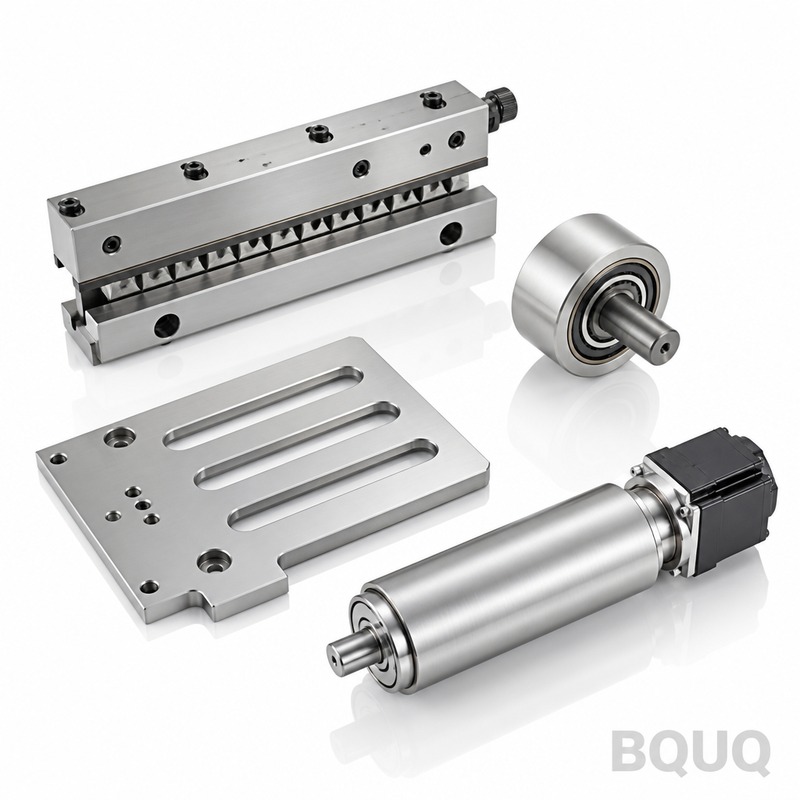
CNC "tooling" is usually fixtures, soft jaws, and custom workholding rather than a die. These are lower cost but highly machine-specific. The real intellectual property is often the CAM program and inspection plan, not the fixture. If you want portability, negotiate for the setup sheets and inspection programs as deliverables. See custom CNC parts for how fixture design interacts with tolerance capability.
Springs and wire forms
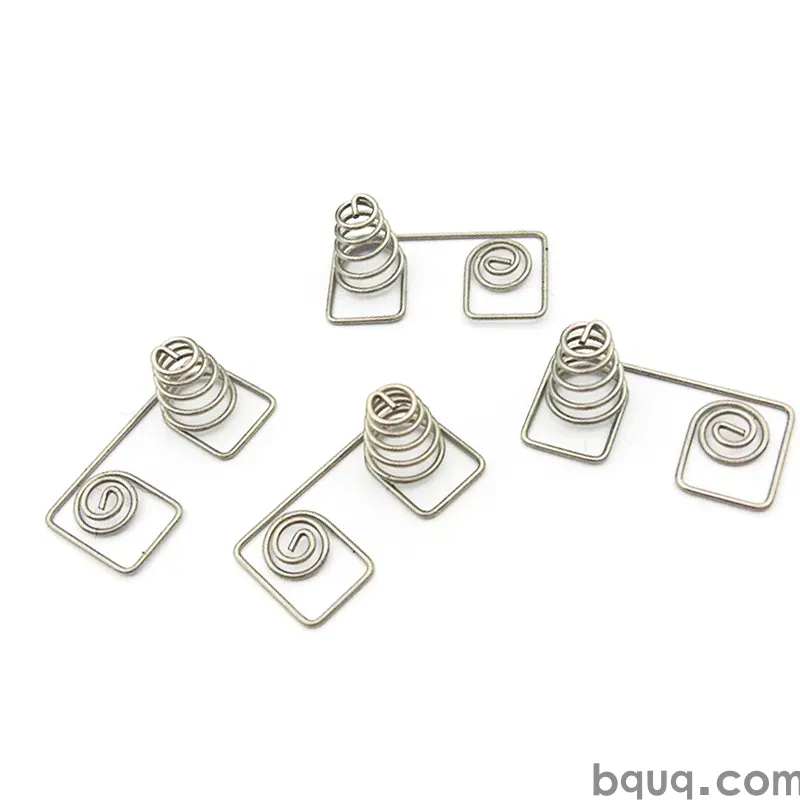
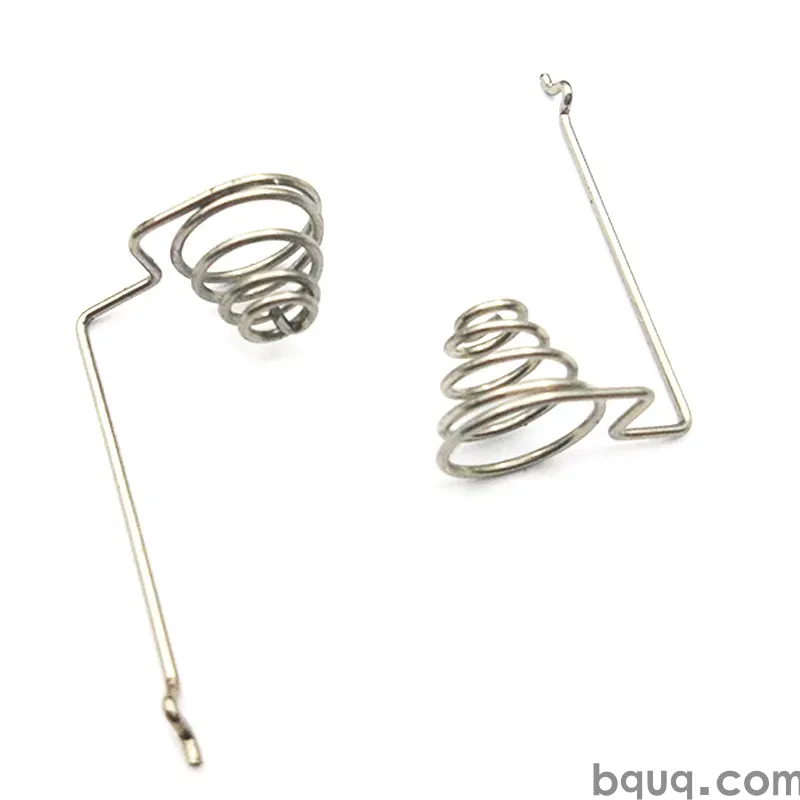
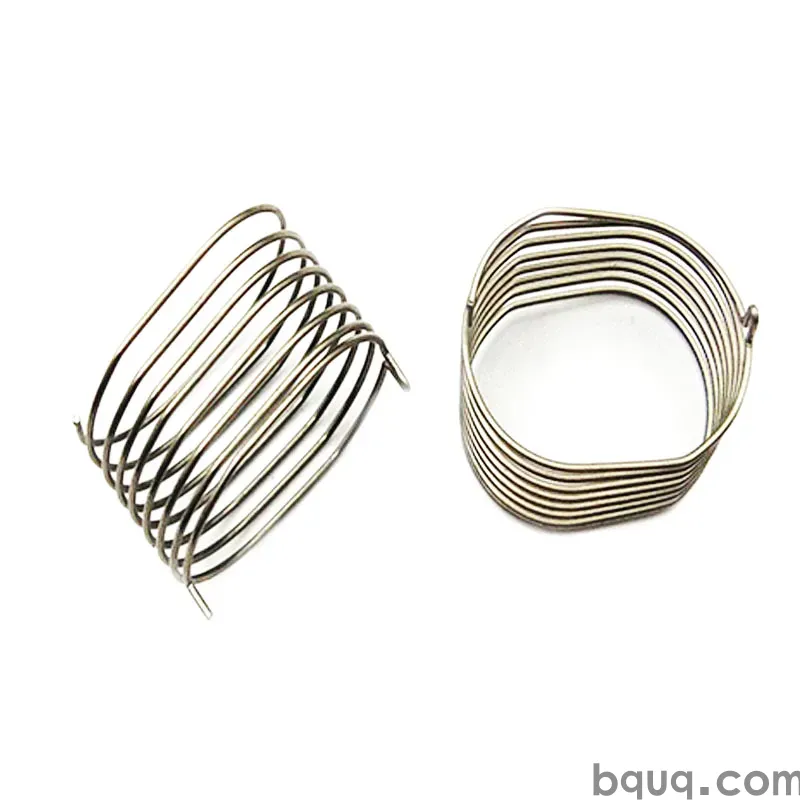
Coiling tools, pitch cams, and custom mandrels are modest in cost but slow to rebuild. The bigger risk is the setup recipe — tension, feed rate, and stress-relief parameters. Ask for the process sheet as part of the tooling package.
Heat sinks and deep-drawn parts
Extrusion dies, skiving fixtures, and deep-draw punches fall somewhere between stamping and machining in cost. Deep-drawn tooling in particular should be documented with a punch-and-die drawing set, since rebuilds are frequent.
What happens when you want to move the tool?
Tool transfer is where ownership is tested. A well-run transfer follows a predictable sequence.
1. Written transfer request referencing the tooling agreement clause.
2. Settlement of any open balance — unamortized tooling, unpaid invoices, or agreed buyout.
3. Tool condition inspection at the current supplier, ideally with photos and a tryout report.
4. Packing to a defined standard, with rust-preventive coating and a packing list.
5. Freight arrangement — clarify Incoterms on the tool movement itself, which is separate from the parts Incoterm.
6. Tryout at the receiving factory, with a first-article inspection against the original drawing.
Step six is not optional. A tool that ran at the old supplier's press may need shimming, new springs, or a punch replacement at the new one. Budget for it.
If you are also managing qualification paperwork during a transfer, our guide to the sample approval process explains how to keep first-article documentation aligned with the original approval.
How do you avoid tooling lock-in?
Lock-in is rarely the result of a single bad clause. It accumulates. These practices keep you portable.
- Always pay tooling separately if cash flow allows. It is the single most effective protection.
- Never accept "the tool is free" without understanding what you are giving up.
- Get the tool drawings. Even if you do not own the tool, drawings let you re-quote.
- Document the process, not just the part. Setup sheets, tryout records, and inspection plans.
- Keep a tool register with location, condition, last tryout date, and remaining amortization.
- Review annually. Tooling agreements signed at launch are often stale by year three.
A useful discipline is to run the same DFM review on tooling that you run on parts. Our article on the DFM feedback loop covers how early manufacturability input reduces tooling revisions — and every avoided revision is money that does not need to be amortized.
Frequently Asked Questions
Q: Who owns the tooling if I pay for it separately?
A: You do, provided the tooling agreement states that title passes on full payment and identifies the tool specifically. A separate invoice alone is not enough — the contract must name the tool, the payment event, and the transfer terms. Without a written title clause, a supplier can argue the payment was a contribution toward tooling cost rather than a purchase of the asset itself.
Q: Can a Chinese supplier refuse to release my tooling?
A: They can refuse if there is an open balance, an unresolved dispute, or no written ownership clause. Most suppliers will release a tool once legitimate outstanding amounts are settled. The protection is contractual: include a clause stating the tool may not be withheld once all invoiced amounts are paid, and that it may not be used for other customers' parts.
Q: What is a fair tooling buyout price?
A: The fairest formula is the remaining unamortized balance on a straight-line basis. If a USD 14,000 tool was amortized over 350,000 pieces and you have consumed 150,000, the remaining balance is roughly USD 8,000. Agree this formula at contract signing, not at the moment you want to leave — that is when your negotiating position is weakest.
Q: Does amortized tooling make the unit price higher forever?
A: It should not. The tooling adder is a temporary component that must be removed once the amortization volume is reached. The failure mode is a contract that adds the adder but never states the post-amortization price. Always write both prices into the agreement, plus a mechanism to confirm when the amortization volume has been consumed.
Q: How long should tooling last before replacement?
A: It depends on material and tool steel. A progressive die running mild steel might produce 300,000–1,000,000 strokes between major refurbishments; harder or thicker material shortens that considerably. These are typical figures, not guarantees. Ask your supplier for an expected tool life at your specific material and thickness, and write it into the agreement as a maintenance reference point.
Related Resources
- About BQUQ and our four production lines in one Dongguan factory: /about/
- CNC machining, metal stamping, springs, and heat sinks: /cnc-machining/, /custom-metal-stamping/, /compression-springs/
- Industry trends shaping China sourcing: /industry-dynamics/
- Technical articles on DFM, inspection, and lead time: /bquq-blog/
- Common sourcing and quality questions: /faq/
- Program examples and outcomes: /case/
- Talk to an engineer about your tooling structure: /contact/
Authored by the BQUQ Engineering Team. BQUQ (Dongguan) runs CNC machining (±0.005 mm), metal stamping, custom springs, and heat sink production in one ISO9001 factory. Source-direct from Dongguan, China — quote in 12 hours: sc@bquq.com | WhatsApp +86 13713157787 | www.bquq.com