Customs and Duties for Metal Parts From China
Short answer: There is no single "metal parts duty." Your landed cost is built from four layers: the HS code classification (typically 2.5–6% for many machined and stamped metal parts under Chapter 73/84/85), any additional trade-remedy tariffs such as Section 301 (commonly 7.5–25% for Chinese-origin goods), freight and insurance, and the customs brokerage plus entry fees. On a typical USD 10,000 shipment of CNC parts, a 25% additional tariff adds USD 2,500 on the declared value alone — which is why classification accuracy and Incoterms matter more than the headline duty rate. BQUQ provides commercial invoices, packing lists, material certificates and HS code suggestions with every shipment, and quotes in 12 working hours.
Why the Duty Rate You Find Online Is Rarely the Rate You Pay
Search any "China tariff calculator" and you will get a single percentage. That number is almost always wrong for your specific shipment, for three reasons.
First, duty is assessed on the customs value, not the price you paid the factory. Customs value is normally the transaction value at the point of export — so if you buy FOB Shenzhen, the value excludes international freight, but if you buy CIF or DDP, the freight and insurance are typically baked in and become part of the dutiable base.
Second, the HS code drives everything. A stainless steel bracket and a stainless steel spring can sit in different headings with different base rates, different trade-remedy exposure, and different documentation requirements. Classification is a legal determination, not a marketing one.
Third, additional tariffs stack. Section 301 duties, anti-dumping and countervailing duties (AD/CVD), and safeguard measures are added on top of the general or special rate. A part with a 3% general rate and a 25% Section 301 rate is a 28% part, plus brokerage and freight.
The practical takeaway: budget from a landed cost model, not from a duty percentage you found in a search result.
How Are Metal Parts Classified Under the HS Code System?
The Harmonized System is a six-digit international nomenclature. Beyond six digits, each country adds its own tariff schedule — in the United States that is the HTSUS (10 digits), in the EU the TARIC (10 digits), in the UK the UK Global Tariff.
Most metal parts sourced from a Dongguan factory land in one of a few chapters:
| Chapter | Typical content | Example parts |
|---|---|---|
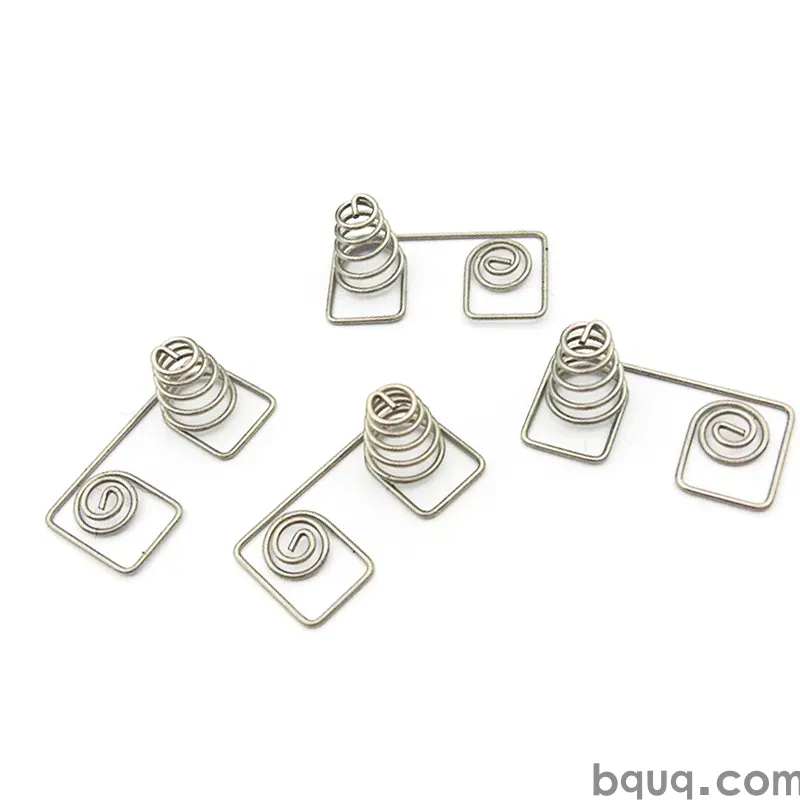
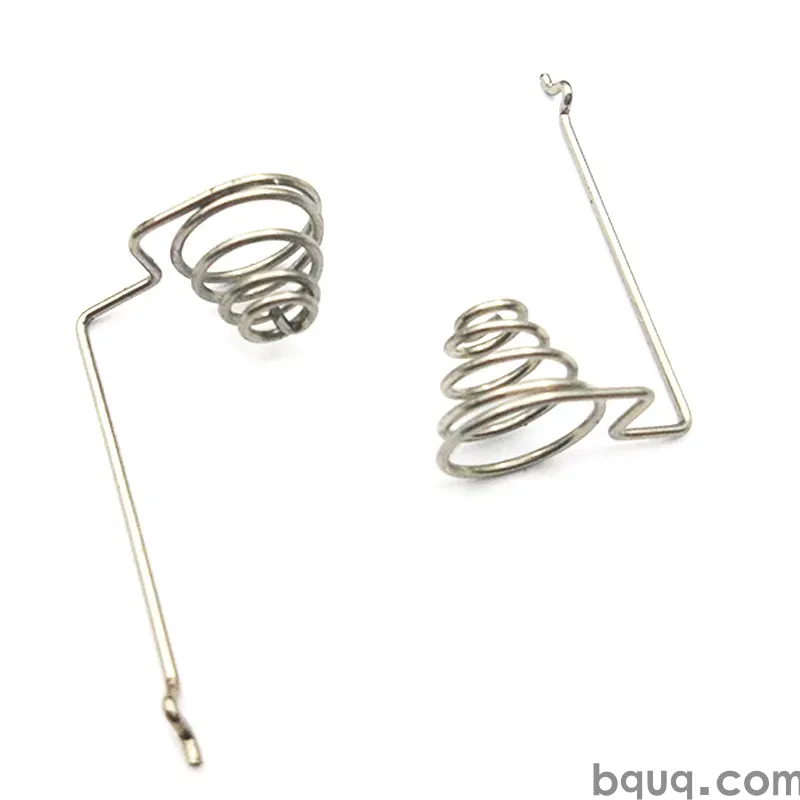
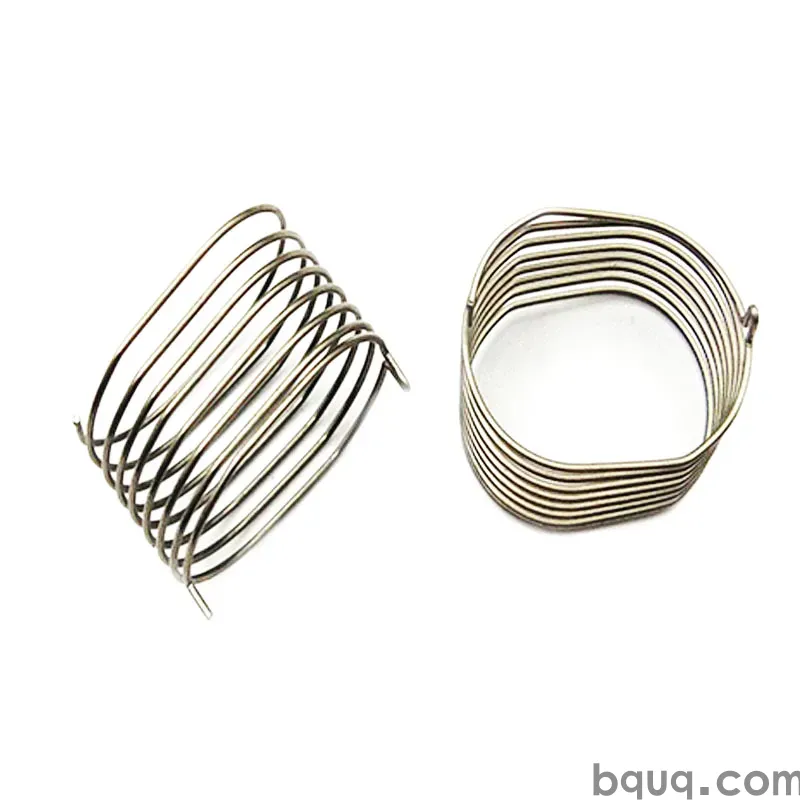
| 73 | Articles of iron or steel | Stamped brackets, springs, wire forms, fasteners, deep-drawn shells |
| 82 | Tools, implements, cutlery | Collet chucks, tool holders, hand tools |
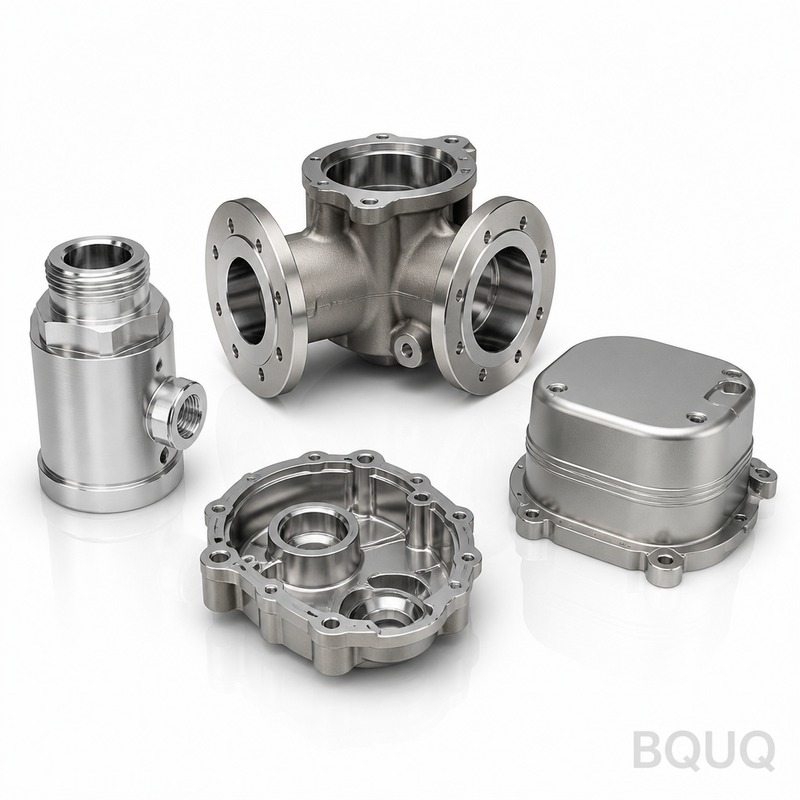
| 84 | Machinery and mechanical appliances | Machined housings, shafts, precision components for equipment |
| 85 | Electrical machinery and equipment | Heat sinks, connector shells, lead frames, EMI shielding |
The classification logic follows the essential character of the part, not the material alone. A heat sink is usually classified by its function as a part of the apparatus it serves, not simply as "aluminium article." A spring is normally an article of iron or steel under heading 7320 regardless of the machine it will eventually sit in.
Why the Same Drawing Can Get Two Different Codes
Two importers can classify the same bracket differently and both can be "reasonable" — until Customs disagrees. The difference usually comes down to:
- Whether the part is dedicated to a specific machine (which can push it into a "parts of" heading)
- Whether it is a general-purpose article (which keeps it in Chapter 73)
- Whether it performs an electrical function (Chapter 85) versus a purely mechanical one
This is why you should never let a supplier's shipping clerk pick your HS code silently. Ask for the code in writing, ask for the reasoning, and validate it against your own broker's opinion.
What Tariffs Apply to Chinese-Origin Metal Parts?
Three layers are common for US-bound shipments, and a similar structure exists in the EU and UK.
| Layer | What it is | Typical magnitude | Who sets it |
|---|---|---|---|
| Base duty (MFN) | Normal most-favoured-nation rate | 0–6% for many metal parts | Destination customs authority |
| Additional trade measures | Section 301 (US), similar measures elsewhere | Commonly 7.5–25% | Trade authority |
| AD/CVD | Anti-dumping / countervailing | Highly product-specific | Trade authority |
EU and UK importers face a different mix: the EU Common Customs Tariff (often 0–2.7% for many machinery parts), plus VAT collected at import, plus anti-dumping duties on certain steel products. The UK operates its own global tariff schedule.
Important nuance: Section 301 exposure depends on the country of origin, not the country of export. Transshipping through a third country without substantial transformation does not change origin — and origin fraud carries severe penalties. If you are exploring alternative supply geographies, our comparison of China vs Vietnam manufacturing covers the trade-offs honestly.
The First Sale and Transaction Value Question
If you buy through a trading company that buys from the factory, you may be able to declare the first sale price (the factory-to-trader price) rather than the price you paid the trader — potentially lowering the dutiable value. This is legitimate but heavily scrutinised. It requires documented evidence of the bona fide sale, and many brokers will not touch it without a ruling. For most small and mid-size importers, the compliance cost exceeds the saving.
How Do Incoterms Change Who Pays the Duty?
Incoterms decide where risk transfers and who contracts for carriage and clearance. They do not decide who legally owes duty — that is always the importer of record.
| Incoterm | Freight paid by | Duty paid by | Practical note |
|---|---|---|---|
| EXW | Buyer | Buyer | Buyer handles everything from the factory gate; highest admin burden |
| FOB | Buyer | Buyer | Common for China sourcing; supplier delivers to port |
| CIF / CFR | Seller | Buyer | Seller books freight; buyer still clears and pays duty |
| DAP | Seller | Buyer | Seller delivers to named place; buyer clears and pays duty |
| DDP | Seller | Seller (nominally) | Seller quotes all-in; buyer has least control and least visibility |
DDP is convenient but has two traps. First, you often cannot see the actual duty paid, so you cannot verify classification. Second, if the seller under-declares to hit a DDP price, you — as importer of record in most jurisdictions — carry the legal risk. Ask for the entry summary (CBP Form 7501 in the US) on every DDP shipment.
For most B2B buyers of precision parts, FOB plus your own broker is the cleanest structure: you control classification, you see every line of the entry, and you build a real landed cost history.
How Do You Calculate Landed Cost for a Metal Parts Shipment?
Build the model line by line. Here is a worked example for a USD 10,000 FOB shipment of CNC-machined aluminium housings.
| Cost element | Basis | Example (USD) |
|---|---|---|
| Goods value (FOB) | Invoice | 10,000 |
| International freight | Actual or quoted | 850 |
| Insurance | ~0.3% of CIF | 35 |
| Customs value | FOB + freight + insurance | 10,885 |
| Base duty @ 3.0% | On customs value | 327 |
| Section 301 @ 25% | On customs value | 2,721 |
| Merchandise processing fee | US: 0.3464%, min/max caps | 38 |
| Brokerage / entry fee | Per entry | 125 |
| Destination delivery | To your dock | 400 |
| Total landed | 14,496 |
That is a 45% uplift over the FOB invoice. If your sourcing business case assumed a 10% uplift, the programme is underwater before you have machined the first part.
Where the Savings Actually Come From
Because duty is levied on value, the levers are:
1. Correct classification. A defensible code with a lower rate is worth real money — but only if it is genuinely correct.
2. First sale valuation, where the structure supports it.
3. Duty drawback. If you export the finished goods, you may recover up to 99% of duties paid on imported components. This is the single largest lever for exporters and is chronically under-used.
4. Free trade agreement routing. If your finished product qualifies under a USMCA or EU FTA rule of origin, duty may be reduced or eliminated on the finished good — but the Chinese-origin component still needs to satisfy the applicable rule.
5. Design and material choices. A part machined from domestic aluminium rather than imported billet changes the origin analysis entirely.
If you are weighing processes, our breakdown of CNC vs stamping supplier selection explains how process choice affects unit cost, tooling and — indirectly — the value you declare.
What Documents Do You Need for a Clean Customs Entry?
Missing or inconsistent paperwork is the number one cause of delayed entries. Every shipment of metal parts should travel with:
- Commercial invoice — seller, buyer, part numbers, description, quantity, unit price, total, currency, Incoterm, country of origin, HS code
- Packing list — carton count, dimensions, net and gross weight, marks and numbers
- Bill of lading or airway bill — matching the invoice consignee
- Certificate of origin — if a preferential rate is claimed
- Material certificates — mill certs for steel, aluminium or copper alloys
- Test/inspection reports — dimensional or functional, if required by your quality plan
- Product-specific declarations — e.g. FDA, FCC, or RoHS/REACH statements where applicable
The invoice description must be specific. "Metal parts" invites a hold. "Stainless steel 304 stamped mounting bracket, P/N BR-4412, 42 × 18 × 1.5 mm, 1,200 pcs" does not.
We recommend pairing your customs documentation with a documented pre-shipment inspection. Our guide to third-party inspection in China covers what to check and when.
Frequently Asked Questions
Q: Do I have to pay duty on samples and prototypes from China?
A: Often not, if the value is below your country's de minimis threshold — in the US this has historically been USD 800 per shipment, though rules change and low-value shipments face increasing scrutiny. Above the threshold, duty applies normally. Mark samples clearly as "samples, not for resale, value for customs purposes only" and declare a realistic value. Under-declaring samples to avoid duty is a compliance risk that is never worth the saving.
Q: Who is legally responsible for the HS code — me or my Chinese supplier?
A: You are, as importer of record. Your supplier can suggest a code and should provide accurate product descriptions, but the legal classification duty rests with the importer. The safest workflow is to get the supplier's suggested code in writing, have your own customs broker review it, and keep that record. If Customs later disagrees, documented reasonable care substantially reduces penalty exposure.
Q: Does buying DDP mean I do not have to worry about customs?
A: No. DDP shifts the commercial burden of paying duty to the seller, but in most jurisdictions you remain the importer of record or the party ultimately liable if the entry is wrong. Always request the entry summary showing the declared value, HS code and duty paid. If a DDP quote looks impossibly cheap, the declared value is probably understated — and that risk lands on you.
Q: Can I avoid Section 301 tariffs by shipping through another country?
A: Only if the goods undergo substantial transformation there. Simply transshipping, relabelling or repacking Chinese-origin parts does not change origin, and origin misdeclaration is treated as fraud with severe penalties including seizure and retroactive duty. Legitimate alternatives are genuine manufacturing in a different country, or duty drawback if you subsequently export the finished product.
Q: How does BQUQ help with customs documentation?
A: Every BQUQ shipment includes a commercial invoice with specific part descriptions, a packing list with carton-level weights and dimensions, material certificates for the alloys used, and inspection reports where your quality plan requires them. We provide HS code suggestions with reasoning, and we quote in 12 working hours so you can build landed cost models early. We ship FOB, CIF, DAP or DDP — your choice.
Practical Checklist Before You Place a China Metal Parts Order
1. Get the HS code in writing from both the supplier and your broker, and reconcile any difference before the first shipment.
2. Model landed cost, not unit price. Include freight, duty, additional tariffs, brokerage and destination delivery.
3. Choose FOB unless you have a strong reason for DDP, and demand the entry summary either way.
4. Check drawback eligibility if you export finished goods — it can recover most of the duty.
5. Verify origin claims for any FTA benefit; do not assume a component qualifies.
6. Keep documentation for at least five years — the standard audit lookback in most jurisdictions.
7. Re-check rates annually. Tariff schedules, trade measures and de minimis thresholds change, sometimes with little notice.
Duty is not a rounding error. On precision metal parts it routinely adds 25–45% to the FOB price, and it is the single most commonly mis-modelled line in a China sourcing business case. Build the model properly once, and every subsequent quote you receive — including ours — becomes directly comparable.
Related Resources
- About BQUQ and our Dongguan factory: /about/
- CNC machining services (±0.005 mm): /cnc-machining/
- Custom metal stamping: /custom-metal-stamping/
- Custom springs and wire forms: /compression-springs/
- Industry trends and trade policy notes: /industry-dynamics/
- Technical articles and sourcing guides: /bquq-blog/
- Frequently asked questions: /faq/
- Contact our engineering team: /contact/
Authored by the BQUQ Engineering Team. BQUQ (Dongguan) runs CNC machining (±0.005 mm), metal stamping, custom springs, and heat sink production in one ISO9001 factory. Source-direct from Dongguan, China — quote in 12 hours: sc@bquq.com | WhatsApp +86 13713157787 | www.bquq.com