Sourcing CNC vs Stamping: Different Supplier Profiles
Short answer: CNC machining and metal stamping are bought from fundamentally different supplier profiles. A CNC shop competes on machine hours, programming skill and ±0.005 mm capability, with no tooling and MOQs as low as one piece. A stamping house competes on tooling engineering, die maintenance and per-piece cost at volume, where a USD 1,500–6,000 die (typical, indicative) only pays back above roughly 2,000–5,000 pieces. Sourcing both from one supplier is possible — BQUQ runs four production lines in one Dongguan factory — but you should still evaluate each process against its own supplier scorecard, not a shared one.
Why the supplier profile changes with the process
When a buyer sends the same RFQ to five Chinese factories, the quotes often look comparable on the surface: a unit price, a lead time, a MOQ. Underneath, the two processes are economically different animals, and the factories that excel at one are rarely structured to excel at the other.
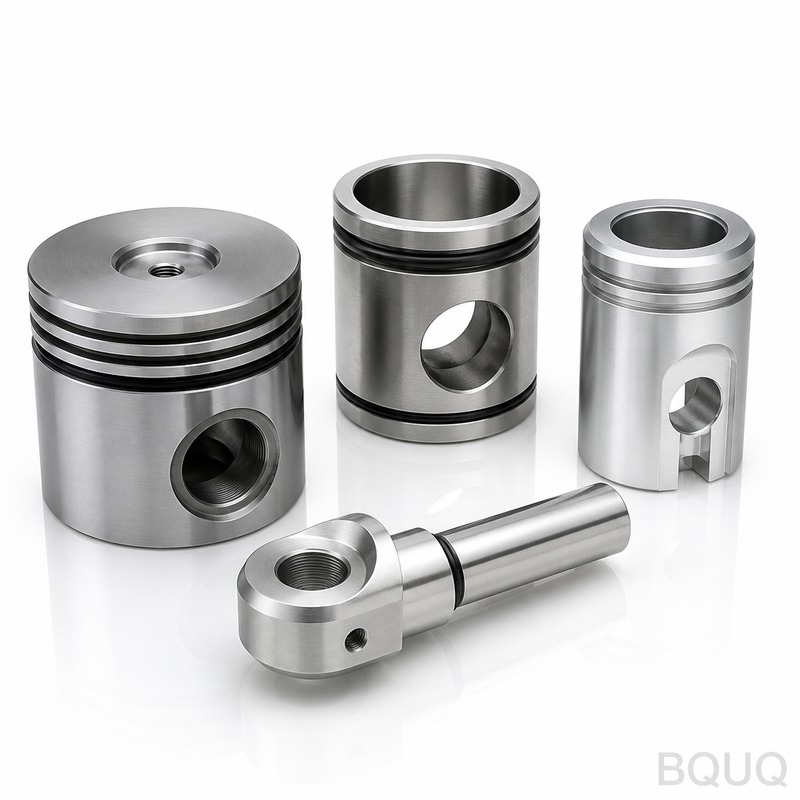
CNC machining is a time-based business. Revenue is machine hours multiplied by shop rate. The supplier's assets are spindles, skilled programmers, and a metrology room. Setup is cheap — a vise, a fixture, a CAM program — so the marginal cost of the first part is high but the cost of the second part is nearly identical to the thousandth. There is no tooling to amortize, which is why a competent CNC shop will happily quote one prototype and 500 production parts on the same drawing.
Metal stamping is a tooling-based business. Revenue is press strokes multiplied by parts per stroke. The supplier's assets are dies, presses, coil feeders, and toolmakers who can grind and re-shim a worn die at 2 a.m. The first part is extraordinarily expensive because you are paying for a die; the ten-thousandth part is almost free by comparison. This is why stamping suppliers ask about annual volume before they ask about tolerance.
If you evaluate both processes with one checklist, you will misprice both. A stamping house that looks "expensive" on a 200-piece order is not gouging you — it is quoting a die. A CNC shop that looks "cheap" at 50,000 pieces is not being generous — it is simply the wrong process at that volume.
How do CNC and stamping suppliers differ on tooling and MOQ?
The tooling question is the single clearest divider between the two supplier profiles.
| Dimension | CNC machining supplier | Metal stamping supplier |
|---|---|---|
| Tooling required | Fixtures and CAM programs only | Hard die (progressive, compound or blank) |
| Typical tooling cost | USD 0–400 (fixture, indicative) | USD 1,500–6,000+ (indicative) |
| Tooling lead time | 0–3 days | 10–25 days (indicative) |
| Practical MOQ | 1 piece | 2,000–5,000 pieces for payback |
| Cost driver | Machine hours, setup, programming | Die amortization, press tonnage, coil yield |
| Best volume band | 1–5,000 pieces | 5,000–millions |
| Design change cost | Re-program, low cost | Die modification, often significant |
| Tolerance capability | ±0.005 mm (BQUQ CNC) | Typically ±0.05 mm, tighter with fine blanking |
A CNC supplier's MOQ is effectively one part. That makes CNC the natural home for prototypes, bridge production, low-volume industrial equipment, and any part whose geometry is still moving. You can iterate a design three times in a week without scrapping capital.
A stamping supplier's MOQ is set by die economics, not by machine capacity. A progressive die for a connector terminal might cost USD 3,000–8,000 depending on stations, material and tolerance. Divide that across your annual volume and the picture becomes obvious: at 1,000 pieces per year the die adds USD 3–8 per part, which usually kills the business case; at 100,000 pieces per year it adds USD 0.03–0.08, which usually wins against CNC by a wide margin.
This is also why stamping suppliers ask harder questions up front. A good one will ask for annual volume, expected lifetime volume, material grade and temper, and whether the part will be re-designed. If your answers are vague, a serious stamping house will either decline or quote conservatively.
What does each supplier actually need from you?
The information a supplier needs reveals what they optimize for. Feed a CNC shop a 3D STEP file and a tolerance callout and it can quote in hours. Feed a stamping house the same file and it will come back with questions — because the die design depends on things a 3D model does not show.
What a CNC supplier needs
- 3D model (STEP/IGES) plus a 2D drawing with GD&T
- Material and temper, or a functional description
- Critical tolerances and datum scheme
- Surface finish requirement (as-machined, anodized, passivated)
- Quantity per order and expected annual usage
- Whether the design is frozen or still in iteration
What a stamping supplier needs
- Flat pattern or the ability to develop one
- Material grade, thickness and temper — coil-fed stamping is thickness-sensitive
- Annual volume and expected program life
- Strip layout constraints, grain direction, burr direction
- Whether secondary operations (tapping, deburring, plating) are in scope
- Die ownership and maintenance terms
That last stamping point matters commercially. Tooling ownership, die transfer rights, and who pays for maintenance after the first 100,000 strokes should be written into the PO, not agreed verbally. Buyers who skip this often discover at the second order that the die is "the supplier's asset."
How should you compare quotes from the two supplier types?
Never compare a CNC unit price to a stamping unit price without normalizing for tooling and volume. The correct comparison is total cost of ownership across the program life.
| Cost element | CNC at 1,000 pcs | Stamping at 1,000 pcs | Stamping at 100,000 pcs |
|---|---|---|---|
| Tooling / NRE | ~USD 200 | ~USD 4,000 | ~USD 4,000 |
| Unit price (indicative) | USD 4.50 | USD 0.85 | USD 0.22 |
| Total part cost | USD 4,700 | USD 4,850 | USD 26,000 |
| Effective unit cost | USD 4.70 | USD 4.85 | USD 0.26 |
| Break-even vs CNC | — | ~1,200 pcs | — |
At 1,000 pieces the two processes are nearly identical in total cost. At 100,000 pieces stamping is roughly 18× cheaper per part. The crossover for a typical small bracket sits somewhere between 1,500 and 5,000 pieces, and it moves with part complexity, material cost, and how much secondary machining the stamped part still needs.
Two practical rules follow. First, if your program life is under two years and volume is under 5,000 pieces, default to CNC and keep your design flexible. Second, if volume is above 10,000 pieces per year and the geometry is stable, get a stamping quote early — the die cost is real but it is a one-time investment that compounds.
For buyers running pilot builds before committing to a die, the sequencing matters. A pilot production run on CNC parts validates fit and function before you spend die money, and it is far cheaper to change a CAM program than a hardened die.
Where does the "one factory, two processes" model fit?
There is a real sourcing advantage in a supplier that runs both processes under one roof, provided the supplier is genuinely structured for both rather than subcontracting one.
BQUQ (Dongguan) operates four production lines in one ISO9001 factory covering CNC machining to ±0.005 mm, metal stamping, custom springs and heat sink production. For buyers, that means a stamped bracket and its machined mating insert can be quoted together, tolerance-stacked by one engineering team, and shipped in one lot. It also means a part can start life as a CNC-machined bridge order and transition to a custom metal stamping die once volume justifies it — without changing supplier, re-qualifying, or re-explaining the drawing.
That transition path is where most sourcing savings actually hide. A buyer who runs CNC at 2,000 pieces per year and never revisits the process choice leaves money on the table. A buyer who reviews the process decision at every volume milestone usually finds the crossover point within 12–18 months.
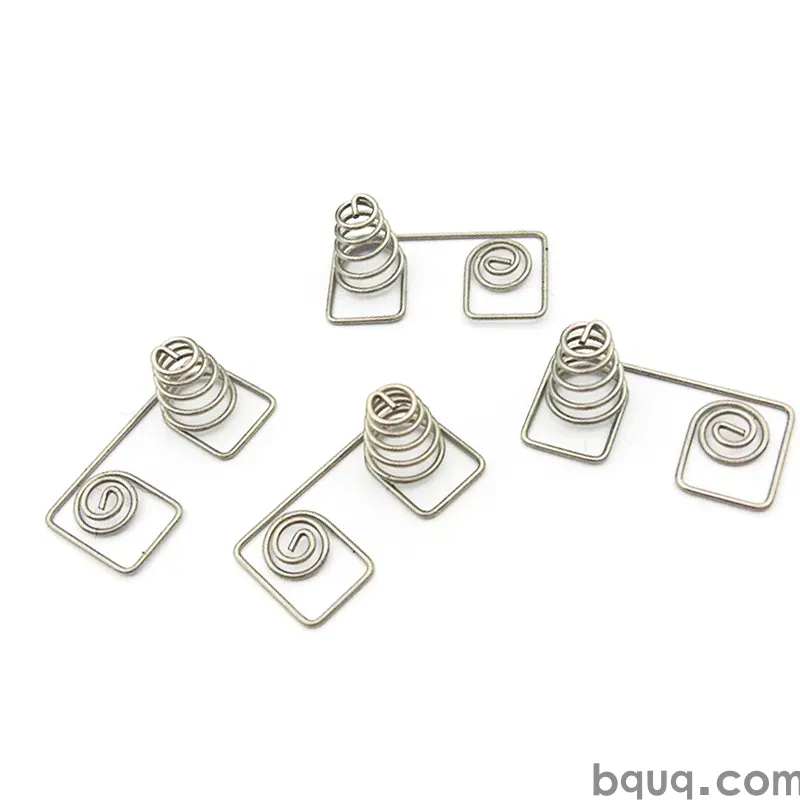
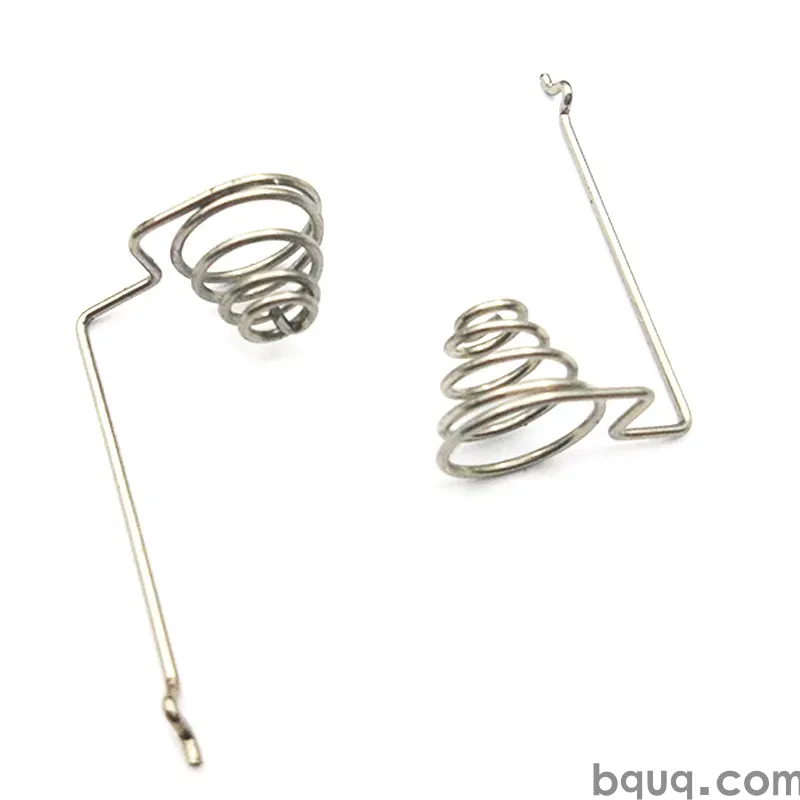
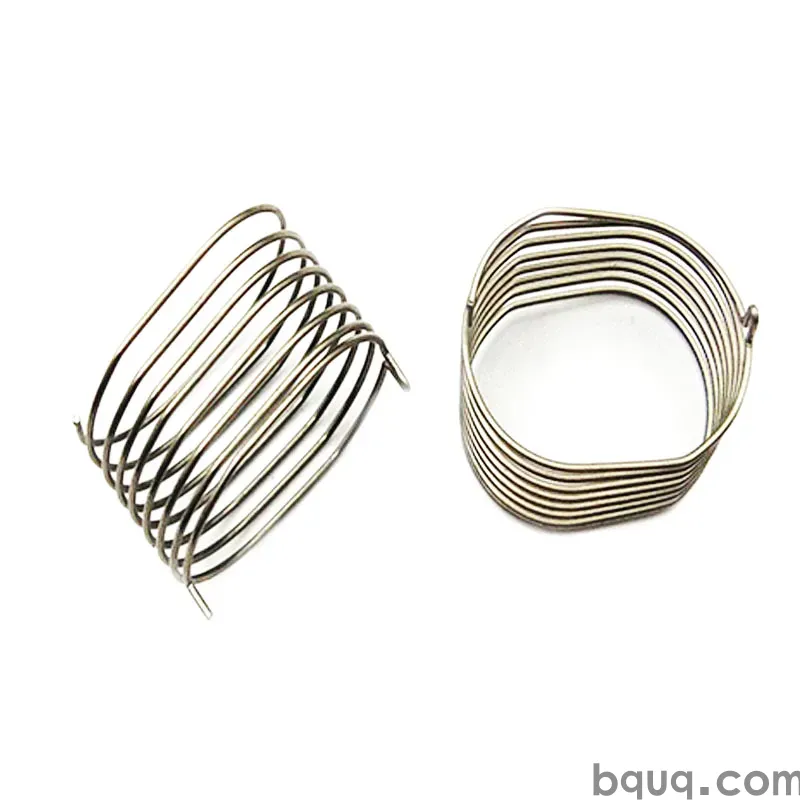
The same logic applies across other processes. A compression spring program may start as wound prototypes and move to automated coiling; a machined housing may later be die-cast or stamped. The supplier profile question is not "which process is better" but "which process is right at this volume, and who can carry me to the next one."
How do you vet a supplier for each process?
The vetting criteria diverge sharply, and using a generic checklist wastes time on irrelevant questions.
For a CNC supplier, verify:
- Spindle count, axis configuration, and maximum part envelope
- In-house metrology (CMM, optical comparator) versus outsourced inspection
- CAM software and programming depth for 5-axis or complex geometry
- Tooling library and how they handle hard materials (stainless, titanium, tool steel)
- Scrap policy and first-article inspection documentation
For a stamping supplier, verify:
- Press tonnage range and bed size against your strip layout
- In-house die design and die maintenance capability — this is the make-or-break item
- Coil handling, straighteners, and feeder accuracy
- Secondary operation capability (tapping, deburring, plating, assembly)
- Die ownership terms, transfer rights, and maintenance responsibility
A supplier that outsources die maintenance is a supplier that cannot control your lead time. That single question filters out more weak stamping vendors than any other. A broader supplier vetting checklist is worth running in parallel, particularly around financial stability and escalation paths.
What about lead time and quoting speed?
CNC suppliers quote fast because there is little to calculate. A competent shop can return a price in 12 working hours for a straightforward machined part, and ship first articles within a week depending on material availability.
Stamping suppliers quote slower because a real quote requires a strip layout, tonnage calculation, and die concept. Expect 3–10 working days for a serious stamping quotation, and 10–25 days for die build after approval. Buyers who expect stamping quotes in 24 hours usually receive a guess rather than an engineering estimate.
This asymmetry has a sourcing consequence: if your project timeline is tight, run the CNC quote in parallel with the stamping quote and plan to launch on CNC. You can tool the die while shipping machined bridge parts, which protects your launch date without paying for expedited die work. That approach also de-risks the die — you learn about fit issues on machined parts before committing to hardened steel.
Frequently Asked Questions
Q: Can one supplier do both CNC machining and metal stamping?
A: Yes, and it is increasingly common among integrated Chinese factories. BQUQ runs CNC machining, metal stamping, custom springs and heat sinks across four production lines in one ISO9001 Dongguan factory. The advantage is tolerance stacking, single-lot shipping and a clean CNC-to-stamping transition as volume grows. The caveat is that you should still verify in-house die capability — a supplier that subcontracts stamping is not really a stamping supplier.
Q: What volume makes stamping cheaper than CNC?
A: It depends on part complexity, but for a typical small bracket the crossover sits between 1,500 and 5,000 pieces. Below that, CNC usually wins on total cost because there is no die to amortize. Above roughly 10,000 pieces per year, stamping typically wins by a wide margin — often 5× to 20× lower unit cost. Always compare total program cost, not unit price alone.
Q: How much does stamping tooling cost?
A: Indicatively, a simple blank or compound die runs USD 1,500–3,000, while a multi-station progressive die for a connector or terminal can reach USD 6,000–15,000 depending on stations, tolerance and material. These are typical ranges, not quotes. Tooling cost should always be evaluated against annual volume — a USD 4,000 die across 100,000 pieces adds only USD 0.04 per part.
Q: Should I own the stamping die?
A: In most cases, yes — or at minimum secure written transfer rights. Die ownership protects you if you change suppliers, and it clarifies who pays for maintenance. Negotiate maintenance responsibility explicitly: many suppliers cover routine grinding for the first year or first 100,000 strokes, then bill separately. Get die ownership, transfer rights and maintenance terms in the PO, not in email.
Q: How fast can I get quotes for both processes?
A: BQUQ returns CNC machining quotes within 12 working hours for standard parts. Stamping quotations take longer because they require a strip layout, tonnage calculation and die concept — typically 3–10 working days. If your timeline is tight, quote both in parallel and launch on CNC bridge parts while the die is being built. This protects your schedule without expediting die work.
Related Resources
- About BQUQ and our Dongguan factory: /about/
- CNC machining services (±0.005 mm): /cnc-machining/
- Custom metal stamping and die engineering: /custom-metal-stamping/
- Custom springs and wire forms: /compression-springs/
- Sourcing and industry trends: /industry-dynamics/
- Technical articles and engineering guides: /bquq-blog/
- Frequently asked questions: /faq/
- Case studies: /case/
- Contact our engineering team: /contact/
Authored by the BQUQ Engineering Team. BQUQ (Dongguan) runs CNC machining (±0.005 mm), metal stamping, custom springs, and heat sink production in one ISO9001 factory. Source-direct from Dongguan, China — quote in 12 hours: sc@bquq.com | WhatsApp +86 13713157787 | www.bquq.com