China Factories vs Domestic Shops: Choosing by Part
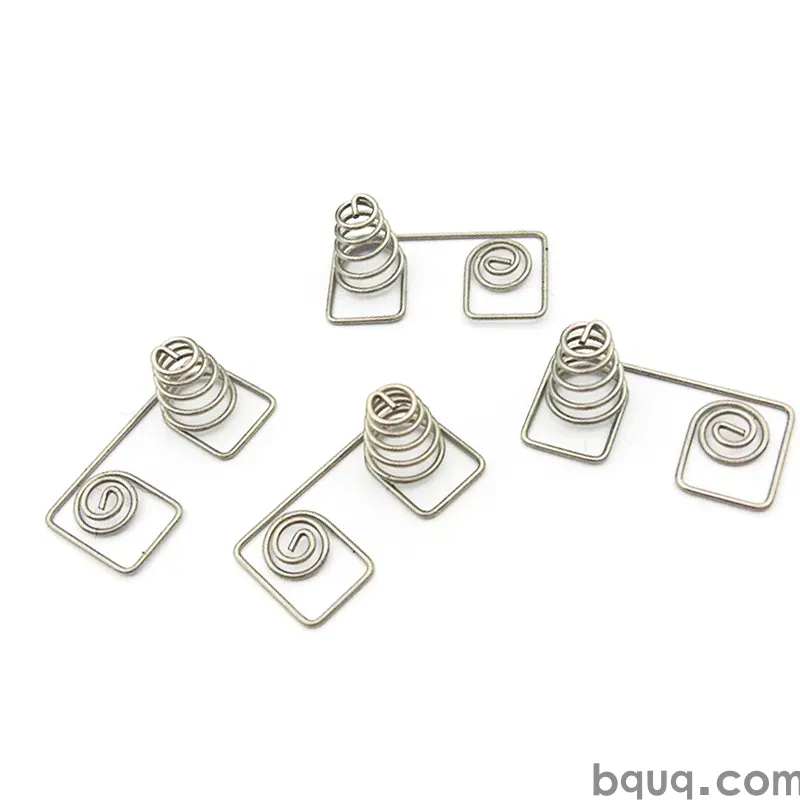
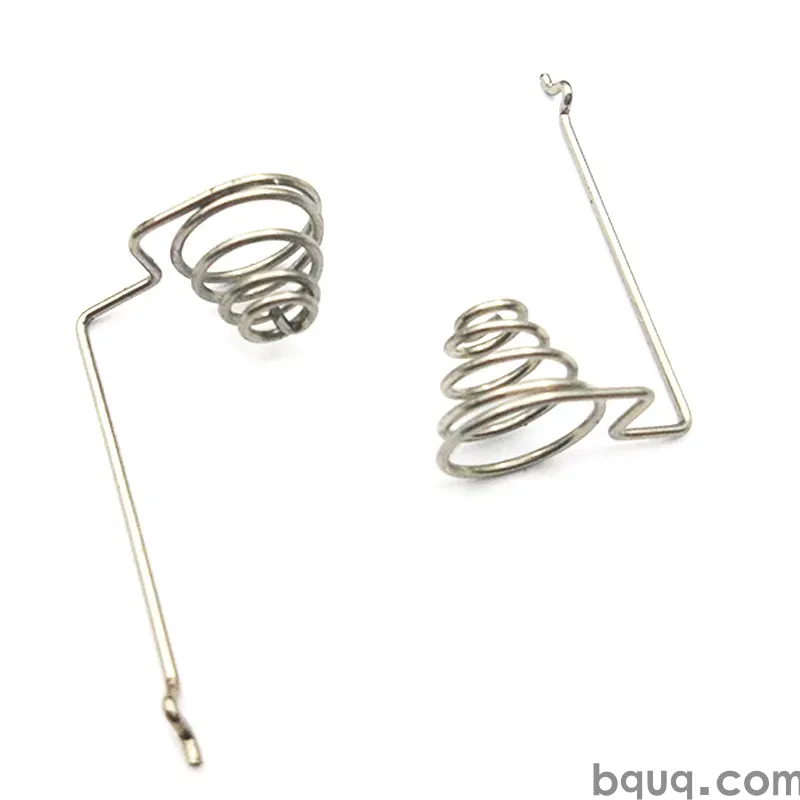
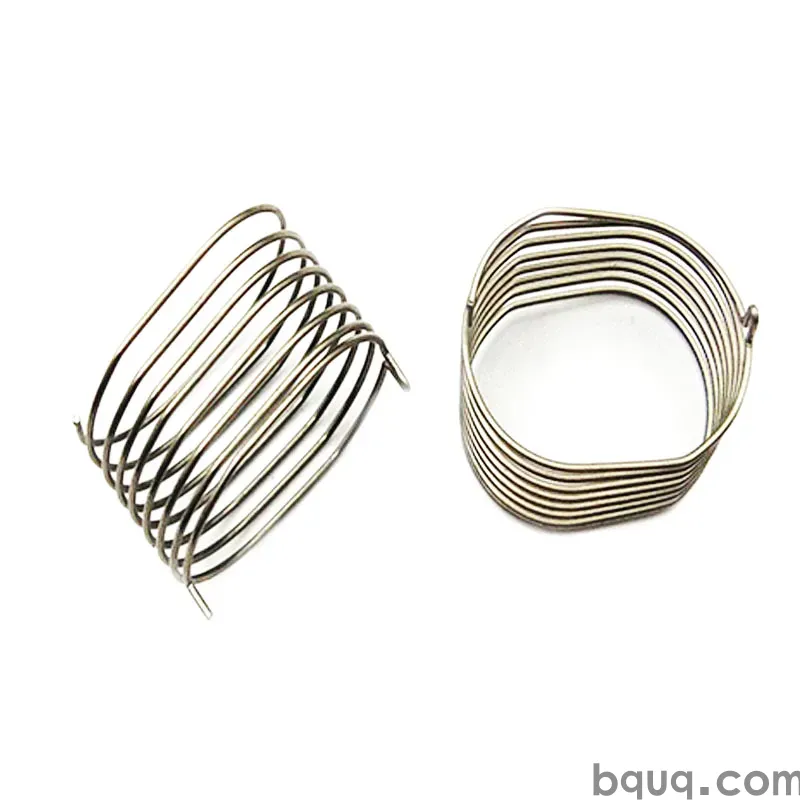
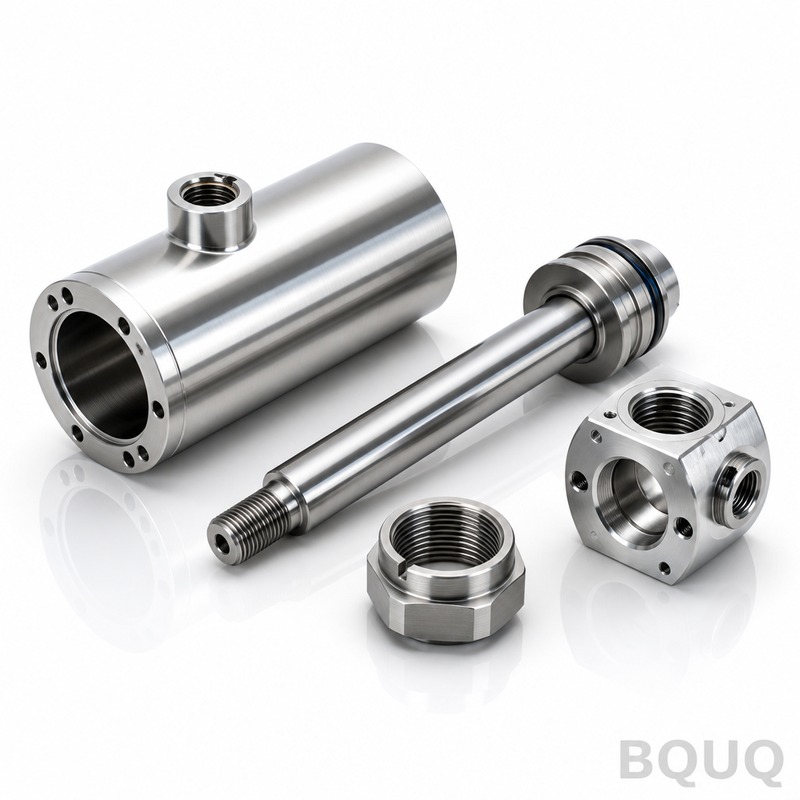
Short answer: choose by part, not by country. For low-volume, high-mix CNC parts with tight deadlines, a domestic shop within driving distance usually wins on responsiveness — expect 3-7 day turns and easy same-day design reviews. For parts where tooling cost amortizes over volume, or where a process is capital-intensive (progressive stamping, spring coiling, heat sink extrusion, fine blanking), a Dongguan factory typically wins on unit cost once quantities pass roughly 500-2,000 pieces. The practical rule: prototype and bridge locally, then move the parts that repeat, at volume, with stable drawings to a China source factory. BQUQ quotes in 12 working hours and runs CNC machining, stamping, springs, and heat sinks in one ISO9001 factory.
Why "China vs Domestic" Is the Wrong Question
Most sourcing arguments fail because they treat the decision as a company-wide policy. It is not. It is a per-part decision, and the variables that matter are process type, tolerance, annual volume, revision frequency, and how much of your schedule depends on the part arriving on time.
A domestic machine shop 40 minutes away and a Dongguan factory 8,000 km away are not competitors for the same part. They are competitors for different parts in the same BOM. A shop with three mills and a lathe is structurally good at one thing: small quantities of geometrically complex parts where the engineer can walk in and argue about a fixture. A factory with dedicated progressive stamping lines, coiling machines, and a finishing department is structurally good at another thing: the same part, made 50,000 times, at a price your local shop cannot approach because it is buying material and running machines at a different scale.
The useful exercise is to sort your BOM into three buckets before you contact anyone.
| Bucket | Typical part profile | Usual best source |
|---|---|---|
| Development | Prototypes, first articles, design still moving | Local shop or domestic quick-turn |
| Bridge | 50-500 pcs, production ramp, tooling not yet justified | Either — decide on lead time |
| Repeating volume | Stable drawing, 2,000+ pcs/yr, process-specific | China source factory |
| Process-locked | Progressive stamping, coiled springs, extruded heat sinks | China factory (tooling-driven) |
If a part sits in two buckets, that is a signal, not a problem. It usually means you should dual-source it deliberately rather than pick a side.
Where Domestic Shops Still Win
Domestic shops win on four things, and they are real advantages, not consolation prizes.
Speed of iteration. When a drawing changes on Tuesday and you need the revised part on Friday, a local shop can absorb that. Offshore, the same change crosses a time zone, a language, and a shipping lane. Even with a factory that quotes in 12 working hours, physical parts take days to arrive.
Engineering conversation. Whiteboard sessions, fixture debates, and "bring the sample over" troubleshooting are genuinely easier within driving distance. This matters most when the part is not yet well understood.
Low-volume economics. For 20 pieces of a 5-axis part, the domestic shop's setup cost is the whole cost, and it is small. Offshore, you add freight, duties, and the administrative overhead of an international transaction — which does not scale down well.
Schedule certainty for critical spares. A line-down spare that arrives in four hours beats a cheaper one that arrives in four weeks, every time.
None of these advantages survive a volume increase. They are all functions of proximity and small batch size.
Where a China Source Factory Wins
The China advantage is not "cheap labor" — that framing is two decades out of date. The advantage is capital equipment utilization, process depth, and vertical integration under one roof.
Tooling-driven processes
Progressive stamping dies, spring coiler cams, extrusion dies, and fine-blanking tooling are expensive to build and cheap to run. The economics only work at volume, which means the factories that own this equipment are built around volume. A domestic job shop that outsources its stamping is paying someone else's tooling amortization plus a margin.
Multi-process parts
A heat sink that needs extrusion, CNC skiving or milling, and a stamped clip is three processes. In Dongguan, BQUQ runs CNC machining, metal stamping, custom springs, and heat sink production across four production lines in one factory. The part does not ship between vendors, and tolerance stack-up conversations happen between departments that share a QA system, not between companies that share an invoice.
Cost structure at volume
| Cost element | Domestic shop (typical) | China factory (typical) |
|---|---|---|
| Setup / programming | Similar absolute cost | Similar absolute cost |
| Unit machine time | Higher hourly rate | Lower hourly rate |
| Material | Small-quantity pricing | Mill-direct or near it |
| Tooling | Often outsourced + margin | In-house, amortized |
| Freight + duty | Minimal | Adds landed cost |
| Admin / communication | Low | Moderate |
| Break-even volume | — | Usually 500-2,000 pcs |
Treat those break-even numbers as indicative. They move with part size, material, and how much finishing is required.
Matching Process to Source: A Practical Matrix
This is the table worth printing. Find your process, read across.
| Process | Tolerance capability | Best source at low volume | Best source at volume | Notes |
|---|---|---|---|---|
| 3-axis CNC milling | ±0.05 mm typical | Domestic | Either | Freight can erase savings on small parts |
| Tight-tolerance CNC | ±0.005 mm | Domestic if urgent | China factory | BQUQ holds ±0.005 mm |
| Progressive stamping | ±0.05 mm typical | China factory | China factory | Tooling cost dominates |
| Fine blanking | Tight, clean edge | China factory | China factory | Specialized equipment |
| Compression springs | Rate ±5-10% typical | Either | China factory | Coiling setup favors volume |
| Wire forms | ±0.1 mm typical | Either | China factory | Custom tooling per form |
| Heat sinks | Geometry-dependent | Either | China factory | Extrusion + machining combo |
| Prototype / bridge | Loose | Domestic | Domestic | Speed beats cost |
The pattern: subtractive, one-off, urgent work leans domestic. Tooling-driven, repeating, multi-process work leans China.
The Hidden Costs of Each Choice
Both options carry costs that never appear on the quote.
Domestic hidden costs: capacity ceilings during busy season, single-point-of-failure risk when the one machinist who runs your part leaves, limited finishing options (often outsourced anodizing or plating with its own lead time), and price escalation on material that the shop buys in small lots.
China hidden costs: freight and duty on landed cost, inventory carrying cost for the extra weeks of pipeline stock, engineering time to close the communication gap, and the cost of a bad first article when you cannot walk over and look at it. That last one is the biggest and the most avoidable — it is why a structured sample approval process matters more offshore than locally.
A useful way to think about it: domestic sourcing trades money for time and control. Offshore sourcing trades time and control for money. Neither trade is free, so make it consciously.
A Decision Framework You Can Run in Ten Minutes
For each part in the BOM, answer five questions:
1. Annual volume. Under 500? Lean domestic. Over 2,000? Lean China.
2. Process type. Does it need tooling (die, coil cam, extrusion die)? Lean China.
3. Revision frequency. More than twice a year? Lean domestic until it stabilizes.
4. Tolerance. Tighter than ±0.01 mm with a tight deadline? Lean domestic. Tight tolerance with a stable drawing and volume? China factories hold ±0.005 mm routinely.
5. Line-down criticality. Is this a spare that stops production? Keep a domestic source warm regardless of volume.
Score each part. The parts that score "China" on three or more questions are your offshore candidates. The rest stay local. This is essentially a lightweight version of a dual-source strategy, applied per part rather than per supplier.
When to run both
The strongest position for any high-value part is a qualified source on each side. Domestic shop for the emergency replacement and the design iteration. China factory for the production volume. Same drawing, same inspection criteria, two sources. You pay a small qualification cost once and buy permanent leverage.
Getting the Offshore Side Right
If the framework sends a part offshore, the risk is not the factory's capability — it is the information gap. Three practices close most of it.
Send a complete drawing package. Material spec, tolerance block, surface finish, critical dimensions marked, and a note on which features are functional versus cosmetic. Vague drawings generate conservative quotes and slow first articles.
Ask for DFM feedback before tooling. A factory that reviews your design and suggests a change that removes a die station or relaxes a tolerance is worth more than one that quotes exactly what you sent. That feedback loop is where the real savings live.
Define inspection before production, not after. Agree on which dimensions are measured, with what instrument, and what the report looks like. For stamped and machined parts, a documented first article inspection is the cheapest insurance in the transaction.
For a deeper look at what to verify before committing, see our guide to assessing a China factory's capability, and for the mechanics of running two sources on one drawing, dual-source strategy.
Frequently Asked Questions
Q: At what volume does a China factory become cheaper than a domestic shop?
A: It varies by process, but for machined parts the crossover is typically 500-2,000 pieces per year once freight and duty are included. For tooling-driven processes like progressive stamping or custom springs, the crossover can be lower because the domestic shop is often outsourcing the tooling anyway. Treat these as indicative and model your own landed cost.
Q: Can a China factory hold the same tolerances as a local machine shop?
A: Yes, for most work. BQUQ holds ±0.005 mm on CNC machining, which matches or exceeds typical domestic job shop capability. The real difference is not the tolerance ceiling but the verification loop — you cannot walk over and check a first article, so you rely on documented inspection reports instead. Build that into the PO.
Q: Is domestic sourcing always faster?
A: For small quantities, usually yes, because there is no freight leg. But domestic shops queue up during busy periods, and a shop with three machines can be a bottleneck. A China factory with four production lines may actually hold a more predictable schedule at volume. Compare quoted lead times, not assumptions.
Q: How do I split a BOM between domestic and China sources without doubling my workload?
A: Split by part family, not by individual part. Send all stamping and spring work offshore, keep urgent CNC prototypes local, and standardize the drawing and inspection format across both. One consistent package means one process to manage, even with two suppliers.
Q: What should I ask a China factory before sending a PO?
A: Ask for the DFM feedback, the inspection plan, the material certification, and a first article report before mass production. Confirm how they handle a non-conformance and who your engineering contact is. BQUQ quotes in 12 working hours and provides DFM input at quote stage — use that window to test the communication.
Related Resources
- About BQUQ and our Dongguan factory: /about/
- CNC machining services (±0.005 mm): /cnc-machining/
- Custom metal stamping and progressive dies: /custom-metal-stamping/
- Compression springs and custom spring design: /compression-springs/
- Industry trends in sourcing and manufacturing: /industry-dynamics/
- Technical articles and engineering guides: /bquq-blog/
- Frequently asked questions: /faq/
- Case studies: /case/
- Contact our engineering team: /contact/
Authored by the BQUQ Engineering Team. BQUQ (Dongguan) runs CNC machining (±0.005 mm), metal stamping, custom springs, and heat sink production in one ISO9001 factory. Source-direct from Dongguan, China — quote in 12 hours: sc@bquq.com | WhatsApp +86 13713157787 | www.bquq.com