Dual-Sourcing Strategy for Critical Parts
Short answer: A dual-sourcing strategy means qualifying two independent suppliers for the same critical part and splitting volume between them — typically 70/30 or 80/20 — so a single failure never stops your line. Run both sources through the same PPAP-style approval, hold separate tooling at each, and keep a tested safety stock of 2–6 weeks. Expect 3–8% higher piece price than single-sourcing, offset by avoided downtime. BQUQ quotes custom CNC, stamped, and spring parts in 12 working hours from one ISO9001 Dongguan factory, so a second source can be qualified in weeks, not quarters.
What Is Dual Sourcing, and When Does It Pay Off?
Dual sourcing is the deliberate qualification and maintenance of two suppliers capable of producing the same part to the same drawing, specification, and inspection standard. It is not the same as "having a backup vendor you could call someday." A real second source has approved first-article inspection (FAI) reports, production tooling, a live price, and a proven run history.
The strategy pays off under specific conditions:
- The part is on the critical path. If a stockout stops assembly, the part qualifies.
- Annual spend is meaningful. Dual sourcing a $2,000/year bracket rarely justifies the qualification cost.
- The supply base is concentrated. Sole-source, single-region, or single-process parts carry the most risk.
- Your customer requires it. Automotive, medical, and aerospace contracts often mandate a documented continuity plan.
Dual sourcing is usually the wrong answer for low-volume custom parts where tooling amortization dominates, or for parts with a genuinely irreplaceable process. In those cases, buffer stock or a redesign for manufacturability is cheaper.
Single Source vs. Dual Source: The Trade-Off Table
| Factor | Single Source | Dual Source |
|---|---|---|
| Piece price | Lowest (full volume leverage) | 3–8% higher typical |
| Tooling investment | One set | Two sets, or one set plus soft tooling |
| Qualification effort | One PPAP/FAI cycle | Two cycles, plus cross-audit |
| Supply interruption risk | High — no fallback | Low — volume shifts in days |
| Quality consistency | One process signature | Two signatures to correlate |
| Admin overhead | Low | Medium — two scorecards, two audits |
| Best fit | Commodity, low-risk, low-spend parts | Line-stopping, high-spend, sole-source parts |
The 3–8% price premium is indicative, not a rule. It depends on how much volume each source receives and whether the second source runs the same process family. Splitting 50/50 often costs more than 80/20 because neither supplier reaches its efficient batch size.
How Do You Decide Which Parts Need a Second Source?
Score every part on two axes: impact of failure and likelihood of failure. The intersection is where dual sourcing earns its keep.
A Practical Risk Scoring Model
| Criterion | Weight | Score 1 (Low) | Score 3 (Medium) | Score 5 (High) |
|---|---|---|---|---|
| Line-stop impact | 25% | Buffer absorbs it | Partial line stop | Full line down |
| Annual spend | 15% | Under $10k | $10k–$100k | Over $100k |
| Supplier count | 20% | 3+ qualified | 2 qualified | Sole source |
| Process complexity | 15% | Standard turning | Multi-op stamping | Tight-tolerance CNC, special wire forms |
| Geographic concentration | 15% | Multi-region | Single region | Single city/factory |
| Lead time | 10% | Under 2 weeks | 2–6 weeks | Over 6 weeks |
Multiply each score by its weight and total. Anything above 3.5 is a strong dual-source candidate. Anything below 2.5 usually does not justify the overhead.
Where Tight Tolerances Raise the Stakes
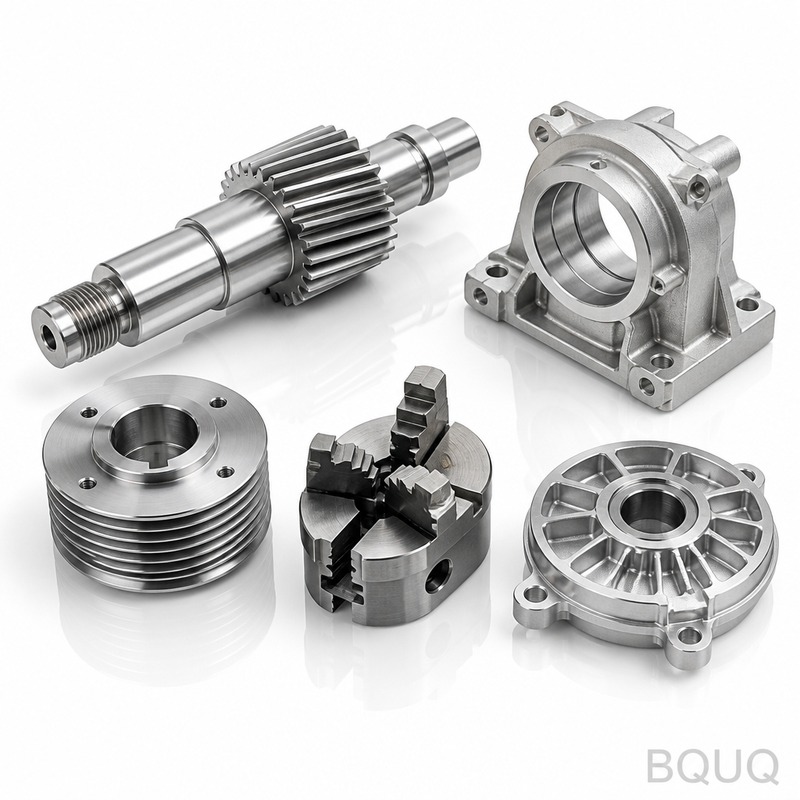
Parts held to ±0.005 mm on a CNC machining process are harder to replicate across two suppliers than parts with ±0.1 mm windows. Two machines, two fixture designs, and two operators will produce two slightly different distributions — even when both are in tolerance. That is manageable, but it means your incoming inspection plan must be tight enough to catch a drifting second source before it reaches the line.
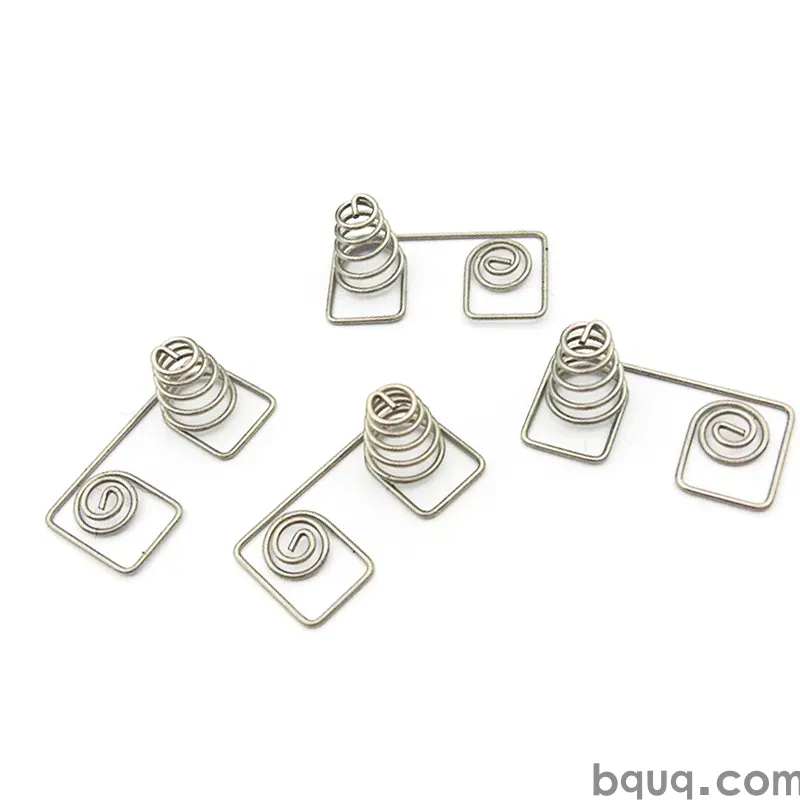
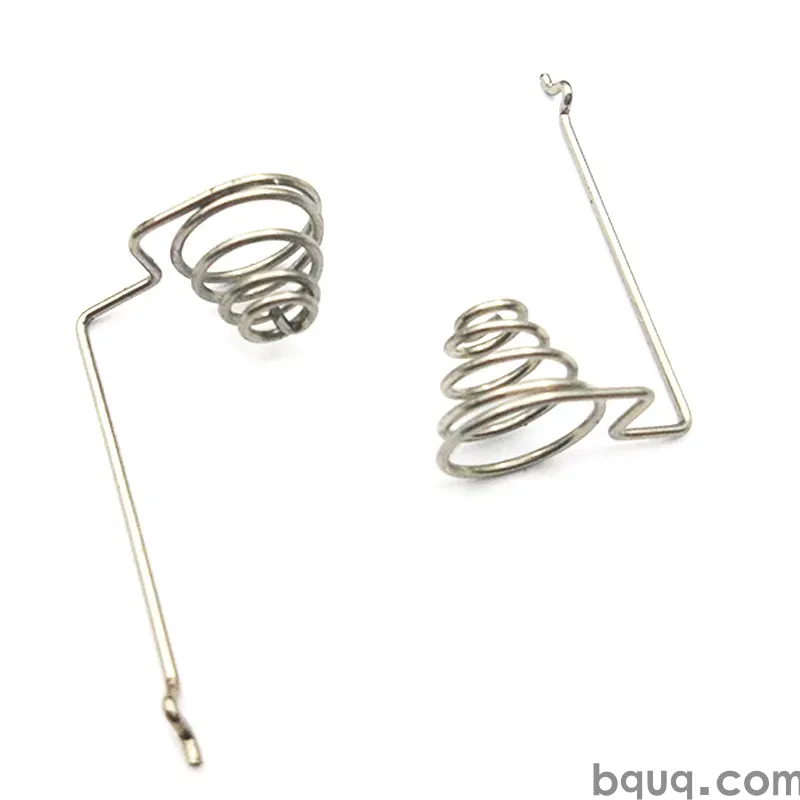
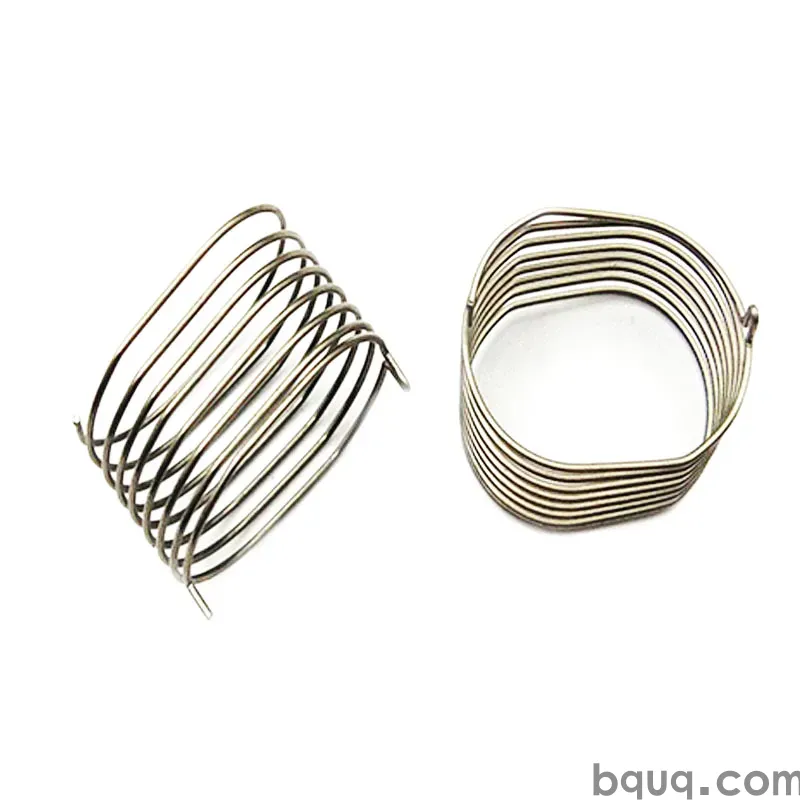
For stamped parts, the equivalent risk sits in tooling: a second source needs its own die, and die-to-die variation shows up in burr height, bend radius, and camber. For springs, rate tolerance and free length are the usual divergence points.
What Is the Right Volume Split Between Two Suppliers?
There is no universal answer, but three patterns cover most situations.
70/30 — The Default
The primary supplier keeps enough volume to stay cost-efficient and responsive. The second source gets enough to stay engaged, maintain its process knowledge, and be ready to scale. This is the most common split for critical machined and stamped parts.
80/20 — When Price Leverage Matters
Use this when the primary supplier's volume discount is steep and the second source is mainly an insurance policy. The risk: at 20%, the second source may deprioritize your orders during its own busy periods. Mitigate with a contractual response-time commitment.
50/50 — When Both Are Truly Equivalent
Rare, and usually only justified when you want maximum negotiating leverage or when customer contracts require balanced sourcing. Expect higher total cost because neither supplier optimizes for your volume.
Split Decision Matrix
| Split | Cost Impact | Risk Reduction | Supplier Engagement | Best For |
|---|---|---|---|---|
| 90/10 | Lowest | Modest | Low at second source | Low-criticality insurance |
| 80/20 | Low | Good | Medium | Price-sensitive critical parts |
| 70/30 | Medium | Strong | High | Most critical parts |
| 50/50 | Highest | Strongest | Highest | Contract-mandated balance |
Whatever split you choose, make it dynamic. Shift 5–10% of volume toward whichever supplier is performing better on your scorecard. That keeps both attentive without destabilizing either.
How Do You Qualify a Second Source Without Doubling Your Work?
The qualification burden is the main reason dual-sourcing programs stall. The fix is to reuse your existing approval package rather than inventing a new one.
Reuse the Same Control Plan
Send the second source the exact drawing, GD&T scheme, material spec, finish spec, and control plan the first source uses. Do not let them propose "equivalent" substitutions during quoting — that is how hidden differences enter the supply chain.
Run a Parallel First Article
Both suppliers should produce a first-article inspection report against the same ballooned drawing. Compare them side by side. If the second source's process capability (Cpk) is below 1.33 on critical characteristics, either tighten the process or narrow the split.
Keep Tooling Separate and Documented
Never assume a second source can run the first source's tooling. Die ownership, fixture duplication, and program transfer are all friction points. Our guide to tooling ownership and transfer covers the contractual language that prevents disputes here.
Score Both Suppliers Continuously
A second source that is never measured quietly becomes a non-source. Track on-time delivery, PPM defect rate, responsiveness, and price stability on a shared scorecard. The metrics that matter most are covered in our supplier scorecard breakdown.
What Does Dual Sourcing Actually Cost?
The visible cost is the piece-price premium. The invisible costs are qualification, duplicate tooling, and administrative overhead. The invisible savings are the downtime you never had.
Cost Comparison: Single vs. Dual Source (Indicative)
| Cost Element | Single Source | Dual Source | Notes |
|---|---|---|---|
| Piece price (annual) | $100,000 | $104,000 | 4% premium assumed |
| Second tooling set | $0 | $6,000 | One-time, amortized over 3 years |
| Qualification (FAI, audits) | $2,000 | $4,500 | Engineering hours |
| Safety stock carrying cost | $1,500 | $3,000 | 4 weeks at 20% cost of capital |
| Admin/scorecard overhead | $1,000 | $2,500 | Annual |
| Annualized total | $104,500 | $116,000 | Year 1, including amortization |
| Avoided downtime (one 8-hour stop) | — | $40,000+ | Typical line-stop cost, varies widely |
The math flips in year one if dual sourcing prevents even a single line stoppage. For most critical parts, that is the entire argument.
Where the Premium Comes From
The 3–8% premium is not arbitrary. The second source runs smaller batches, carries setup costs across less volume, and may hold dedicated capacity you are not fully using. Suppliers price that in. If a second source quotes the same price as your primary at 30% of the volume, ask why — it usually means they have not fully costed your program.
How Do You Keep a Second Source Alive?
Qualifying a second source is the easy part. Keeping it production-ready is where most programs fail.
Place Real Orders on a Schedule
Give the second source at least one production order per quarter, even if it is small. A supplier that has not run your part in 18 months will not be ready when you need them.
Rotate Volume Deliberately
Shift 5–10% of volume between sources each quarter based on scorecard performance. This keeps both processes warm and gives you real data on each supplier's capability.
Maintain a Shared Document Set
Drawings, revisions, control plans, and inspection standards must stay synchronized. When you issue an engineering change, both suppliers receive it the same day. Use a single revision-controlled document repository.
Pre-Agree the Escalation Path
When a source fails — and eventually one will — you need a defined response. Our sourcing escalation process lays out the trigger points, notification windows, and volume-shift authority that make a dual-source program actually work under pressure.
Frequently Asked Questions
Q: How many suppliers count as dual sourcing?
A: Exactly two qualified, production-ready sources for the same part. A third "emergency" vendor you have never run does not count — it is an untested assumption. True dual sourcing requires both suppliers to hold current FAI approval, live tooling, and a recent production run. If either has not shipped in 12 months, treat the program as single-sourced until you re-qualify.
Q: Is dual sourcing worth it for low-volume custom parts?
A: Usually not. Below roughly $10,000 annual spend, the qualification and tooling cost of a second source exceeds the expected loss from a supply interruption. For low-volume parts, hold 4–8 weeks of buffer stock instead, or design the part so a standard process can produce it. Reserve dual sourcing for parts where a stockout stops the line or breaches a customer commitment.
Q: Can both suppliers share the same tooling?
A: In practice, no. Tooling rarely transfers cleanly between factories — fixtures are built around specific machines, and die dimensions drift during use. Even when transfer is technically possible, shipping tooling back and forth adds lead time and damage risk. Budget for a second tooling set, or specify a process where the second source builds its own. Document ownership clearly in both contracts.
Q: How do I handle quality differences between two sources?
A: Correlate them with data. Run first-article inspections on both against the same ballooned drawing, then compare Cpk on critical characteristics. If the second source's distribution sits near a tolerance limit, tighten your incoming inspection or narrow its volume share. Over time, feed measurement data back to both suppliers so they converge on the same process target rather than drifting apart.
Q: What split ratio should a first-time dual sourcer use?
A: Start at 80/20 and move to 70/30 once the second source has three consecutive clean production runs. The 80/20 start limits your exposure if the new source has hidden issues, while still giving it enough volume to stay engaged. Revisit the split every quarter using delivery, quality, and responsiveness data rather than renegotiating from scratch.
Related Resources
- About BQUQ and our ISO9001 Dongguan factory: /about/
- CNC machining, metal stamping, springs, and heat sinks: /cnc-machining/, /custom-metal-stamping/, /compression-springs/
- Industry trends affecting sourcing decisions: /industry-dynamics/
- Technical articles and engineering guides: /bquq-blog/
- Frequently asked questions: /faq/
- Case studies: /case/
- Contact the engineering team: /contact/
Authored by the BQUQ Engineering Team. BQUQ (Dongguan) runs CNC machining (±0.005 mm), metal stamping, custom springs, and heat sink production in one ISO9001 factory. Source-direct from Dongguan, China — quote in 12 hours: sc@bquq.com | WhatsApp +86 13713157787 | www.bquq.com