High-Volume Sourcing From China: Scaling Without Surprises
Short answer: High-volume sourcing from China works when you lock capacity, tooling ownership, inspection method and change control before the first mass-production PO. In practice that means agreeing annual volumes with monthly call-offs, freezing a golden sample, and confirming the process is repeatable at rate — not just at prototype. A Dongguan factory running four production lines can typically quote in 12 working hours and hold ±0.005 mm on CNC work, but the surprises come from unmanaged ramp-up, not from machining capability. Plan the ramp, document the standard, and keep flexible MOQ on the first batch so you can validate before committing to full annual volume.
Most sourcing problems at volume are not quality problems in the abstract. They are ramp problems: the first 500 pieces were perfect, the first 50,000 were not, and nobody agreed in advance what "acceptable" looked like at rate. This article is about removing that gap.
Why does high-volume sourcing from China go wrong?
Prototype and mass production are different manufacturing systems. A prototype shop optimizes for speed and flexibility. A volume line optimizes for repeatability, cycle time and yield. When a buyer treats the second as a scaled version of the first, three things break.
First, the process changes and nobody re-validates. A CNC prototype may be cut from bar stock on a 3-axis mill. At volume, the same part might move to a multi-axis machine with custom fixturing, or to a stamping die if the geometry and material allow. That is a different process with different failure modes. If the drawing is the only thing that carries over, you have validated nothing.
Second, capacity is assumed rather than reserved. A supplier with four production lines can absolutely run your program — but not if three of those lines are already committed to another customer's annual contract. Capacity is a scheduling commitment, not a capability statement.
Third, the inspection standard drifts. At prototype, someone inspects every part. At volume, inspection moves to sampling, and the sampling plan is often never written down. The buyer assumes AQL, the supplier assumes "looks fine," and the first container is a negotiation.
The prototype-to-volume gap in numbers
| Factor | Prototype stage | Volume stage | What changes |
|---|---|---|---|
| Process | General-purpose machining | Dedicated fixturing or hard tooling | Failure modes shift to tooling wear, fixturing drift |
| Inspection | 100% dimensional check | Sampling per control plan | Defect escape risk rises |
| Unit cost driver | Machine time | Setup amortization + material + yield | Cost curve is not linear |
| Lead time driver | Queue position | Material procurement + line scheduling | Longer, less flexible |
| Change cost | Low | High (tooling, PPAP-style re-approval) | Freeze points matter |
The practical lesson: define the volume process before you approve the prototype, not after.
What should be locked before the first mass-production order?
Five things. If any one is open, you are carrying risk into the ramp.
1. Tooling and fixture ownership
Who owns the die, the fixture, the gauge? Where is it stored? Can you retrieve it? This is the single most common source of leverage loss in Chinese sourcing, and it is entirely avoidable with a one-page tooling agreement. Ownership should be explicit, documented, and ideally marked on the physical tool.
2. The golden sample
A signed golden sample — physical or fully measured with a CMM report — is the reference for every dispute. Without it, "in spec" becomes an opinion. With it, a 20-minute conversation replaces a two-week argument.
3. The control plan
Which dimensions are checked, how often, with what instrument, and what happens when a reading trends out. A control plan is not bureaucracy; it is the document that lets a supplier run without you standing on the floor.
4. Material and finish specification
"Stainless steel" is not a specification. 304 vs 301 vs 17-4PH changes spring rate, formability and corrosion behavior. Finish matters too — passivation, zinc plating, anodizing and heat treatment all add lead time and each has its own tolerance stack.
5. Change control
Any change to material, process, tooling, sub-supplier or inspection method should require written approval. This is the clause that prevents a "small improvement" in month four from quietly invalidating your field data.
How do you plan capacity and lead time at volume?
Break the volume into three phases and plan each separately.
| Phase | Typical quantity | Purpose | Lead time driver |
|---|---|---|---|
| Pilot / first article | 50–500 pcs | Validate process at rate | Tooling build, fixture prove-out |
| Ramp | 1,000–10,000 pcs | Prove yield and stability | Line scheduling, operator learning curve |
| Steady state | Monthly call-off | Cost and delivery stability | Material procurement, capacity reservation |
For steady-state programs, the buyer should provide a rolling forecast — commonly 12 months by quarter, with firm commitments on the nearest 4–8 weeks. This lets the supplier buy material in economical lots and reserve line time, which is where most of the cost reduction at volume actually comes from. It is not the unit price negotiation; it is the material and scheduling efficiency behind it.
Lead time at volume is usually dominated by material procurement, not by machine time. Specialty alloys, specific tempers and imported substrates can add weeks. If your schedule is tight, the highest-leverage move is often to approve a material substitution or to pre-position stock, not to push the factory harder.
Where the cost actually goes
At volume, unit price is a stack: material, setup amortization, machine or press time, labor, finishing, inspection, packaging, yield loss, and margin. Buyers who negotiate only the headline number leave money on the table. Buyers who reduce yield loss and finishing rework usually find more.
Practical levers, in rough order of impact:
- Tolerance rationalization. Tightening a non-functional dimension from ±0.1 mm to ±0.02 mm can multiply cost. Tighten only what the assembly needs.
- Material standardization. Using a grade the factory already stocks shortens lead time and lowers price.
- Finishing consolidation. Fewer finishing steps means fewer handling risks and shorter lead time.
- Packaging design. Bulk packaging that survives ocean freight reduces damage claims and rework.
- Forecast accuracy. Better forecasts buy better material pricing.
Which process fits your volume?
Different processes have different economic crossover points. The table below is indicative — actual crossovers depend on geometry, material and tolerance.
| Process | Typical economical volume | Best for | Watch out for |
|---|---|---|---|
| CNC machining | 1 – 50,000 pcs/yr | Tight tolerance, complex geometry, low-to-mid volume | Cycle time dominates cost at high volume |
| Metal stamping | 10,000 – millions | Thin sheet parts, brackets, contacts, terminals | Tooling cost and lead time upfront |
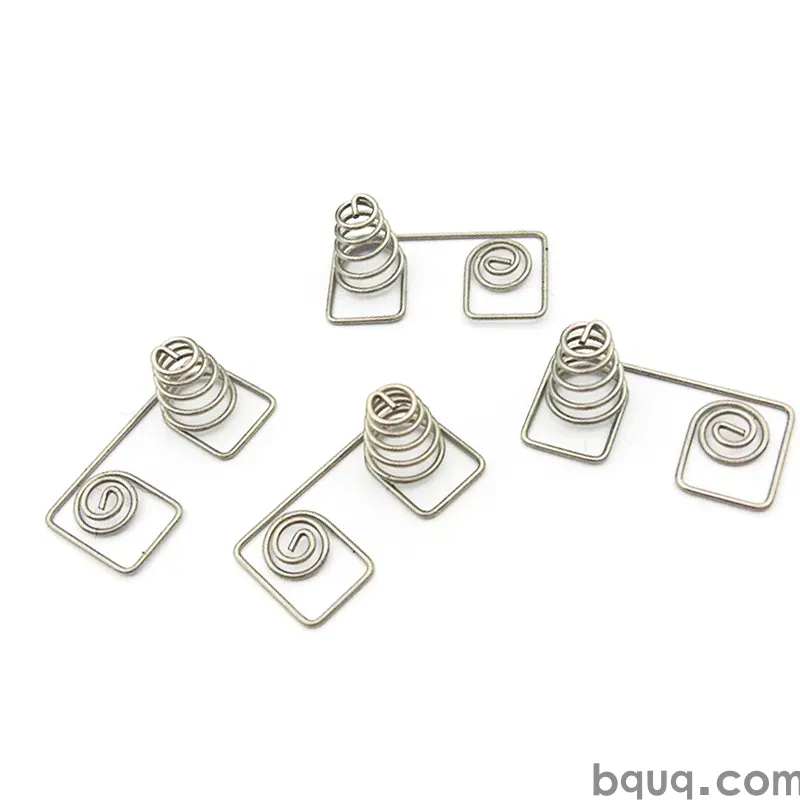
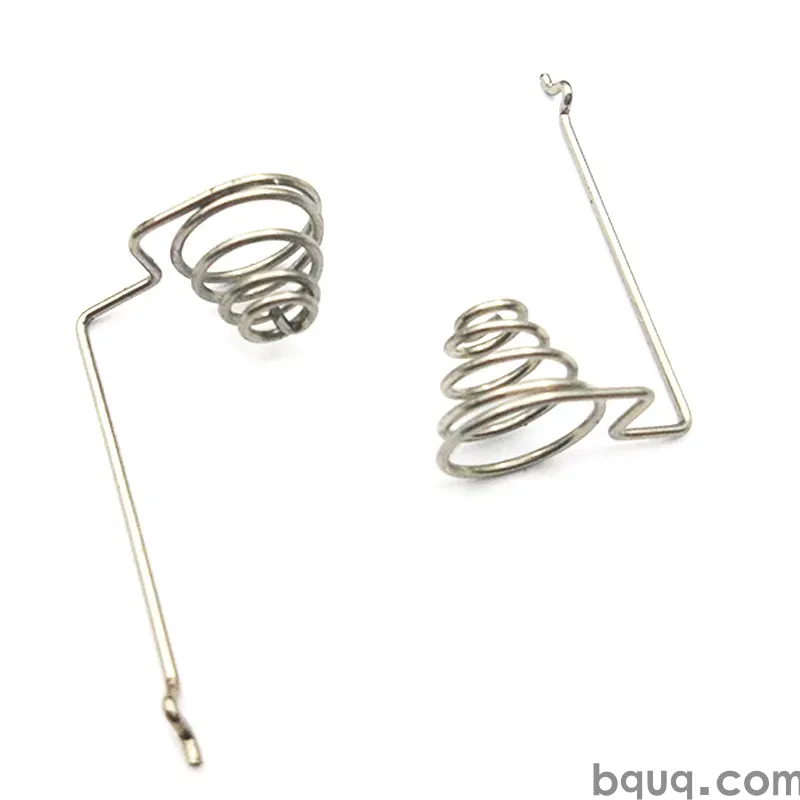
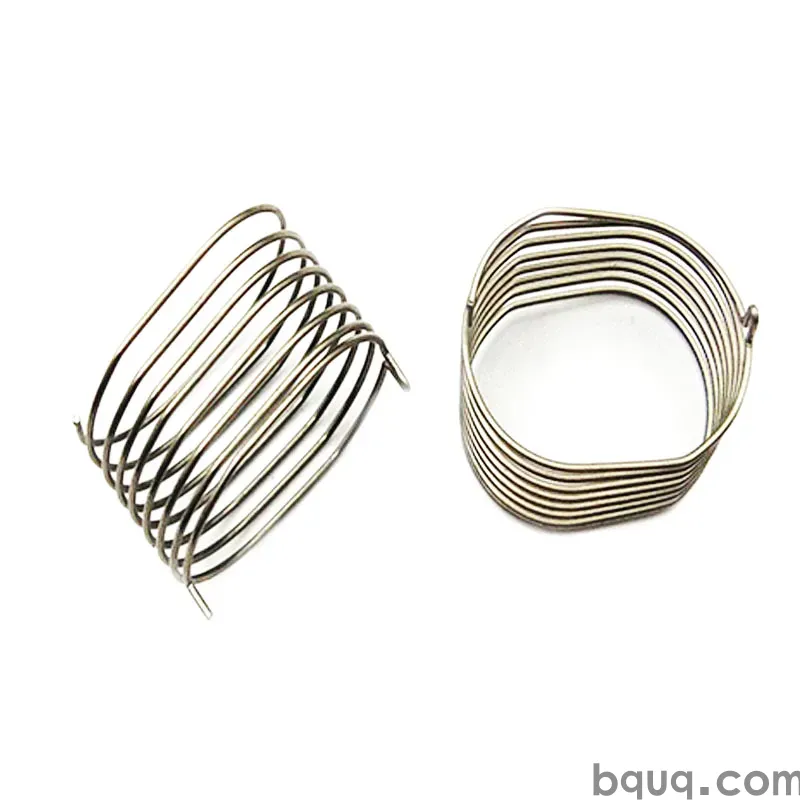
| Custom springs | 1,000 – millions | Compression, extension, torsion, wire forms | Spring rate consistency, wire supply |
| Deep drawn / progressive | 50,000+ | Enclosures, shells, high-volume formed parts | Tooling complexity, material utilization |
If your part is a machined component with ±0.005 mm features, CNC is the right answer regardless of volume — you cannot stamp that tolerance. If your part is a flat bracket in 0.5 mm stainless, stamping wins above roughly 10,000 pieces per year once tooling is amortized. See our CNC machining services and custom metal stamping for capability details.
A useful rule: choose the process that meets the tolerance with the least special control. Over-specifying is as expensive as under-specifying.
How do you keep quality stable across a long production run?
Stability comes from three habits.
First, measure the process, not just the parts. Track key dimensions over time. If a dimension is drifting, you want to know at piece 8,000, not at piece 40,000.
Second, control the inputs. Incoming material certificates, tooling maintenance schedules, and operator qualification all feed output stability. A die that is 200,000 strokes past its service interval will produce parts that pass inspection and fail in the field.
Third, keep a live defect log. Every escape, every near-miss, every rework event. Reviewed monthly, this log is the most valuable document in the relationship — it tells you where the next problem will be.
For high-volume programs, a first-article inspection report plus a documented control plan is the minimum. Buyers in regulated industries often want more; that is a scope conversation, not an assumption. What we can state plainly: BQUQ is an ISO9001 factory in Dongguan with four production lines under one roof, which means machining, stamping, springs and heat sinks can be coordinated without third-party handoffs — fewer interfaces, fewer surprises.
If you are moving from prototype to volume, our guide on sourcing from prototype to production walks through the handoff in detail, and assessing factory capability covers what to verify on a site visit.
What commercial terms reduce volume risk?
Three terms do most of the work.
Flexible MOQ on the first production batch. A supplier that insists on full annual volume in one PO is transferring all ramp risk to you. A first batch at a fraction of annual volume, priced fairly, is a better deal for both sides.
Price validity windows. Material prices move. A 6- or 12-month price validity with a defined index for material adjustment is more honest than a fixed price that quietly degrades quality.
Tooling payment and ownership terms. Pay for tooling in milestones tied to sample approval, and confirm ownership in writing. Our article on tooling ownership in China covers the mechanics.
For quoting, speed matters more than most buyers expect. BQUQ returns quotes in 12 working hours for most RFQs, which shortens the comparison cycle and lets you evaluate three suppliers in the time it usually takes to hear back from one.
Frequently Asked Questions
Q: What volume counts as "high volume" for sourcing from China?
A: It depends on process. For CNC machining, high volume typically starts around 10,000–50,000 pieces per year, where fixturing and cycle time dominate. For metal stamping and custom springs, high volume usually means 100,000 pieces or more, because tooling cost must be amortized. Below those thresholds, general-purpose machining is often more economical than building dedicated tooling.
Q: How long does it take to ramp up high-volume production in China?
A: Typical indicative timelines: 2–4 weeks for tooling design and build on simple stamping dies, 4–8 weeks for complex progressive dies, and 1–2 weeks for CNC fixturing. Add first-article inspection and pilot run time. Material procurement for specialty alloys can add several weeks. A realistic full ramp from PO to steady-state shipment is often 8–14 weeks for tooled parts.
Q: Can I keep flexible MOQ while scaling to high volume?
A: Yes, and you should ask for it. A common structure is a small first production batch to validate the process, followed by monthly call-offs against a rolling forecast. This protects the supplier's scheduling while letting you confirm yield and quality before committing to annual volume. Flexible MOQ on the first batch is a reasonable request, not an unusual one.
Q: What inspection documentation should I require at volume?
A: At minimum: a first-article inspection report with measured dimensions, a control plan naming which characteristics are checked and how often, material certificates, and a defect log reviewed periodically. For critical characteristics, request capability data (Cpk) rather than pass/fail results. The documentation should match the risk of the part, not be copied from a template.
Q: How do I prevent quality drift over a long production run?
A: Freeze the process with written change control, sign a golden sample, and require approval before any change to material, tooling, sub-supplier or inspection method. Track key dimensions over time rather than only sampling at the end. Schedule tooling maintenance and record it. Most drift events trace back to an unapproved change or a worn tool, both of which are preventable with documentation.
Related Resources
- About BQUQ and our Dongguan factory: /about/
- CNC machining, metal stamping, springs and heat sinks: /cnc-machining/, /custom-metal-stamping/, /compression-springs/
- Industry trends affecting sourcing decisions: /industry-dynamics/
- Technical articles and engineering guides: /bquq-blog/
- Frequently asked questions: /faq/
- Case studies: /case/
- Contact the engineering team: /contact/
Authored by the BQUQ Engineering Team. BQUQ (Dongguan) runs CNC machining (±0.005 mm), metal stamping, custom springs, and heat sink production in one ISO9001 factory. Source-direct from Dongguan, China — quote in 12 hours: sc@bquq.com | WhatsApp +86 13713157787 | www.bquq.com