Onboarding a New Chinese Supplier: The First 90 Days
Short answer: split the first 90 days into three 30-day gates. Days 1–30: NDA, drawing review, DFM feedback and a paid sample order of 5–20 pieces. Days 31–60: first article inspection with dimensional reports, material certs and a signed quality agreement. Days 61–90: a pilot production run at 10–30% of annual volume, then a full release. Suppliers who skip gate two are the ones who surprise you in month seven. Budget 12 working hours for the first quote and expect a ±0.005 mm capable CNC shop to return a full dimensional report on request.
Most sourcing failures are not caused by a bad factory. They are caused by a good factory that was never properly briefed. The Chinese supplier that ships the wrong hardness, the wrong finish, or a 0.15 mm out-of-tolerance bore in month seven usually got there because nobody defined "good" in writing during month one.
This is a practical 90-day onboarding framework for B2B buyers and engineers bringing a new Chinese manufacturing partner online. It assumes you have already shortlisted and want to de-risk the ramp rather than re-run the whole search.
Why do the first 90 days decide the whole relationship?
Because everything after that is scale. A supplier's process discipline is set early — the fixtures they build, the inspection routine they write, the way they escalate a deviation. Once a line is running at full volume, changing those habits costs far more than establishing them.
There is also a commercial reason. In the first 90 days you have leverage and attention. Your order is small, your account manager is motivated, and the engineering team is still curious about your part. By month nine, you are one of forty accounts and your emails go to a shared inbox.
Three things should be true by day 90:
1. You have dimensional data proving the process, not just the parts.
2. There is a written, signed quality agreement with a defined AQL and a deviation process.
3. You have run at least one production lot at meaningful volume without a fire drill.
If any of those is missing, you are not onboarded — you are just buying.
Days 1–30: Documentation, DFM and the sample order
The document package you should send first
Send everything at once. Piecemeal drawings create piecemeal quotes.
| Document | Why it matters | Typical format |
|---|---|---|
| 2D drawing with GD&T | Defines tolerance, datum and inspection method | PDF, controlled revision |
| 3D model (STEP/IGES) | Drives CAM and fixture design | STEP AP214 |
| Material spec | Grade, temper, condition, RoHS/REACH status | ASTM / DIN / JIS reference |
| Surface finish spec | Ra value or plating standard (e.g. Zn-Ni, trivalent) | Drawing note + standard |
| Annual volume + release pattern | Determines process choice and tooling | Forecast table |
| Packaging and labelling | Prevents damage and mis-shipment claims | Photo or sketch |
| Inspection expectations | Full dimensional or key-character only | Inspection plan |
If you only have a 3D model and no drawing, say so explicitly. A capable supplier will flag the missing tolerances rather than guess — but only if you ask them to.
What good DFM feedback looks like
A supplier that returns a quote with no questions is not necessarily efficient. It may be guessing. Expect at least a short DFM note covering:
- Tolerance vs. process. A ±0.005 mm callout on a turned diameter is routine; the same callout across a 300 mm stamped panel is not.
- Feature accessibility. Deep pockets, undercuts and sharp internal corners drive tool cost.
- Material availability. Some grades carry 3–5 week lead times in the Chinese market; substitutes may be needed.
- Blank and strip layout. For custom metal stamping, material utilisation often moves the price more than labour does.
- Deburr and finish sequence. Whether finishing happens before or after a secondary operation changes both cost and risk.
Running the sample order properly
Order 5–20 pieces, paid, with a purchase order that references the drawing revision. Do not accept free samples — a paid order creates a traceable record and puts the job into the real production queue rather than a lab bench.
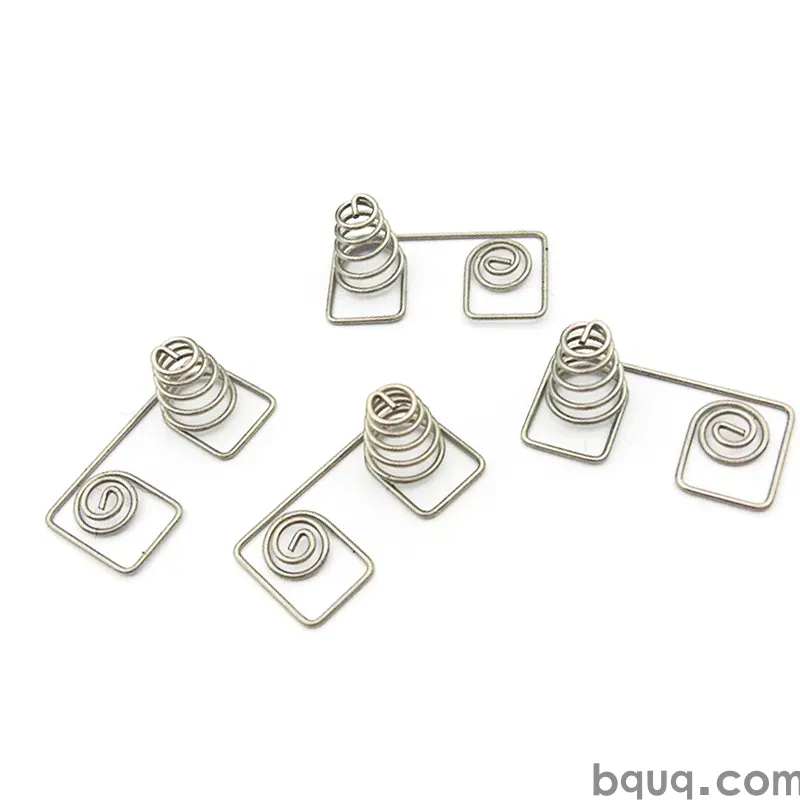
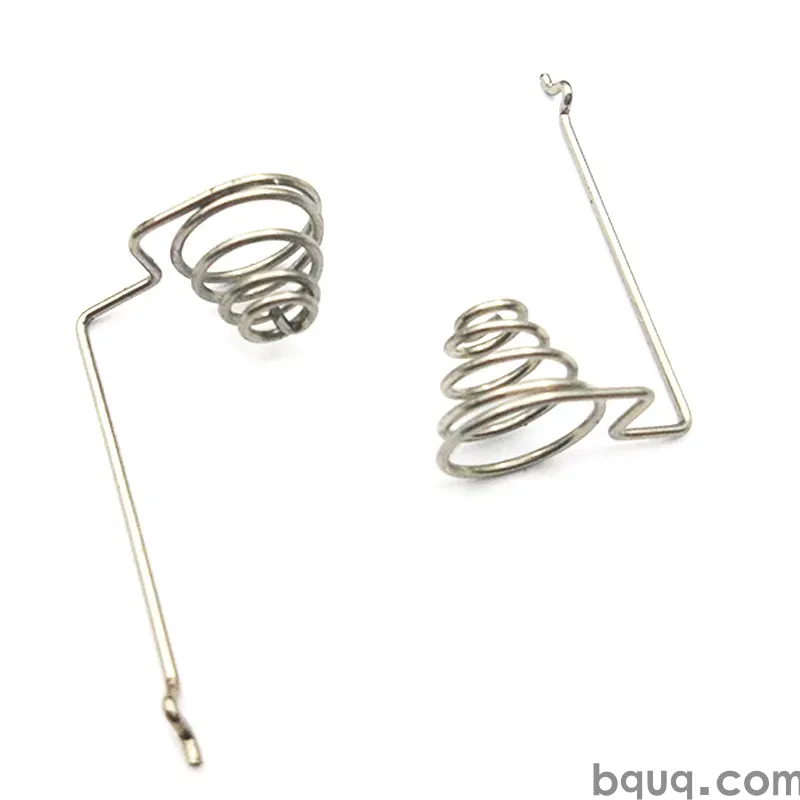
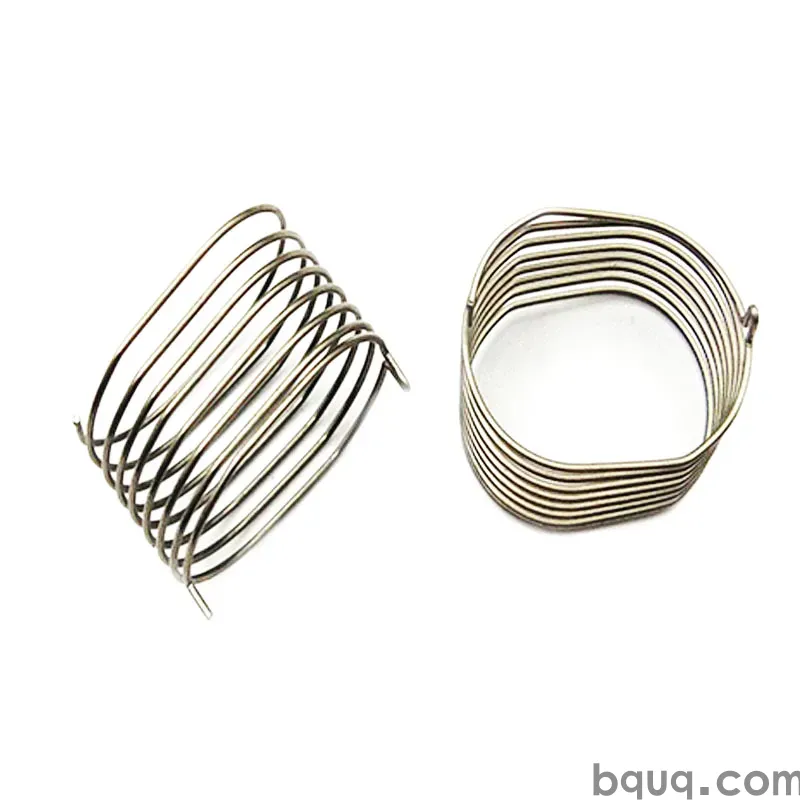
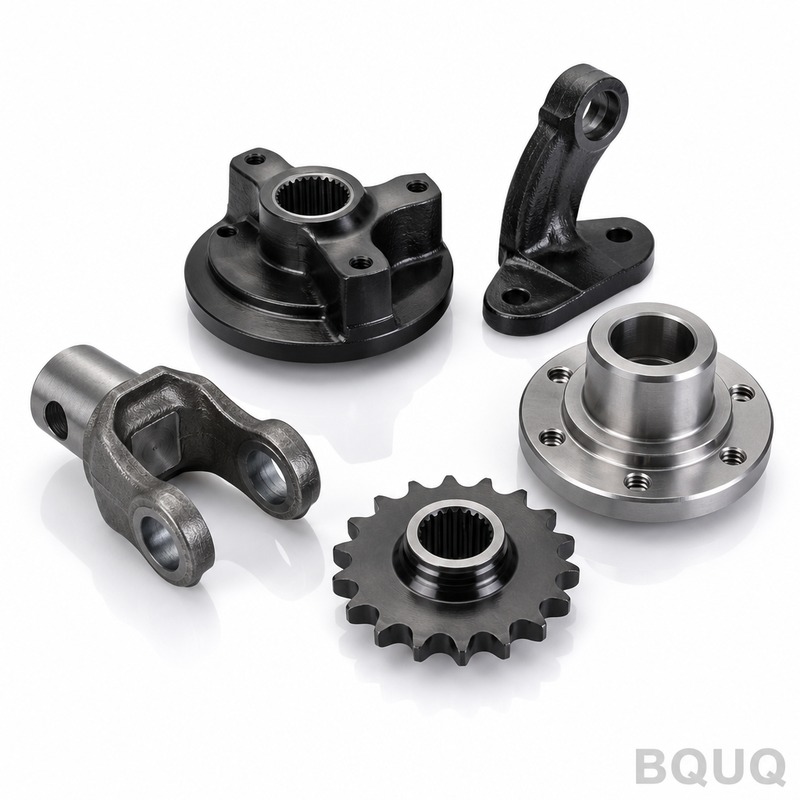
Ask for the sample to be produced on the intended production process. A hand-finished prototype tells you nothing about capability. For a CNC machining project, that means the same machine class and the same workholding concept. For springs, it means the same coiler setup and the same stress-relief cycle.
Days 31–60: First article inspection and the quality agreement
The first article inspection package
This is the gate most buyers under-specify. Ask for a package, not a photo of a part on a bench.
| Deliverable | What to check | Red flag |
|---|---|---|
| Dimensional report | Every ballooned characteristic, measured value vs. nominal | Only min/max reported |
| Material certificate | Mill cert with heat number, matched to the lot | "Equivalent to" with no grade |
| Hardness / mechanical data | Where applicable, with test method | Single reading, no method |
| Surface finish report | Ra or plating thickness measurement | Visual confirmation only |
| Process flow / control plan | Operations, controls, inspection points | One-line summary |
| Deviation list | Any out-of-spec characteristic and proposed disposition | Nothing listed at all |
A supplier that reports zero deviations on a first article is either perfect or not measuring. Ask which characteristics were measured on a CMM versus a caliper, and which were not measured at all. Honest answers here are worth more than clean numbers.
Writing the quality agreement
The quality agreement is the document you will actually rely on in month eight. Keep it short and specific. It should cover:
- AQL and sampling plan. State the standard and the level. "Visual AQL 1.0, dimensional per control plan" is enough.
- Inspection method. Which instrument for which characteristic, and who calibrates it.
- Deviation and concession process. Who can approve a deviation, in what timeframe, and how it is documented.
- Change control. Any change to material, process, sub-supplier or manufacturing location requires written approval before shipment.
- Traceability. Lot marking, date codes and records retention period.
- Corrective action. 8D or equivalent within a defined number of working days after a defect is confirmed.
If you are still drafting this, our guide to a China quality agreement walks through the clauses that matter most and the ones that are just noise.
Calibration and measurement capability
Ask for the calibration certificates on the instruments that will measure your part. A shop with a CMM, a profile projector and calibrated gauges can prove capability. A shop with one digital caliper cannot, no matter how good the machinist is.
If your part has a tight true-position or profile callout, ask for a Gage R&R or at minimum a repeatability check on the key characteristic. This is where you find out whether the ±0.005 mm on the website is a real capability or a marketing number.
Days 61–90: Pilot run, packaging and release
The pilot production run
Run 10–30% of your annual volume, or a minimum of 200–500 pieces for small parts. The goal is not the parts — it is watching the process hold.
Things to watch during the pilot:
- Cycle time stability. If the first 50 pieces run at 40 seconds and the last 50 at 55 seconds, there is a tool-wear or fixturing problem.
- First-pass yield. Ask for it in writing. Anything below 95% on a mature process deserves an explanation.
- In-process inspection frequency. Confirm the operator is checking at the interval stated in the control plan.
- Handling and packaging. Verify the packaging actually survives the freight lane, not just the factory floor.
For a multi-process part — say a stamped bracket that also needs custom springs and a plated finish — the pilot is where you find out whether the sub-tier coordination works. Single-process suppliers often struggle here. A multi-process partner that runs stamping, machining and finishing under one roof removes an entire category of handoff risk, but you still need to verify it in the pilot.
Packaging validation
Packaging failures are the most common cause of a first shipment claim, and the least discussed during onboarding. Specify:
- Unit protection (bag, tray, VCI paper, foam)
- Interleave and layer count
- Carton compression strength for the stacking height in your container
- Label content: part number, revision, lot, quantity, date code
- Moisture protection for plated or ferrous parts
Ask for a photo of the packed carton before the pilot ships. It takes the supplier two minutes and saves you a claim.
Release to production
Release should be a signed document, not an email saying "looks good." Include:
1. Approved drawing revision and any approved deviations
2. Approved first article report
3. Signed quality agreement
4. Agreed packaging specification
5. Agreed lead time and release pattern
6. Named contacts on both sides, with escalation path
Once that is signed, you have a supplier. Before it, you have a hopeful arrangement.
What should you measure during the first 90 days?
Track a small number of things consistently. These six will tell you whether the relationship is going to work.
| Metric | Target (typical) | How to collect |
|---|---|---|
| Quote turnaround | 12 working hours for standard parts | Timestamp on quote |
| First article approval | Within 2 submission rounds | FAI log |
| On-time delivery | ≥95% against confirmed date | PO vs. receipt date |
| Incoming defect rate | <1% by lot, AQL-based | Incoming inspection record |
| Response to deviation | <48 hours with disposition | Email log |
| Engineering change turnaround | <5 working days for re-quote | ECN log |
None of these require software. A shared spreadsheet works for the first year. The discipline of recording them is what matters, because it converts a vague feeling of "they're okay" into a number you can act on.
Common onboarding mistakes
Skipping the paid sample. Free samples come from a different process and a different person.
Accepting a quote without DFM notes. Silence means the supplier is not engaging with your drawing.
Not defining inspection method. Two people measuring the same part with different instruments will disagree, and you will argue about it.
Leaving change control out of the agreement. A silent material substitution is the classic month-six surprise.
Over-specifying everything. Tolerancing every dimension to ±0.01 mm triples cost with no functional benefit. Tolerance what matters, and reference the rest.
Onboarding three suppliers at once. You will not have the engineering bandwidth to do any of them properly.
Frequently Asked Questions
Q: How long does it realistically take to onboard a new Chinese supplier?
A: For a straightforward machined or stamped part, 60–90 days from first contact to full production release is realistic. Complex assemblies with multiple processes, tooling, or regulatory requirements can take 4–6 months. The variable is rarely the factory's speed — it is how fast your own team reviews samples, approves drawings and signs the quality agreement. Buyers who pre-assemble their document package before the first quote typically cut 2–3 weeks off the timeline.
Q: Should I visit the factory during onboarding?
A: A visit in days 31–60 is the highest-value trip. You can see the actual machines, meet the quality engineer, review calibration records and watch the inspection routine. If travel is not possible, request a live video walkthrough of the specific production cell, plus photos of the measuring equipment with visible calibration stickers. A recorded walkthrough of the process for your part is more useful than a general facility tour.
Q: What is a reasonable MOQ for a first order?
A: For CNC machining, 5–50 pieces is a normal first order and many factories will accept lower. For stamping and springs, the tooling drives the economics, so a first production run of 500–2,000 pieces is common. Flexible MOQ arrangements are standard with smaller Chinese factories, but expect the unit price to reflect the setup. Do not push MOQ below the point where the supplier cannot run the real production process.
Q: How do I verify a supplier's claimed tolerances?
A: Send a test part. Give them a drawing with a known tight characteristic, order 5–10 pieces, and require a full dimensional report with the instrument named for each characteristic. Repeat the order three months later and compare. A shop that genuinely holds ±0.005 mm on CNC will produce consistent data across runs; one that does not will show scatter, or will quietly loosen the tolerance in the report.
Q: What payment terms are normal for a new Chinese supplier?
A: For a first order, 30% deposit with 70% before shipment is the most common arrangement, sometimes 100% with the PO for very small sample orders. After 6–12 months of clean delivery, 30/70 against a copy of the bill of lading, or net-30 from shipment, becomes negotiable. Never pay 100% upfront to an unverified supplier, and always pay to the company account named on the invoice, not to an individual.
Related Resources
- About BQUQ and our four production lines in Dongguan: /about/
- CNC machining, metal stamping, springs and heat sinks: /cnc-machining/, /custom-metal-stamping/, /compression-springs/
- Industry trends and sourcing shifts: /industry-dynamics/
- Technical articles and engineering guides: /bquq-blog/
- Frequently asked questions: /faq/
- Case studies: /case/
- Contact the engineering team: /contact/
Authored by the BQUQ Engineering Team. BQUQ (Dongguan) runs CNC machining (±0.005 mm), metal stamping, custom springs, and heat sink production in one ISO9001 factory. Source-direct from Dongguan, China — quote in 12 hours: sc@bquq.com | WhatsApp +86 13713157787 | www.bquq.com