Quality Agreements With Chinese Suppliers: Key Clauses
Short answer: A China quality agreement should lock down eight things in writing — drawing revision control, measurable acceptance criteria (e.g. ±0.005 mm on critical CNC dimensions), sampling plan and AQL, inspection method and gauge ownership, first-article and PPAP-lite deliverables, non-conformance and disposition rights, tooling and IP ownership, and remedies with cost recovery. Without signed acceptance criteria and a defined inspection method, "quality" becomes an opinion. BQUQ, an ISO9001 factory in Dongguan running four production lines, issues quotes in 12 working hours and works from flexible MOQ, which makes it practical to pilot a small first order before committing to volume under the agreement.
Most sourcing failures in China are not fraud. They are ambiguity. A purchase order says "high quality, no burrs, tight tolerance." The supplier reads that as "commercially acceptable." Three months later, a batch of stamped brackets arrives with 0.12 mm of edge roll-off and both sides argue about a sentence nobody defined. A quality agreement exists to delete that argument before it happens.
This article walks through the clauses that actually carry weight in a China quality agreement for precision metal parts — CNC machined components, metal stampings, springs, and heat sinks — and shows what good wording looks like versus what looks good but does nothing.
Why a purchase order alone is not a quality agreement
A PO is a commercial document. It transfers money and title. It is a poor technical document because it has no room for acceptance criteria, no sampling logic, and no remedy ladder.
A quality agreement sits alongside the PO and answers four questions the PO never does:
1. What exactly is being accepted? Which drawing revision, which tolerance callouts, which surface finish, which cosmetic standard.
2. How is conformance measured? Which instrument, which fixture, which measurement point, how many decimal places.
3. What happens when a lot fails? Who pays for sorting, who owns the scrap, what triggers a corrective action.
4. What survives the relationship? Tooling, fixtures, gauges, inspection data, and design IP.
If your supplier can answer all four without opening a document, you do not have an agreement — you have a conversation.
Clause 1: Document and revision control
The most common root cause of a "quality dispute" is that two factories are building to two different drawings. Revision control is boring and it is the highest-value clause in the document.
Spell out:
- The controlled drawing revision number and date, listed as an annex to the agreement.
- That the supplier must not start production on an unreleased or superseded revision.
- That any engineering change request (ECR) flows through a written change note, with a re-first-article requirement when the change touches form, fit, or function.
- A validity window — e.g. drawings older than 24 months require re-confirmation.
A practical trick: require the supplier to print the revision letter on the packing label of every shipment. It costs nothing and it makes receiving inspection a five-second check instead of a 20-minute investigation.
Clause 2: Measurable acceptance criteria
"Tight tolerance" is not a specification. A number with a unit and a measurement method is.
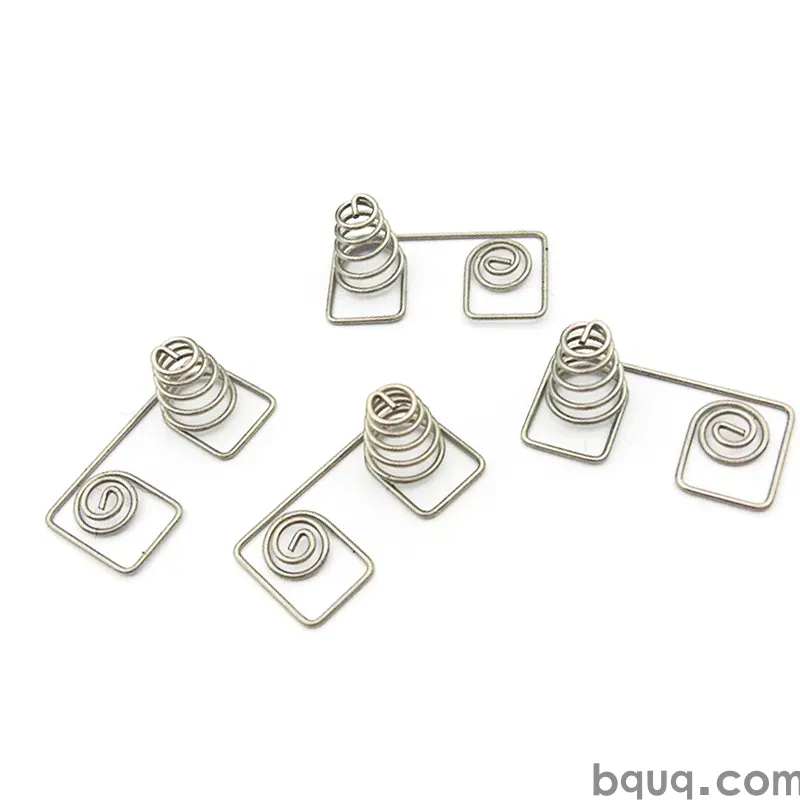
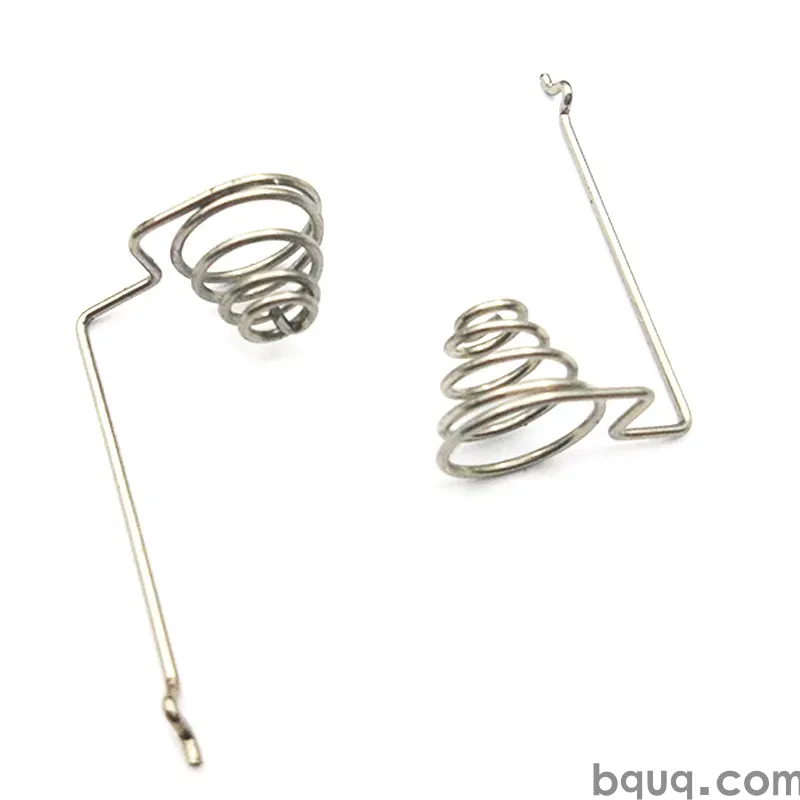
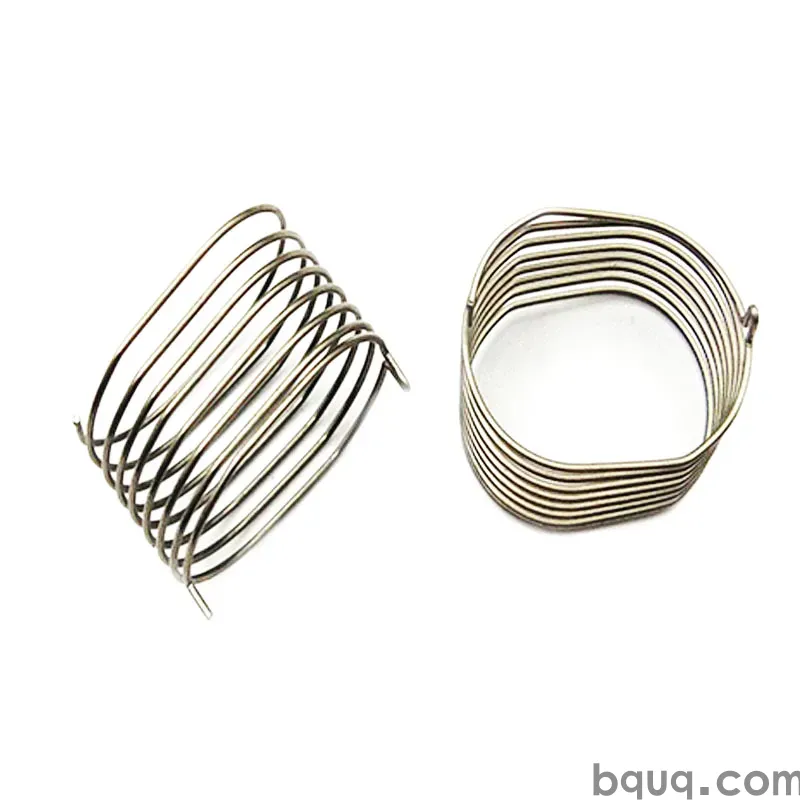
For a CNC part, the agreement should state the general tolerance block (for example, ±0.005 mm on critical features, ±0.1 mm on non-critical features) and then list the critical-to-quality (CTQ) characteristics individually. For stampings, define burr height limits, flatness, and edge condition. For springs, define rate, free length, solid height, and end-square. For heat sinks, define flatness, surface roughness, and thermal interface flatness where relevant.
| Part family | Typical CTQ characteristics to write into the agreement | Typical method |
|---|---|---|
| CNC machined parts | Critical bore diameter, position, perpendicularity, surface roughness | CMM, micrometer, profilometer |
| Metal stampings | Burr height, flatness, hole position, material thickness | Optical comparator, height gauge, vision system |
| Compression springs | Spring rate, free length, solid height, end squareness | Load tester, caliper, force-displacement rig |
| Heat sinks | Base flatness, fin pitch, surface finish | Flatness gauge, optical measurement |
Two rules make this clause enforceable. First, every CTQ gets a number and a unit. Second, every CTQ gets a named measurement method — because two labs measuring the same part differently will produce two different verdicts, and the supplier will always cite the more forgiving method.
Clause 3: Sampling plan, AQL, and inspection level
You cannot inspect quality into a part, and you also cannot afford 100% inspection on every feature. The agreement needs a sampling logic that both sides accept before the first shipment.
Most precision metal agreements reference an AQL scheme derived from ISO 2859-1, with tightened levels for CTQ features and normal levels for cosmetic and secondary dimensions. A workable structure:
| Characteristic class | Inspection level | Typical AQL | Notes |
|---|---|---|---|
| CTQ (safety, fit, function) | 100% or tightened | 0.65 or lower | Often 100% for low-volume CNC |
| Major dimensions | Normal | 1.0 | Sample size by lot size |
| Minor / cosmetic | Reduced | 2.5 | Visual and touch criteria |
| Packaging and labeling | Normal | 2.5 | Revision letter, quantity, lot trace |
Write down what "critical defect" means for your product. A crack in a stamped contact spring is critical. A faint tool mark on a non-visible face is minor. If the agreement does not classify defects, every defect becomes a negotiation.
Clause 4: First article, PPAP-lite, and production readiness
Before volume, you want evidence that the process can hold the tolerance — not just that one part did. This is where a "PPAP-lite" package earns its keep, especially for stamping tooling and spring coiling setups where the process, not the operator, determines the result.
A proportionate package for precision metal parts typically includes:
- First article inspection report (FAIR) with ballooned drawing and measured values
- Material certificates and, where relevant, heat treatment or plating certificates
- Process flow and control plan for CTQ features
- Gauge list with calibration status
- Capacity statement and cycle time
- Packaging specification with a sample photo
Full automotive-grade PPAP is often overkill for a first order of 500 CNC parts. A trimmed package that still forces the supplier to prove capability is the pragmatic middle. If you are comparing suppliers on this dimension, the metrics in our supplier scorecard framework map directly onto these deliverables.
Should the first article be a separate paid item?
Usually yes, and that is healthy. A paid FAIR creates a defined deliverable with a due date. Suppliers who offer "free first article" often mean "we will send a part we already made." Pay for the report, not the part.
Clause 5: Non-conformance, disposition, and cost recovery
This is the clause buyers most often leave vague, and it is the one that decides who pays when things go wrong.
Define the sequence:
1. Notification window. Supplier notifies buyer of suspected non-conformance before shipment where possible.
2. Containment. Buyer may sort, rework, or scrap at the supplier's cost if the non-conformance is confirmed and attributable.
3. Disposition options. Use as-is (with written buyer concession), rework, return to supplier, or scrap.
4. Cost recovery. Line down-time, sorting labor, expedited freight, and re-inspection costs are recoverable when the defect is confirmed supplier-attributable.
5. Corrective action. A written 8D or equivalent within an agreed number of working days, with verification of effectiveness on the next two lots.
Keep the remedy ladder proportionate. A supplier who knows a single minor cosmetic escape will trigger a full chargeback will hide defects instead of reporting them. Define a threshold — for example, cost recovery applies above a defined lot rejection rate or a defined monetary value.
Clause 6: Tooling, gauges, fixtures, and IP ownership
For stamping dies, injection tooling, and custom fixtures, ownership is a real balance-sheet item. The agreement should state:
- Who owns the tooling (buyer, if paid for by buyer, even when physically located at the supplier)
- Where the tooling is stored and under what access conditions
- What happens to tooling on termination — return, transfer, or buy-out, with a defined timeline
- Maintenance responsibility and who pays for normal wear versus damage
- Whether the supplier may use the tooling for other customers (normally: no)
- Treatment of buyer drawings, CAD files, and process know-how as confidential
A tooling annex with a serial number, a photo, and a stated replacement value removes most end-of-relationship friction. It also makes tooling transfer to a second source realistic if you ever need dual sourcing — a theme we cover in the China vs domestic supplier comparison.
Clause 7: Traceability, records, and audit rights
Traceability is what lets you contain a problem in days instead of months. Require lot-level traceability from raw material heat number through to shipment, with retention periods (commonly 3 to 5 years, longer for regulated end uses).
Add a reasonable audit right: notice period, scope (quality system, records, relevant processes), and confidentiality obligations on the buyer's side. A supplier operating an ISO9001 system will already have most of this documentation; the clause mainly confirms you can see it.
Clause 8: Communication, escalation, and change notification
Quality agreements fail quietly when communication is undefined. Name the people and the cadence:
- Named quality contact on both sides, with a backup
- Response time for quality queries (for example, 24 working hours for acknowledgment)
- Escalation path from quality engineer to plant manager to commercial owner
- Mandatory notification before any change in material, sub-supplier, process, or manufacturing location
That last item matters more than buyers expect. A silent change of plating sub-supplier can alter corrosion performance without touching a single dimension. Our guide to a structured sourcing escalation process shows how to sequence these notifications so a small deviation does not become a stopped production line.
What a proportionate agreement looks like by order size
Not every relationship needs 20 pages. Match the document to the risk.
| Order profile | Recommended agreement scope |
|---|---|
| Sample or pilot order, flexible MOQ | Drawing revision control, CTQ list, FAIR, defect classification |
| Repeat production, single process | Above plus AQL plan, non-conformance clause, traceability, packaging spec |
| Multi-process assembly or tooling-heavy | Above plus tooling annex, change notification, audit rights, cost recovery ladder |
| Regulated or safety-related end use | Above plus extended records retention, validated process evidence, full PPAP where applicable |
A pilot order is the cheapest way to test whether a supplier's quality system matches its sales presentation. BQUQ runs CNC machining, metal stamping, custom springs, and heat sinks under one ISO9001 system in Dongguan, which means a pilot can cover several processes without a second supplier agreement. You can review capability at /cnc-machining/, /custom-metal-stamping/, and /compression-springs/.
Practical drafting tips that save money later
- Attach, do not describe. The drawing, the packaging photo, and the gauge list go in as annexes. Prose descriptions of geometry always lose to a PDF.
- Use one unit system. Mixed metric and imperial callouts in the same document cause real conversion errors.
- Define "burr-free" numerically. State a maximum burr height in millimeters and a measurement method.
- Set the inspection method before the price. If the supplier quotes based on a vision system but you inspect with a CMM, you have bought a dispute.
- Agree the sample size with the price. 100% inspection on a low-volume CNC part is often cheaper than a sorting argument.
- Write the exit. Termination notice, tooling return, and final lot obligations should be as clear as the onboarding terms.
If you are still at the comparison stage, the structure in our quote comparison guide helps you normalize quotes so the quality deliverables are visible line items rather than hidden assumptions.
Frequently Asked Questions
Q: Is a quality agreement legally enforceable in China?
A: Yes, when it is signed by authorized representatives and attached to or referenced by the purchase contract. Enforcement is strongest when acceptance criteria are numeric and measurable, because a court or arbitrator can evaluate a measured value against a stated limit. Vague terms like "good workmanship" are difficult to enforce. Keep the agreement bilingual or provide an agreed governing-language version.
Q: How detailed should the AQL plan be for precision metal parts?
A: Detailed enough to classify defects and set sampling by characteristic class. Most buyers use tightened or 100% inspection for CTQ features and normal sampling for major and minor characteristics. Write the AQL numbers, the lot-size table, and the defect classification into the agreement annex. Review the plan after the first three production lots and adjust based on actual escape rates.
Q: Do I need full PPAP from a Chinese supplier?
A: Only if your end customer or industry requires it. For most industrial precision parts, a proportionate package — first article inspection report, material certificates, control plan for CTQ features, gauge list, and packaging specification — provides the same practical assurance at far lower cost. Full PPAP makes sense for regulated or safety-critical applications with validated process requirements.
Q: Who pays for tooling maintenance and replacement?
A: Split it by cause. Normal wear from producing your parts is typically the buyer's cost, often built into piece price or handled as a periodic maintenance charge. Damage from misuse, incorrect setup, or negligence is the supplier's cost. State the distinction, the maintenance interval, and the replacement value in a tooling annex with serial numbers and photos.
Q: How do I handle a supplier that refuses to sign a quality agreement?
A: Treat it as a risk signal rather than a deal-breaker, and scale back scope. Ask which specific clauses they object to — resistance is often about cost recovery language, not inspection. If they will not commit to revision control, numeric acceptance criteria, and a non-conformance process, keep the order small and inspect heavily, or qualify an alternative source before volume.
Related Resources
- About BQUQ and our Dongguan factory: /about/
- CNC machining, metal stamping, springs, and heat sinks: /cnc-machining/, /custom-metal-stamping/, /compression-springs/
- Industry trends in sourcing and manufacturing: /industry-dynamics/
- Technical articles and engineering guides: /bquq-blog/
- Frequently asked questions: /faq/
- Case studies: /case/
- Contact our engineering team: /contact/
Authored by the BQUQ Engineering Team. BQUQ (Dongguan) runs CNC machining (±0.005 mm), metal stamping, custom springs, and heat sink production in one ISO9001 factory. Source-direct from Dongguan, China — quote in 12 hours: sc@bquq.com | WhatsApp +86 13713157787 | www.bquq.com