HS Codes for Precision Parts: Classifying Correctly
Short answer: There is no single HS code for "precision parts." A CNC-machined aluminium bracket usually lands under 7616.99, a steel stamping under 7326.19 or 7326.90, and a helical compression spring under 7320.20 — but the correct heading depends on material, function, and whether the part is a dedicated machine component. Misclassification typically shifts duty by 2-8 percentage points and can trigger customs holds of 3-10 working days. At BQUQ, we supply a material declaration, drawing revision, and process route with every shipment, so your customs broker can classify with evidence rather than guesswork. Get a quote in 12 working hours.
Why HS Classification Matters More Than Most Buyers Think
For B2B buyers, the HS code is not paperwork. It is the number that decides your landed cost, your clearance speed, and your exposure if an audit arrives two years later.
Three things move when the code is wrong:
1. Duty rate. Different headings carry different rates in different destination markets. A swing of a few percentage points on a container of stamped terminals is real money.
2. Clearance risk. Customs authorities in the EU, US, and Southeast Asia increasingly cross-check declared codes against product descriptions and drawings. A mismatch invites a hold, a request for technical documentation, or a post-clearance adjustment.
3. Compliance scope. Anti-dumping duties, Section 301 lists, and free-trade-agreement preferential rates all attach to specific headings. Classify a part into the wrong heading and you may lose preferential treatment you were entitled to — or claim one you were not.
The trap for precision parts is that the same physical object can be described several ways: by material, by manufacturing process, or by the machine it belongs to. Customs law generally cares most about essential character and function, not about how you made it.
The Core Rules Behind Every Classification
GRI 1: Headings and section notes first
The Harmonized System's General Rules of Interpretation (GRI) are applied in order. GRI 1 says classification is determined by the terms of the headings and any relevant Section or Chapter Notes. Before you look at anything else, read the Chapter Notes for the chapter you are considering — they often exclude exactly the product you have in hand.
GRI 3(b): Essential character
When a part could fit two headings, GRI 3(b) sends you to the heading covering the essential character. A machined aluminium housing with a pressed-in steel bearing is still, in character, an aluminium article unless the bearing defines its function.
Chapter 84 vs Chapter 87 vs Chapter 73
This is the fork in the road for most precision parts:
- Chapter 84/85 — the part is identifiable as a component of a specific machine, engine, or electrical device (for example, a dedicated pump housing or a connector shell designed solely for one connector series).
- Chapter 87 — the part is identifiable as a component of a vehicle (brackets, clips, terminals used in automotive assemblies).
- Chapter 73/76/74 — the part is a general article of iron/steel, aluminium, or copper, not identifiable as belonging to one machine.
Note 2 to Chapter 84 is the one to read carefully: parts that are not identifiable as being solely or principally for a particular machine fall to the material chapter instead.
A Practical Reference Table for Common Precision Parts
The table below reflects typical, indicative classification logic. Rates and national subheadings vary by destination and change over time — always confirm with your broker and the destination tariff schedule.
| Part type | Typical material | Likely HS heading | Classification driver |
|---|---|---|---|
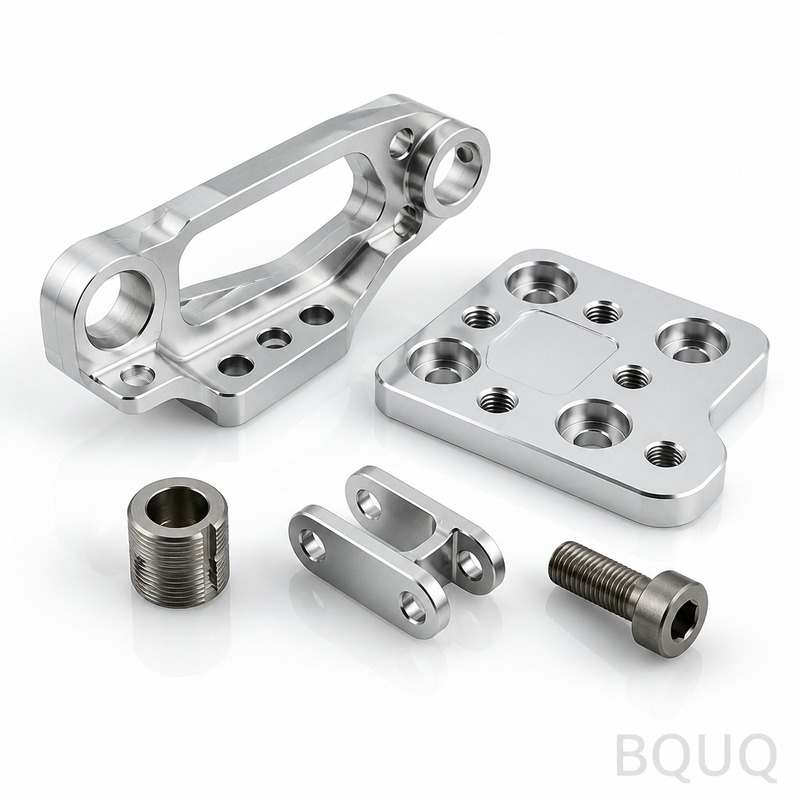
| CNC-machined aluminium bracket | Aluminium 6061 | 7616.99 | General article of aluminium, not machine-specific |
| CNC-machined steel shaft | Alloy steel | 7326.19 / 7326.90 | General article of iron or steel |
| Dedicated pump or gearbox housing | Aluminium / cast iron | 8413.91 / 8483.90 | Identifiable as part of a specific machine |
| Progressive-die steel stamping (generic) | Cold-rolled steel | 7326.19 | Stamped steel article, not further specified |
| Stamped connector shell / pin | Brass, phosphor bronze | 8538.90 or 7419.99 | Electrical-part character vs copper article |
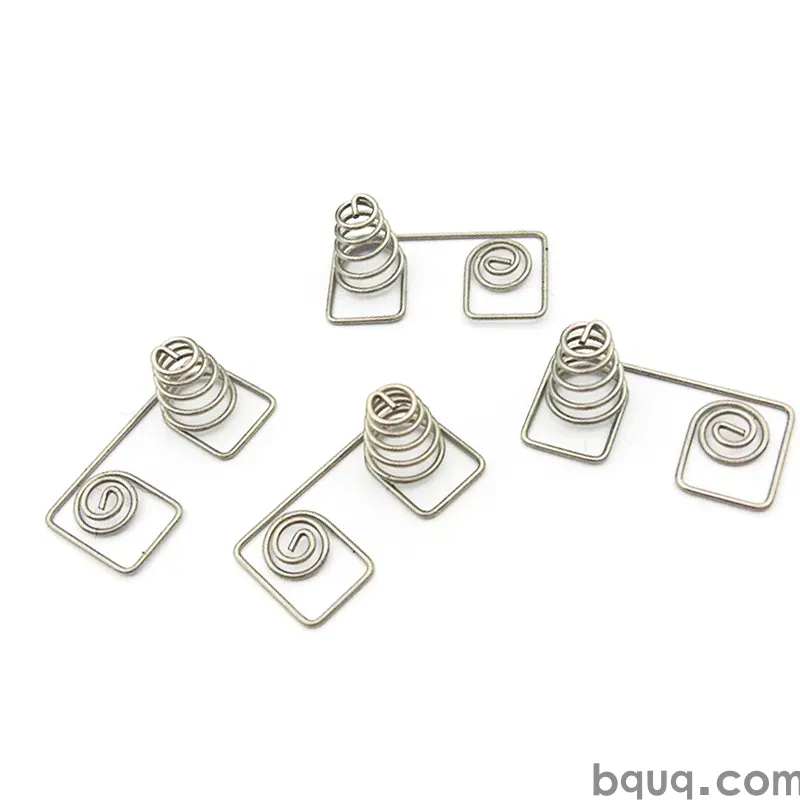
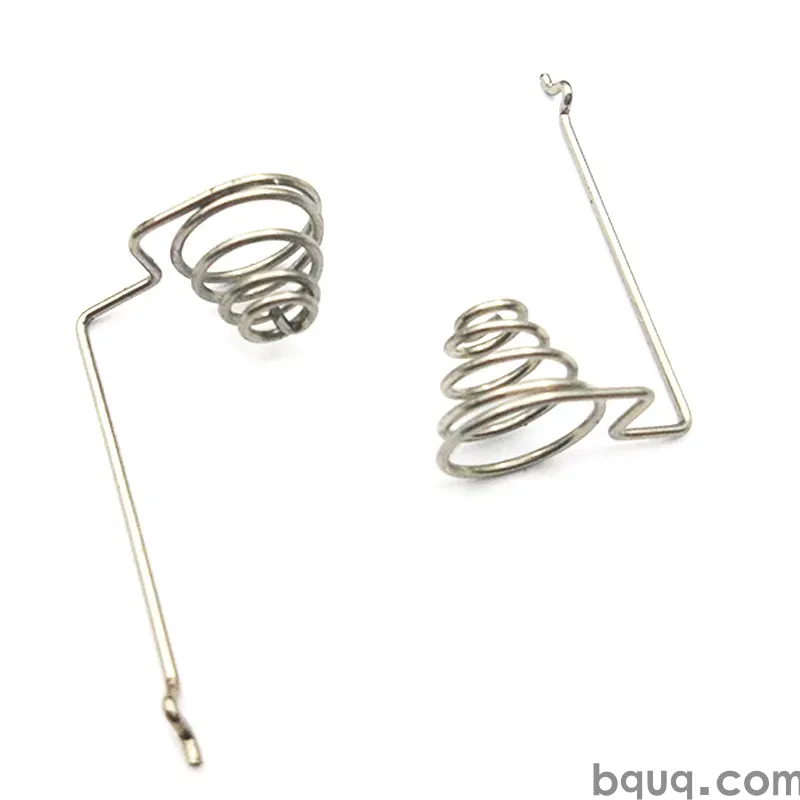
| Helical compression spring | Spring steel | 7320.20 | Springs and leaves for springs, of iron or steel |
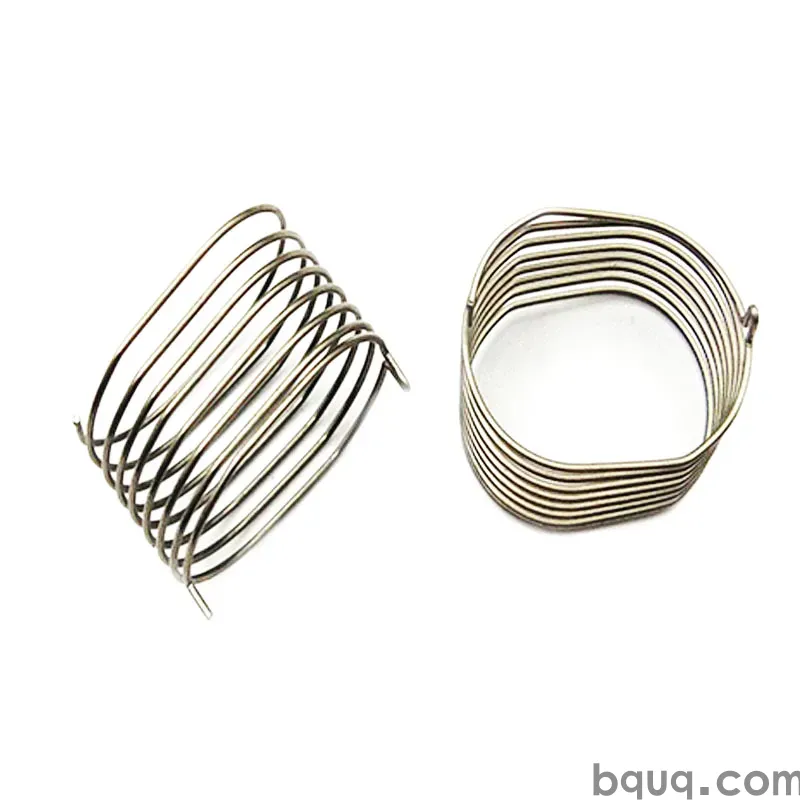
| Flat / leaf spring | Spring steel | 7320.10 | Same heading family as above |
| Stamped heat sink / heat sink clip | Aluminium | 7616.99 or 8548.00 | Heat-sink character vs aluminium article |
| Custom collet / chuck component | Tool steel | 8466.20 | Identifiable as machine-tool accessory |
| Precision motor lamination stamping | Electrical steel | 8503.00 | Part of electric motor |
Two patterns are worth remembering. First, springs have their own heading — 7320 — which is unusual for a simple metal part and often surprises buyers who assumed 7326. Second, electrical character can pull a part out of the material chapter entirely, which is why connector shells and terminals need a closer look than a plain bracket.
How Material, Function, and Process Interact
Material is necessary but not sufficient
Material determines the chapter family (73 for iron/steel, 76 for aluminium, 74 for copper, 85 for electrical). It rarely determines the final heading on its own. Two identical-shaped parts in the same material can classify differently if one is a general article and the other is a dedicated machine component.
Function usually wins
If a part is designed solely or principally for one machine type, and Chapter 84 or 85 has a "parts of" heading for that machine, the part generally goes there. This is why a heat sink designed for a specific inverter may classify differently from a generic extruded heat sink sold as a stock profile.
Process rarely wins — with exceptions
How you made the part (CNC turning, progressive-die stamping, coiling, deep drawing) is usually irrelevant to classification. The exceptions matter though: certain headings specify a process, and some Chapter Notes exclude parts "further worked" beyond a stated stage. If your supplier offers both a stamped and a machined version of the same part, expect the codes to be the same — and be suspicious if they are not.
Building a Classification File That Survives an Audit
A defensible classification is a documented one. Ask your supplier for a compact technical pack per part number:
| Document | What it must show | Why customs wants it |
|---|---|---|
| Dimensional drawing (latest revision) | Geometry, tolerances, revision letter | Proves function and identifiability |
| Material declaration | Grade, standard, chemical composition | Anchors the chapter family |
| Process route | Stamping, CNC, coiling, finishing steps | Supports GRI reasoning |
| Bill of materials | All constituent materials, by weight | Needed for GRI 3(b) essential character |
| End-use statement | Which machine or assembly the part serves | Supports Chapter 84/85 vs material chapter |
| Photograph | Finished part, with scale reference | Fast visual confirmation at the border |
At BQUQ, this pack is standard output from our four production lines in one Dongguan factory — CNC machining (±0.005 mm), metal stamping, custom spring coiling, and heat sink production. Because the process route and material certificate originate from the same facility that made the part, there is no gap between what the factory did and what the customs file claims.
Common Classification Mistakes and How to Avoid Them
Defaulting everything to 7326.90
It is the catch-all for iron and steel articles, and it is the most over-used code in precision manufacturing. It is correct for many generic machined and stamped steel parts — and wrong for springs, for dedicated machine parts, and for anything with electrical character.
Ignoring the "parts of" headings
Chapter 84 and 85 contain hundreds of "parts of" headings. Skipping them means you may be paying duty on a part that could have been classified as a machine component, or vice versa.
Assuming the supplier's code is authoritative
Your supplier knows manufacturing, not your destination market's tariff schedule. The importer of record is legally responsible for the declared code. Treat the supplier's suggestion as input, not as the answer.
Forgetting that finishing can matter
Surface finishing rarely changes a heading, but it can affect value declaration and, in some cases, whether a part is considered "further worked." Anodising, passivation, and plating costs belong in the customs value. For a deeper look at how finishing choices interact with sourcing economics, see our article on balancing quality and cost in China sourcing.
Letting the code drift across shipments
If part number A was declared under one heading in January and a different one in June, expect questions. Lock the classification, document the reasoning, and change it only with a written rationale. Our guide to building a tariff strategy that survives policy shifts covers how to keep that discipline across a product family.
Where Classification Sits in Your Sourcing Workflow
Classification is not a step you do at the port. It belongs early, alongside DFM and quoting, because it feeds landed-cost math and can even influence design decisions.
A practical sequence:
1. At RFQ stage — request the material grade and process route with the quote. At BQUQ this arrives within 12 working hours for most parts.
2. At prototype approval — freeze the drawing revision and record the intended end use in writing.
3. Before first shipment — have your broker confirm the heading against the technical pack, and check whether any anti-dumping or preferential-treatment rules apply.
4. At each shipment — verify that the commercial invoice description matches the technical pack. Vague descriptions like "metal parts" are the single most common cause of holds.
5. Annually — review headings against tariff changes and any design revisions.
If you use third-party inspection, add a classification check to the inspection scope: the inspector confirms the shipped part matches the drawing revision referenced in the customs file. Our notes on third-party inspection in China explain how to structure that scope without inflating cost.
Frequently Asked Questions
Q: What HS code do CNC machined parts usually fall under?
A: Most general CNC-machined parts classify by material: aluminium articles under 7616.99, iron or steel articles under 7326.19 or 7326.90, copper articles under 7419.99. If the part is identifiable as a component of a specific machine — a pump housing, a machine-tool collet — a Chapter 84 "parts of" heading such as 8413.91 or 8466.20 usually takes precedence. Always confirm against your destination tariff schedule.
Q: Do springs have their own HS code?
A: Yes. Helical springs and leaf springs of iron or steel sit in heading 7320, with 7320.20 covering helical compression and extension springs and 7320.10 covering leaf springs and leaves for springs. This is a common surprise, because buyers often assume springs fall under the general steel-articles heading 7326. Material still matters: springs of copper or aluminium classify elsewhere.
Q: Can the same part have different HS codes in different countries?
A: The first six digits of the HS code are internationally harmonised, but the digits after that are set nationally. Two countries can apply different subheadings, duty rates, and interpretation notes to the same product. This is why a code that clears smoothly in one market may attract questions in another. Classify per destination market, not once globally.
Q: Does surface finishing change the HS classification?
A: Usually not. Anodising, zinc plating, passivation, and similar finishes rarely move a part to a different heading, because classification follows material and function. Finishing does affect customs valuation — the cost of finishing is part of the declared value — and in some cases "further worked" language in Chapter Notes can matter. Confirm with your broker if finishing is a major cost component.
Q: What happens if customs disagrees with my declared code?
A: You may face a clearance hold, a request for technical documentation, a post-clearance duty adjustment with interest, or a penalty in serious cases. The practical defence is a documented classification file: drawing revision, material certificate, process route, and end-use statement. Suppliers who can produce that pack quickly — as BQUQ does from a single Dongguan factory — make disputes resolvable in days rather than weeks.
Related Resources
- About BQUQ and our four production lines in one Dongguan factory: /about/
- CNC machining to ±0.005 mm: /cnc-machining/
- Metal stamping and progressive-die production: /custom-metal-stamping/
- Custom compression springs and wire forms: /compression-springs/
- Industry trends affecting sourcing and tariffs: /industry-dynamics/
- Technical articles and engineering guides: /bquq-blog/
- Frequently asked questions for buyers: /faq/
- Contact our engineering team for a 12-hour quote: /contact/
Authored by the BQUQ Engineering Team. BQUQ (Dongguan) runs CNC machining (±0.005 mm), metal stamping, custom springs, and heat sink production in one ISO9001 factory. Source-direct from Dongguan, China — quote in 12 hours: sc@bquq.com | WhatsApp +86 13713157787 | www.bquq.com