Tariff Strategy for Sourcing Metal Parts
Short answer: A tariff strategy is not a negotiation tactic — it is a landed-cost engineering exercise. Duty is charged on the declared customs value, so the levers that actually move your number are HS classification, Incoterms, first-sale valuation, consolidation density, and design choices that reduce shipped weight and volume. A typical mixed order of CNC parts and stamped components carries 3–8% in freight and 0–25% in duty depending on destination and code. Model all of it before you compare quotes, because a 12% cheaper unit price can lose to a better-classified, denser-packed alternative from a Dongguan factory quoting in 12 working hours.
Tariffs on metal parts are rarely a single number you can look up once and forget. They change by destination country, by product classification, by the specific alloy and process, and by how the goods are declared at the border. Buyers who treat duty as a fixed tax end up absorbing cost they could have engineered away. Buyers who treat it as a design variable usually find 5–20% of total landed cost sitting in places they never modelled.
This article lays out a working tariff strategy for B2B teams sourcing CNC machined parts, metal stampings, springs, and heat sinks. It covers how duty is actually calculated, where the real cost hides, which engineering levers reduce exposure, and how to compare a Chinese quote against a domestic or third-country alternative on equal terms.
How is duty actually calculated on imported metal parts?
Duty is almost always charged as a percentage of the declared customs value — not the retail price, not the invoice total including freight, and not the weight. That single fact drives most of the strategy.
The core formula:
Landed cost = (Unit price × Quantity) + Freight + Insurance + Duty + Fees + Inland transport + Carrying cost
Where Duty = Declared customs value × duty rate.
The declared customs value is normally the transaction value: what you actually paid the seller for the goods, adjusted for certain additions and deductions defined by the importing country's customs authority. Freight and insurance are added to compute the duty-paid value in most jurisdictions, but they are not themselves dutiable as goods.
This is why the Incoterm matters so much. Under FOB, you control the freight and see it separately. Under DDP, the supplier bundles duty into a single price and you lose visibility — and often pay a margin on it.
| Cost element | Typical share of landed cost | Who controls it | Leverage available |
|---|---|---|---|
| Unit price (ex-works) | 55–75% | Supplier + your design | High |
| International freight | 3–8% | You / forwarder | Medium |
| Duty | 0–25% | HS code + origin | Medium–High |
| Insurance | 0.3–1% | You | Low |
| Customs brokerage & fees | 1–3% | Forwarder | Low |
| Inland transport both ends | 2–6% | You | Medium |
| Inventory carrying cost | 2–8% | Your planning | High |
The percentages above are indicative ranges for typical industrial metal components moving in LCL and air freight. Your actual mix will differ, but the ranking of levers rarely does: unit price and duty dominate, and both are engineering-controllable.
Why the HS code is the highest-leverage line item
A CNC-machined aluminium bracket and a stamped steel bracket can land under different HS headings depending on material, function, and whether the part is a finished article or a part of a larger machine. The difference between two plausible classifications can be 0% versus 8%, or 2.5% versus 12%.
Classification is a legal determination, not a preference. You cannot simply pick the cheaper code. But you can:
- Request the supplier's suggested HS code and the reasoning behind it.
- Have your customs broker review it before the first shipment, not after.
- Request a binding ruling from your customs authority for high-volume parts.
- Keep drawings, material certs, and function descriptions consistent with the declared code.
A part described as "aluminium bracket" invites one classification. The same part described as "aluminium mounting bracket for industrial control enclosure, machined from 6061-T6" invites a more defensible one. Documentation quality is tariff strategy.
Which engineering levers reduce tariff exposure?
This is where sourcing teams create real advantage, because these decisions are made at the drawing stage — long before a purchase order exists.
1. Reduce shipped volume, not just weight
Duty is charged on value, but freight is charged on volume and weight. For bulky parts like heat sinks, you can often cut freight 20–40% by redesigning fin geometry or nesting parts for shipment. That does not reduce duty directly, but it reduces the freight component that feeds into the duty-paid value in many jurisdictions.
2. Consolidate processes under one supplier
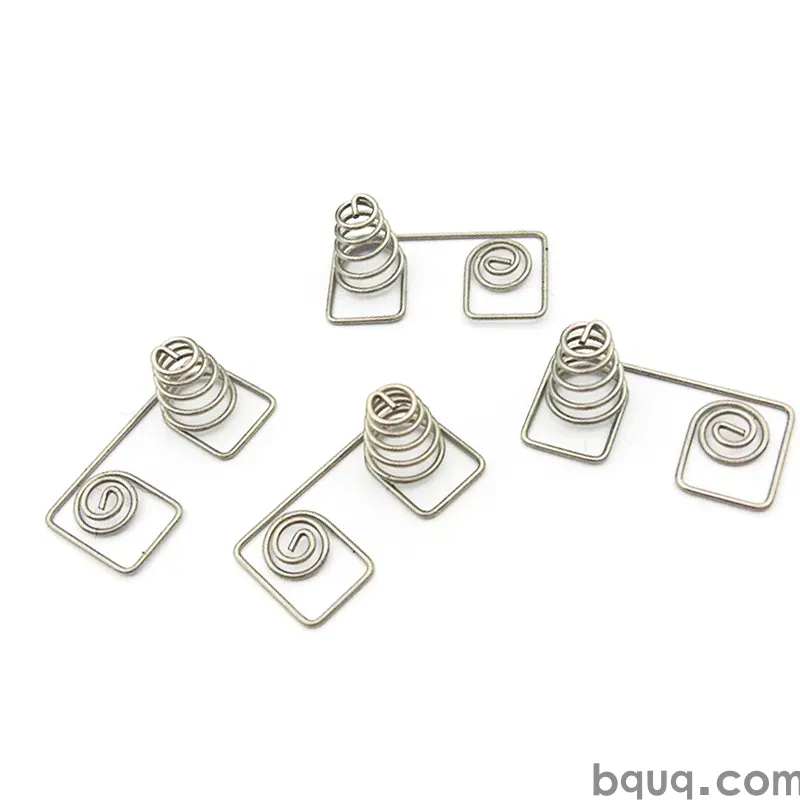
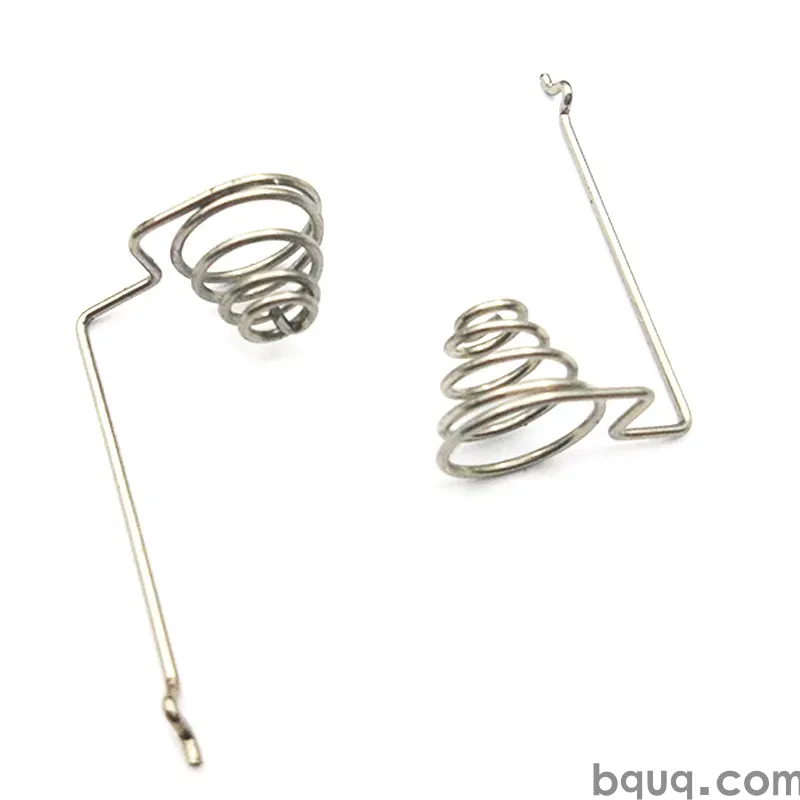
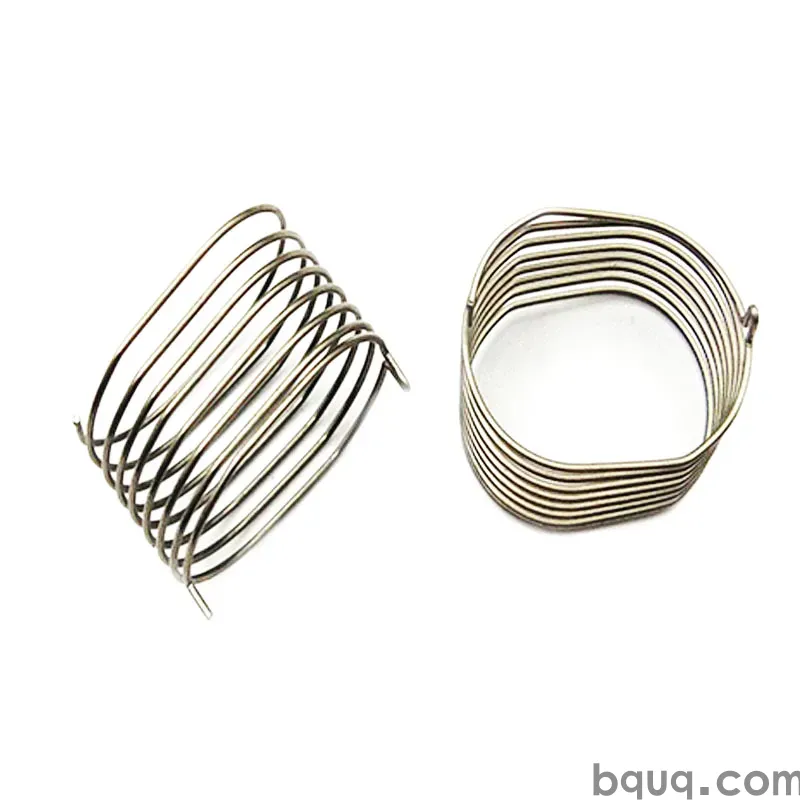
If a bracket needs machining, deburring, anodising, and laser marking, sourcing those across three vendors adds three sets of freight, three customs entries, and three sets of documentation risk. BQUQ runs CNC machining, metal stamping, custom springs, and heat sink production across four production lines in one Dongguan factory. One PO, one shipment, one entry.
3. Choose the process that matches the volume
A part that is CNC machined at 500 pieces per year may be better as a custom metal stamping at 50,000 pieces per year. Stamped parts typically have lower unit cost, lower material waste, and lighter shipping weight per piece. The tariff rate may be identical, but the declared value per unit drops — and so does duty per unit.
4. Right-size tolerances
Over-specified tolerances drive cost. A ±0.005 mm requirement on a non-critical mounting face adds machining time, inspection time, and scrap. BQUQ holds ±0.005 mm where it matters on CNC machined parts, but applying that globally to a part that needs ±0.1 mm is paying for precision you will never measure.
| Design lever | Typical cost impact | Tariff impact | Effort |
|---|---|---|---|
| Consolidate to one supplier | −5 to −15% | Fewer entries, lower admin | Low |
| Switch process at volume | −20 to −50% unit | Lower declared value | Medium |
| Relax non-critical tolerances | −5 to −20% | Lower declared value | Low |
| Reduce part weight / volume | −3 to −10% freight | Lower duty-paid value | Medium |
| Localise finishing | Varies | May split entries | Medium |
| Redesign for nesting | −10 to −30% freight | Lower duty-paid value | Medium |
5. Consider first-sale valuation where legitimate
If your supplier buys from a manufacturer and resells to you, some jurisdictions allow valuation based on the first sale — the price the middleman paid. This can materially reduce declared value. It requires documentation, an unrelated-party transaction, and broker sign-off. It is legitimate where the rules allow it and fraudulent where they do not. Ask your broker, not your supplier.
How should you compare a China quote against alternatives?
Most quote comparisons fail because they compare unit price only. A proper comparison normalises everything to landed cost per usable piece.
Here is a worked comparison for a stamped stainless contact, 100,000 pieces per year:
| Line item | Dongguan supplier | Domestic supplier | Third-country supplier |
|---|---|---|---|
| Unit price | $0.041 | $0.078 | $0.055 |
| Tooling (amortised yr 1) | $0.004 | $0.009 | $0.006 |
| Freight per piece | $0.003 | $0.001 | $0.004 |
| Duty per piece | $0.002 | $0.000 | $0.001 |
| Brokerage & admin | $0.001 | $0.000 | $0.001 |
| Quality risk / rework reserve | $0.002 | $0.001 | $0.004 |
| Landed cost per piece | $0.053 | $0.089 | $0.071 |
Figures are illustrative. The point is structural: even with duty and freight added, the Dongguan option wins here by roughly 40%. But flip one variable — say duty rises to 25% and volume drops to 5,000 pieces — and the domestic supplier can win on responsiveness and inventory carrying cost.
Run the model at your actual volume, your actual duty rate, and your actual payment terms. For a deeper framework, see our China quote comparison guide.
Include the cost of capital and inventory
A 30-day ocean shipment plus 45 days of safety stock means 75 days of cash tied up. At an 8% cost of capital, that is roughly 1.6% of goods value per cycle. Air freight costs more per kilo but can cut that to near zero. The right answer depends on your margin and your cash position, not on freight rate alone.
What are the practical duty mitigation options?
Mitigation is not evasion. Everything below is a legitimate structural choice.
Free trade agreements and preferential origin
If your destination country has an FTA with China, your supplier may be able to issue a certificate of origin that reduces or eliminates duty. Check the specific agreement, the product-specific rules of origin, and whether your part qualifies. Many metal parts qualify on tariff-shift rules if the raw material originates in the right place.
Duty drawback and inward processing
If you import parts, process them, and re-export the finished goods, many jurisdictions refund the duty paid on the imported components. This is standard practice in electronics and machinery assembly. It requires clean import/export records and a broker who handles drawback claims.
Bonded warehouses and FTZ storage
Storing goods in a bonded facility defers duty until the goods enter the domestic market. If you resell some volume domestically and re-export the rest, this splits the liability cleanly.
Tariff engineering
This is the legitimate redesign of a product so it falls under a different, more favourable classification. Classic example: a part that is technically a "finished article" versus a "part" can be classified differently. This must be a genuine design change with a real functional basis, documented and defensible. It is not relabelling.
Currency and payment terms
Tariffs are paid in your local currency at the exchange rate on the entry date. Volatile FX can move your landed cost more than a 2% duty change. Where possible, quote in a stable currency and hedge large orders.
How do you build a repeatable tariff process?
Ad-hoc tariff handling creates surprise costs. A repeatable process looks like this:
1. Classify before you quote. Get an HS code and duty rate for every part number before the RFQ goes out.
2. Model landed cost per part. Use a standard template with freight, duty, brokerage, and carrying cost.
3. Standardise Incoterms. FOB is usually the best balance of control and simplicity for buyers new to China sourcing.
4. Consolidate shipments. Combine parts from one factory into one entry.
5. Review quarterly. Duty rates, freight rates, and FX all move. Re-run the model.
6. Keep documentation audit-ready. Drawings, material certs, and function descriptions should match the declared code.
For the broader onboarding picture, our full guide to sourcing precision parts from China covers supplier vetting, sampling, and quality gates in detail.
Where does quality risk fit into the tariff model?
Every tariff model has a hidden line: the cost of a bad shipment. A misclassified part held at customs, a batch that fails incoming inspection, or a spring with the wrong rate all cost more than the duty you saved. BQUQ operates under ISO9001 with documented inspection at each production stage. That does not eliminate risk, but it makes it measurable — and measurable risk is cheaper to reserve for.
If your part is a compression spring or a machined housing, the same logic applies: specify clearly, inspect consistently, and keep the documentation aligned with the customs declaration.
Frequently Asked Questions
Q: Does the tariff rate apply to the unit price or the total invoice?
A: Duty applies to the declared customs value, which is normally the transaction value of the goods plus specified adjustments. Freight and insurance are added to determine the duty-paid value in most jurisdictions, but they are not themselves goods. So the effective rate you feel is slightly higher than the headline percentage. Always model duty on the full CIF value, not just the ex-works unit price.
Q: Can I ask my Chinese supplier to declare a lower value to reduce duty?
A: No. Under-declaring is customs fraud in every major jurisdiction and exposes you, not just the supplier, to penalties, seizure, and loss of import privileges. Legitimate reductions come from correct classification, first-sale valuation where permitted, FTA preferential origin, duty drawback, and bonded storage. If a supplier volunteers to under-declare, treat it as a serious red flag about their compliance culture.
Q: How do I know which HS code applies to my machined part?
A: Start with the supplier's suggestion, then have your customs broker verify it against the actual drawing, material, and function. For high-volume or ambiguous parts, request a binding ruling from your customs authority. Keep the description consistent with the code on every shipment. Classification depends on material, function, and whether the part is a finished article or a component, so a one-line description is rarely enough.
Q: Is it cheaper to source from Vietnam or another country instead?
A: Sometimes, but rarely by the margin buyers expect. Unit prices in alternative Southeast Asian sources are often 10–30% higher than Dongguan for equivalent precision work, and tooling, lead time, and supply-chain depth are usually weaker. Duty savings can still win at high volumes. Our China vs Vietnam manufacturing comparison walks through the trade-offs in detail.
Q: How often should I re-run my landed-cost model?
A: Quarterly at minimum, and immediately after any tariff schedule change, freight rate spike, or FX move above 5%. Duty rates and freight rates are both volatile. A model that was accurate last year may be off by double digits today. Build it in a spreadsheet with clear inputs so you can re-run it in under an hour rather than rebuilding it each time.
Related Resources
- About BQUQ and our Dongguan factory: /about/
- CNC machining services: /cnc-machining/
- Custom metal stamping: /custom-metal-stamping/
- Industry trends and trade policy notes: /industry-dynamics/
- Technical articles and engineering guides: /bquq-blog/
- Frequently asked questions: /faq/
- Case studies: /case/
- Contact the engineering team: /contact/
Authored by the BQUQ Engineering Team. BQUQ (Dongguan) runs CNC machining (±0.005 mm), metal stamping, custom springs, and heat sink production in one ISO9001 factory. Source-direct from Dongguan, China — quote in 12 hours: sc@bquq.com | WhatsApp +86 13713157787 | www.bquq.com