China vs Vietnam for Metal Parts: Capability and Cost
Short answer: Vietnam wins on labor rate for simple, high-volume, low-tolerance assemblies, while China wins on process depth, tolerance capability and tooling speed for precision metal parts. For CNC work held to ±0.005 mm, multi-stage progressive stamping, custom springs and heat sinks, Dongguan remains the practical default. Typical Vietnamese stamping labor runs 30–50% below Chinese rates, but once you add imported tooling steel, secondary finishing shipped back to China, and 2–4 extra weeks of tooling lead time, the landed cost gap on precision parts usually closes to under 10% — often in China's favor at volumes under roughly 100,000 pieces.
Why buyers are comparing China and Vietnam at all
Sourcing managers rarely wake up wanting a country comparison. They want a part that meets print, arrives on schedule, and costs less than last year. The China-versus-Vietnam question usually appears for one of four reasons: tariff exposure on US-bound goods, a customer mandate to diversify beyond a single country, a wage-driven cost review, or a capacity crunch at an existing Chinese supplier.
All four are legitimate. None of them automatically mean Vietnam is the better answer for a specific part. The mistake is treating "China" and "Vietnam" as interchangeable labels rather than as different manufacturing ecosystems with different tooling bases, different supply chains for raw material, and different depths of process know-how.
This article breaks the comparison down by capability, cost structure, lead time and risk, so you can decide per part number rather than per country.
Capability comparison: what each country actually does well
Vietnam's real strengths
Vietnam has built genuine strength in labor-intensive assembly, plastic injection molding, simple metal fabrication, and mid-tolerance stamping. Electronics assembly has pulled a supporting supply base along with it, so you can often find:
- Sheet metal fabrication, welding and powder coating
- Simple single-stage or two-stage stamping
- Injection molding and basic CNC turning
- Cable, wire harness and connector assembly
- Manual and semi-automatic assembly lines
For a bracket, an enclosure, a welded frame or a cable assembly with tolerances in the ±0.1 mm to ±0.3 mm range, a competent Vietnamese supplier is a reasonable choice.
Where the depth runs out
The gaps appear as soon as the part requires process stacking or tight tolerance. Precision progressive dies with 10-plus stations, in-die tapping, fine blanking, multi-slide wire forming, spring coiling with controlled load tolerances, and heat sink skiving or bonded-fin assembly are all thin in Vietnam. So is the supporting ecosystem: specialized tool steel, precision grinding shops, heat treat houses qualified for spring steel, and the surface finishing chain (anodize, passivate, electroless nickel, selective gold plating).
In China — and specifically in clusters like Dongguan, Shenzhen and Suzhou — those processes exist within a 30 km radius. That matters more than labor rate when your part needs four operations.
| Capability | China (Dongguan cluster) | Vietnam |
|---|---|---|
| CNC tolerance (typical) | ±0.005 mm | ±0.02–0.05 mm |
| Progressive die stations | 10–30+ | 2–8 typical |
| In-die tapping / fine blanking | Common | Rare |
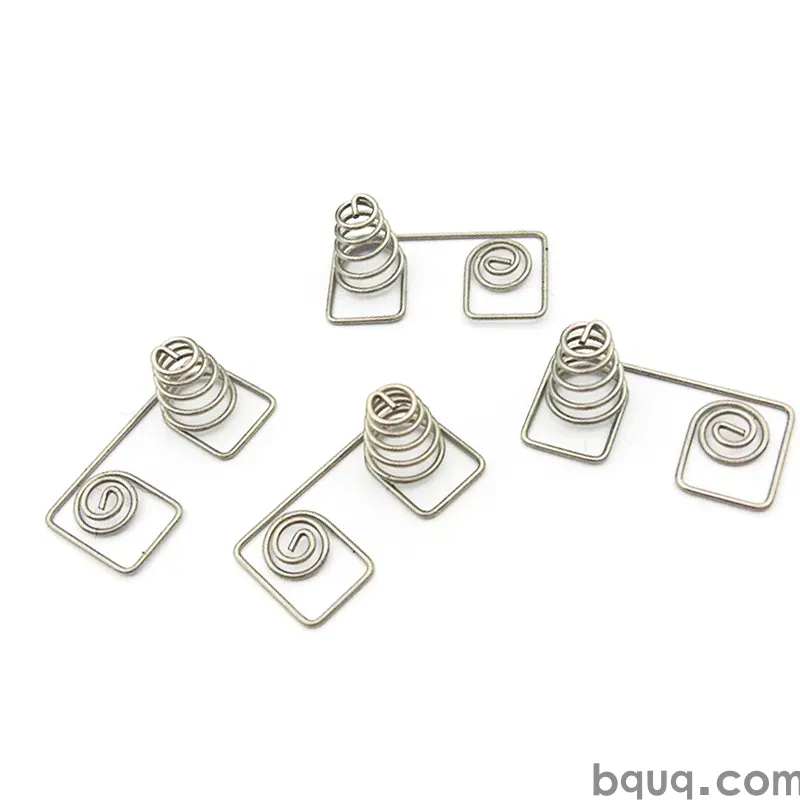
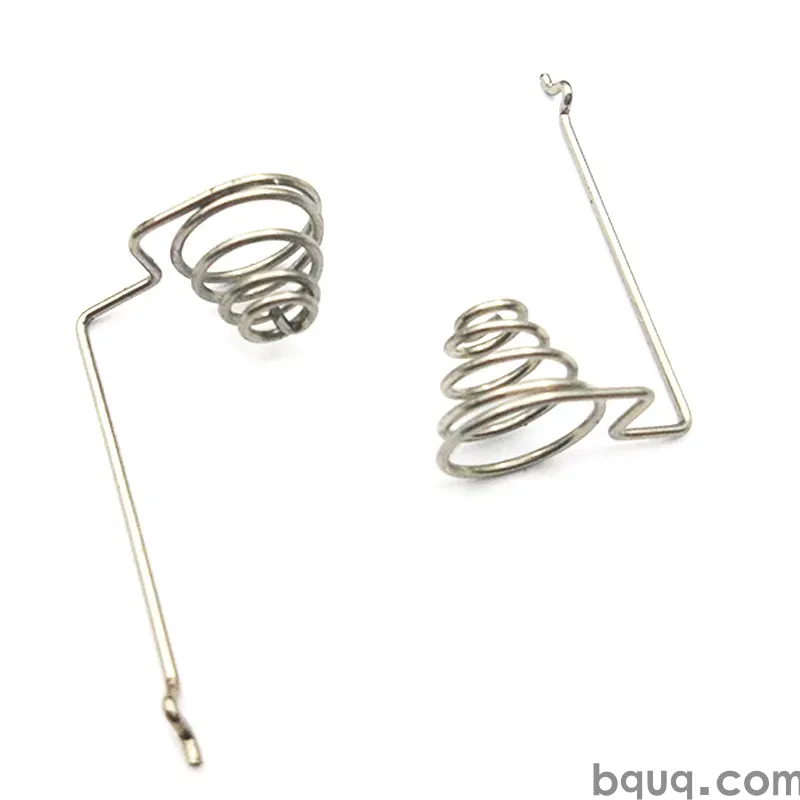
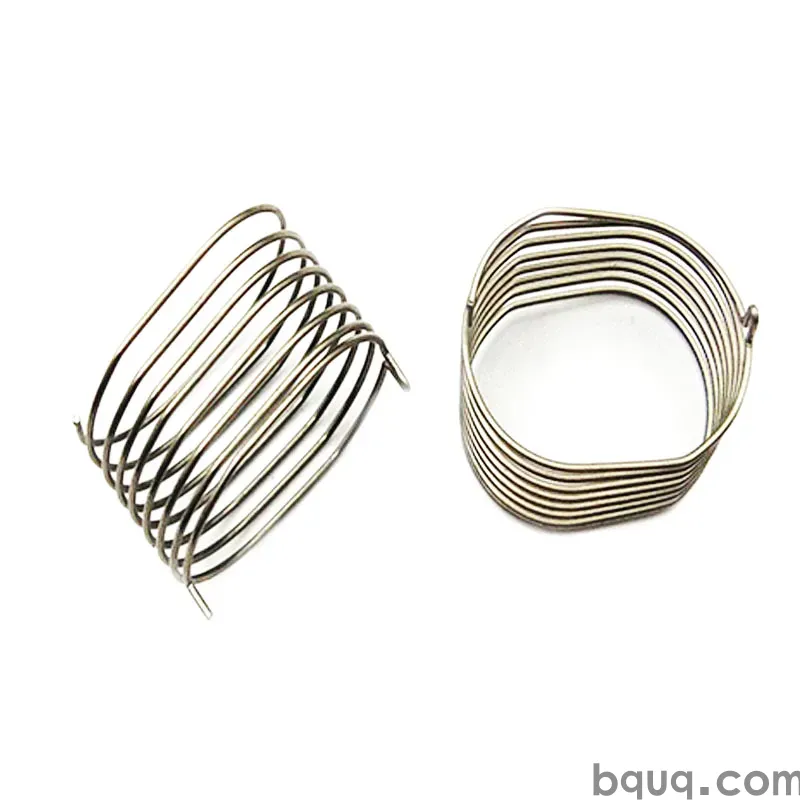
| Custom spring coiling (load-controlled) | Mature | Limited |
| Heat sink skiving / bonded fin | Mature | Very limited |
| Tool steel & heat treat supply chain | Local, deep | Mostly imported |
| Surface finishing breadth | Full chain in-cluster | Partial, often outsourced |
| Engineering-to-order response | Fast, tooling shop on site | Slower, fewer toolmakers |
The tolerance question, in practice
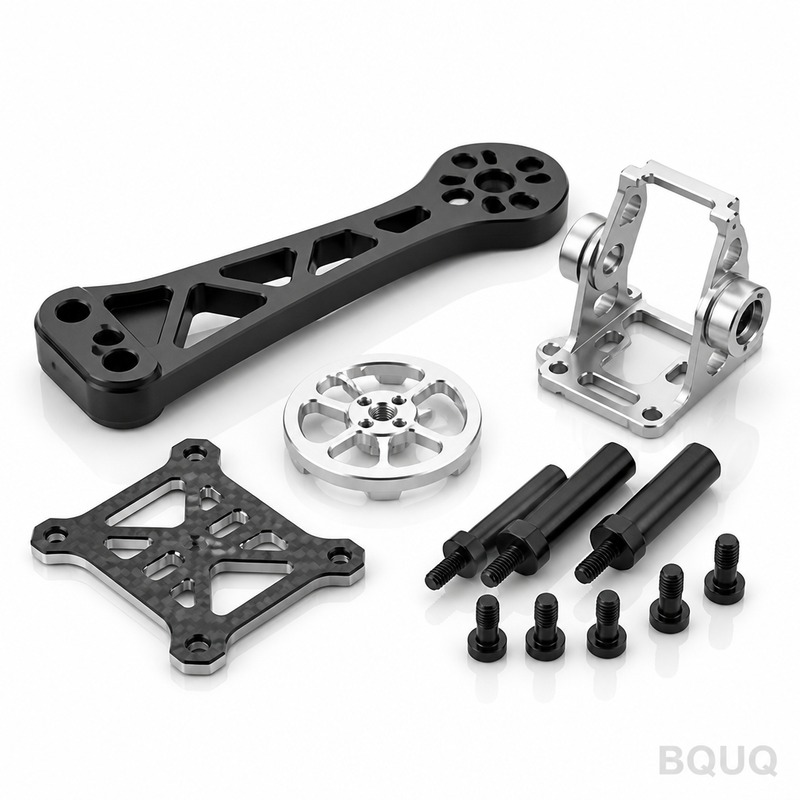
A ±0.005 mm CNC callout is not a marketing number — it requires temperature-stable machining, ground tooling, in-process probing and a metrology room with CMM and optical comparators. That combination is standard in a Dongguan precision shop and uncommon in Vietnam outside a handful of foreign-invested plants.
If your print says ±0.05 mm, both countries can do it. If it says ±0.005 mm on a bearing bore or a collet seat, the supplier list narrows sharply.
Cost structure: where the money actually goes
Labor rate is the number everyone quotes, and it is the least useful one on its own. What matters is landed cost per good part.
The line items that move
- Direct labor: Vietnam typically 30–50% below Chinese rates for comparable skill. On a part where labor is 15% of cost, that saves 5–7% — not 40%.
- Tooling: Often 20–40% more expensive in Vietnam because die steel, standard components and wire EDM capacity are imported. Amortized over 50,000 pieces, a USD 12,000 tool adds USD 0.24 per part; a USD 16,000 tool adds USD 0.32.
- Raw material: Vietnamese stampers frequently import cold-rolled steel, phosphor bronze and spring steel from China, Japan or Korea, adding freight and duty.
- Secondary operations: Plating, heat treat and precision grinding are often sent back to China, adding 1–3 weeks and double freight.
- Freight and duty: Depends entirely on destination and current tariff schedules — model it per shipment, not per country.
- Quality cost: Higher incoming inspection, more sorting, more containment on a new supplier.
A worked comparison
Indicative numbers for a 4-station progressive-stamped connector shell, 200,000 pieces per year, 0.4 mm phosphor bronze, ±0.03 mm:
| Cost element | China (Dongguan) | Vietnam | Notes |
|---|---|---|---|
| Tooling (one-time) | USD 9,000 | USD 12,500 | Imported die steel in VN |
| Unit price at 200k | USD 0.085 | USD 0.078 | Labor advantage |
| Annual piece cost | USD 17,000 | USD 15,600 | 200,000 pcs |
| Tooling amortized (yr 1) | USD 9,000 | USD 12,500 | One-time |
| Secondary plating | In-cluster, included | Ship to China, +USD 1,400/yr | Freight + handling |
| Year-1 total | USD 26,000 | USD 29,500 | |
| Year-2 total | USD 17,000 | USD 17,000 | Parity after tooling |
The pattern repeats across categories: Vietnam's unit price advantage is real but small, and it is frequently erased in year one by tooling and logistics. From year two, the two are often within a few percent — at which point capability, lead time and risk should decide.
When Vietnam genuinely wins
Vietnam is the better answer when the part is simple, tolerances are loose, volumes are high, tooling is minimal or already amortized, and the destination market favors Vietnamese origin. Manual assembly, wire harnesses, welded frames, and single-stage stamped parts with ±0.2 mm tolerance fit that profile well.
Lead time and tooling speed
Tooling lead time is where the gap is widest and most underestimated.
| Activity | China (Dongguan) | Vietnam |
|---|---|---|
| Quote turnaround | 12 working hours (BQUQ) | 3–10 days typical |
| DFM feedback | 1–2 days | 3–7 days |
| Simple stamping die | 2–3 weeks | 4–6 weeks |
| Progressive die (10+ stations) | 4–6 weeks | 8–14 weeks |
| CNC first article | 3–7 days | 7–14 days |
| Spring tooling & first samples | 2–3 weeks | 4–8 weeks |
Two things drive this. First, toolmakers: Dongguan has a dense population of independent die and mold shops, so a factory can outsource a die and still hold schedule. Second, iteration speed — when a first article is out of tolerance, the fix happens the same week in China and often the next month in Vietnam.
For a product launch, 6–10 weeks of extra tooling time usually costs more than the entire unit-price saving.
Quality, IP and supply chain risk
Quality systems
ISO9001 is widely available in both countries. Beyond that, the density of certified process controls — PPAP discipline, SPC on stamping lines, CMM and XRF verification, material traceability — is higher in China's precision clusters simply because more customers demand it.
IP and tooling ownership
In both countries, protect yourself the same way: written tooling ownership, tooling identification plates, a documented exit clause, and periodic on-site verification. Our guide to supplier exit planning covers the mechanics. Tooling depreciation and ownership terms are also worth negotiating explicitly — see tooling depreciation terms.
Supply chain resilience
Vietnam's exposure is upstream: it imports much of its steel, tooling components and semi-finished goods. A disruption in that flow hits Vietnamese factories harder than Chinese ones, which sit closer to domestic mills and component makers.
A practical decision framework
Score each part number rather than the country.
| Question | If yes | Lean toward |
|---|---|---|
| Tolerance tighter than ±0.02 mm? | Yes | China |
| 10+ station progressive die or fine blanking? | Yes | China |
| Custom spring with controlled load tolerance? | Yes | China |
| Heat sink with skived or bonded fins? | Yes | China |
| Multiple finishing steps (anodize + plating + grind)? | Yes | China |
| Simple part, ±0.2 mm, high volume, tooling amortized? | Yes | Vietnam viable |
| Labor-intensive manual assembly? | Yes | Vietnam viable |
| Destination tariff strongly favors Vietnam origin? | Yes | Vietnam viable |
| Launch schedule under 12 weeks? | Yes | China |
| Annual volume under ~100,000 pcs? | Yes | China usually cheaper landed |
A common and sensible outcome is a split: keep precision metal parts — CNC machined components, custom metal stampings and compression springs — in China, and move simple, high-volume, loose-tolerance assemblies to Vietnam once tooling is paid off. Our notes on high-volume sourcing in China cover how to structure that split without splitting your quality system.
How BQUQ fits
BQUQ (Dongguan) runs four production lines under one ISO9001 roof: CNC machining to ±0.005 mm, metal stamping, custom spring coiling and heat sink production. Because tooling, machining, stamping and finishing sit in one factory, DFM feedback and first articles move fast — quotes in 12 working hours, flexible MOQ, and no handoff between countries for secondary operations.
If you are benchmarking Vietnam against China for a specific part, the useful comparison is a quoted part, not a country average. Send the drawing and the annual volume.
Frequently Asked Questions
Q: Is Vietnam cheaper than China for metal parts?
A: On unit price for simple, high-volume, loose-tolerance parts, Vietnam is often 5–10% cheaper because labor rates run 30–50% below Chinese rates. But tooling typically costs 20–40% more, and secondary operations are often shipped back to China. For precision parts under roughly 100,000 pieces annually, landed cost usually favors China.
Q: Can Vietnam hold ±0.005 mm CNC tolerances?
A: A small number of foreign-invested Vietnamese plants can, but it is not a standard offering across the local supply base. Holding ±0.005 mm requires temperature-controlled machining, ground tooling, in-process probing and CMM verification. In Dongguan, that capability is routine across many precision shops rather than the exception.
Q: Which country is better for progressive stamping dies?
A: China, clearly. Dongguan's toolmaking cluster supports 10–30 station progressive dies, in-die tapping and fine blanking with 4–6 week lead times. Vietnamese tool shops typically handle 2–8 stations and take 8–14 weeks, largely because die steel and standard components must be imported.
Q: How much longer does tooling take in Vietnam?
A: Expect roughly double. A simple stamping die runs 4–6 weeks in Vietnam versus 2–3 weeks in China; a complex progressive die runs 8–14 weeks versus 4–6. CNC first articles typically take 7–14 days in Vietnam versus 3–7 days in China. That gap usually dominates launch economics.
Q: Should I split production between China and Vietnam?
A: Often yes, but split by part number, not by percentage. Keep precision, multi-operation and tight-tolerance parts in China; move simple, high-volume, loose-tolerance assemblies to Vietnam after tooling is amortized. Run one quality standard and one inspection protocol across both so you are comparing data, not impressions.
Related Resources
- About BQUQ and our Dongguan factory: /about/
- CNC machining services (±0.005 mm): /cnc-machining/
- Custom metal stamping and progressive dies: /custom-metal-stamping/
- Industry trends in metal parts sourcing: /industry-dynamics/
- Technical articles and sourcing guides: /bquq-blog/
- Frequently asked questions: /faq/
- Case studies: /case/
- Contact the engineering team: /contact/
Authored by the BQUQ Engineering Team. BQUQ (Dongguan) runs CNC machining (±0.005 mm), metal stamping, custom springs, and heat sink production in one ISO9001 factory. Source-direct from Dongguan, China — quote in 12 hours: sc@bquq.com | WhatsApp +86 13713157787 | www.bquq.com